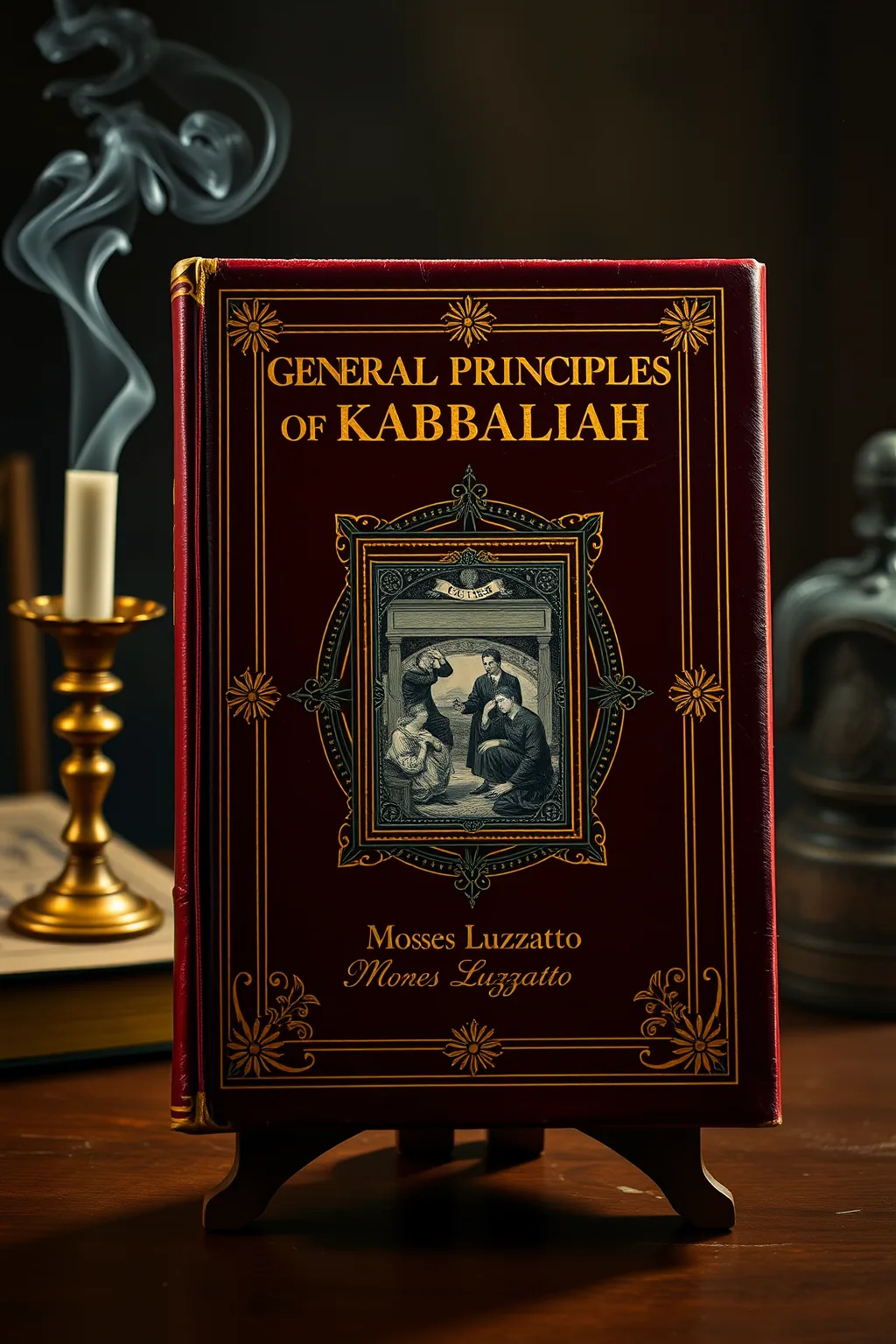
General Principles of Kabbalah
 61
61

General Principles of Kabbalah


Silas Hawthorne (Hermetic Studies Editor) — Moses Luzzatto's 'General Principles of Kabbalah' stands as a cornerstone for serious students of Kabbalistic thought. Luzzatto, a luminary of Jewish mysticism, provides an unparalleled clarity to complex concepts, demystifying the intricate architecture of the Sephiroth and the divine emanations. His approach is both rigorously intellectual and deeply spiritual, offering insights that are essential for understanding the esoteric underpinnings of creation and the soul's journey. This text is indispensable for practitioners and scholars alike who seek an authoritative and accessible guide to the foundational principles of Kabbalah, bridging the gap between ancient wisdom and modern comprehension.
📝 Description
61
Moses Luzzatto wrote 'General Principles of Kabbalah' to clarify complex Kabbalistic ideas.
Moses Luzzatto's 'General Principles of Kabbalah' provides a structured introduction to Kabbalistic concepts. Luzzatto explains the fundamental ideas of Jewish mysticism, drawing on earlier texts like the Zohar. He details the structure of the Sephirotic Tree, the process of divine emanation, and the nature of the soul. The book aims to make these esoteric teachings accessible to students of Kabbalah. Luzzatto's approach focuses on clear exposition, helping readers grasp the connections between the divine and the material world. He discusses the structure of creation and the potential for spiritual growth. The work encourages reflection on the nature of reality and the hidden workings of the cosmos. It presents a framework for understanding divine consciousness through symbolic meaning.
This text is designed for those seriously interested in Kabbalistic study. Luzzatto's clear explanations help demystify concepts that can otherwise seem obscure. The book covers the essential elements needed to begin a deeper exploration of Kabbalistic thought. It offers a systematic way to approach the study of Jewish mysticism. Readers will find a logical presentation of core principles.
Moses Luzzatto's work is situated within the tradition of Kabbalistic literature, which seeks to understand the divine nature and the creation of the universe through mystical interpretation of Jewish scripture and tradition. He engages with the conceptual framework established by earlier Kabbalists, particularly concerning the Sefirot, the divine attributes or emanations that mediate between God and creation. Luzzatto's contribution lies in his effort to systematize and clarify these ideas, making them more approachable for students of Kabbalah. His writing reflects a desire to present the core tenets of this esoteric tradition in an orderly fashion, building upon centuries of mystical thought.
💡 Why Read This Book?
Unlock the profound secrets of Jewish mysticism and cosmic order. 'General Principles of Kabbalah' offers an accessible yet deep dive into the Sephirotic Tree, divine emanations, and the soul's spiritual journey. Ideal for seekers of esoteric knowledge, students of comparative religion, and practitioners aiming to deepen their understanding of Kabbalistic principles and their application.
⭐ Reader Reviews
Honest opinions from readers who have explored this book.
❓ Frequently Asked Questions
What is Kabbalah?
Kabbalah is an esoteric tradition within Judaism that seeks to understand the divine nature of God and the relationship between God and the created universe through mystical interpretation of the Torah and other sacred texts.
Who was Moses Luzzatto?
Moses Chaim Luzzatto (1707-1746) was a renowned Italian Jewish Kabbalist, philosopher, and poet whose writings are highly regarded for their clarity and depth in explaining Kabbalistic concepts.
Is this book suitable for beginners?
Yes, 'General Principles of Kabbalah' is considered an excellent starting point for those new to Kabbalah due to its systematic and clear exposition of foundational concepts.
What are the Sephirot?
The Sephirot, often translated as 'emanations' or 'attributes,' are ten divine qualities or vessels through which God's infinite light is expressed and manifested in the created world, forming the structure of the Kabbalistic Tree of Life.
What is the primary goal of studying Kabbalah?
The primary goal is often described as achieving a deeper understanding of God, the cosmos, and one's own spiritual purpose, leading to spiritual elevation and closeness to the Divine.
🔮 Key Themes & Symbolism
The Sephirotic Tree of Life
This book meticulously details the Sephirotic Tree, the central diagram in Kabbalah representing the ten divine emanations and the structure of creation. Luzzatto guides the reader through each Sephirah, explaining its unique attributes, its role in the cosmic order, and its connection to the human soul. Understanding this divine blueprint is crucial for grasping the Kabbalistic worldview, revealing the pathways of divine energy and the interconnectedness of all existence. It serves as a map for spiritual ascent and a key to unlocking the hidden meanings within scripture.
Divine Emanations and Creation
Luzzatto explores the profound concept of divine emanation, explaining how the infinite, unknowable God (Ein Sof) progressively manifests into the finite, perceivable universe. The book illuminates the process by which divine light, or energy, flows through the Sephirot, giving birth to all levels of reality. This exploration provides a framework for understanding creation not as a singular event, but as a continuous unfolding of divine will and wisdom. It offers a mystical perspective on cosmology, revealing the underlying spiritual forces that shape our world.
The Soul's Journey and Ascent
A significant focus of the 'General Principles' is the nature of the human soul and its spiritual journey. Luzzatto explains the soul's origins, its various levels, and its ultimate purpose: to return to its Divine source. The book outlines the principles and practices that facilitate this ascent, emphasizing purification, contemplation, and the attainment of higher spiritual consciousness. It provides a roadmap for personal transformation, demonstrating how understanding Kabbalistic principles can lead to profound self-awareness and spiritual growth.
💬 Memorable Quotes
Direct passages from the work, attributed to the author.
“Know that all things are interconnected, like the branches of a tree.”
— This emphasizes the holistic and unified nature of existence as understood in Kabbalah, where every element is intrinsically linked to the divine source and to all other creations.
“The soul descends to learn, and ascends to teach.”
— This profound statement captures the Kabbalistic view of the soul's purpose: a journey of learning and spiritual refinement in the material world, followed by a return to higher consciousness with gained wisdom.
“Through contemplation, the veil of illusion is lifted.”
— This points to the transformative power of meditative and contemplative practices in Kabbalah, enabling the practitioner to perceive spiritual realities beyond the superficial appearance of things.
“The hidden lights are revealed to the pure heart.”
— This suggests that spiritual insight and the understanding of Kabbalistic mysteries are not merely intellectual pursuits but require inner purity and a sincere desire for divine truth.
💡 Key Ideas
Editorial paraphrase of the work's core concepts — not direct quotes.
The wisdom of Kabbalah is the secret of the Torah.
This quote highlights Kabbalah's central role as the mystical interpretation of Jewish scripture, suggesting it holds the deepest, hidden meanings of divine revelation.
🌙 Esoteric Significance
Tradition
This work is a foundational text within the Lurianic and general Kabbalistic tradition, deeply rooted in Jewish mysticism. It synthesizes earlier teachings, particularly from the Zohar and Isaac Luria, presenting them in a structured and comprehensible format. Luzzatto's unique contribution lies in his ability to articulate complex metaphysical concepts with philosophical rigor, making the esoteric accessible without sacrificing its profundity. It serves as a vital link between ancient Kabbalistic thought and its later developments.
Symbolism
The book is rich with Kabbalistic symbolism, primarily centering on the Sephirotic Tree. Each Sephirah is a potent symbol representing divine attributes, cosmic forces, and stages of spiritual manifestation. Other key symbols include the Hebrew letters, divine names, the 'Adam Kadmon' (primordial man), and the concept of divine light (Ohr). Luzzatto explains how these symbols are not mere representations but active principles that embody and channel spiritual energies, serving as keys to understanding the hidden order of the universe.
Modern Relevance
In an era seeking deeper meaning and connection, Luzzatto's 'General Principles of Kabbalah' offers timeless wisdom. Its exploration of consciousness, the nature of reality, and the human soul's potential for growth resonates powerfully with contemporary spiritual seekers. The book provides a robust framework for understanding interconnectedness, personal responsibility, and the pursuit of inner harmony. Its clear exposition of complex metaphysical ideas makes Kabbalistic insights accessible to modern minds, offering a path to spiritual insight and personal transformation.
👥 Who Should Read This Book
This text is indispensable for anyone drawn to the profound depths of Jewish mysticism. Beginners will find 'General Principles of Kabbalah' a lucid and systematic introduction, offering a solid foundation in core Kabbalistic concepts. Scholars of religion and philosophy will appreciate its intellectual rigor and historical significance. Spiritual seekers and practitioners looking to deepen their understanding of the divine, the cosmos, and their own soul's journey will find practical insights and profound contemplation. It is a must-read for those seeking to unlock the esoteric wisdom encoded within ancient traditions.
📜 Historical Context
Written in the mid-18th century, Moses Luzzatto's 'General Principles of Kabbalah' emerged during a period of intense spiritual and intellectual ferment within Jewish communities. Following the disruptive influence of Sabbatai Zevi and the subsequent disillusionment, there was a strong need for a grounded and systematic approach to Kabbalah. Luzzatto, a prominent figure of the Haskalah (Jewish Enlightenment) and a master Kabbalist, sought to present the esoteric teachings in a clear, logical, and accessible manner, separating genuine mystical tradition from potentially misleading interpretations. His work aimed to restore faith in the depth and validity of Kabbalistic wisdom, providing a coherent framework that resonated with both scholars and spiritual seekers, influencing subsequent generations of Kabbalists and philosophers.
📔 Journal Prompts
Reflect on the concept of divine emanation as described by Luzzatto. How does this differ from your previous understanding of creation?
Consider the Sephirotic Tree as a map of consciousness. Which Sephirah do you feel most connected to, and why?
Luzzatto discusses the soul's journey of descent and ascent. What lessons do you believe you are currently learning in your own 'descent' into the material world?
How can the Kabbalistic understanding of interconnectedness influence your daily interactions and perception of the world?
Meditate on a specific symbol discussed in the book (e.g., a Hebrew letter, a Sephirah). What personal insights arise from this contemplation?
🗂️ Glossary
Ein Sof
The Kabbalistic term for the Infinite, Unknowable God, representing God in His absolute, transcendent, and undifferentiated essence before any manifestation or creation.
Sephirah (plural: Sephirot)
One of the ten divine emanations or attributes through which the infinite God is revealed and interacts with the created universe, forming the structure of the Tree of Life.
Keter
The first Sephirah, often translated as 'Crown,' representing the highest point of divine will and the ultimate source of all emanation, beyond comprehension.
Binah
The third Sephirah, often translated as 'Understanding' or 'Intelligence,' representing the feminine principle of divine wisdom, receptivity, and the formation of concepts.
Tikkun Olam
A Hebrew term meaning 'repair of the world.' In Kabbalah, it refers to the cosmic process of rectifying the brokenness of creation and restoring divine harmony, often involving human action.
This book appears in 1 collection
🔮 Readers Also Liked
Browse all →








From the “Kabbalah” Collection
View all →









More Free Kabbalah & Jewish Mysticism Books
View all →![[Zohar]](/img/thumb/zohar-jerry-winston.webp)