Die Neurowissenschaft hinter Yoga und Meditation
 83
83

Die Neurowissenschaft hinter Yoga und Meditation
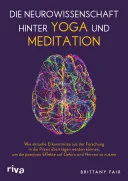
Brittany Fair’s "Die Neurowissenschaft hinter Yoga und Meditation" offers a compelling, if sometimes dense, examination of how ancient practices interface with modern brain science. Fair’s strength lies in her ability to translate complex neuroscientific findings into accessible language, detailing, for instance, the observed changes in the prefrontal cortex during mindful awareness. A potential limitation is the sheer volume of technical jargon, which may occasionally challenge readers less familiar with neuroscience. The discussion on how yoga influences the vagal tone, referencing studies from the early 2000s, is particularly illustrative of the book's empirical approach. Fair avoids hyperbole, presenting a balanced perspective on the measurable benefits of these disciplines. The work provides a grounded understanding of mind-body synergy, useful for both practitioners and academics.
📝 Description
83
Brittany Fair's 2024 book examines the neuroscience behind yoga and meditation.
Die Neurowissenschaft hinter Yoga und Meditation, published in 2024, investigates the scientific basis of contemplative practices. Brittany Fair connects neuroscience with the experiential benefits of yoga and meditation, detailing how these disciplines change brain structure and function. The book offers a data-driven perspective on the mind-body connection, moving beyond anecdotal observations.
This work is for yoga and meditation practitioners interested in the biological mechanisms of their experiences. It will also interest neuroscientists, psychologists, and researchers studying the brain effects of mindfulness. Students of consciousness and those at the intersection of spirituality and science will find valuable insights.
Interest in yoga and meditation has led to significant scientific research, especially in recent decades. Early mid-20th century studies, once met with skepticism, have given way to more rigorous investigations. Fair's book builds on this history, referencing neuroimaging techniques that provide new views into brain activity during these practices, shifting the field from philosophy to empirical study.
This book enters a long tradition of contemplative practices aimed at understanding and altering consciousness. For centuries, yogic and meditative traditions have posited that internal disciplines can lead to profound shifts in perception and well-being. While historically explored through philosophical and experiential frameworks, Fair's work applies modern scientific methods, particularly neuroscience, to validate and explain these ancient claims. It seeks to bridge the gap between subjective experience and objective measurement, grounding esoteric pursuits in empirical research.
💡 Why Read This Book?
• Understand the specific neurobiological changes, such as increased grey matter density in the hippocampus, that yoga and meditation can induce, as detailed in Fair's analysis of studies from the 2010s. • Gain a concrete grasp of how practices like breathwork affect the autonomic nervous system, moving beyond spiritual interpretations to scientific explanations of stress reduction. • Learn about the concept of neuroplasticity as it applies directly to contemplative practices, enabling you to intentionally cultivate desired mental states through consistent practice.
⭐ Reader Reviews
Honest opinions from readers who have explored this book.
❓ Frequently Asked Questions
What specific brain regions are affected by consistent yoga and meditation according to "Die Neurowissenschaft hinter Yoga und Meditation"?
The book details how consistent practice can lead to increased grey matter volume in areas like the prefrontal cortex, associated with executive functions, and the insula, linked to interoception and self-awareness, citing research from the 2010s.
How does meditation impact stress hormones, as explained in Brittany Fair's book?
Fair explains that meditation can help regulate the hypothalamic-pituitary-adrenal (HPA) axis, leading to reduced levels of cortisol, the primary stress hormone, by promoting a parasympathetic nervous system response.
What is neuroplasticity and how is it relevant to yoga?
Neuroplasticity is the brain's ability to reorganize itself by forming new neural connections. The book illustrates how yoga and meditation actively engage this process, allowing practitioners to reshape neural pathways related to attention and emotional regulation.
Does "Die Neurowissenschaft hinter Yoga und Meditation" discuss the effects of yoga on the nervous system?
Yes, Brittany Fair's work extensively covers the impact on the nervous system, particularly the shift from sympathetic (fight-or-flight) to parasympathetic (rest-and-digest) dominance, which is crucial for stress reduction and well-being.
When was "Die Neurowissenschaft hinter Yoga und Meditation" first published?
The book was first published on June 16, 2024, reflecting recent advancements in the scientific study of yoga and meditation.
Who is the author of "Die Neurowissenschaft hinter Yoga und Meditation"?
The author is Brittany Fair, a researcher who bridges the fields of neuroscience and contemplative practices, bringing a scientific perspective to ancient disciplines.
🔮 Key Themes & Symbolism
Neuroplasticity and Practice
The book details how consistent engagement with yoga and meditation practices actively reshapes the brain. Fair elaborates on neuroplasticity, explaining that the brain is not static but malleable, with specific neural pathways strengthened or weakened by experience. This section explores how mindfulness cultivates attention networks and how yogic postures can influence proprioception and interoception, directly linking physical and mental discipline to tangible neurological alterations observed in studies from the 2010s.
Stress Response Regulation
A significant focus is placed on how yoga and meditation modulate the body's stress response. Fair examines the autonomic nervous system, highlighting the shift from sympathetic dominance (fight-or-flight) to parasympathetic dominance (rest-and-digest) through these practices. The work explains the physiological mechanisms, including the impact on heart rate variability and cortisol levels, offering scientific validation for the calming effects reported by practitioners for centuries.
Emotional and Cognitive Enhancement
The book investigates the cognitive benefits, such as improved focus, attention span, and memory, often associated with regular meditation. Fair discusses how these practices enhance emotional regulation by strengthening the prefrontal cortex's control over the amygdala. This allows for more measured responses to stimuli and a greater capacity to manage challenging emotions, supported by neuroimaging studies showing altered connectivity.
Mind-Body Integration
Fair emphasizes the profound connection between the mind and body, moving beyond dualistic thinking. The work presents scientific evidence for how somatic experiences in yoga, like the awareness of breath and physical sensations, translate into mental states of presence and equanimity. This section underscores the holistic impact of these practices on overall well-being, grounding ancient wisdom in contemporary scientific understanding.
💬 Memorable Quotes
Direct passages from the work, attributed to the author.
“Yoga and meditation are not merely relaxation techniques; they are sophisticated methods for actively training the brain.”
— This statement reframes contemplative practices from passive stress relief to active cognitive and neurological training, emphasizing their potential for profound mental and physical transformation.
“Observed changes in the insula correlate with increased self-awareness and the capacity to process internal bodily states.”
— This highlights how the brain's ability to sense and interpret internal signals (interoception) is enhanced by these practices, leading to a deeper connection with one's physical and emotional self.
“The reduction in amygdala reactivity is a key indicator of improved emotional regulation.”
— This points to the scientific basis for why practitioners often experience less intense emotional responses to stressors, as the brain's threat-detection center becomes less reactive.
“Neuroplasticity offers a biological explanation for the lasting effects of contemplative disciplines.”
— This emphasizes that the mental and emotional shifts experienced through yoga and meditation are not temporary but can lead to permanent, structural changes in the brain.
“Understanding the neuroscience validates the empirical wisdom found in traditional yogic texts.”
— This suggests that modern scientific findings are converging with, and providing a biological basis for, the insights into mind and body that have been developed over centuries of contemplative practice.
🌙 Esoteric Significance
Tradition
While rooted in contemporary neuroscience, this work engages with the esoteric traditions of Hatha Yoga and classical Indian contemplative practices. It seeks to provide a scientific framework for phenomena historically described through yogic philosophy and Tantric traditions. It departs from purely metaphysical explanations by grounding these concepts in biological mechanisms, effectively translating ancient yogic insights into the language of modern science, aligning with a modern esoteric impulse to integrate spiritual knowledge with empirical discovery.
Symbolism
The book implicitly engages with symbols of transformation and interconnectedness. The 'brain' itself becomes a symbol of consciousness, its plasticity representing the potential for spiritual evolution. Concepts like 'prana' (life force) are explored through their neurophysiological correlates, such as the regulation of the autonomic nervous system. The interconnectedness of mind and body, a core tenet in many esoteric paths, is presented as a verifiable biological reality.
Modern Relevance
Fair's work is highly relevant to contemporary mindfulness-based interventions (MBIs) and the burgeoning field of contemplative neuroscience. Thinkers and practitioners in secular mindfulness, positive psychology, and even therapeutic applications of meditation draw heavily on the kind of neuroscientific evidence presented here. It informs modern approaches to mental health, well-being, and human potential, bridging the gap between ancient wisdom traditions and 21st-century scientific understanding.
👥 Who Should Read This Book
• Yoga and meditation practitioners seeking to deepen their understanding of the physiological and neurological effects of their practice, moving beyond experiential knowledge to scientific validation. • Neuroscientists and psychologists interested in the empirical study of consciousness, mindfulness, and the impact of contemplative disciplines on brain function and structure. • Students of comparative religion and philosophy of mind looking for contemporary scientific perspectives that intersect with traditional spiritual teachings on the mind-body connection.
📜 Historical Context
The surge in scientific inquiry into yoga and meditation, particularly from the late 20th century onwards, marked a significant shift from purely philosophical or spiritual discussions to empirical investigation. This period saw the rise of neuroimaging techniques like fMRI and EEG, allowing researchers to observe brain activity in real-time. Brittany Fair's 2024 publication builds upon this foundation, benefiting from decades of accumulated research that began to gain traction in academic circles around the 1970s and 1980s. Early pioneers like Richard Davidson began publishing influential studies in the 1990s, challenging skepticism and paving the way for widespread acceptance. Fair's work engages with this ongoing scientific dialogue, contrasting with earlier, more philosophical interpretations prevalent in the Theosophical movement of the late 19th and early 20th centuries, and directly addresses the scientific community's increasing interest, moving beyond the more anecdotal evidence.
📔 Journal Prompts
Brain region changes and intentional practice.
Autonomic nervous system shifts during breathwork.
The amygdala's reactivity and emotional regulation.
Neuroplasticity as a tool for mental cultivation.
Interoception and the insula's role in self-awareness.
🗂️ Glossary
Neuroplasticity
The brain's capacity to change and adapt by forming new neural connections throughout life, influenced by learning, experience, and practice.
Autonomic Nervous System (ANS)
The part of the nervous system controlling involuntary bodily functions, divided into the sympathetic (fight-or-flight) and parasympathetic (rest-and-digest) branches.
Prefrontal Cortex (PFC)
The area at the front of the brain responsible for executive functions, including planning, decision-making, working memory, and moderating social behavior.
Insula
A region of the cerebral cortex deep within the lateral sulcus, involved in interoception (sensing internal bodily states), emotion, and self-awareness.
Amygdala
An almond-shaped structure in the temporal lobe involved in processing emotions, particularly fear and threat detection.
Cortisol
A steroid hormone produced by the adrenal glands, often referred to as the 'stress hormone,' which plays a role in metabolism and the immune response.
Interoception
The sense of the physiological state of the body, involving the perception of sensations originating from within the body.