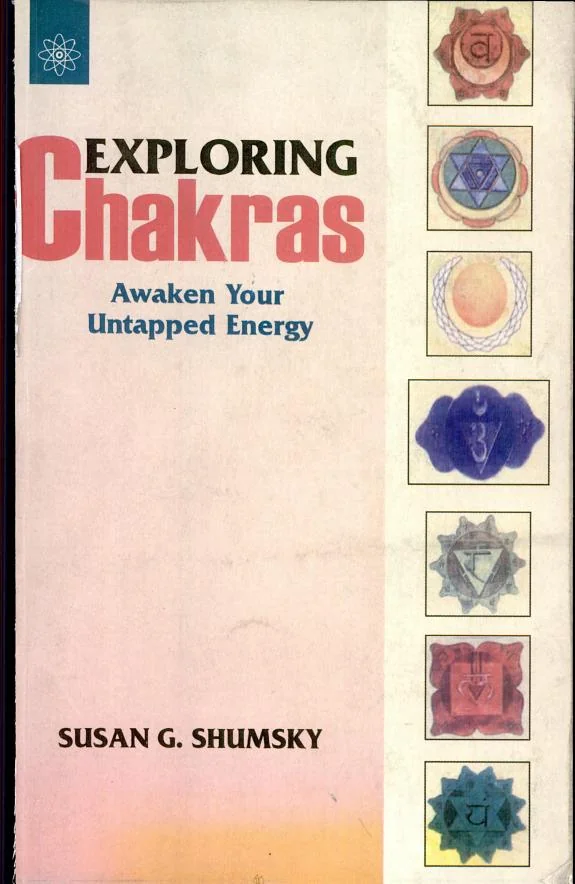
Exploring Chakras
 77
77

Exploring Chakras
Susan G. Shumsky's "Exploring Chakras" presents the chakra system with an admirable clarity that belies the topic's potential for obscurity. The strength lies in its systematic approach, breaking down the seven primary centers into digestible components, detailing their traditional associations with colors, sounds, and physical locations. A particularly effective section discusses the energetic blockages associated with the Manipura (solar plexus) chakra, linking it to issues of personal power and self-esteem. However, the book occasionally leans towards a prescriptive tone, particularly in its suggested remedies, which might feel overly simplified to seasoned practitioners. Despite this, it serves as a solid primer, offering accessible information for anyone beginning to map their energetic landscape. "Exploring Chakras" is a dependable introduction to the subtle body's architecture.
📝 Description
77
Susan G. Shumsky's Exploring Chakras details the body's seven primary energy centers.
This book serves as a guide to the body's subtle energy centers, explaining their locations, functions, and the effects of their balance or imbalance. Shumsky systematically breaks down each major chakra, giving readers a framework for understanding a concept central to many spiritual traditions. The work is structured for individuals seeking to understand and work with their own energy systems. It offers clear explanations for those new to chakra theory and aims to deepen the knowledge of practitioners. Anyone interested in holistic health, meditation, or yogic philosophy will find practical applications.
The concept of chakras has roots in ancient Indian traditions, specifically Hinduism and Tantra, with early mentions in Vedic literature. Western interpretations gained traction in the late 19th and early 20th centuries, influenced by Theosophy and figures like Helena Blavatsky. Shumsky's work builds upon this historical lineage. Central to the book is the exploration of the seven primary chakras, from the Root (Muladhara) to the Crown (Sahasrara). Each is discussed in relation to its associated colors, sounds (mantras), elements, and specific emotional or physical states.
The concept of chakras originates in ancient Indian traditions, particularly Hinduism and Tantra, with early references found in Vedic literature. Western understanding and application of these energy centers developed significantly in the late 19th and early 20th centuries. This period saw figures associated with Theosophy, such as Helena Blavatsky, introduce Indian spiritual ideas to a Western audience. Shumsky's work engages with this lineage, detailing the seven primary chakras and their associated qualities within a spiritual development framework.
💡 Why Read This Book?
• Gain a clear, systematic understanding of the seven primary chakras, including the Muladhara (Root Chakra), which is essential for grounding and security, a concept detailed from the book's early chapters. • Learn specific associations for each chakra, such as the color blue for the Vishuddha (Throat Chakra), enabling more focused energetic work and self-awareness. • Discover practical methods for identifying and addressing energetic imbalances, as explored through the book's examination of the Manipura (Solar Plexus) chakra's connection to personal power.
⭐ Reader Reviews
Honest opinions from readers who have explored this book.
❓ Frequently Asked Questions
What is the historical origin of the chakra system discussed in "Exploring Chakras"?
The chakra system has ancient roots in Indian spiritual traditions, notably Hinduism and Tantra, with early references appearing in Vedic texts predating the common era.
How does Susan G. Shumsky's "Exploring Chakras" approach the concept of energy centers?
The book systematically details the seven primary chakras, explaining their locations, associated colors, sounds, and influences on physical and emotional well-being.
Is "Exploring Chakras" suitable for beginners in esoteric studies?
Yes, the work is designed for clarity, making it accessible for those new to concepts like the subtle body and energy centers, offering foundational knowledge.
What are some key concepts covered in "Exploring Chakras"?
Key concepts include the distinct characteristics of each of the seven main chakras, such as the Manipura (solar plexus) and its relation to personal power, and the overall flow of energy.
When was "Exploring Chakras" first published?
The initial publication of "Exploring Chakras" by Susan G. Shumsky was in 2003.
Does the book offer practical exercises for chakra work?
The book provides guidance and insights that can be applied to practical exercises for balancing and understanding one's energetic system, particularly concerning the Manipura chakra.
🔮 Key Themes & Symbolism
The Seven Primary Chakras
The core of "Exploring Chakras" revolves around the seven main energy centers, each with unique vibrational frequencies and functions. From the grounding Muladhara at the base of the spine to the transcendent Sahasrara at the crown of the head, Shumsky maps their symbolic colors, sounds (mantras), and elemental associations. The book emphasizes that these are not static points but dynamic vortexes of energy integral to physical health, emotional equilibrium, and spiritual awareness, providing a structured map for the subtle anatomy.
Energy Balance and Imbalance
A significant theme is the impact of balanced versus imbalanced chakras on an individual's life. Shumsky explores how blockages or overactivity in specific centers, such as the Manipura (solar plexus) chakra impacting personal power and self-worth, can manifest as physical ailments or emotional distress. The work guides readers to recognize these signs and understand the energetic roots of discomfort, positioning the chakras as key indicators of overall vitality and well-being.
Chakras and Holistic Health
"Exploring Chakras" firmly places the chakra system within the context of holistic health. It posits that understanding and working with these subtle energy centers is crucial for a complete approach to wellness. The book connects the energetic state of the chakras to tangible aspects of life, suggesting that cultivating harmony within the energy body directly supports physical vitality and psychological stability, extending beyond conventional medical perspectives.
Practical Application of Chakra Knowledge
Beyond theoretical explanation, the book aims to empower readers with practical knowledge. It details how specific practices, meditations, and affirmations can be used to harmonize the chakras. By focusing on actionable insights, Shumsky encourages readers to actively engage with their energy systems, fostering self-discovery and personal growth through direct experience with the chakra framework.
💬 Memorable Quotes
Direct passages from the work, attributed to the author.
“The seven primary chakras are the main energy centers of the body.”
— This statement establishes the foundational premise of the book, defining the scope of the discussion and highlighting the critical role these energy centers play in human physiology and consciousness.
“Each chakra has unique colors, sounds, and elemental associations.”
— This highlights the symbolic language of the chakras, suggesting that understanding these specific correspondences offers a key to deciphering their energetic qualities and functions.
“Imbalances in chakras can manifest as physical or emotional issues.”
— This points to the practical implications of chakra theory, linking the subtle energy system directly to tangible experiences of health and well-being, or lack thereof.
“The Manipura chakra relates to personal power and self-esteem.”
— This offers a specific example of a chakra's influence, illustrating how the energy system is tied to psychological states and personal agency.
“Harmonizing the chakras promotes overall vitality.”
— This expresses the therapeutic goal of chakra work, presenting the alignment of these energy centers as a pathway to a more robust and vibrant existence.
🌙 Esoteric Significance
Tradition
The work draws heavily from the Tantric and yogic traditions of India, which conceptualized chakras as part of a subtle energetic anatomy and consciousness framework. While rooted in these ancient lineages, "Exploring Chakras" adapts the material for contemporary Western esoteric practitioners, often emphasizing the psychological and physical correlates of these energy centers more than the complex philosophical or ritualistic aspects found in classical texts.
Symbolism
Key symbols include the lotus flower, often used to depict the chakras with varying numbers of petals corresponding to specific energy centers. Colors are also paramount, with each chakra assigned a distinct hue (e.g., red for Muladhara, blue for Vishuddha), serving as a visual anchor for their energetic qualities. Mantras, or specific sound vibrations like 'LAM' for Muladhara, represent the sonic aspect of these energy centers, vital for their activation and balancing.
Modern Relevance
Contemporary holistic health practitioners, yoga instructors, and mindfulness coaches frequently incorporate chakra theory into their teachings and personal practices. Thinkers and authors within the broader wellness and self-help movements, though not always explicitly esoteric, often reference chakra concepts when discussing energy, emotional well-being, and the mind-body connection, demonstrating the enduring influence of this framework.
👥 Who Should Read This Book
• Individuals beginning their exploration of subtle energy systems: Provides foundational knowledge on the seven primary chakras, their functions, and common associations, making complex ideas accessible. • Yoga practitioners seeking deeper understanding: Offers context for the energetic principles underlying asanas and pranayama, particularly concerning the Manipura and other core chakras. • Those interested in holistic approaches to wellness: Presents the chakra system as integral to mind-body health, offering insights into how energy imbalances may manifest physically and emotionally.
📜 Historical Context
Published in 2003, Susan G. Shumsky's "Exploring Chakras" entered a landscape where interest in Eastern spiritual practices had significantly permeated Western esoteric thought. The concept of chakras, originating in ancient Indian Tantric traditions, was popularized in the West through the Theosophical Society, particularly by Helena Blavatsky in the late 19th century. By the early 2000s, chakra work had become a common element within New Age spirituality, yoga studios, and alternative healing modalities. Shumsky's work arrives in an era where concepts like Kundalini Yoga, popularized by Yogi Bhajan, and diverse interpretations of yogic philosophy were widely accessible, often diverging from their original classical contexts. This period saw a surge in accessible literature on energy systems, contrasting with earlier, more academic or guarded introductions to such topics. "Exploring Chakras" contributes to this ongoing discourse, offering a structured, accessible guide that synthesizes traditional ideas for a modern audience seeking practical application.
📔 Journal Prompts
The energetic qualities associated with the Manipura chakra.
Reflecting on the connection between the Vishuddha chakra and self-expression.
How the concept of the Muladhara chakra informs your sense of security.
Exploring the symbolic meaning of the colors assigned to each primary chakra.
The relationship between balanced energy centers and overall vitality.
🗂️ Glossary
Chakra
Literally 'wheel' in Sanskrit, chakras are conceptualized as energy centers within the subtle body, believed to regulate the flow of life force (prana) and influence physical, emotional, and spiritual states.
Muladhara
The first chakra, located at the base of the spine, associated with grounding, security, survival, and the element of earth. Its color is typically red.
Manipura
The third chakra, located in the solar plexus region, associated with personal power, self-esteem, willpower, and metabolism. Its color is typically yellow.
Vishuddha
The fifth chakra, located in the throat area, associated with communication, self-expression, truth, and creativity. Its color is typically blue.
Sahasrara
The seventh chakra, located at the crown of the head, associated with spiritual connection, consciousness, and enlightenment. Its color is typically violet or white.
Prana
The vital life force or energy that flows through the subtle body, believed to be regulated by the chakras. It is often associated with breath.
Mantra
A sacred sound, word, or phrase, often chanted, used in meditation and spiritual practices to focus the mind and invoke specific energies or states of consciousness.
🔮 Readers Also Liked
Browse all →









More by Susan G. Shumsky
All books →



More Free Spiritual Development Books
View all →