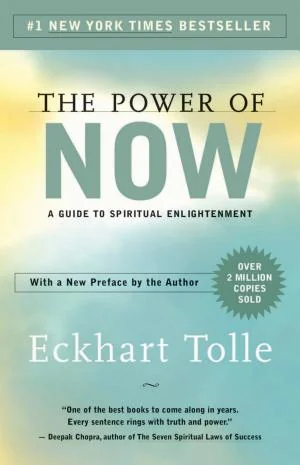
The Power of Now
 72
72

The Power of Now
Eckhart Tolle's "The Power of Now" offers a stark, often challenging, exposition on presence. Its strength lies in its relentless focus on the immediate moment as the only sanctuary from mental suffering. The concept of the "pain-body," while esoteric, provides a tangible framework for understanding how past emotional trauma perpetuates itself. However, the book's insistence on absolute disidentification from the thinking mind can feel overly prescriptive and potentially dismissive of the mind's necessary functions. A passage discussing the "formless" self, which Tolle posits as our true nature beyond all mental constructs, is particularly illustrative of this absolute stance. While potent, this unwavering focus risks alienating readers who find value in reasoned thought. Ultimately, "The Power of Now" is a powerful, albeit uncompromising, manual for achieving present-moment awareness.
📝 Description
72
Eckhart Tolle's 2016 book argues that suffering arises from identification with the mind.
Eckhart Tolle's "The Power of Now" presents a guide to achieving presence, asserting that human suffering largely stems from dwelling on the past or future. The book suggests that by focusing on the present moment, individuals can find peace and overcome mental distress. It is structured as direct instruction rather than a narrative.
The work is intended for those experiencing anxiety or dissatisfaction, often due to rumination, who seek a practical, non-denominational path to spiritual growth. It appeals to readers interested in mindfulness, consciousness, or alternative well-being practices, particularly those feeling overwhelmed by their thoughts.
Tolle's core philosophy centers on the "Now" as the sole reality. The book identifies the "pain-body" as a psychic energy, a collection of past emotional pain that can be reactivated. It also discusses the ego, identifying it as a false sense of self constructed from thought and memory, which creates a distorted perception of reality.
Published in 2016, "The Power of Now" reflects a Western interest in Eastern spiritual philosophies like Advaita Vedanta and Buddhist concepts. Its direct approach to achieving presence and understanding the ego distinguishes it within esoteric circles. The book's focus on "the Now" as the ultimate reality and its accessible language contributed to its reach among those exploring contemplative practices outside traditional religious structures.
💡 Why Read This Book?
• Learn to identify and detach from the "pain-body," a concept introduced by Tolle to explain how past emotional wounds actively seek to replicate themselves, offering a unique framework for emotional healing. • Understand the distinction between "being" and the "egoic mind," a core tenet of the book that helps differentiate your true self from the mental constructs that create suffering, specifically referencing Tolle's "inner body" awareness. • Gain practical techniques for accessing "the Now," the book's central teaching, by engaging with internal energy and disidentifying from thought, providing a direct path to psychological peace beyond conventional self-help.
⭐ Reader Reviews
Honest opinions from readers who have explored this book.
❓ Frequently Asked Questions
What is the core message of Eckhart Tolle's "The Power of Now"?
The core message is that true peace and enlightenment are found by living fully in the present moment, "the Now." Tolle argues that most suffering arises from dwelling on the past or worrying about the future, and by disidentifying from the mind, one can access a deeper state of consciousness.
Who is Eckhart Tolle?
Eckhart Tolle is a spiritual teacher and author, best known for "The Power of Now." He leads workshops and retreats internationally, focusing on consciousness and spiritual awakening, with his teachings drawing from various spiritual traditions.
When was "The Power of Now" first published?
"The Power of Now" was first published in 2016, though its core teachings have been disseminated through Tolle's work for many years prior. The 2016 date often refers to a specific edition or wider release.
What is the 'pain-body' in "The Power of Now"?
The 'pain-body' is a concept introduced by Tolle to describe an accumulation of past emotional pain that resides within us. It is an energy field that feeds on negative emotions and thoughts, seeking to create more pain to sustain itself.
Is "The Power of Now" a religious book?
While "The Power of Now" draws on concepts found in many spiritual and religious traditions, it is not affiliated with any specific religion. Tolle presents his teachings as a universal spiritual message applicable to people of all backgrounds.
How does one "disidentify" from the mind according to the book?
Disidentification involves observing your thoughts and emotions without judgment or attachment, recognizing that you are the conscious awareness behind them, not the thoughts themselves. This is achieved through focused attention on the present moment and inner body awareness.
🔮 Key Themes & Symbolism
Presence as Sole Reality
The work posits that only the present moment, "the Now," is truly real and accessible. Past and future exist only as mental constructs. By anchoring consciousness in the present, Tolle argues, one transcends the illusion of time that fuels psychological suffering. This concept aligns with certain non-dualistic philosophies and meditative practices that emphasize direct experience over conceptual thought. The book guides readers to access this state through focused attention and stillness, moving beyond the incessant narrative of the mind.
The Pain-Body
Tolle introduces the "pain-body" as an "energy field" of past emotional hurt that can inhabit individuals. This psychic entity feeds on negative emotions, seeking out situations that will trigger more pain to sustain itself. Understanding the pain-body is presented as crucial for breaking its cycle. It represents the accumulated trauma and sorrow that, when activated, can overwhelm one's present consciousness, perpetuating suffering and hindering spiritual progress. Its recognition is key to its dissolution.
Ego and True Self
The book differentiates between the "ego," a false sense of self constructed from identification with thoughts, possessions, and external validation, and the "True Self," which is pure consciousness or Being. Tolle contends that the ego is the root of most human conflict and dissatisfaction. Achieving spiritual awakening involves seeing through the ego's illusions and realizing one's identity with the formless, eternal consciousness. This involves a radical shift in perspective from identification with the mind to awareness of existence itself.
Inner Body Awareness
As a practical tool for accessing the Now, Tolle advocates for "inner body awareness." This involves sensing the aliveness within one's physical body, moving attention away from the mind's conceptualizations. By feeling the energy field that permeates the body, readers can anchor themselves in the present and bypass the turbulent mental landscape. This practice is presented as a gateway to the state of presence and a means of connecting with the deeper, formless dimension of existence.
💬 Memorable Quotes
Direct passages from the work, attributed to the author.
“The pain-body wants to be recognized, accepted, and surrendered.”
— This highlights the process of dealing with emotional trauma. Tolle suggests that acknowledging the presence of the 'pain-body' without resistance is the first step towards its dissolution, rather than fighting or suppressing it.
“You are not your mind.”
— A foundational statement for disidentification. It asserts that your true identity is not the incessant stream of thoughts but the conscious awareness that observes them, urging a separation from mental identification.
“The moment you accept what you are doing, you are doing it perfectly.”
— This emphasizes acceptance of the present action. When fully present and accepting of the task at hand, one performs it with optimal engagement, free from the mental interference of judgment or future concern.
“Enlightenment is the inner state of wholeness that comes from the recognition of your being.”
— This defines enlightenment not as an achievement but as a state of internal completeness. It is realized through understanding and connecting with one's essential nature, beyond the limitations of the ego or mind.
💡 Key Ideas
Editorial paraphrase of the work's core concepts — not direct quotes.
The only way to live in the present is to accept that the present is all you have.
This quote expresses Tolle's core message: the present moment is the only point of access to reality. By accepting its primacy, we release the mental grip of past regrets and future anxieties, finding peace in what is.
🌙 Esoteric Significance
Tradition
Tolle's work draws heavily from non-dual traditions, particularly Advaita Vedanta from India, and echoes principles found in Zen Buddhism and mystical Christianity. It departs from many esoteric lineages by deliberately stripping away specific dogma, ritual, or complex cosmologies. Instead, it focuses on a universal, experiential understanding of consciousness and presence, making it accessible outside of any particular established esoteric school. It functions as a modern, secularized transmission of ancient wisdom concerning the nature of reality and the self.
Symbolism
The primary "symbol" is "the Now" itself, representing absolute presence and the gateway to spiritual realization. The "pain-body" can be seen as a symbol for the collective unconscious trauma or the shadow self that must be integrated. The "inner body" acts as a symbol for the divine spark or life force within, a tangible connection to the formless dimension that transcends physical and mental identification.
Modern Relevance
The book's influence is evident in contemporary mindfulness movements, secularized meditation practices, and various therapeutic modalities that emphasize present-moment awareness and cognitive defusion. Modern thinkers and practitioners in fields ranging from positive psychology to neuroscience of consciousness often reference Tolle's core ideas about the mind's role in suffering. His work continues to inspire spiritual seekers and those exploring consciousness beyond traditional religious frameworks.
👥 Who Should Read This Book
• Individuals struggling with anxiety, depression, or chronic dissatisfaction seeking a practical, non-denominational path to inner peace. • Students of comparative spirituality interested in the practical application of non-dualistic concepts like presence and ego-dissolution. • Seekers of personal transformation looking for tools to disidentify from destructive thought patterns and reconnect with a deeper sense of self.
📜 Historical Context
Emerging in 2016, "The Power of Now" found fertile ground in a global spiritual landscape increasingly receptive to mindfulness and Eastern contemplative traditions. While the book’s message echoes ancient philosophies like Advaita Vedanta, its accessible prose and direct focus on "the Now" distinguished it from more academic or tradition-bound texts. It arrived amidst a burgeoning interest in non-dualistic thought and consciousness studies, popularized by figures like Eckhart Tolle himself and amplified by endorsements from mainstream figures such as Oprah Winfrey. This period saw a growing skepticism towards traditional religious dogma and a search for experiential spirituality. Tolle's work offered a secularized, practical approach, sidestepping theological debate and emphasizing immediate psychological relief through presence, making it a significant counterpoint to the more intellectual or ritualistic spiritual paths prevalent at the time.
📔 Journal Prompts
The "pain-body's" tendency to seek out suffering.
Disidentifying from the "ego" versus embracing "Being."
The feeling of the "inner body" when fully present.
Accepting the present moment without resistance.
The nature of time as perceived by the "ego."
🗂️ Glossary
The Now
The present moment, regarded as the only reality and the gateway to spiritual awakening. It is the point of access to consciousness itself, free from the illusions of past regret and future anxiety.
Pain-Body
An energy field of past accumulated emotional pain that resides within individuals. It feeds on negative emotions and thoughts, seeking to create more pain to sustain itself and perpetuate suffering.
Ego
The false sense of self constructed through identification with the mind, its thoughts, possessions, and external validation. It is seen as the root of human conflict and dissatisfaction.
Being
The formless, eternal consciousness that is one's true identity, distinct from the ego or the thinking mind. It is the state of pure awareness and presence.
Inner Body
The subtle energy field that permeates and animates the physical body. Sensing this inner aliveness is presented as a key practice for anchoring oneself in the present moment.
Disidentification
The process of observing thoughts, emotions, and mental states without attachment or judgment, recognizing that one is the conscious awareness behind them, not the mental content itself.
Form
Refers to the manifested world of objects, thoughts, and experiences that are transient and impermanent, as opposed to the formless dimension of Being.
🔮 Readers Also Liked
Browse all →









More by Eckhart Tolle
All books →




More Free Spiritual Development Books
View all →