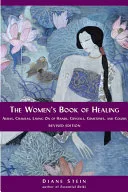
The Women's Book of Healing
 75
75

The Women's Book of Healing
Diane Stein’s *The Women's Book of Healing* offers a compelling argument for the inherent healing abilities of women, drawing a direct line from ancient "wisewomen" to contemporary seekers. The book’s strength lies in its accessible introduction to energy work concepts like chakras and auras, presented within a framework of divine feminine spirituality. Stein’s re-framing of healing as an integrated mind-body-spirit practice is particularly valuable. However, the work sometimes leans heavily on generalized historical claims about "modern medicine" suppressing traditions, which could benefit from more nuanced engagement with the complexities of both historical and contemporary medical practices. A passage discussing the energetic properties of colors within the chakra system is particularly evocative. Ultimately, it serves as a foundational text for those beginning to explore the intersection of spirituality and personal healing.
📝 Description
75
Diane Stein's 2011 book asserts women's inherent healing capacity, a tradition obscured by modern medicine.
The Women's Book of Healing, published in 2011, argues that women possess a natural ability for healing, a practice often overlooked by contemporary medical systems. Stein posits that genuine well-being integrates physical, emotional, mental, and spiritual aspects, connecting them to an understanding of the divine feminine. The book aims to reintroduce older healing methods, stressing self-healing and empowering women as their own healers.
This work is for women who wish to connect with ancestral healing ways and reclaim their inner strength. It speaks to those who feel distant from conventional medicine or are drawn to spiritual and energetic health approaches. Readers interested in the Goddess archetype, energy work like aura and chakra manipulation, and using meditation and visualization for personal growth will find this book valuable. Stein's book arises from a renewed interest in goddess spirituality and earth-based traditions from the late 20th century, often linked with feminist spiritual movements and the New Age.
It directly questions the historical dominance of patriarchal views in healing, which frequently marginalized or condemned female healers and midwives. The text endeavors to recover and validate these suppressed lineages, presenting them as crucial to a holistic view of health and spirituality that predates and, in Stein's view, surpasses purely materialistic medical models.
This book is situated within the broader resurgence of goddess spirituality and earth-based traditions that gained traction in the late 20th century, often associated with feminist spiritual movements and the New Age phenomenon. It challenges patriarchal narratives in healing history, aiming to recover and validate suppressed knowledge from female healers, wisewomen, and midwives. The work connects these lineages to a holistic understanding of health that integrates physical, emotional, mental, and spiritual dimensions through the lens of feminine divine energy.
💡 Why Read This Book?
• You will learn to identify and work with your own energy centers, specifically the chakras, as outlined in Chapter 3, "Chakras and Energy." This offers a practical, internal method for assessing and influencing your well-being. • You will gain an understanding of the "wisewoman" tradition and its historical suppression, as discussed throughout the text, allowing you to connect with a lineage of feminine healing knowledge often overlooked. • You will be introduced to the practice of creative visualization as a tool for manifesting health, a technique detailed in Chapter 5, enabling you to actively participate in your healing process.
⭐ Reader Reviews
Honest opinions from readers who have explored this book.
❓ Frequently Asked Questions
What is the primary focus of Diane Stein's "The Women's Book of Healing"?
The book's primary focus is on re-establishing women's inherent healing capacities by integrating ancient practices with spiritual understanding, emphasizing the connection between body, emotions, mind, and spirit.
When was "The Women's Book of Healing" first published?
Diane Stein's "The Women's Book of Healing" was first published on March 2, 2011.
What ancient healing skills does the book explore?
The book explores ancient skills such as aura and chakra work, creative visualization, meditation, and laying on of hands, linking them to the concept of the Goddess.
How does the book relate to the concept of the Goddess?
It connects the practice of healing and understanding the body, emotions, mind, and spirit to an active connection with the divine feminine, referred to as the Goddess.
Who is Diane Stein?
Diane Stein is the author of "The Women's Book of Healing," known for her work exploring women's spirituality, healing traditions, and the divine feminine.
What historical role does the book assign to women in healing?
The book posits that women have historically performed vital curative roles as mothers, midwives, caregivers, and "wisewomen," a tradition it argues has been suppressed by modern medicine.
🔮 Key Themes & Symbolism
The Goddess as Healer
This theme posits the "Goddess" not merely as a deity but as an intrinsic feminine principle of creation and healing. Stein argues that by connecting with this energy, women can access profound self-healing capabilities. The book integrates this concept with practices like meditation and visualization, suggesting that embodying this divine feminine energy is key to understanding the interconnectedness of body, emotions, mind, and spirit. It reframes healing as a spiritual act aligned with natural cycles and feminine power.
Reclaiming the Wisewoman Tradition
The book champions the "wisewoman" archetype, representing female healers who historically served their communities using intuitive knowledge and natural methods. Stein contrasts this with the often impersonal and disempowering nature of modern medicine, advocating for the recovery of these suppressed practices. This theme involves understanding women's historical roles as midwives and caregivers, and re-evaluating their contributions to health and well-being outside of patriarchal medical structures.
Holistic Energy Work
Central to the book is the exploration of energetic systems within the human body, particularly auras and chakras. Stein explains these as vital components of an individual's overall health, influencing physical, emotional, and spiritual states. The book provides practical guidance on how to perceive, balance, and utilize these energies for therapeutic purposes, promoting a view of healing that extends beyond the purely physical to encompass the energetic and spiritual dimensions.
Mind-Body-Spirit Integration
A core tenet is the interconnectedness of the physical body, emotional states, mental processes, and spiritual essence. The Women's Book of Healing argues that true healing arises from addressing all these facets simultaneously. Practices like creative visualization and meditation are presented as tools to achieve this integration, fostering a state of balance and wholeness that allows individuals to actively participate in their own wellness journey.
💬 Memorable Quotes
Direct passages from the work, attributed to the author.
“Women are naturally healers.”
— This foundational statement sets the premise for the entire book, asserting an inherent, biological, and spiritual capacity for healing within women that has been historically undervalued or suppressed.
“The body is more than what is seen.”
— This phrase captures the book's holistic approach, emphasizing the importance of energetic and spiritual dimensions alongside the physical in understanding health and facilitating healing.
“Through body, emotions, mind, and spirit, we can connect with the Goddess.”
— This highlights the integrated nature of human experience and connects personal well-being directly to a spiritual connection with the divine feminine, positioning healing as a sacred path.
“By relearning and using ancient skills like aura and chakra work, creative visualization, meditation, laying on of ha”
— This points to specific, actionable techniques discussed in the book, suggesting that ancient methods are not lost but can be revived and applied for modern healing and empowerment.
“Modern medicine has suppressed this important tradition.”
— This is a critical assertion regarding the historical marginalization of women's healing practices, framing the book's purpose as a reclamation and reassertion of these suppressed arts.
🌙 Esoteric Significance
Tradition
This work draws heavily from what can be broadly termed "Goddess spirituality" and "earth-based" or "folk" healing traditions. It aligns with neo-pagan and feminist spiritual movements that seek to revive pre-Christian and marginalized feminine divine archetypes. While not strictly Hermetic or Kabbalistic, it shares with these traditions an emphasis on subtle energies, symbolic understanding, and the interconnectedness of all things, but centers the divine feminine principle as the primary source of healing power.
Symbolism
Key symbols include the "Goddess," representing the divine feminine in its creative, nurturing, and healing aspects, and the "wisewoman," embodying intuitive knowledge and community-based healing. The book also uses symbols inherent in the energy systems it discusses: "auras" as energetic fields surrounding the body, and "chakras" as focal points of vital energy, each associated with specific colors, emotions, and functions, representing a map of the subtle body.
Modern Relevance
Contemporary practitioners of holistic health, energy medicine, and feminist spirituality find resonance in Stein's work. It informs modern approaches to mindfulness, energy psychology, and shamanic practices that emphasize inner wisdom and connection to nature. Thinkers and practitioners in fields like ecofeminism and trauma-informed care, who seek to integrate spiritual and somatic healing, often draw upon the principles outlined in books like this one.
👥 Who Should Read This Book
• Women seeking to reconnect with their innate healing abilities and reclaim ancestral knowledge, particularly those interested in spiritual and energetic approaches to wellness. • Students of esoteric traditions and comparative religion who wish to understand the historical and spiritual roles of women as healers and the concept of the divine feminine. • Individuals exploring holistic health practices, including energy work, meditation, and visualization, who are looking for a grounded, accessible introduction to these techniques within a spiritual framework.
📜 Historical Context
Published in 2011, *The Women's Book of Healing* arrived during a period of sustained interest in neo-paganism, goddess spirituality, and alternative healing modalities, movements that gained significant traction from the 1970s onward. Diane Stein's work directly engages with and critiques the historical trajectory of Western medicine, which, since the rise of scientific rationalism in the 17th and 18th centuries, often marginalized or pathologized traditional female healing roles. The book can be seen as part of a broader late 20th and early 21st-century effort within feminist spirituality and ecofeminism to recover and revalidate suppressed women's histories and knowledge systems. It implicitly stands in contrast to the reductionist materialism often associated with biomedical science, advocating instead for a more holistic, energetic, and spiritual understanding of health. While figures like Carl Jung explored archetypes, Stein focuses specifically on the archetype of the Goddess and the practical application of feminine-centric healing.
📔 Journal Prompts
Reflect on your personal connection to the "Goddess" archetype and its manifestation in your life.
Map the energetic flow within your own "chakras" and note any perceived imbalances.
Consider the "wisewoman" tradition's influence on your understanding of historical female healers.
Describe a personal experience where your "body, emotions, mind, and spirit" felt interconnected.
How can "creative visualization" be applied to a current health challenge you are facing?
🗂️ Glossary
Goddess
In the context of this book, the Goddess represents the divine feminine principle, an immanent force of creation, nurturing, and healing that women can connect with for empowerment and wellness.
Wisewoman
An archetype of a female healer, often operating within a community, who possesses intuitive knowledge of herbs, energetic practices, and natural healing methods, representing a suppressed historical tradition.
Aura
The subtle energy field or 'halo' that surrounds a living being, believed to reflect physical, emotional, and spiritual states. It can be perceived and worked with for diagnostic and healing purposes.
Chakra
Energy centers within the subtle body, typically depicted as wheels of light, that govern various physical, emotional, and spiritual functions. Balancing these is key to holistic health.
Creative Visualization
A mental technique involving the focused use of imagination to create desired outcomes, particularly in healing, by picturing health, vitality, and wholeness.
Laying on of Hands
A healing practice involving the gentle placement of hands on or over a person's body to channel energy for the purpose of promoting healing and well-being.
Body, Emotions, Mind, and Spirit
These represent the four interconnected dimensions of human experience that, according to the book, must be addressed holistically for true healing and self-realization.