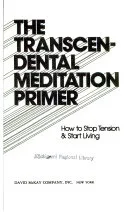
The Transcendental Meditation Primer
 80
80

The Transcendental Meditation Primer
Patricia Drake Hemingway’s *The Transcendental Meditation Primer*, from 1975, attempts to distill the essence of TM into an approachable format. The strength of this work lies in its clear, unadorned prose, which effectively presents the core mechanics of mantra-based meditation without overwhelming the novice. Hemingway avoids the New Age jargon that would later saturate the market, focusing instead on the practical application and immediate effects of the technique. However, the book’s limitation is its brevity; while it introduces the concepts, it offers minimal depth into the theoretical underpinnings or the broader philosophical context that informed TM’s rise in the 1970s. The section on the specific benefits of transcending, while clear, could have been expanded to better address potential skepticisms or offer more varied anecdotal evidence. Ultimately, it serves as a competent, if somewhat superficial, introduction to a practice that continues to evolve.
📝 Description
80
Patricia Drake Hemingway published 'The Transcendental Meditation Primer' in 1975 to explain TM's core technique.
Published in 1975, Patricia Drake Hemingway's 'The Transcendental Meditation Primer' introduces the practice of Transcendental Meditation (TM). The book aims to clarify TM's mechanics and its potential benefits for mental clarity and stress reduction. Hemingway breaks the technique into understandable parts, making it a good starting point for people new to meditation or those wanting a structured way to achieve mental quiet.
This guide is for anyone curious about TM, especially those who have heard of it but do not understand its specifics. It is suitable for people looking for practical ways to handle stress, improve focus, and find inner peace without getting lost in deep philosophy. Readers interested in self-help, mental well-being, and using meditation in daily life will find its clear format helpful. It also suits those who prefer a simple, direct introduction to a spiritual or psychological practice.
Released in 1975, this primer appeared during a time of growing Western interest in Eastern spiritual practices like meditation. Transcendental Meditation, championed by Maharishi Mahesh Yogi, gained significant traction in the 1970s. This period saw a cultural shift towards alternative philosophies and psychologies. Hemingway's book fits this trend, offering an accessible entry point into a practice that was becoming part of the broader counterculture and self-improvement movements.
💡 Why Read This Book?
• Understand the core mechanics of mantra-based meditation as presented in the 1975 primer, learning how the technique aims for mental quietude beyond concentration. • Grasp the specific physiological and psychological benefits associated with achieving the 'transcending' state, as described by Patricia Drake Hemingway in the text. • Appreciate the historical context of TM's emergence in the 1970s, recognizing its place within a broader cultural shift towards Eastern spiritual practices.
⭐ Reader Reviews
Honest opinions from readers who have explored this book.
❓ Frequently Asked Questions
When was 'The Transcendental Meditation Primer' first published?
The book was first published in 1975, positioning it within the period of widespread Western interest in Eastern spiritual and meditative practices.
What is the primary technique explained in 'The Transcendental Meditation Primer'?
The primer primarily explains Transcendental Meditation (TM), a mantra-based technique involving silent repetition to achieve a state of deep rest and mental quietude.
Who is the author of 'The Transcendental Meditation Primer'?
The author is Patricia Drake Hemingway, who penned this introductory guide to Transcendental Meditation.
What are some of the purported benefits of TM discussed in the book?
The book discusses benefits such as stress reduction, enhanced mental clarity, improved focus, and a greater sense of inner peace, all stemming from the practice of transcending.
Is this book suitable for experienced meditators?
While it offers a clear foundational understanding, 'The Transcendental Meditation Primer' is best suited for beginners or those curious about TM, as it focuses on introductory concepts rather than advanced techniques.
What historical period does the book reflect?
Published in 1975, the book reflects the 1970s era, a time when Eastern spiritual practices and meditation techniques gained significant traction in Western culture.
🔮 Key Themes & Symbolism
The Practice of Transcending
The central theme is the process of 'transcending,' described as a natural mental activity where the mind settles to a state of profound rest. The book clarifies that this is distinct from concentration or contemplation, emphasizing its effortlessness. It posits that by allowing the mind to naturally settle, individuals can access a state of deep relaxation and clarity, leading to reduced stress and improved mental functioning. The primer guides readers on how to facilitate this natural settling through the silent use of a mantra.
Mental Clarity and Stress Reduction
A significant focus is placed on the practical outcomes of practicing TM, particularly in combating stress and enhancing cognitive abilities. The work suggests that the deep rest achieved through transcending provides the mind and body with a unique opportunity to recuperate from accumulated fatigue and stress. This recuperation is linked to improved concentration, better problem-solving skills, and a general increase in mental alertness and efficiency. The primer frames TM as a tool for optimizing mental performance in everyday life.
Mantra as a Vehicle
The book explains the role of the mantra as a crucial element in facilitating the TM technique. It is presented not as an object of focus or a word to be analyzed, but as a vehicle for the mind to transcend thought. The silent, effortless repetition of a specific sound or word allows the mind to naturally withdraw from external stimuli and active thinking. The primer emphasizes the personal nature of the mantra, suggesting it is chosen for its unique vibrational quality and its ability to induce the desired state of inner quietude.
Simplicity and Accessibility
A core tenet presented is the inherent simplicity and accessibility of Transcendental Meditation. Unlike other meditative practices that may require years of dedicated effort or complex philosophical understanding, TM is presented as a technique that anyone can learn and practice with ease. The primer underscores that no special beliefs, lifestyle changes, or strenuous mental effort are necessary, making it a practical option for busy individuals seeking a straightforward path to inner peace and stress relief.
💬 Memorable Quotes
Direct passages from the work, attributed to the author.
“The mind naturally settles down when allowed to.”
— This phrase expresses the core philosophy of TM as presented in the primer: that achieving a state of deep rest is not a forced effort but a natural process facilitated by the technique.
“A mantra is a vehicle for the mind to transcend thought.”
— This highlights the functional role of the mantra in TM, describing it as a tool that guides the consciousness beyond the usual stream of active thinking towards a state of stillness.
“Transcendence provides rest deeper than sleep.”
— This interpretation emphasizes the unique restorative quality of the TM state, suggesting it offers a level of rejuvenation for the mind and body that surpasses even ordinary sleep.
“Stress dissolves when the mind is at rest.”
— This articulates a key benefit of TM, linking the state of mental quietude directly to the alleviation of psychological tension and accumulated stress.
💡 Key Ideas
Editorial paraphrase of the work's core concepts — not direct quotes.
The technique is simple and effortless.
This quote underscores the primer's focus on the ease of learning and practicing TM, distinguishing it from more demanding contemplative or concentration-based meditation methods.
🌙 Esoteric Significance
Tradition
While Transcendental Meditation, as presented in this primer, often emphasizes its scientific and secular aspects, its roots lie within the Vedic tradition of India, specifically in the Upanishads and Tantric lineages. It draws upon concepts of consciousness and mantra that are ancient within Hindu philosophy. However, the primer's approach is to secularize and simplify these elements for a Western audience, making it accessible without requiring adherence to the broader Hindu cosmology or theological doctrines. It represents a modern adaptation, filtering ancient wisdom through a lens of psychological benefit and stress management.
Symbolism
The primary symbolic element is the mantra itself, which, within its Vedic context, is considered a sacred sound or vibration imbued with specific energetic qualities. In the primer, its symbolic function is reduced to being a 'vehicle' for transcending thought. Beyond the mantra, the concept of 'transcending' can be seen as symbolic of a return to an original, pure state of consciousness, a common theme in many esoteric traditions that posit an original unity or spiritual source from which individuals have become separated.
Modern Relevance
The work's legacy is evident in contemporary mindfulness and meditation movements, many of which, while not directly TM, echo its emphasis on accessible techniques for stress reduction and mental well-being. Thinkers and practitioners in fields ranging from positive psychology to corporate wellness programs often utilize principles derived from or paralleling TM's core ideas about effortless awareness and mental restoration. The secular, scientifically framed approach pioneered by TM continues to influence how meditation is taught and perceived globally.
👥 Who Should Read This Book
• Individuals new to meditation seeking a straightforward, non-dogmatic introduction to a recognized technique. • Those experiencing stress or seeking improved focus who are interested in practical, accessible mental wellness tools. • Students of 20th-century spiritual movements interested in understanding the popularization of Eastern practices in the West during the 1970s.
📜 Historical Context
Published in 1975, *The Transcendental Meditation Primer* emerged during a period of intense global interest in Eastern spirituality and consciousness exploration. The 1970s were a fertile ground for such practices, with Transcendental Meditation itself experiencing a significant surge in popularity, largely propelled by Maharishi Mahesh Yogi and endorsements from cultural figures. This era saw a cultural shift away from traditional Western religious and philosophical frameworks, with many seeking alternative paths to meaning and well-being. TM was one of the most prominent movements to gain traction, often presented as a scientific and secular technique for stress reduction and personal development. It stood in contrast to more established Western psychological approaches and also to other Eastern traditions like Zen Buddhism or Vedanta, which often required deeper philosophical engagement or monastic discipline. The book's accessibility reflects the widespread desire to engage with these practices without necessarily adopting the full cultural or religious context, positioning TM as a readily available tool for modern life.
📔 Journal Prompts
Reflect on the concept of 'transcending' as described in the primer; how does it differ from your current understanding of rest?
Consider the role of the mantra as a 'vehicle for thought' and its potential to quiet the mind.
Analyze the specific benefits of TM mentioned, such as stress reduction, and how they might apply to your daily life.
Compare the 'effortless' nature of TM described in the book with other activities you find challenging.
Explore the historical context of 1970s spiritual seeking and how this primer fits into that landscape.
🗂️ Glossary
Transcendental Meditation (TM)
A specific form of mantra meditation introduced by Maharishi Mahesh Yogi, characterized by the silent, effortless repetition of a personal mantra to achieve a state of deep rest and mental clarity.
Mantra
In the context of TM as presented in the primer, a sound or word silently repeated to help the mind settle into a state of quiet awareness, acting as a vehicle for transcending thought.
Transcending
The core state achieved in TM, described as a natural settling of the mind to its least excited state, offering deep rest and mental rejuvenation beyond ordinary sleep.
Mental Quietude
A state of profound inner stillness and reduced mental activity, considered the objective of TM practice, leading to stress reduction and enhanced clarity.
Effortless
A key characteristic of TM, implying that the technique does not require concentration, willpower, or strenuous mental effort to achieve its benefits.
Vedic Tradition
The ancient philosophical and spiritual tradition originating in India, from which TM draws its theoretical basis, particularly concepts related to consciousness and sound.
Stress Reduction
A primary benefit associated with TM, referring to the alleviation of psychological and physiological tension resulting from the deep rest experienced during the practice.