Transcendence
 73
73

Transcendence
Norman Rosenthal's *Transcendence* attempts to bridge the gap between the esoteric practice of Transcendental Meditation and the empirical demands of modern science. Rosenthal, a psychiatrist, succeeds admirably in presenting TM in an accessible, non-dogmatic fashion, drawing on his clinical experience and scientific research. The book's strength lies in its clear explanation of the TM technique and its potential benefits for stress reduction and mental clarity, making it a valuable resource for newcomers. However, the text occasionally leans towards advocacy, sometimes presenting research findings with an enthusiasm that may overshadow potential limitations or alternative interpretations. A notable passage discusses the research on TM's effects on the brain's prefrontal cortex, suggesting enhanced cognitive control, which is well-argued but could benefit from a more balanced acknowledgment of ongoing scientific debate. Ultimately, *Transcendence* is a well-intentioned and informative introduction to TM, particularly for those seeking a scientifically-grounded approach.
📝 Description
73
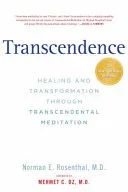
Norman Rosenthal's 2011 book *Transcendence* examines Transcendental Meditation as more than relaxation.
Published in 2011, Norman Rosenthal's *Transcendence* details Transcendental Meditation (TM) not just as a relaxation method but as a structured approach to deeper consciousness and personal development. The book covers TM's history and its scientific basis, arguing it can improve cognitive function, lower stress, and promote a more stable life. Rosenthal, a psychiatrist, addresses scientific and medical perspectives on TM. He explains the practice involves using a mantra for 20 minutes twice daily, aiming for a state of 'restful alertness'.
The work is aimed at a wide readership. It speaks to those looking for practical stress relief, individuals interested in the science of meditation, and anyone curious about expanding their awareness. The book seeks to clarify TM for newcomers while still offering depth for those already familiar with meditation. It is particularly useful for people feeling overwhelmed by modern life's pressures.
*Transcendence* arrives during a time of increased public interest in Eastern spiritual practices, a trend that gained momentum in the mid-20th century. Rosenthal places TM within scientific and medical discourse, countering skepticism and pointing to research. The book’s appearance in 2011 aligns with ongoing societal engagement with mindfulness and meditation, following decades of study and wider acceptance.
This book connects with a lineage of Eastern contemplative practices that entered Western awareness significantly from the 1960s. TM, with its roots in Vedic traditions, represents a specific systematization of mantra meditation designed for broad accessibility. Rosenthal's work places this practice within a modern scientific framework, bridging the gap between ancient techniques and contemporary psychological and physiological understanding. It reflects a broader cultural movement toward integrating spiritual disciplines with secular life and scientific inquiry.
💡 Why Read This Book?
• Learn the core principles and techniques of Transcendental Meditation as presented by Dr. Norman Rosenthal, understanding its unique approach to mantra-based practice derived from the Vedic tradition. • Gain insight into the scientific research supporting TM's efficacy, with specific references to studies published in journals by the 2010s concerning its impact on stress and brain function. • Discover how the concept of 'restful alertness' can be cultivated through daily practice, offering a tangible method for enhancing mental clarity and resilience beyond conventional stress management.
⭐ Reader Reviews
Honest opinions from readers who have explored this book.
❓ Frequently Asked Questions
What is Transcendental Meditation as described in Norman Rosenthal's book?
Transcendental Meditation (TM) in Rosenthal's *Transcendence* is a mantra-based meditation technique practiced for 20 minutes twice daily. It's presented as a simple, natural process for accessing inner stillness and achieving a state of 'restful alertness', distinct from concentration or contemplation.
Is *Transcendence* by Norman Rosenthal suitable for beginners to meditation?
Yes, the book is specifically designed to be an accessible introduction to TM. Rosenthal, a psychiatrist, explains the technique and its benefits in clear, scientific terms, making it understandable for individuals with no prior meditation experience.
What scientific evidence does Norman Rosenthal cite for Transcendental Meditation?
Rosenthal references numerous scientific studies, including research on TM's effects on stress reduction, cardiovascular health, and brain function. He often refers to findings published in peer-reviewed journals, highlighting research conducted from the late 20th century onwards.
How does Transcendental Meditation differ from other meditation techniques according to the book?
The book emphasizes that TM uses a specific, individualized mantra and requires no effort or concentration. It differs from mindfulness or concentration techniques by allowing the mind to settle naturally to a state of deep rest without trying to control thoughts.
When was Norman Rosenthal's book *Transcendence* first published?
*Transcendence* by Norman E. Rosenthal, MD, was first published on June 2, 2011. This edition marked a significant contribution to the literature explaining TM within a scientific and medical framework.
What are the core benefits of practicing TM as outlined in *Transcendence*?
The book outlines benefits such as reduced anxiety and depression, improved focus and creativity, better sleep, and enhanced overall well-being. These are often linked to the deep rest achieved during the practice, as supported by scientific research.
🔮 Key Themes & Symbolism
The Science of Stillness
Rosenthal meticulously details the physiological and neurological effects of Transcendental Meditation, presenting it as a quantifiable practice. He discusses research findings from the late 20th and early 21st centuries that indicate TM induces a unique state of 'restful alertness,' characterized by reduced sympathetic nervous system activity and increased alpha brainwave coherence. The book frames these scientific observations not as mere curiosities but as evidence for TM's efficacy in promoting mental clarity, emotional balance, and overall health, grounding the practice in empirical data for a skeptical audience.
TM as a Tool for Personal Growth
Beyond stress reduction, *Transcendence* posits TM as a catalyst for profound personal development. Rosenthal explores how consistent practice can unlock latent potential, enhance creativity, and foster a deeper sense of self-awareness. The book suggests that by quieting the mind's surface activity, individuals can access more profound levels of consciousness, leading to greater insight, improved decision-making, and a more fulfilling life. This perspective elevates TM from a mere coping mechanism to a path for self-realization.
Accessibility and Demystification
A significant theme is the effort to explain Transcendental Meditation and make it accessible to everyone, regardless of background or belief system. Rosenthal addresses common misconceptions and critiques, explaining the simplicity and naturalness of the TM technique. He highlights that it requires no belief, effort, or lifestyle change, presenting it as a practical, effortless tool that can be integrated into any life. The book aims to remove perceived barriers, encouraging a wider adoption of TM.
The Role of the Mantra
The book elaborates on the specific use of a mantra within the TM technique. Rosenthal explains that the mantra is not a word of power or a focus of attention, but rather a vehicle for the mind to settle inward. He details how the correct administration of a mantra, typically learned through certified instruction, is key to achieving the unique state of deep rest associated with TM. This focus on the mantra's function distinguishes TM from other meditation practices.
💬 Memorable Quotes
Direct passages from the work, attributed to the author.
“The research shows that TM can significantly reduce stress and anxiety.”
— This statement highlights the scientific validation of TM's benefits. Rosenthal consistently refers to studies demonstrating positive psychological outcomes, positioning TM as an effective intervention for common modern ailments like stress and anxiety.
“Practicing TM twice a day for 20 minutes leads to a state of restful alertness.”
— This defines the key physiological and mental state achieved through regular TM practice. 'Restful alertness' is presented as a unique benefit, combining deep relaxation with mental clarity and preparedness.
“TM can enhance cognitive abilities, including creativity and problem-solving.”
— This points to the broader cognitive advantages of TM beyond stress management. Rosenthal suggests that the practice can unlock greater mental capacity, fostering innovation and improving overall cognitive function.
💡 Key Ideas
Editorial paraphrase of the work's core concepts — not direct quotes.
TM is a very simple, natural technique that allows the mind to settle down easily and effortlessly.
This quote expresses the core of TM as presented by Rosenthal: its ease of use and natural unfolding. It contrasts with more demanding meditation styles, emphasizing that the practice is accessible and requires no forceful concentration or control.
TM is not a religion or philosophy, but a technique for the mind.
This quote directly addresses potential skepticism by clarifying TM's nature. Rosenthal emphasizes that it is a practical mental exercise, devoid of dogma, making it suitable for people of all backgrounds and beliefs.
🌙 Esoteric Significance
Tradition
While *Transcendence* focuses on the practical and scientific aspects of Transcendental Meditation, the technique itself has roots in the ancient Vedic tradition of India. It draws from a lineage of yogic practices passed down through generations. Although Rosenthal presents TM in a secular, scientific framework, its underlying methodology of using specific mantras to quiet the mind and access deeper states of consciousness connects it to yogic and Vedantic philosophies concerning the nature of mind and awareness.
Symbolism
The primary symbolic element within TM, as presented in the book, is the mantra. While not overtly explained as a symbol in the traditional sense, the mantra functions symbolically as a vehicle or a point of gentle focus that allows the consciousness to transcend ordinary thought processes. Its specific sound and vibrational quality are considered significant in the Vedic tradition, though Rosenthal emphasizes its role in facilitating effortless inward attention rather than embodying a specific deity or concept.
Modern Relevance
Rosenthal's work remains highly relevant in contemporary discussions surrounding mental wellness and peak performance. Thinkers and practitioners in fields ranging from positive psychology to neuroscience continue to explore meditation's impact on the brain and well-being. Schools of thought emphasizing effortless action and accessing inner resources, such as certain interpretations of Stoicism or modern self-help methodologies, find resonance with TM's principles. The book serves as a key reference for understanding a scientifically validated form of meditation accessible to a broad audience.
👥 Who Should Read This Book
• Individuals seeking evidence-based stress reduction techniques: This book offers a clear explanation of Transcendental Meditation and the scientific research supporting its efficacy in lowering anxiety and improving resilience. • Beginners interested in meditation: Rosenthal's accessible writing style and focus on the effortless nature of TM make it an ideal starting point for those new to contemplative practices. • Healthcare professionals and researchers: The book provides a comprehensive overview of TM, referencing numerous studies and clinical observations, valuable for understanding its potential applications in mental and physical health.
📜 Historical Context
Published in 2011, Norman Rosenthal's *Transcendence* arrived during a period of burgeoning public and scientific interest in meditation, building on the groundwork laid decades earlier. The Transcendental Meditation movement, spearheaded by Maharishi Mahesh Yogi, had gained significant traction in the West from the 1960s onward, influencing counterculture figures and eventually entering mainstream discourse. Rosenthal, a psychiatrist, sought to bridge the gap between this popular practice and the rigorous demands of Western medicine and psychology. His work appeared alongside a broader trend of mindfulness-based interventions gaining scientific validation, such as Mindfulness-Based Stress Reduction (MBSR) developed by Jon Kabat-Zinn in the late 1970s. While TM had its own established research base, Rosenthal's book contributed to the ongoing dialogue about the efficacy and mechanisms of contemplative practices, addressing both enthusiasts and the scientifically-minded. The reception was generally positive within circles familiar with TM, acknowledging its clear presentation, while mainstream scientific reviews often noted its comprehensive overview of existing research.
📔 Journal Prompts
Reflect on the concept of 'restful alertness' and its potential application in your daily life.
Consider the role of the mantra in Transcendental Meditation as described by Dr. Rosenthal.
Analyze the scientific evidence presented for TM's effects on stress and cognitive function.
Explore how the practice of TM might differ from other mental techniques you are familiar with.
Imagine integrating the twice-daily 20-minute TM practice into your schedule.
🗂️ Glossary
Transcendental Meditation (TM)
A specific, mantra-based meditation technique taught by certified instructors, practiced for 20 minutes twice daily, designed to allow the mind to settle into a state of deep rest and awareness.
Mantra
A specific sound or word, typically of Sanskrit origin, used in Transcendental Meditation as a vehicle for the mind to settle inward effortlessly. It is not meant to be concentrated on, but used easily.
Restful Alertness
A unique state of deep physiological rest coupled with mental clarity and inner wakefulness, achieved during Transcendental Meditation practice. It is characterized by reduced metabolic rate and brainwave coherence.
Vedic Tradition
An ancient Indian tradition encompassing scriptures, philosophy, and practices, from which Transcendental Meditation is derived. It emphasizes knowledge and spiritual understanding.
Alpha Brainwaves
A type of brainwave pattern associated with a relaxed, awake state. Increased alpha coherence is often observed during TM and is linked to reduced mental chatter and increased inner calm.
Sympathetic Nervous System
Part of the autonomic nervous system responsible for the 'fight or flight' response. TM practice is associated with reduced sympathetic nervous system activity, leading to decreased stress.
Effortless
A key characteristic of TM practice, meaning the technique requires no concentration, control, or manipulation of the mind. The mind settles naturally on its own.