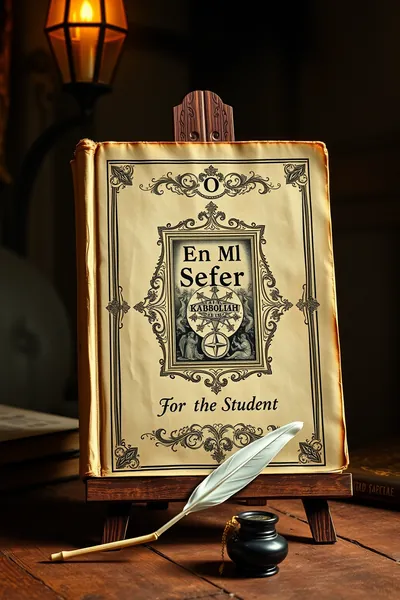
The lamp of God

 61
61

The lamp of God

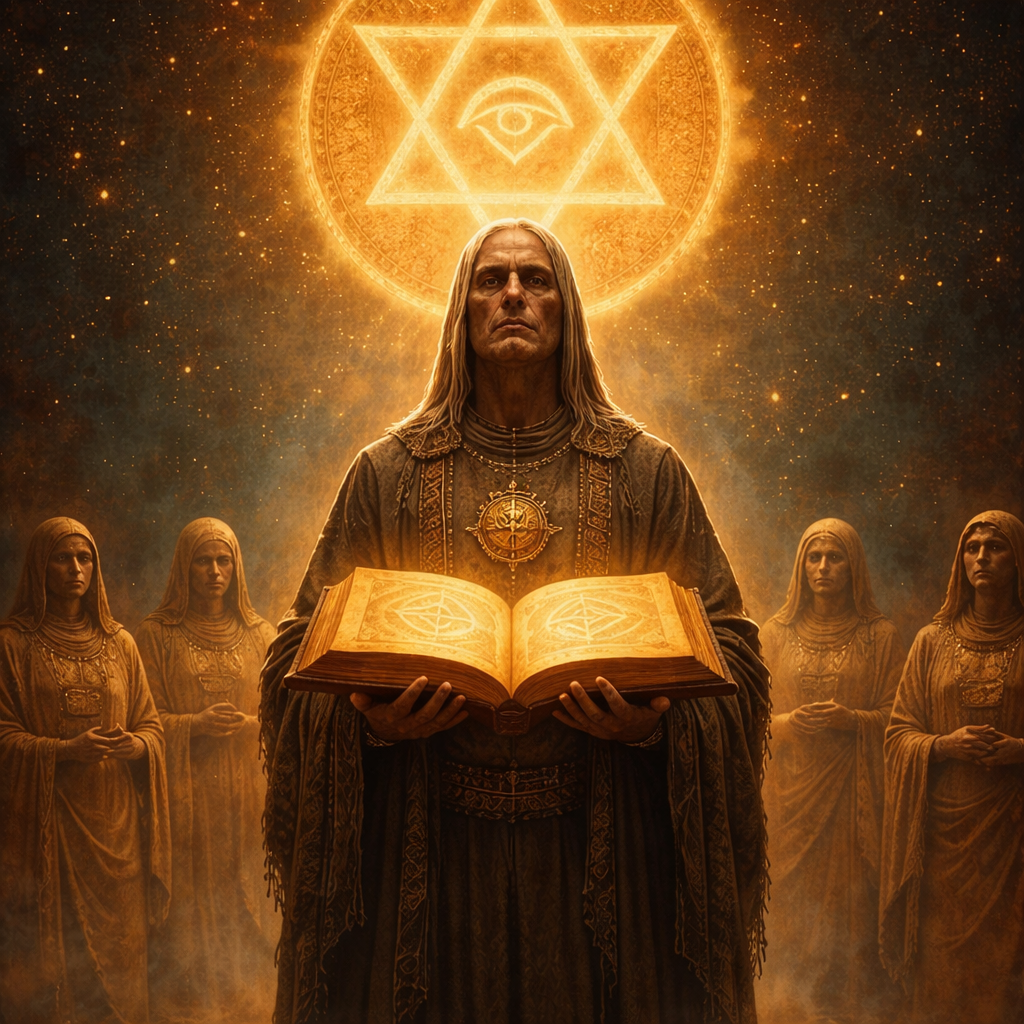

Freema Gottlieb's 'The Lamp of God' is a radiant beacon in the study of Kabbalah, offering an accessible yet profoundly insightful journey into Jewish mystical traditions. Gottlieb's command of the subject matter is evident, as she artfully deciphers complex symbolism, particularly the multifaceted nature of divine light. This work is indispensable for those seeking to grasp the esoteric dimensions of Judaism, illuminating concepts often veiled in ancient texts. Its strength lies in its ability to bridge historical scholarship with practical mystical contemplation, making it a valuable resource for both nascent seekers and seasoned practitioners of the contemplative arts.
📝 Description
61
Freema Gottlieb's "The Lamp of God" appeared in 1979, examining Kabbalah through the metaphor of light.
Freema Gottlieb's "The Lamp of God" examines Kabbalah and Jewish mysticism. The book uses the symbolism of light as a divine emanation and a connection to hidden spiritual knowledge. Gottlieb discusses ancient Hebrew lore, forgotten legends, theological points, and the mystical foundations of Judaism. The work encourages readers to seek a greater grasp of the universe's subtle energies and the divine aspect present in all things. It is intended for those interested in Kabbalah, ancient wisdom, and the philosophical and religious ideas surrounding light and consciousness. The book aims to explain the core of mystical thinking and reveal aspects of creation and divine presence.
This book is situated within the tradition of Kabbalah, a Jewish mystical system that originated in medieval Europe. Kabbalistic thought often uses symbolic language, particularly concerning divine attributes and the structure of the cosmos. Gottlieb focuses on the concept of light, a common motif in Kabbalistic texts, representing divine presence and the process of creation. The work engages with the interpretation of Hebrew scriptures and traditional Jewish theology from a mystical perspective.
💡 Why Read This Book?
Unlock ancient secrets of divine light and the Kabbalistic universe. 'The Lamp of God' offers a profound connection to Jewish mystical traditions, revealing hidden meanings and spiritual insights. Ideal for seekers of esoteric knowledge, scholars of comparative religion, and practitioners interested in the contemplative aspects of Judaism.
⭐ Reader Reviews
Honest opinions from readers who have explored this book.
❓ Frequently Asked Questions
What is the primary focus of 'The Lamp of God'?
The book's primary focus is the exploration of Kabbalah and Jewish mysticism, with a particular emphasis on the symbolism and spiritual significance of divine light within these traditions.
Is this book suitable for beginners in Kabbalah?
Yes, while it delves into profound concepts, Gottlieb's accessible prose makes it a valuable starting point for those new to Kabbalah, offering a solid foundation and engaging introduction.
What kind of legends are discussed in the book?
The book weaves in various Jewish legends and ancient lore that serve to illustrate the mystical principles and theological ideas at the core of Kabbalistic thought.
How does the book relate the concept of light to religious aspects?
It explores light not just as a physical phenomenon, but as a divine metaphor, a manifestation of God's presence, and a key element in spiritual illumination and creation narratives within Judaism.
What is the overall tone and atmosphere of the book?
The tone is scholarly yet reverent, creating an atmosphere of sacred inquiry and contemplative depth, inviting readers to engage with the mystical aspects of their faith and existence.
🔮 Key Themes & Symbolism
The Divine Emanation of Light
This theme looks at the Kabbalistic concept of light as the primordial divine force, the source from which all creation emanates. It explores how light symbolizes God's presence, wisdom, and the very essence of existence. The text illuminates the intricate pathways of divine energy, tracing its descent and manifestation through the Sefirot and its impact on the material and spiritual realms, offering a profound understanding of cosmic genesis.
Symbolism of Light in Jewish Lore
The book meticulously examines the wide range of symbolism associated with light throughout Jewish tradition, scripture, and legend. From the primordial light of creation to the menorah's sacred flames and the illumination of prophetic visions, light is presented as a many-sided symbol of holiness, guidance, redemption, and spiritual awakening. Gottlieb deciphers these ancient visual metaphors, revealing their deeper esoteric meanings and practical applications for the spiritual seeker.
Mystical Pathways and Contemplation
Central to 'The Lamp of God' is the exploration of the mystical journey and the practices that facilitate communion with the divine. The book guides readers through the contemplative dimensions of Kabbalah, offering insights into how the understanding and internal harnessing of spiritual light can lead to profound self-awareness and a deeper connection to the divine essence. It serves as a manual for those seeking to integrate esoteric knowledge into their spiritual lives.
💬 Memorable Quotes
Direct passages from the work, attributed to the author.
“Within the spark, the universe is mirrored.”
— Suggests the divine microcosm within each individual, where the entirety of cosmic order and divine essence can be found through spiritual introspection.
“The menorah's flame, a ladder to the divine.”
— Highlights the Menorah as a symbolic tool for spiritual ascent, with each flame representing a step or connection towards higher spiritual realms and divine understanding.
“Shadows recede where true knowledge shines.”
— Emphasizes the transformative power of spiritual wisdom and divine illumination, which dispels ignorance, fear, and illusion, leading to clarity and truth.
“To see the light is to know the source.”
— Connects the perception of divine light with direct spiritual insight and understanding of God's ultimate reality and origin of all things.
💡 Key Ideas
Editorial paraphrase of the work's core concepts — not direct quotes.
Light is the primordial breath of the Infinite.
This quote captures the Kabbalistic view of light as the fundamental creative force, the initial emanation from the Ein Sof (the Infinite), which gives rise to all existence.
🌙 Esoteric Significance
Tradition
This book is deeply rooted in the Kabbalistic tradition, a mystical interpretation of Judaism that emerged in medieval Europe. It explores the esoteric dimensions of Jewish scripture, theology, and practice, focusing on the divine nature, the structure of the cosmos, and the path of spiritual ascent through understanding of the Sefirot and divine emanations.
Symbolism
The central symbolism revolves around 'light,' interpreted as divine energy, wisdom, and the creative force of the universe. Other key symbols include the Tree of Life (Etz Chaim), the Hebrew alphabet as divine blueprints, and various numerical and geometric patterns that represent cosmic order and spiritual interconnectedness.
Modern Relevance
In an age often characterized by spiritual seeking and a desire for deeper meaning, 'The Lamp of God' offers timeless insights into the nature of consciousness, the divine presence, and the potential for inner transformation. Its exploration of light as a unifying force and a source of wisdom remains profoundly relevant for those seeking to understand their place in the cosmos and cultivate a more profound spiritual life.
👥 Who Should Read This Book
This volume is indispensable for students and scholars of Kabbalah and Jewish mysticism, offering a comprehensive yet accessible overview. Spiritual seekers drawn to the esoteric traditions of Judaism will find useful insights into the nature of divine light and consciousness. Practitioners of contemplative arts may discover new dimensions to their meditation and spiritual disciplines. Beginners curious about the deeper philosophical and mystical aspects of Judaism will find a welcoming and clear introduction.
📜 Historical Context
Published during a period of burgeoning interest in comparative religion and esoteric studies, 'The Lamp of God' emerged from a rich intellectual milieu that sought to bridge ancient wisdom traditions with modern sensibilities. The late 20th century saw a significant resurgence of scholarly and popular engagement with Kabbalah, moving it from the exclusive domain of select scholars to a wider audience. Freema Gottlieb's work stands as a proof of this era, offering a meticulously researched yet spiritually resonant interpretation of Jewish mysticism that resonated with seekers and academics alike, contributing to the ongoing dialogue about spirituality and consciousness.
📔 Journal Prompts
Reflect on your personal understanding of divine light. How does it manifest in your life and spiritual practice?
Consider the symbolism of the Menorah. What might each flame represent in your journey towards greater spiritual awareness?
Explore the idea of the universe being mirrored within you. What 'spark' within you holds the potential for clear insights?
How can the 'shadows' of ignorance or doubt be dispelled in your life through the 'light' of knowledge and spiritual practice?
Journal about a moment you felt a profound connection to a source beyond yourself. How did this experience relate to the concept of divine emanation?
🗂️ Glossary
Kabbalah
A complex system of Jewish mysticism that seeks to understand the nature of God, creation, and the relationship between the divine and the human through esoteric interpretation of scripture and tradition.
Sefirot
The ten divine emanations or attributes of God, forming the structure of the Kabbalistic Tree of Life, through which the divine manifests in the created universe.
Ein Sof
The Kabbalistic term for the 'Infinite' or 'Limitless,' representing God as utterly transcendent and unknowable before any creation or emanation occurs.
Luminous Emanation
The concept in Kabbalah where divine energy and light radiate or emanate from the Ein Sof, forming the various levels of existence and consciousness.
Divine Spark
The idea that a fragment of the divine essence resides within every human soul, connecting individuals to the ultimate source and offering the potential for spiritual awakening.
This book appears in 1 collection
🔮 Readers Also Liked
Browse all →








More by Freema Gottlieb
All books →

From the “Kabbalah” Collection
View all →






More Free Kabbalah & Jewish Mysticism Books
View all →