Die Kundalini-Mystik
 72
72

Die Kundalini-Mystik
Kavita Bhattacharya's *Die Kundalini-Mystik* offers a structured, if somewhat reserved, introduction to a subject often shrouded in hyperbole. The author's strength lies in grounding the esoteric concepts within their historical and philosophical context, drawing clear lines from the Vedic period through Tantric literature. The section detailing the energetic pathways, particularly the *nadis*, provides a valuable, less sensationalized perspective. However, the work occasionally feels overly academic, lacking the visceral, experiential descriptions one might expect from a text on such a potent force. A passage discussing the yogic concept of *prana* and its relationship to Kundalini, while accurate, could have benefited from more evocative language. Ultimately, it's a text that informs more than it inspires, serving as a solid reference for those already initiated into deeper study.
📝 Description
72
Kavita Bhattacharya's Die Kundalini-Mystik connects Kundalini to cosmic consciousness awakening.
This work examines Kundalini as a dormant primal energy central to Indian spiritual traditions. Bhattacharya describes it not just as a force but as the potential for awakening cosmic consciousness. The activation of this energy is presented as a path toward deep inner transformation and spiritual fulfillment, going beyond superficial effects to address the essence of existence.
The book is written for serious students of Indian spiritual philosophy and yoga. It aims to provide a more systematic grasp of the subtle body and its energies. Practitioners of Tantra, advanced yogis, and scholars of comparative religion will find its exploration of Kundalini phenomena and its philosophical basis valuable. Those seeking to merge esoteric knowledge with personal spiritual growth will also find the text relevant.
Die Kundalini-Mystik situates itself within the long lineage of Indian esoteric thought, tracing the concept of Kundalini to foundational texts like the Vedas and Upanishads. It details the complex integration and elaboration of this energy within Tantric traditions, which significantly expanded its psycho-spiritual dimensions. The book shows how these ancient ideas were preserved and interpreted across centuries, maintaining a continuous stream of esoteric knowledge concerning the subtle body and its potential for transformation.
💡 Why Read This Book?
• Gain a precise understanding of the *chakras* and *nadis* as described in ancient Indian texts, moving beyond popular interpretations to grasp their precise energetic function. • Understand the philosophical lineage of Kundalini, tracing its evolution from the Vedas and Upanishads to its complex role in Tantric philosophy, offering historical depth. • Learn about the traditional yogic and Tantric methods for working with Kundalini energy, providing practical, historically-informed guidance for dedicated practitioners.
⭐ Reader Reviews
Honest opinions from readers who have explored this book.
❓ Frequently Asked Questions
What are the Vedas and Upanishads in relation to Kundalini?
The Vedas are ancient Indian scriptures considered foundational. The Upanishads, philosophical texts within the Vedas, contain early discussions of subtle energies and consciousness that laid groundwork for later Kundalini concepts.
How does Tantra approach Kundalini differently?
Tantra significantly elaborated on Kundalini, viewing it as the dynamic, divine feminine energy (Shakti) that can be awakened through specific practices to achieve liberation and cosmic union.
Is Kundalini awakening always a spiritual experience?
While the ultimate aim is spiritual realization, the process can manifest in diverse ways, involving intense physical, emotional, and psychological experiences, requiring careful guidance.
What are the 'nadis' mentioned in Kundalini mysticism?
Nadis are subtle energy channels within the body, akin to energetic pathways. The three main nadis are Ida, Pingala, and the central Sushumna, through which Kundalini energy is said to ascend.
When was the concept of Kundalini first documented?
While the energetic principles are ancient, explicit textual references to Kundalini and its associated practices appear most prominently in Tantric literature, which developed from around the 6th century CE onwards.
What is the role of Shakti in Kundalini yoga?
Shakti represents the primordial cosmic energy, often identified with Kundalini itself. Its awakening is seen as the activation of divine potential within the practitioner, leading to spiritual transformation.
🔮 Key Themes & Symbolism
The Serpent Power
The book elucidates Kundalini as the primal, coiled energy at the base of the spine, often symbolized as a serpent. This potent force, when awakened, is believed to ascend through the subtle energetic channels, leading to profound spiritual and conscious transformation. The text details its dormant state and the potential for liberation it represents when properly activated and guided.
Vedic and Tantric Foundations
Central to the work is the historical tracing of Kundalini concepts from their earliest mentions in Vedic literature and the Upanishads to their elaborate development within Tantric traditions. This exploration highlights how the understanding of this energy evolved, integrating philosophical insights with practical yogic and ritualistic applications over centuries.
Subtle Anatomy: Chakras and Nadis
A significant focus is placed on the body's subtle energetic framework, specifically the *chakras* (energy centers) and *nadis* (channels). The book describes Kundalini's journey through the central *sushumna nadi*, passing through various *chakras*, each associated with different states of consciousness and psycho-spiritual development.
Path to Spiritual Realization
The ultimate purpose of Kundalini awakening, as presented, is the attainment of the highest spiritual knowledge and self-realization. The text outlines this process as a transformative journey that purifies the practitioner and leads to union with the divine or ultimate reality, moving beyond ordinary human consciousness.
💬 Memorable Quotes
Direct passages from the work, attributed to the author.
“Kundalini is the latent cosmic consciousness within the individual.”
— This statement defines Kundalini not just as a physical energy but as the embodiment of the universe's consciousness, dormant within each person, awaiting activation for spiritual awakening.
“The ascent through the Sushumna nadi purifies the spiritual pathways.”
— This highlights the central channel's role in the Kundalini process. Its purification is essential for the safe and effective upward movement of energy, clearing blockages for higher consciousness.
“Chakras are not just points but centers of profound psycho-spiritual transformation.”
— This emphasizes that the energetic centers are more than mere locations; they are dynamic hubs where deep internal changes occur as Kundalini energy activates them.
“Early Vedic texts hint at the potency later elaborated in Tantra.”
— This suggests a historical continuity, indicating that while Tantra provided detailed frameworks, the fundamental awareness of a powerful inner energy existed in much earlier Indian spiritual thought.
“Shakti's awakening is the key to unlocking individual potential.”
— This frames Kundalini, often identified with Shakti, as the divine feminine power whose activation is the crucial step for realizing one's full spiritual and creative capacity.
🌙 Esoteric Significance
Tradition
This work situates itself within the broad spectrum of Indian esoteric thought, specifically focusing on the yogic and Tantric traditions. It departs from purely philosophical Vedanta by emphasizing the practical, energetic dimensions of spiritual realization. While acknowledging its roots in ancient Vedic and Upanishadic cosmology, the book's detailed exploration of Kundalini aligns most closely with Tantric doctrines concerning Shakti and the subtle body.
Symbolism
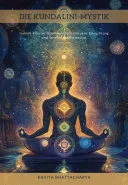
The central symbol is the coiled serpent at the base of the spine, representing dormant divine energy (Kundalini-Shakti). Other key symbols include the *chakras*, visualized as lotus-like energy centers along the spinal axis, and the *nadis* (Ida, Pingala, Sushumna), depicted as luminous channels facilitating the flow of vital force and consciousness.
Modern Relevance
Contemporary practitioners of yoga, particularly those engaged with Kundalini Yoga as popularized by Yogi Bhajan, and scholars of consciousness studies find resonance in Bhattacharya's systematic approach. The book’s detailed exploration of the subtle body and energy flow is relevant to modern somatic practices and transpersonal psychology seeking to integrate ancient wisdom with contemporary understanding.
👥 Who Should Read This Book
• Serious students of Indian spiritual traditions seeking a comprehensive overview of Kundalini theory, moving beyond popular myths. • Yoga practitioners aiming to deepen their theoretical understanding of the energetic and philosophical underpinnings of their practice. • Scholars of comparative religion and esoteric studies interested in the historical development and textual sources of Kundalini mysticism.
📜 Historical Context
Published in 2025, *Die Kundalini-Mystik* arrives in an era where esoteric traditions are increasingly scrutinized and re-contextualized. While the book draws from ancient Indian spiritual lineages, its contemporary scholarly approach reflects a modern academic engagement with mysticism. Its grounding in the Vedas and Upanishads places it within a long tradition of interpreting India's foundational texts, a practice active since the colonial-era translations by scholars like Sir Edwin Arnold. The work implicitly engages with the broader discourse on yoga and consciousness studies, a field significantly shaped by figures like Swami Vivekananda, who introduced Vedanta and Raja Yoga to the West in the late 19th century. Unlike purely devotional or experiential accounts, Bhattacharya's text aims for a systematic, philosophical exposition, positioning itself within a lineage of critical hermeneutics applied to sacred traditions.
📔 Journal Prompts
The concept of the Sushumna nadi's purification and its implications for consciousness.
The relationship between the Vedic concept of Agni and Kundalini energy.
Comparing the role of Shakti in Tantra versus its portrayal in the Upanishads.
Reflecting on the potential psycho-spiritual manifestations of Kundalini awakening.
The significance of the Muladhara chakra as the seat of Kundalini.
🗂️ Glossary
Kundalini
A dormant, potent spiritual energy often depicted as a coiled serpent at the base of the spine, believed to be the source of consciousness and spiritual power when awakened.
Chakras
Energetic centers within the subtle body, typically aligned along the spine, which govern different psychological and spiritual functions and are activated by Kundalini's ascent.
Nadis
Subtle energy channels or pathways within the body. The three primary nadis are Ida, Pingala, and the central Sushumna, crucial for the flow of prana and Kundalini.
Sushumna Nadi
The central, most important subtle energy channel running along the spinal cord, through which Kundalini energy ascends to reach the higher chakras.
Shakti
The primordial cosmic energy, often understood as the dynamic, divine feminine principle, frequently identified with Kundalini itself.
Vedas
The oldest scriptures of Hinduism, considered foundational to Indian spiritual thought, containing hymns, rituals, and philosophical insights.
Upanishads
Later Vedic texts focusing on philosophical concepts, meditation, and the nature of reality and consciousness, providing early frameworks for understanding subtle energies.