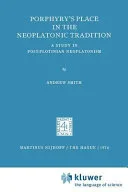
Porphyry’s Place in the Neoplatonic Tradition
 82
82

Porphyry’s Place in the Neoplatonic Tradition
A. Smith’s 1974 study, Porphyry’s Place in the Neoplatonic Tradition, offers a necessary, if somewhat dry, academic assessment of a philosopher often relegated to the footnotes of history. Smith meticulously charts Porphyry's intellectual landscape, particularly his relationship with Plotinus and his engagement with earlier traditions. The book excels in its detailed analysis of Porphyry's commentaries, demonstrating how they served to consolidate and transmit Neoplatonic doctrines. However, the prose, bearing the marks of its dissertation origins, can be dense. A passage discussing Porphyry's critique of Christianity, for instance, provides crucial context for understanding the philosopher's broader intellectual project but requires careful reading. While not a work for casual perusal, it is an indispensable resource for understanding the architecture of Neoplatonism. Smith’s contribution is a solid, if unadorned, piece of scholarship.
📝 Description
82
Published in 1974, A. Smith's study examines Porphyry's role in the Neoplatonic tradition.
This 1974 book, originally a 1972 dissertation from the University of Hull, analyzes the philosopher Porphyry (c. 234 – c. 305 CE) and his significance within Neoplatonism. Smith argues that Porphyry's contributions were not simply derivative but were crucial for the later development of the school. The author seeks to clarify Porphyry's distinct philosophical ideas.
The work is aimed at scholars and dedicated students of ancient philosophy, especially those focused on Neoplatonism and its intellectual history. Anyone interested in the history of metaphysics, ethics, or how Platonic ideas were received will find this study valuable. It offers a rigorous academic look at a philosopher often overshadowed by his teacher, Plotinus, or by later Christian interpretations. The book addresses a period of increased academic attention to classical philosophy after World War II. Porphyry's writings gained attention as scholars re-examined Hellenistic and Roman philosophy, moving beyond a Greece centric view. The 1970s saw substantial work on Plotinus, Porphyry, and Iamblichus, attempting to chart the connections and differences within Neoplatonism. Smith's study contributes to this by dissecting Porphyry's philosophical output.
Porphyry stands as a central figure in the transmission and development of Neoplatonism. His commentaries and original works shaped how later thinkers understood Plato, Aristotle, and the broader philosophical currents of the ancient world. This study places his work within that vital tradition, showing how his ideas about the soul, the divine, and the structure of reality influenced subsequent philosophical and mystical thought. It examines how he systematized and propagated the teachings of Plotinus while also forging his own distinct philosophical path.
💡 Why Read This Book?
• Gain a precise understanding of Porphyry's philosophical distinctions from his teacher Plotinus, as detailed in the analysis of their respective commentaries on Plato's dialogues. • Appreciate the historical positioning of Porphyry’s *Against the Christians* within the intellectual debates of the late Roman Empire, a key focus of the book. • Grasp the specific Neoplatonic concepts Porphyry refined, such as the soul's ascent, which are central to the book’s examination of his systematic contributions.
⭐ Reader Reviews
Honest opinions from readers who have explored this book.
❓ Frequently Asked Questions
What was the original context for the publication of Porphyry’s Place in the Neoplatonic Tradition?
This book is an emended version of a dissertation presented at the University of Hull in 1972, first published in 1974. It reflects scholarly work from that specific period of philosophical inquiry.
Who was Porphyry and why is he important in Neoplatonism?
Porphyry (c. 234 – c. 305 CE) was a student of Plotinus and a major philosopher in his own right. He was instrumental in preserving, systematizing, and disseminating Neoplatonic philosophy, influencing subsequent philosophical and religious thought for centuries.
Does the book discuss Porphyry's views on ethics or his critique of Christianity?
Yes, the work explores Porphyry's ethical treatises and his significant polemical text, *Against the Christians*, examining his philosophical arguments against the nascent Christian movement.
Is this book suitable for beginners in philosophy?
While it offers insights into Neoplatonism, its academic rigor and origins as a dissertation suggest it is best suited for readers with a background in philosophy or those seriously committed to studying ancient thought.
What specific philosophical texts of Porphyry are analyzed?
The book likely examines Porphyry's commentaries on Plato's works, such as the *Phaedrus* and *Republic*, as well as his own philosophical treatises and polemical writings.
What is Neoplatonism?
Neoplatonism is a philosophical system that emerged in the 3rd century CE, drawing heavily from Plato but synthesizing elements from various other traditions. It posits a hierarchical structure of reality emanating from a supreme, ineffable 'One'.
🔮 Key Themes & Symbolism
Porphyry's Philosophical System
This theme centers on A. Smith's dissection of Porphyry's unique contributions to Neoplatonism, moving beyond his role as merely a disciple of Plotinus. The work emphasizes Porphyry's systematization of Platonic and Plotinian ideas, particularly concerning the structure of reality, the nature of the soul, and the methods for achieving spiritual ascent. It highlights how Porphyry's philosophical architecture provided a framework for subsequent generations of Neoplatonists and influenced diverse intellectual currents.
Commentaries and Interpretations
A significant focus is placed on Porphyry's extensive commentaries on the works of Plato and Aristotle. Smith analyzes how these commentaries served not only to elucidate the original texts but also to infuse them with Neoplatonic principles. This section explores Porphyry's hermeneutical approach, demonstrating how he reinterpreted established philosophical traditions to align with the Neoplatonic worldview, thereby shaping the reception of classical philosophy.
Porphyry's Polemic Against Christianity
The book examines Porphyry's critical engagement with Christianity, primarily through his lost work *Against the Christians*. Smith reconstructs Porphyry's arguments, positioning them within the broader context of late antique philosophical debates and inter-religious tensions. This theme explores Porphyry's philosophical objections to Christian doctrines and his perspective on the movement's place within the Roman intellectual landscape.
The Neoplatonic Hierarchy
Central to understanding Porphyry's philosophy is the concept of emanation and hierarchy. This theme explores how Porphyry elaborated on Plotinus's model of reality, detailing the descent from the ineffable One through Intellect (Nous) and Soul (Psyche) to the material world. The book investigates Porphyry's specific contributions to mapping this structure and the implications for the human soul's journey back to its divine source.
💬 Memorable Quotes
Direct passages from the work, attributed to the author.
“Porphyry's place in the Neoplatonic tradition.”
— This phrase captures the book's core objective: to define and elevate Porphyry's standing within the philosophical lineage that followed Plotinus, arguing for his foundational rather than merely secondary importance.
“A slightly emended version of a dissertation presented at the University of Hull in 1972.”
— This direct statement from the author acknowledges the academic origins of the work, setting expectations for its scholarly tone and detailed analysis, while also noting revisions for publication.
“His polemical works, such as Against the Christians.”
— This refers to Porphyry's critical engagement with early Christianity, highlighting a specific area of his philosophical output that remains a subject of historical and theological interest.
“Commentaries on Plato and Aristotle.”
— This points to a significant portion of Porphyry's literary output, emphasizing his role in interpreting and transmitting the philosophical heritage of classical Greece through the lens of Neoplatonism.
“The soul's ascent.”
— This concept is fundamental to Neoplatonic thought and refers to the process by which the human soul seeks to return to its divine origin, a theme extensively explored in Porphyry's philosophical writings.
🌙 Esoteric Significance
Tradition
Porphyry is a cornerstone figure in the Neoplatonic tradition, a philosophical system that profoundly influenced subsequent esoteric lineages. While not strictly 'esoteric' in the sense of secret teachings, Neoplatonism provided the intellectual framework for many later Hermetic, Gnostic-influenced, and mystical movements. Porphyry's role was crucial in systematizing Plotinus's thought and developing its metaphysical structure, making it accessible and adaptable for a wider range of practitioners and thinkers interested in spiritual ascent and the nature of the divine.
Symbolism
Within Porphyry's Neoplatonic framework, key symbols relate to the soul's journey. The 'One' represents the ultimate, ineffable source of all existence, often symbolized by light or the sun. The descent into the material world can be seen as a symbolic fall or entrapment, with the material body acting as a prison for the soul. Conversely, the soul's ascent involves symbolic purification and remembrance of its divine origin, often depicted through journeys or ascents towards higher domains of being.
Modern Relevance
Contemporary thinkers and practitioners in Western Esotericism, particularly those engaged with Hermeticism, ritual magic, and comparative mysticism, continue to draw on Neoplatonic principles as articulated by Porphyry. His systematic approach to metaphysics and the soul's journey provides a philosophical bedrock for understanding concepts of divine emanation, spiritual development, and the relationship between the human and the transcendent, informing modern occult philosophies and spiritual practices.
👥 Who Should Read This Book
• Advanced students of ancient philosophy and the history of metaphysics seeking a deep dive into the Neoplatonic school's foundational figures. • Scholars of comparative religion interested in the philosophical context of late antiquity and the intellectual debates between pagan philosophy and early Christianity. • Researchers of Western Esotericism looking to understand the philosophical roots of later mystical and occult traditions that heavily rely on Neoplatonic concepts.
📜 Historical Context
Published in 1974, A. Smith's work emerged during a vibrant period of classical scholarship focused on Hellenistic and Roman philosophy. The mid-20th century saw a significant reassessment of figures like Plotinus, Iamblichus, and Porphyry, moving them from the periphery to the center of philosophical inquiry. This era witnessed a growing appreciation for Neoplatonism not just as a historical curiosity but as a complex philosophical system with wide implications. Competing schools of thought, such as Stoicism and later Christian theology, were also being re-examined in relation to Neoplatonic ideas. Porphyry’s engagement with Christianity, particularly his *Against the Christians*, made him a figure of interest for scholars studying the intellectual field of late antiquity and the philosophical underpinnings of religious change. The work thus sits within a tradition of rigorous philological and philosophical analysis aimed at understanding the intricate development of Western metaphysical thought.
📔 Journal Prompts
Porphyry's commentaries on Plato's dialogues and their Neoplatonic interpretations.
The philosophical arguments presented in Porphyry's *Against the Christians*.
The concept of the soul's ascent as elaborated by Porphyry.
Porphyry's position relative to Plotinus within the Neoplatonic tradition.
The structure of reality as described in Porphyry's systematization of Neoplatonism.
🗂️ Glossary
Neoplatonism
A philosophical system originating in the 3rd century CE, stemming from the works of Plotinus and further developed by thinkers like Porphyry. It interprets Plato's philosophy in a mystical and systematic way, positing a hierarchical reality emanating from a supreme 'One'.
The One
In Neoplatonism, the ultimate principle and source of all reality. It is utterly transcendent, ineffable, and beyond being, from which all existence emanates in a hierarchical order.
Nous (Intellect)
The first emanation from The One, representing divine intellect or mind. It contains the Platonic Forms and is the realm where being and thought are unified.
Psyche (Soul)
The principle that bridges the intellectual realm and the material world. In Neoplatonism, the human soul is an individual manifestation of this cosmic Soul, capable of descending into matter and ascending back to its divine source.
Emanation
The Neoplatonic concept describing the process by which reality flows or is generated from The One without diminishing it. It is an outpouring of divine being, creating a hierarchy of existence.
Polemics
Literally 'warfare,' in a philosophical context, this refers to a systematic and aggressive critique or refutation of opposing doctrines or beliefs, as seen in Porphyry's *Against the Christians*.
Dissertation
An academic document submitted in fulfillment of the requirements for a higher degree, especially a doctorate. It typically involves original research and analysis.