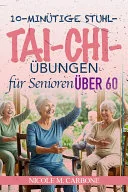
10-Minütige Stuhl Tai Chi Übungen für Senioren über 60
 83
83

10-Minütige Stuhl Tai Chi Übungen für Senioren über 60
Carbone Nicole M.'s "10-Minütige Stuhl Tai Chi Übungen für Senioren über 60" offers a practical solution to a growing concern: the erosion of confidence and mobility in older adults. The book’s strength lies in its direct, no-nonsense approach, presenting exercises specifically tailored for seated practice. This makes the profound benefits of Tai Chi accessible to those who might otherwise be excluded. A particular passage detailing the coordinated breath and subtle wrist movements for improving circulation is exceptionally clear. However, the book could benefit from more detailed explanations of potential contraindications or modifications for specific physical ailments beyond general advice. Despite this, it serves as a valuable, actionable guide for its intended audience.
📝 Description
83
Published in March 2026, this book adapts Tai Chi principles for seniors over 60.
Carbone Nicole M.'s "10-Minütige Stuhl Tai Chi Übungen für Senioren über 60" offers a series of seated Tai Chi movements for individuals aged 60 and older. The exercises address common concerns like balance, stability, and confidence that can arise with age. They are designed to be accessible, needing little space or strenuous effort, fitting comfortably within a senior's physical capabilities. The book's goal is to help users regain a sense of physical security and self-direction through regular, gentle practice.
This guide is for adults over 60 who notice a decrease in balance, feel unsteady when moving, or experience general mobility loss. It is especially useful for those who find traditional standing Tai Chi or more demanding exercises difficult. People seeking to rebuild confidence in their daily actions, enhance their physical self-reliance, and lessen the fear of falling will find this book helpful. It also suits individuals looking for a low-impact, recuperative practice to incorporate into their health regimen.
This work draws from the ancient Chinese practice of Tai Chi Chuan, a discipline with centuries of history. The adaptation of Tai Chi into seated forms for health benefits gained attention in the 20th century, coinciding with growing medical recognition of gentle movement's value for the elderly and those with physical limitations. This approach aligns with contemporary somatic practices and holistic health trends that prioritize accessibility and individual modification of exercises.
💡 Why Read This Book?
• You will learn how to integrate specific seated Tai Chi movements, like the "Opening the Chest" sequence mentioned in the book's exercise descriptions, into your daily routine to improve balance and reduce the fear of falling. • You will gain a practical understanding of cultivating Qi through gentle, seated postures, a concept central to this 2026 publication, fostering a deeper mind-body connection without requiring strenuous activity. • You will discover how to build confidence in your physical capabilities through consistent 10-minute sessions, a core tenet of Carbone Nicole M.'s approach, enhancing your independence and overall sense of well-being.
⭐ Reader Reviews
Honest opinions from readers who have explored this book.
❓ Frequently Asked Questions
Are the 10-minute Tai Chi exercises suitable for absolute beginners over 60?
Yes, the exercises in "10-Minütige Stuhl Tai Chi Übungen für Senioren über 60" are designed for beginners. The focus is on gentle, seated movements that are easy to learn and perform, making them accessible even if you have no prior experience with Tai Chi.
How often should I practice the seated Tai Chi exercises?
The book recommends consistent practice, suggesting that even 10 minutes daily can yield benefits. Regularity is key to improving balance, stability, and confidence over time, as highlighted by Carbone Nicole M.'s structured approach.
What physical benefits can I expect from seated Tai Chi for seniors?
Practicing these exercises can lead to improved balance, increased joint mobility, better posture, enhanced core strength, and a reduction in the fear of falling. The gentle movements also promote mental calmness and overall well-being.
Do I need any special equipment for these exercises?
No special equipment is required. The exercises are designed to be performed while seated, typically on a sturdy chair. Comfortable clothing is recommended to allow for ease of movement.
Is this book suitable for seniors with limited mobility?
Absolutely. The seated nature of the exercises makes them ideal for individuals with limited mobility or those who find standing exercises challenging. The focus is on gentle, controlled movements from a stable seated position.
When was this book first published?
The book "10-Minütige Stuhl Tai Chi Übungen für Senioren über 60" was first published on March 30, 2026.
🔮 Key Themes & Symbolism
Accessible Tai Chi Adaptation
This work fundamentally reinterprets the ancient art of Tai Chi, making its therapeutic benefits accessible to a demographic often excluded by traditional practices. By focusing on seated movements, the book breaks down barriers of physical limitation and fear of falling. It champions the idea that profound internal and external balance can be cultivated through gentle, short, and consistent practice, demonstrating how core Tai Chi principles like slow, deliberate motion and breath synchronization can be effectively translated into a safe, seated format for seniors.
Restoring Confidence and Independence
The book directly addresses the psychological impact of aging on physical confidence. It posits that regaining a sense of control over one's body, even through small movements, is crucial for maintaining independence. The '10-minute' structure is not just about time efficiency but about building a sustainable habit that fosters a positive feedback loop: practice leads to improved stability, which in turn builds confidence, encouraging further engagement with daily life and reducing the pervasive anxiety associated with potential falls.
Mind-Body Harmony in Later Life
Central to the book's philosophy is the interconnectedness of mental and physical states, particularly relevant for seniors. It guides readers to synchronize breath with movement, a central to Tai Chi, to achieve a state of mindful presence and calm. This focus on internal cultivation, even within simple seated exercises, aims to alleviate stress and enhance cognitive function, promoting a holistic sense of well-being that transcends mere physical exercise and fosters a deeper connection to oneself.
The Power of Consistent Gentle Movement
This publication emphasizes that significant improvements in physical function and well-being do not require strenuous effort. The core message is that consistency with gentle, low-impact movements, as exemplified by the specific exercises detailed, is more effective and sustainable for seniors. The book advocates for a patient, gradual approach, respecting the body's capabilities while gently encouraging progress, thereby making physical health improvement an achievable and non-intimidating goal for its target audience.
💬 Memorable Quotes
Direct passages from the work, attributed to the author.
“The hesitation before standing, the uncertainty when reaching, the diminished confidence in walking – these are the quiet battles many over 60 face.”
— This opening sentiment captures the subtle but pervasive anxieties related to physical decline that the book aims to address, setting a tone of empathy and understanding for the reader's experiences.
“Ten minutes is all it takes to begin the journey back to confident movement.”
— This statement underscores the book's practical, time-efficient approach, suggesting that small, consistent efforts are the key to overcoming physical insecurities and improving mobility.
“Your chair becomes your foundation for balance.”
— This concise phrase emphasizes the book's innovative use of the seated position as a stable base for cultivating balance and strength, making the familiar act of sitting a tool for empowerment.
💡 Key Ideas
Editorial paraphrase of the work's core concepts — not direct quotes.
Reclaim your strength, stability, and self-assurance through the gentle flow of seated Tai Chi.
This paraphrased concept highlights the book's core promise: empowering seniors to regain physical control and mental confidence through accessible, seated Tai Chi practices, emphasizing empowerment and restoration.
Synchronize breath and movement to calm the mind and invigorate the body.
This paraphrased concept points to the mind-body integration central to Tai Chi, explaining how the practice's specific techniques can lead to both mental tranquility and physical revitalization.
🌙 Esoteric Significance
Tradition
While not overtly aligned with a specific esoteric lineage like Hermeticism or Gnosticism, this work draws heavily from Taoist principles embedded within Tai Chi. The emphasis on cultivating Qi (vital energy), harmonizing with natural rhythms (through slow, deliberate movement), and promoting balance reflects core Taoist philosophies of achieving well-being through alignment with the 'Dao' or 'Way'. It represents a secularized, therapeutic application of these ancient energetic cultivation practices.
Symbolism
The 'chair' itself, often overlooked, becomes a potent symbol of groundedness and accessible stability. The 'ten-minute' duration symbolizes manageable commitment and the power of consistent, small efforts—a micro-practice approach. The flowing movements, even when seated, represent the continuous, adaptable nature of life energy (Qi), suggesting that vitality and grace are not lost with age but can be channeled differently.
Modern Relevance
This work finds relevance in contemporary practices focusing on active aging, accessible fitness, and somatic therapies. Thinkers and practitioners in fields like geriatric care, physical therapy, and mindfulness-based stress reduction (MBSR) might find its principles applicable. It speaks to modern wellness movements that seek to de-mystify ancient practices and present them in practical, evidence-informed formats for everyday life, bridging traditional energetic arts with contemporary health objectives.
👥 Who Should Read This Book
['• Seniors over 60 experiencing concerns about balance, mobility, or confidence in movement, who seek a gentle, low-impact exercise routine.', '• Individuals seeking to improve their physical stability and independence from a seated position, perhaps due to chronic conditions or recovery from injury.', '• Anyone interested in the therapeutic applications of Tai Chi principles, looking for a simplified and accessible entry point into mindful movement practices.']
📜 Historical Context
Published in March 2026, Carbone Nicole M.'s work emerges in an era acutely aware of the challenges of an aging global population and the growing interest in holistic health practices. While Tai Chi itself is ancient, its adaptation for therapeutic use, particularly for seniors and those with mobility issues, gained significant momentum throughout the late 20th and early 21st centuries. This book follows in the footsteps of earlier pioneers who recognized Tai Chi's potential for improving balance and reducing falls, a concern highlighted by public health organizations. It arrives in a landscape where Western medicine increasingly integrates complementary therapies. Unlike more traditional, standing forms often taught in community centers, this book focuses on seated adaptations, a niche that gained traction as accessibility became a paramount concern. Its release avoids the controversial reception faced by some esoteric practices of earlier eras, instead aligning with mainstream wellness trends.
📔 Journal Prompts
The concept of the 'chair as foundation' in seated Tai Chi.
Reflecting on the 'quiet battles' of diminished confidence after 60.
How synchronizing breath and movement impacts your sense of calm.
The significance of a '10-minute' commitment to physical well-being.
Identifying moments where stability feels uncertain in daily life.
🗂️ Glossary
Stuhl Tai Chi
A form of Tai Chi adapted for practice while seated, focusing on gentle movements, balance, and coordination without the need for standing.
Qi (Chi)
In Traditional Chinese Medicine and martial arts, Qi refers to the vital life force or energy believed to flow through the body, influencing health and vitality.
Balance
The ability to maintain the body's center of mass over its base of support. In Tai Chi, balance is cultivated through slow, controlled movements and body awareness.
Mobility
The ability to move freely and easily. In the context of this book, it refers to improving the range of motion and ease of movement for seniors.
Self-assurance
Confidence in one's own abilities or qualities. The book aims to restore this by improving physical competence and reducing fear of falling.
Mind-Body Connection
The principle that the mind and body are interconnected and influence each other's functioning, central to practices like Tai Chi.
Somatic Practice
Practices that focus on the body's internal experience and movement, often aiming to improve physical function, reduce stress, and increase self-awareness.