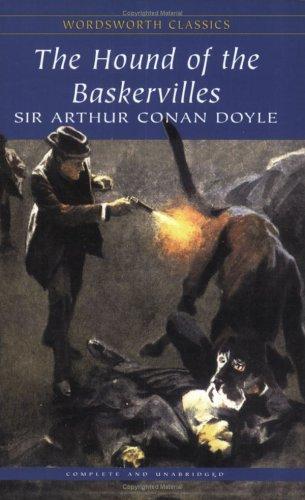
The Hound of the Baskervilles
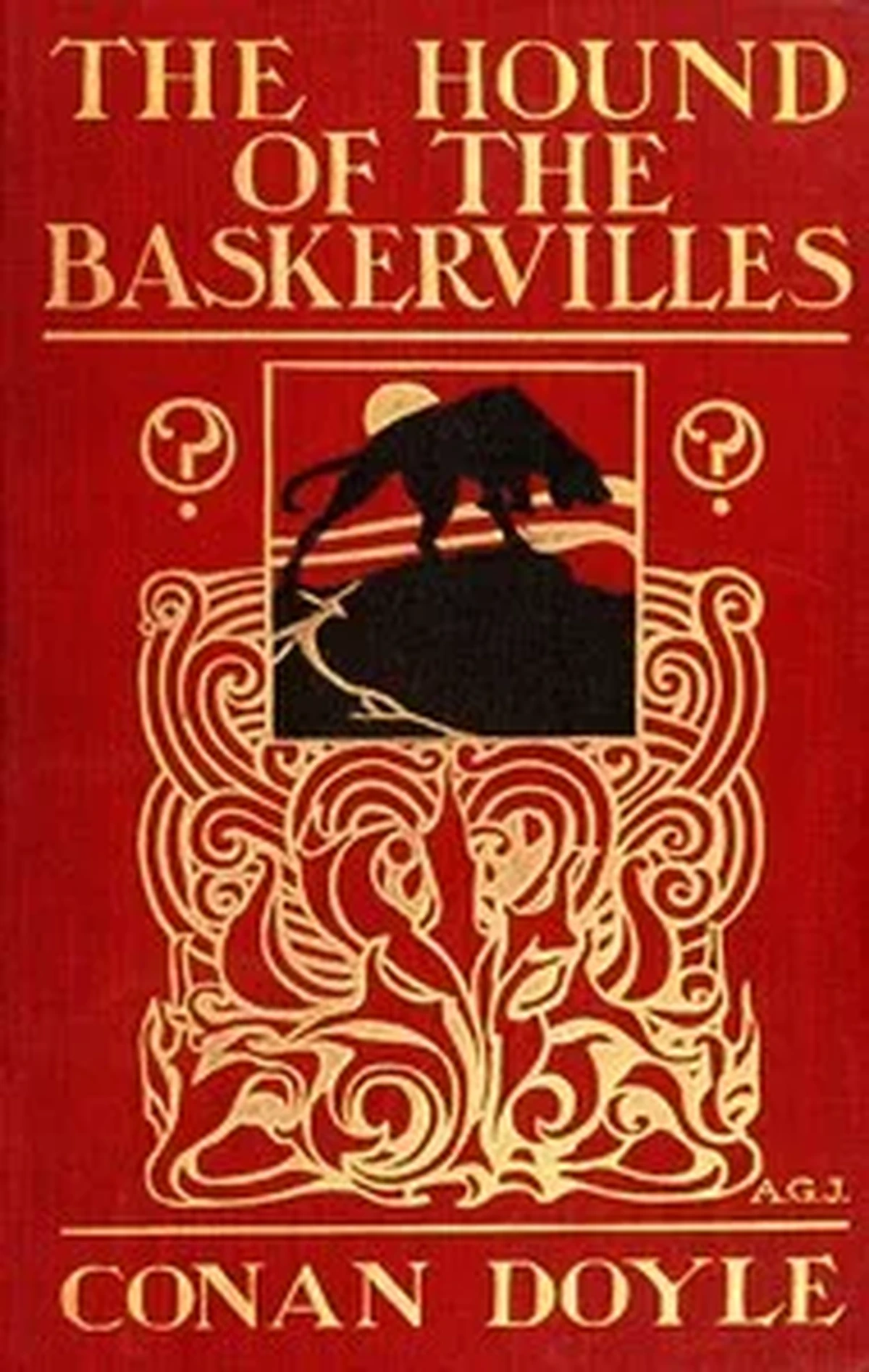
 79
79

The Hound of the Baskervilles
Arthur Conan Doyle’s "The Hound of the Baskervilles" is more than a mere detective yarn; it’s a masterclass in atmospheric tension that even a seasoned skeptic like Holmes struggles to entirely demystify. The chilling depiction of the Devonshire moors, a landscape as menacing as any phantom, is palpable. Doyle’s keenest insight lies in how the legend of the spectral hound preys on the characters' minds, blurring the line between superstition and tangible threat. While the resolution, when it arrives, leans towards the terrestrial, the lingering sense of the uncanny is what elevates this work. My only reservation is that the sheer volume of descriptive passages, while effective for mood, occasionally slows the narrative's momentum. Nevertheless, it remains a compelling exploration of fear and deduction.
Verdict: A superior gothic mystery that uses superstition as a potent narrative device.
📝 Description
79
Arthur Conan Doyle published 'The Hound of the Baskervilles' in 1901, weaving a tale of supernatural dread on Dartmoor.
Set against the bleak, fog-laden moors of Dartmoor, Arthur Conan Doyle's 1901 novel follows Sherlock Holmes and Dr. Watson as they investigate the death of Sir Charles Baskerville. The locals attribute his demise to a monstrous, spectral hound that has plagued the Baskerville family for generations. This legend, passed down through families, fuels the pervasive fear that grips the estate.
The narrative balances the chilling folklore of the moor with Holmes's sharp, rational deduction. While superstition points to a supernatural killer, Holmes suspects a more earthly explanation. The story examines how primal fears and deeply held myths can influence perception and action, creating a potent atmosphere of suspense and unease. The desolate landscape itself becomes a character, contributing to the sense of isolation and dread.
While often read as a detective story, 'The Hound of the Baskervilles' taps into older traditions of folk horror and local curses. The legend of the spectral hound echoes beliefs in nature spirits or ancient protective entities gone awry, common in folklore across Britain and Europe. The story plays on the idea that certain places hold residual psychic energy or are subject to ancient pacts, a concept that finds parallels in occult studies concerning ley lines and localized spiritual phenomena. The fear generated is tied to the land and its history, suggesting forces beyond ordinary human control.
💡 Why Read This Book?
• Learn how Arthur Conan Doyle uses the desolate landscape of Dartmoor, particularly areas like Grimpen Mire, to evoke a palpable sense of dread, mirroring the psychological impact of local legends. • Understand the interplay between Sherlock Holmes's logical deduction and the pervasive local superstitions surrounding the Baskerville curse, showcasing a clash of worldviews. • Explore the narrative function of the spectral hound legend, examining how ancient folklore can be weaponized or exploited within a dramatic context.
⭐ Reader Reviews
Honest opinions from readers who have explored this book.
❓ Frequently Asked Questions
When was The Hound of the Baskervilles first published?
The novel "The Hound of the Baskervilles" by Arthur Conan Doyle was first serialized in The Strand Magazine from August 1901 to April 1902, before being published as a complete book in 1902.
What is the central mystery in The Hound of the Baskervilles?
The central mystery revolves around the apparent supernatural death of Sir Charles Baskerville, with locals fearing a curse involving a monstrous, spectral hound haunting the Baskerville family.
What is Grimpen Mire and why is it significant?
Grimpen Mire is a treacherous, vast bog on Dartmoor, depicted as a dangerous and inescapable natural entity. Its significance lies in its ability to swallow the unwary and amplify the eerie atmosphere of the novel.
Does Sherlock Holmes believe in the supernatural hound?
While Holmes acknowledges the local beliefs and the fear they inspire, his primary method is rational deduction. He seeks a material explanation for the events, viewing the supernatural elements as a potential misdirection.
What themes does The Hound of the Baskervilles explore?
The novel explores themes of superstition versus reason, the power of folklore, inherited curses, psychological fear, and the deceptive nature of appearances, all set against the wild backdrop of Dartmoor.
Is The Hound of the Baskervilles based on a real legend?
While Doyle drew inspiration from local legends and the general folklore of the Devonshire moors, the specific legend of the Baskerville hound as depicted in the novel is largely his own creation.
🔮 Key Themes & Symbolism
Folklore and Inherited Curses
The narrative is deeply embedded in the folklore of the Dartmoor region, particularly the legend of the spectral hound. This ancient curse, supposedly afflicting the Baskerville family for generations, serves as a powerful symbol of inherited trauma and inescapable fate. The work examines how such deeply ingrained myths can influence the behavior and perceptions of individuals, even those attempting rational analysis. The presence of standing stones and ancient burial sites further grounds the story in a history steeped in superstition, suggesting that the past continues to exert a tangible influence on the present.
Reason Versus Superstition
A central tension in "The Hound of the Baskervilles" is the conflict between Sherlock Holmes's empirical methods and the pervasive local superstitions. While the villagers attribute the mysterious deaths to a supernatural entity, Holmes relentlessly seeks a logical, scientific explanation. This dichotomy explores the human tendency to resort to the supernatural when faced with the inexplicable or the terrifying, contrasting it with the power of keen observation and deductive reasoning. The novel questions the boundaries of the explainable, acknowledging how fear can make the impossible seem plausible.
The Psychological Impact of Fear
The desolate and foreboding field of Dartmoor, particularly the treacherous Grimpen Mire, acts as a catalyst for psychological distress. The legend of the hound amplifies the characters' anxieties, leading to paranoia and misjudgment. Doyle illustrates how fear, especially when fueled by suggestion and a sense of isolation, can distort reality and lead individuals to act irrationally. The narrative probes the human psyche under duress, demonstrating how the 'unseen' can be as terrifying and influential as any physical threat.
The Wild and Untamed Landscape
Dartmoor is not merely a setting but a powerful force within the novel. Its wildness, mires, and fog contribute to an atmosphere of primal dread and isolation. This untamed environment symbolizes the limits of human control and the enduring power of nature. The landscape itself seems to harbor ancient secrets and dangers, mirroring the dark histories and hidden threats faced by the characters. The stark contrast between this natural wildness and the attempts at civilized investigation underscores the novel's exploration of primal fears.
💬 Memorable Quotes
Direct passages from the work, attributed to the author.
“When you go to your work, you go to the place where you are the most useful.”
— This statement underscores Holmes's dedication to his craft and his belief in finding one's true calling, suggesting that purpose and utility are found in embracing one's specific talents.
“The world is full of obvious things which nobody by any chance ever observes.”
— This highlights Holmes's core philosophy: that truth often lies in plain sight, overlooked by those who fail to apply rigorous observation and critical thinking to their surroundings.
“It is a capital mistake to theorize before one has data.”
— A foundational principle of Holmes's deductive method, this emphasizes the importance of gathering empirical evidence before forming conclusions, cautioning against premature speculation.
“The lowest and vilest alleys in London do not contain anything which would shock me.”
— This reveals Holmes's desensitization to human depravity, acquired through years of confronting the darker aspects of society, and his pragmatic acceptance of the world's harsh realities.
💡 Key Ideas
Editorial paraphrase of the work's core concepts — not direct quotes.
There is nothing more deceptive than an obvious fact.
This quote points to the idea that what appears simple or evident can often be a carefully constructed facade, hiding a more complex or sinister truth beneath the surface.
🌙 Esoteric Significance
Tradition
While not explicitly belonging to a single esoteric tradition, "The Hound of the Baskervilles" draws heavily on Western folklore and the archetypal concept of the spectral hound, a figure appearing in various mythologies, including Celtic and Germanic traditions. It touches upon themes of inherited karma or curses, reminiscent of certain interpretations within Theosophy or older folk magic systems, where ancestral actions can manifest consequences across generations. The work plays with the idea of unseen forces influencing the material world, a common thread in many esoteric philosophies.
Symbolism
The spectral hound itself is a potent symbol, representing primal fear, the untamed aspects of nature, and the manifestation of ancestral guilt or negative psychic energy. The Grimpen Mire symbolizes the inescapable, the treacherous subconscious, or a place where rational understanding fails. The ancient standing stones scattered across Dartmoor can be interpreted as relics of older, earth-bound spiritual practices or markers of liminal spaces where the veil between worlds is thin.
Modern Relevance
Contemporary explorations of folklore in horror and fantasy literature often echo the atmospheric dread and the blurring of supernatural and psychological threats found in Doyle's novel. Modern occult practitioners and students of comparative mythology might analyze the narrative's engagement with ancestral curses and the power of belief. Furthermore, discussions on the psychological impact of environment and suggestion, particularly in the context of fear and paranoia, remain relevant in fields ranging from psychology to modern storytelling techniques.
👥 Who Should Read This Book
• Readers interested in the intersection of folklore and detective fiction: Those who appreciate how ancient legends and superstitions can be integrated into a rational mystery narrative will find value. • Students of Gothic literature and atmosphere: Individuals drawn to mood-heavy settings and tales that explore psychological dread and the uncanny will appreciate Doyle's masterful use of Dartmoor. • Fans of Sherlock Holmes seeking thematic depth: Readers who enjoy the classic Holmesian deduction but are also interested in exploring deeper themes of inherited curses and the power of belief will find this novel particularly rewarding.
📜 Historical Context
Published in 1901, "The Hound of the Baskervilles" emerged during a period of intense public fascination with spiritualism, the occult, and folklore. The late Victorian and Edwardian eras saw a surge in interest in these areas, partly as a reaction against rampant industrialization and scientific rationalism. Arthur Conan Doyle himself was a proponent of spiritualism, a fact that adds an intriguing layer to his most famous detective creation. The novel’s gothic atmosphere and reliance on a spectral legend tapped into contemporary anxieties and popular literary trends. It appeared in The Strand Magazine, a popular publication that had previously serialized other Holmes adventures, ensuring a wide audience. While competing with established gothic traditions, Doyle's work distinguished itself by grounding its supernatural elements in the meticulous, albeit challenged, logic of Sherlock Holmes, a character who personified the era's faith in scientific progress. Notably, authors like Bram Stoker were exploring similar themes of ancient evils resurfacing in modern times with his 1897 novel "Dracula."
📔 Journal Prompts
The legend of the spectral hound and its effect on the Baskerville family.
Sherlock Holmes's interpretation of the events versus the local superstitions.
The role of the Grimpen Mire as a symbolic landscape.
Sir Charles Baskerville's final moments and the perceived curse.
Dr. Watson's observations and his struggle to reconcile rationalism with the uncanny.
🗂️ Glossary
Dartmoor
A large, desolate granite moorland in southern Devon, England, known for its rugged terrain, tors, mires, and ancient historical sites, providing the novel's primary, atmospheric setting.
Grimpen Mire
A specific, treacherous, and vast bog on Dartmoor within the novel, symbolizing inescapable danger and the limits of rational navigation.
Spectral Hound
The legendary, phantom dog central to the Baskerville curse, depicted as a monstrous, supernatural entity associated with death and terror.
Standing Stones
Ancient megalithic formations found on Dartmoor, often associated with prehistoric rituals and imbued with a sense of mystery and historical weight in the novel.
Baskerville Curse
The supposed supernatural affliction passed down through the Baskerville family lineage, believed to be the cause of their untimely and often gruesome deaths.
Deductive Reasoning
Sherlock Holmes's primary investigative method, involving the systematic observation of details and logical inference to arrive at a specific conclusion.
Superstition
A belief or practice resulting from ignorance, fear of the unknown, or trust in magic or chance, often contrasted with reasoned belief or scientific evidence in the novel.
🔮 Readers Also Liked
Browse all →









More by Arthur Conan Doyle
All books →




More Free Occult Philosophy Books
View all →