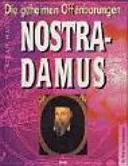
Die großen Weissagungen des Nostradamus
 72
72

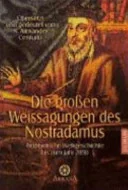
Die großen Weissagungen des Nostradamus
Centurio's compilation of Nostradamus's quatrains offers a structured approach to a famously opaque body of work. The strength lies in the attempt to contextualize the 16th-century prophecies for a 1980s audience, providing a gateway for those unfamiliar with the seer's dense verse. However, the commentary, while earnest, occasionally leans into speculative connections that lack rigorous substantiation, a common pitfall when dissecting Nostradamus. A particular passage discussing the quatrain concerning "the great king of terror" exemplifies this, where Centurio draws parallels to various historical conflicts without definitive proof. The book serves as a functional, if not always critically sharp, guide to a foundational text in prophetic literature.
📝 Description
72
N. Alexander Centurio's 1986 edition compiles and interprets Nostradamus's cryptic quatrains.
This 1986 compilation by N. Alexander Centurio focuses on the prophetic verses attributed to Michael Nostradamus. The book presents these four-line poems, originally written in Old French, alongside Centurio's commentary. The aim is to illuminate the meaning and historical context of these often obscure quatrains for a modern audience. The original prophecies emerged in the 16th century, a time of great change in Europe, and "Les Prophéties" was first published in 1555. Centurio's work connects the historical seer to contemporary interest in occult philosophy and predictive arts.
The text centers on Nostradamus's quatrains, which frequently incorporate astrological details, historical references, and symbolic language. Centurio's interpretation attempts to decode this symbolic lexicon, aligning verses with past events and potential future occurrences. The book engages with concepts like fate, divine inspiration, and the cyclical view of history as seen through the practice of prophecy. It is suited for those interested in divination, historical predictions, and the continued fascination with Nostradamus's work.
Nostradamus's prophecies belong to a long tradition of Western esotericism that seeks to understand divine will or future events through symbolic language and celestial observation. His quatrains, with their blend of astrological imagery and historical allusions, are a prime example of prophetic literature. This tradition often involves decoding veiled meanings, believing that hidden knowledge about the future can be accessed through specific methods. Centurio's edition engages with this by applying modern interpretive frameworks to the seer's 16th-century pronouncements, linking them to contemporary concerns.
💡 Why Read This Book?
• Understand the interpretative challenges inherent in Nostradamus's quatrains, particularly the symbolic language used in verses concerning "the great king of terror. • Gain insight into the historical reception of "Les Prophéties" since its 1555 publication and how later editions like Centurio's sought to update its relevance. • Explore the esoteric tradition of prophecy as a method of understanding historical patterns, as presented through Nostradamus's unique prophetic framework.
⭐ Reader Reviews
Honest opinions from readers who have explored this book.
❓ Frequently Asked Questions
When was the original "Les Prophéties" by Nostradamus first published?
The original collection of prophecies by Michel de Nostredame, "Les Prophéties," was first published in Lyon, France, in 1555. This edition by Centurio, published in 1986, offers a modern interpretation of those foundational verses.
What is the primary language of Nostradamus's original prophecies?
Nostradamus's prophecies were primarily written in a mix of Old French, with elements of Latin, Greek, and Occitan. This linguistic complexity contributes to the difficulty of their interpretation.
Does "Die großen Weissagungen des Nostradamus" provide definitive answers about future events?
No, the book presents interpretations of Nostradamus's cryptic verses, not definitive predictions. The nature of prophecy, especially Nostradamus's, invites multiple readings and speculative connections to historical events.
Who was N. Alexander Centurio?
N. Alexander Centurio is credited as the author or compiler of this specific 1986 edition, focusing on interpreting and presenting Nostradamus's prophecies. Little public biographical information is widely available about Centurio himself.
Are Nostradamus's prophecies considered historical fact or esoteric interpretation?
Nostradamus's prophecies are generally considered within the realm of esoteric interpretation and historical divination. While some claim prescience, scholarly consensus often views them as ambiguous verses that can be retrospectively aligned with events.
What is the significance of the quatrain about 'the great king of terror'?
The quatrain mentioning 'the great king of terror' is one of Nostradamus's most cited and debated prophecies, often interpreted as referring to a future major conflict or a significant destructive force.
🔮 Key Themes & Symbolism
Prophetic Quatrains
The central focus is the collection of four-line verses attributed to Nostradamus. These quatrains, often obscure and symbolic, form the bedrock of the book's exploration. Centurio's work attempts to dissect their allegorical language, astrological references, and potential historical anchors. Each quatrain is treated as a puzzle, inviting readers to engage with the predictive and symbolic nature of prophecy as understood through the 16th-century lens.
Historical Alignment
A significant theme is the attempt to align specific quatrains with documented historical events. The book explores how readers and interpreters have historically connected Nostradamus's verses to occurrences ranging from the French Revolution to modern conflicts. This process highlights the subjective nature of prophetic interpretation and the human tendency to seek patterns and meaning in seemingly chaotic events.
Esoteric Interpretation
The work explores the esoteric tradition of divination and prophecy. It posits that Nostradamus's writings are not mere predictions but encoded messages requiring a specific framework of understanding. This involves exploring symbolism, numerology, and astrological correspondences, treating the quatrains as part of a broader occult philosophical system designed to reveal hidden truths about human destiny.
The Figure of the Seer
The book also examines the persona and legacy of Nostradamus himself. It touches upon his life in 16th-century France and the circumstances under which "Les Prophéties" was conceived. The enduring fascination with his figure as a prophet underscores themes of mysticism, hidden knowledge, and the human desire to anticipate the future.
💬 Memorable Quotes
Direct passages from the work, attributed to the author.
“The language is a cipher of time.”
— This highlights the belief that Nostradamus deliberately obscured his prophecies with complex language, astrological terms, and symbolic imagery, requiring specialized knowledge to fully decipher.
“History repeats, encoded in the quatrains.”
— This interpretation suggests that Nostradamus's prophecies are not just about singular future events but also about recurring patterns and cycles throughout human history.
“The celestial bodies mark man's fate.”
— This reflects the astrological underpinnings often found in Nostradamus's work, where the positions and movements of planets and stars are seen as directly influencing earthly events and human destiny.
“Interpretations shift with the ages.”
— This acknowledges that the meaning attributed to Nostradamus's prophecies evolves over time, with each generation applying the verses to contemporary events and anxieties.
💡 Key Ideas
Editorial paraphrase of the work's core concepts — not direct quotes.
The verses speak of the great king of terror.
This passage refers to one of Nostradamus's most frequently cited quatrains, often interpreted as foretelling a period of immense global conflict or a destructive, terrifying leader.
🌙 Esoteric Significance
Tradition
This work falls within the Western Esoteric tradition, specifically the lineage of prophetic literature and divination that draws from Hermeticism and Renaissance magical thought. Nostradamus's method, blending astrological observation with symbolic verse, is characteristic of a period where the boundaries between science, magic, and religion were fluid. It represents an attempt to access divine or hidden knowledge concerning future events, a practice central to many esoteric paths seeking to understand cosmic order and human destiny.
Symbolism
Key symbols include astrological imagery (planets, constellations) representing cosmic influences on earthly affairs, and animal metaphors (e.g., lions, eagles) often representing nations, rulers, or specific historical forces. The concept of the 'quatrain' itself functions as a symbolic vessel, a compressed form of knowledge meant to be unlocked through careful interpretation, hinting at a hidden order within the apparent chaos of history.
Modern Relevance
Contemporary practitioners of divination, enthusiasts of historical prophecy, and students of esoteric history continue to engage with Nostradamus's work. Modern occultists may use his quatrains as meditative tools or as a framework for analyzing current events through an archetypal lens. The enduring appeal lies in the perceived universality of his cryptic verses, allowing them to be applied to new anxieties and unfolding global scenarios, keeping the tradition alive.
👥 Who Should Read This Book
• Students of Western Esotericism seeking to understand the historical development and popularization of prophetic traditions. • Enthusiasts of historical divination interested in analyzing the methods and interpretations of figures like Nostradamus since his 16th-century prophecies. • Readers curious about the intersection of history, symbolism, and predictive literature, particularly those who appreciate interpretive challenges.
📜 Historical Context
Published in 1986, "Die großen Weissagungen des Nostradamus" emerged during a period of renewed interest in occultism and prophecy, following the counter-cultural movements of the 1960s and 70s. Nostradamus's "Les Prophéties," first appearing in 1555, had already cemented its place in esoteric lore, often cited in contrast to more academic or scientific worldviews. The late 20th century saw numerous popularizations and interpretations of his work, seeking to link his 16th-century verses to events like World Wars, the rise of specific political figures, and perceived global crises. While figures like Manly P. Hall had extensively explored Hermeticism and occult philosophy earlier in the century, the 1980s saw a more mainstream, though often uncritical, engagement with prophecy. The reception of Nostradamus's work has always been polarized, with mainstream historians dismissing it as vague poetry and esotericists viewing it as profound foresight, a division that Centurio's edition navigates.
📔 Journal Prompts
The quatrain concerning the 'great king of terror' and its potential historical parallels.
Nostradamus's use of astrological imagery and its supposed connection to fate.
The process of aligning cryptic verses with specific historical events.
The role of symbolic language in esoteric prophetic texts.
Personal reflections on the concept of historical cycles as presented in prophecy.
🗂️ Glossary
Quatrain
A stanza or verse consisting of four lines. In the context of Nostradamus, these are the fundamental units of his prophecies, each typically containing a cryptic prediction or observation.
Les Prophéties
The original French title for Nostradamus's primary collection of prophecies, first published in 1555. It is the source text for most modern interpretations.
Divination
The practice of seeking knowledge of the future or the unknown by supernatural means. Nostradamus's work is a form of textual divination.
Esoteric
Intended for or likely to be understood by only a small number of people with a specialized knowledge or interest; relating to occult or mystical subjects.
Hermeticism
A religious, philosophical, and esoteric tradition based on the purported teachings of Hermes Trismegistus. It emphasizes principles like 'as above, so below' and the interconnectedness of the cosmos.
Astrology
The study of the movements and relative positions of celestial bodies interpreted as having an influence on human affairs and the natural world.
Symbolism
The use of symbols to represent ideas or qualities. Nostradamus's prophecies are rich in symbolic language, requiring interpretation beyond the literal.
This book appears in 1 collection
🔮 Readers Also Liked
Browse all →









From the “Nostradamus” Collection
View all →



More Free Occult Philosophy Books
View all →