Insurgent

 78
78

Insurgent
Veronica Roth’s *Insurgent* escalates the stakes from its predecessor, moving beyond the initial premise of faction-based society into a more complex, morally grey battlefield. The narrative picks up immediately after the events of *Divergent*, thrusting Tris into a desperate flight from the Erudite faction, now in control. Roth excels at depicting Tris’s internal turmoil and her growing disillusionment with the very system she once fought to uphold. The pacing is breakneck, mirroring Tris's own frantic efforts to survive and uncover the truth behind the faction war. However, this relentless speed sometimes comes at the expense of deeper character development for the supporting cast, who can feel underdeveloped amidst the chaos. A particularly strong sequence involves Tris confronting Jeanine Matthews, highlighting the intellectual and ideological clash at the heart of the conflict. While it successfully expands the world and raises the stakes, *Insurgent* occasionally feels like a bridge, propelling the story forward without fully resolving immediate narrative threads. It’s a propulsive, if sometimes overwhelming, continuation.
📝 Description
78
Veronica Roth's 2016 novel Insurgent continues Tris's fight in a fractured Chicago.
Insurgent, published in 2016, returns readers to Beatrice Prior's (Tris) life after the events of Divergent. The novel unfolds in a post-apocalyptic Chicago where the faction system is breaking down, blurring the lines between allies and enemies. Tris confronts the consequences of her actions as societal upheaval intensifies. Roth's writing emphasizes fast-paced action and Tris's internal struggles, pushing the narrative forward relentlessly. The story examines the costs of freedom and the difficult choices individuals face when challenging established power structures.
This book appeals to young adults and adults familiar with the dystopian genre, especially those who followed Tris's journey in Divergent. It is suited for readers who enjoy stories about survival, moral complexity, and resistance against oppressive societies. Those looking for dynamic action sequences, intricate character relationships, and a protagonist’s significant personal development will find Insurgent engaging. The novel also interests readers who ponder how social systems can be dismantled, even when the price is high.
While Insurgent is primarily a young adult dystopian novel, its exploration of societal collapse and the breakdown of established order can be seen through an esoteric lens. The rigid faction system, representing a form of societal dogma, crumbles, forcing individuals to confront their true selves and forge new identities outside predetermined structures. This mirrors esoteric traditions that often question societal norms and seek inner truth beyond external categorization. The novel's focus on rebellion against an oppressive system and the search for authentic selfhood resonates with themes found in various philosophical and spiritual movements that advocate for personal liberation and the dismantling of limiting beliefs.
💡 Why Read This Book?
• Understand the disintegration of societal control by examining the faction system's collapse and the rise of factionless individuals, a core concept explored in Chapters 1-5. • Feel the protagonist's internal conflict through Tris's struggle with grief and her evolving moral compass after the attack on Abnegation, a central theme in Chapters 6-10. • Grasp the mechanics of genetic manipulation and its societal implications as revealed through the Erudite conspiracy, a plot point central to the novel's climax.
⭐ Reader Reviews
Honest opinions from readers who have explored this book.
❓ Frequently Asked Questions
When was Insurgent by Veronica Roth originally published?
Insurgent was first published in 2016, making it the second book in the Divergent series and continuing the story of Tris Prior.
What is the primary conflict in Insurgent?
The primary conflict in Insurgent is the escalating war between the Dauntless, allied with Erudite, and the factionless, with Tris caught in the middle trying to uncover the truth behind the attacks.
Who are the main factions in the Divergent series, and how does Insurgent challenge them?
The main factions are Abnegation, Dauntless, Erudite, Candor, and Amity. Insurgent challenges these by showing their corruption and the increasing prominence of the factionless, blurring the lines of their established roles.
What is the significance of 'Divergence' in the book?
Divergence signifies individuals who do not fit into any single faction, possessing traits from multiple groups. In Insurgent, this becomes a key element in understanding the larger conflict and the truth about society's origins.
Does Insurgent explain the origins of the faction system?
Yes, Insurgent begins to reveal the origins of the faction system and the societal experiments that led to its creation, particularly through revelations concerning genetics and historical manipulation.
How does Insurgent differ from Divergent in terms of themes?
While Divergent focused on identity and belonging within the faction system, Insurgent shifts to themes of rebellion, the breakdown of order, and the questioning of established truths and authority.
🔮 Key Themes & Symbolism
Faction Collapse and Factionless
The narrative actively depicts the breakdown of the meticulously constructed faction system established in the first book. As Erudite's power grows, the lines between factions blur, and a significant portion of the population exists outside these structures as the 'factionless'. This group, often marginalized and misunderstood, becomes a crucial element in the unfolding conflict. Roth uses the factionless to question the very premise of societal division, suggesting that true belonging might lie beyond these imposed identities. Their presence highlights the societal cost of the faction experiment and foreshadows a potential new order.
Identity Beyond Labels
Tris's journey in *Insurgent* is marked by an intense struggle with her own identity, particularly after the trauma of the first book. No longer simply a Dauntless initiate, she grapples with her 'divergence' and the loss of loved ones. The novel explores how external pressures and societal expectations can warp self-perception. Tris’s internal conflict between her desire for peace and her innate drive for justice forms the emotional core. The narrative pushes the idea that true identity is not solely defined by one's faction or actions, but by internal resilience and evolving moral choices.
Conspiracy and Truth
The plot of *Insurgent* is driven by a complex conspiracy orchestrated by the Erudite faction, led by Jeanine Matthews. This conspiracy aims to control the populace through manipulation and force, challenging the established narrative of societal harmony. Tris and her allies are in a constant race against time to uncover the truth behind the attacks and the true purpose of the faction system. The book explores how power structures rely on controlling information and how challenging these structures requires confronting uncomfortable realities about the past and present society.
Moral Ambiguity in War
Unlike the clear-cut heroism often found in simpler narratives, *Insurgent* explores the moral compromises required in times of conflict. Tris is forced to make difficult decisions that blur ethical lines, often resulting in unintended consequences. The actions of both the 'heroes' and 'villains' are frequently driven by survival, loyalty, or a twisted sense of duty, making it difficult to categorize individuals as purely good or evil. This exploration of moral ambiguity reflects the harsh realities of war and rebellion, where the pursuit of a greater good can necessitate morally questionable acts.
💬 Memorable Quotes
Direct passages from the work, attributed to the author.
“I am not a member of any faction.”
— This statement represents Tris's growing detachment from the societal structures that once defined her. It signifies a shift towards self-definition and a rejection of imposed labels, aligning with the book's exploration of identity beyond factional affiliation.
“Fear doesn't shut people up. Fear just makes them quieter.”
— This observation speaks to the underlying nature of oppression. It suggests that suppression through fear does not eliminate dissent but rather drives it underground, making it more insidious and potentially more dangerous when it finally surfaces.
“I would have been afraid of him if I hadn’t been so afraid of myself.”
— This highlights Tris's profound internal struggle and self-doubt. Her fear of her own potential for violence or loss of control becomes more potent than any external threat, underscoring the novel's focus on psychological conflict.
“We are not meant to be sorted.”
— This interpretation suggests a fundamental rejection of the faction system. It implies that human nature is too complex and complex to be confined by rigid categories, hinting at a more fluid or unified existence.
“This is what it means to be Divergent.”
— This phrase captures the core concept of individuals who transcend faction boundaries. It implies a unique perspective and capability, positioning divergence not as a defect but as a crucial element in understanding and potentially changing their world.
🌙 Esoteric Significance
Tradition
While not explicitly rooted in a single esoteric tradition, *Insurgent* draws heavily on Gnostic themes of a flawed, imposed reality and the search for hidden truth. The faction system can be seen as a metaphor for the material world's limitations, which trap individuals in ignorance. Tris's 'divergence' and her quest to understand the 'truth' behind the simulations echo the Gnostic concept of gnosis – direct, intuitive knowledge that liberates the soul from illusion. The narrative’s exploration of genetic manipulation and societal control also touches upon alchemical ideas of transformation and the artificial manipulation of life, albeit through a modern, scientific lens.
Symbolism
The factionless represent a potent symbol of the unmanifest or the marginalized consciousness existing outside rigid societal structures. Their existence challenges the artificial order, much like chaos or primordial energy can disrupt established forms. The 'simulation' itself functions as a veil of Maya, a construct designed to obscure deeper realities and control perception, a common motif in many mystical philosophies. Tris's own journey, marked by intense psychological trials and the shedding of old identities, symbolizes the alchemical process of purification and transformation, moving towards a more authentic self.
Modern Relevance
Contemporary thinkers and practitioners exploring post-structuralist thought and critiques of identity politics find resonance in *Insurgent*'s deconstruction of rigid social categories. The novel's examination of systemic control and rebellion speaks to modern concerns about surveillance capitalism, digital identity, and the manipulation of information in the digital age. Furthermore, discussions around genetic engineering and bioethics in the 21st century find a fictionalized, albeit dramatic, parallel in the book's exploration of predetermined genetic roles versus individual free will and the potential for societal engineering.
👥 Who Should Read This Book
• Young adult readers seeking fast-paced narratives about rebellion against oppressive systems, who will gain a thrilling story of survival and defiance. • Fans of the *Divergent* series who wish to continue Tris's character arc and explore the escalating conflict and world-building established in the first novel. • Students of speculative fiction interested in the evolution of the Dystopian genre in the 2010s, who will find a prime example of its themes and narrative conventions.
📜 Historical Context
Published in 2016, *Insurgent* arrived at the zenith of the Young Adult Dystopian craze, a literary and cinematic phenomenon that dominated the early 2010s. This genre served as a potent cultural mirror, reflecting anxieties about authoritarianism, societal control, and the future of youth in a precarious world. Veronica Roth’s *Divergent* series, alongside Suzanne Collins' *The Hunger Games* and James Dashner's *The Maze Runner*, formed the bedrock of this trend. The critical and commercial success of the *Divergent* film adaptations, which began in 2014, further amplified the impact of the novels, ensuring *Insurgent*'s release was met with significant anticipation. The intellectual currents tapped into by these novels often included critiques of unchecked scientific advancement and governmental overreach, echoing concerns present in earlier speculative fiction but recontextualized for a contemporary adolescent audience. The series' popularity placed Roth in conversation with authors like Ally Condie (*Matched*) and Marie Lu (*Legend*), all exploring similar themes of rebellion and societal fragmentation.
📔 Journal Prompts
The meaning of factionlessness for Tris's evolving identity.
How the fear of self influences Tris's decisions in Chapters 11-15.
The symbolic weight of the simulation's eventual revelation.
Reflect on the moral compromises made by Dauntless members.
Consider the societal implications of the 'divergent' individuals' existence.
🗂️ Glossary
Factionless
Individuals who do not belong to any of the five established factions (Abnegation, Dauntless, Erudite, Candor, Amity). They often live on the fringes of society, lacking defined roles and purpose within the structured world.
Divergent
A person whose aptitude tests reveal strong inclinations towards multiple factions, rather than just one. Divergents are seen as a threat to the faction system because they cannot be easily controlled or categorized.
Simulation
A technologically induced state or experience used by the Erudite faction, particularly by Jeanine Matthews, to control and manipulate the minds of individuals, often those with divergent traits.
Abnegation
The faction dedicated to selflessness and service, responsible for governing society. Their members wear plain grey clothing and prioritize the needs of others above their own.
Dauntless
The faction associated with bravery and courage, responsible for protecting society. They are known for their daring initiation rituals and their role as the faction's security force.
Erudite
The faction focused on knowledge and intelligence. Their members are typically scholars, researchers, and educators, valuing intellect above all else.
Initiation
The rigorous and often dangerous process undertaken by young adults to prove their worthiness and earn membership in their chosen faction, particularly central to the Dauntless.
🔮 Readers Also Liked
Browse all →









More by Veronica Roth
All books →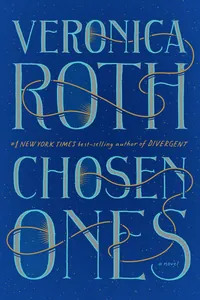



More Free Occult Philosophy Books
View all →