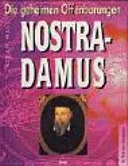
Die geheimen Offenbarungen Nostradamus
 80
80

Die geheimen Offenbarungen Nostradamus
Allan Hall’s investigation into the secret revelations of Nostradamus offers a welcome counterpoint to the more flamboyant interpretations of the 16th-century seer. The strength of this work lies in its methodical approach, attempting to anchor Nostradamus’s prophecies in historical context and textual analysis rather than pure speculation. Hall’s examination of the quatrains, particularly their structure and linguistic peculiarities, provides a valuable perspective for serious students. However, the book occasionally feels constrained by its own desire for scholarly distance, sometimes withholding the speculative leaps that, for better or worse, have fueled the enduring fascination with Nostradamus. A passage detailing the potential astrological underpinnings of the prophecies, while informative, could benefit from more direct engagement with their predictive claims. Ultimately, *Die geheimen Offenbarungen Nostradamus* serves as a sober, if sometimes reserved, guide to a figure often shrouded in hyperbole.
📝 Description
80
Allan Hall's 2011 book examines the prophecies of Michel de Nostredame, the 16th-century seer.
Die geheimen Offenbarungen Nostradamus analyzes the prophecies of Michel de Nostredame, focusing on their origins and the methods he used. The book moves past sensationalism to investigate the textual and historical background of his predictions. It presents an analytical approach to Nostradamus's forecasting.
The work situates Nostradamus's prophecies within the context of 16th-century Europe, a time of religious conflict and interest in astrology. It considers the intellectual atmosphere that allowed his predictions to gain acceptance, looking at earlier prophetic traditions and the era's social conditions. The initial publication and reception of his *Centuries* are also examined.
Central to the analysis is the quatrain, the four-line verse form Nostradamus employed. The book looks into the linguistic puzzles and symbolic language within these verses, which have led to diverse interpretations over time. It also touches on astrological influence as a perceived means of foresight and the difficulty in separating historical events from the seer's coded messages.
This book engages with the tradition of Western esotericism, specifically the practice of prophecy and divination as understood in the early modern period. It places Nostradamus within a lineage of seers and astrologers who sought to understand future events through esoteric means. The analysis considers how such practices were interwoven with the intellectual and religious currents of the Renaissance, a time when occult studies were both feared and pursued.
💡 Why Read This Book?
• Understand the structural basis of Nostradamus’s predictions by examining his signature quatrain format, learning how this poetic form aids in ambiguous interpretation. • Gain insight into the historical milieu of 16th-century France, exploring the intellectual currents and societal factors that contributed to the reception of Michel de Nostredame's work. • Analyze specific prophetic verses discussed in the text, learning to identify symbolic language and potential historical anchors that have led to various interpretations over time.
⭐ Reader Reviews
Honest opinions from readers who have explored this book.
❓ Frequently Asked Questions
When was Nostradamus's primary work, the Centuries, first published?
Nostradamus's *Centuries*, the collection of quatrains that forms the basis of his prophetic fame, was first published in installments. The initial publication occurred in 1555, with subsequent editions expanding the collection.
What is a quatrain in the context of Nostradamus's prophecies?
A quatrain, in Nostradamus's work, is a four-line stanza. He composed hundreds of these verses, often employing cryptic language and symbolism to describe future events.
Did Nostradamus claim to have divine inspiration?
While Nostradamus did not explicitly claim divine inspiration, he described experiencing visions and prophetic dreams, which he attributed to astrological influences and a divine 'inner spirit'.
What historical events are often linked to Nostradamus's prophecies?
Numerous historical events have been retrospectively linked to Nostradamus's prophecies, including the French Revolution, the rise of Napoleon, the assassination of John F. Kennedy, and the September 11th attacks.
Is Nostradamus considered a reliable predictor of the future?
The reliability of Nostradamus's predictions is highly debated. Proponents point to perceived matches with historical events, while skeptics highlight vague language, retrospective interpretation, and mistranslations.
What was the historical context of Nostradamus's life and work?
Nostradamus lived in 16th-century France during a period of significant religious and political upheaval, including the Reformation and dynastic struggles, which influenced the anxieties and beliefs of the era.
🔮 Key Themes & Symbolism
The Art of the Quatrain
This theme examines Nostradamus's chosen medium: the four-line prophetic verse, or quatrain. The work dissects the linguistic construction, symbolic density, and deliberate ambiguity employed by Nostredame. It explores how this specific poetic form, rather than prose, allowed for a multitude of interpretations across centuries, serving as a flexible conduit for perceived future events and a key element in the enduring mystique of his predictions.
Historical Resonance
This theme focuses on the interplay between Nostradamus's predictions and actual historical occurrences. The book investigates how specific quatrains have been retrospectively applied to events ranging from the French Revolution to modern tragedies. It addresses the critical process of discerning genuine predictive power from the human tendency to find patterns and meaning in vague pronouncements, placing the seer's work within its 16th-century context.
Astrological Underpinnings
The book explores the perceived role of astrology in Nostradamus's prophetic method. It explores the belief systems of the 16th century, where celestial movements were often seen as directly influencing earthly affairs and human destiny. This theme examines how Nostredame himself may have used astrological charts and calculations as a basis for his visions, and how this framework contributed to the intellectual acceptance of his predictions at the time.
The Nature of Prophecy
This theme engages with the broader philosophical questions surrounding prophecy itself, using Nostradamus as a case study. It considers the psychological and sociological factors that contribute to belief in predictive texts. The work touches upon the challenges of interpreting visions, the ethics of forecasting, and the enduring human desire to anticipate or control the future, positioning Nostradamus's legacy within a long tradition of seers and diviners.
💬 Memorable Quotes
Direct passages from the work, attributed to the author.
“Michel de Nostredame's work emerged from a Europe steeped in both religious fervor and occult inquiry.”
— This statement contextualizes Nostradamus's prophecies within the specific historical and intellectual climate of the 16th century. It points to the era's blend of widespread religious belief and a concurrent, often clandestine, interest in esoteric practices and divination.
“The challenge lies in separating predictive vision from retrospective narrative.”
— This interpretation addresses the core critical issue when analyzing Nostradamus. It suggests that many perceived fulfillments of his prophecies are likely the result of readers applying his vague verses to known historical events after the fact, rather than evidence of genuine foresight.
“His prophecies were not presented as divine pronouncements but as visions influenced by celestial mechanics.”
— This interpretation clarifies Nostradamus's own framing of his abilities. It distinguishes his approach from direct religious prophecy, emphasizing his reliance on astrological interpretation and personal visionary experiences as the source of his predictions.
💡 Key Ideas
Editorial paraphrase of the work's core concepts — not direct quotes.
The quatrain's structure offers a deliberate canvas for ambiguity.
This paraphrased concept highlights Nostradamus's intentional use of the four-line verse. It suggests that the form itself was designed to be open-ended, allowing for multiple readings and adaptations to events that occurred long after the verses were written.
Astrological configurations were seen as keys to understanding temporal shifts.
This paraphrased concept refers to the Renaissance worldview where celestial patterns were believed to hold direct correlation with events on Earth. It implies that Nostradamus may have used astrological data as a foundational element in his prophetic calculations.
🌙 Esoteric Significance
Tradition
Nostradamus's work sits within the Western esoteric tradition, specifically bridging Renaissance occultism with later prophetic movements. While not strictly Hermetic or Kabbalistic, his reliance on symbolism, astrological correlations, and visionary experience aligns with broader currents of esoteric thought. His prophecies can be seen as a form of practical divination, seeking to map future temporal events through symbolic interpretation, a practice found across various mystical lineages.
Symbolism
Key symbols in Nostradamus's work include animals (e.g., the lion, representing power or nations), celestial bodies (sun, moon, stars, indicating timing or influence), and geographical markers (rivers, cities, pointing to specific locations or events). These elements function as coded references, requiring interpretation within the context of historical events and astrological lore to unlock potential meanings.
Modern Relevance
Contemporary esoteric practitioners and historians of prophecy continue to engage with Nostradamus's quatrains. His work informs discussions on predictive methodologies, the nature of consciousness, and the role of archetypal imagery in forecasting. Modern occult studies and even some psychological analyses of collective anxieties often reference Nostradamus as a touchstone for understanding humanity's enduring fascination with the future.
👥 Who Should Read This Book
• Students of Renaissance history and culture seeking to understand the intellectual and spiritual landscape that fostered figures like Nostradamus. • Practitioners of divination and prophecy interested in historical methodologies and the evolution of predictive arts. • Skeptics and critical thinkers examining the psychology of belief, pattern recognition, and the interpretation of ambiguous texts.
📜 Historical Context
Nostradamus published his *Centuries* in 1555, a period of profound upheaval in Europe. The Protestant Reformation was challenging the established Catholic Church, leading to widespread religious wars and political instability. Intellectual life was a complex blend of burgeoning humanism, lingering medieval scholasticism, and a pervasive interest in astrology, alchemy, and occult sciences. Figures like Agrippa von Nettesheim had already explored the darker arts and hidden knowledge. Nostradamus's work resonated within this climate, offering a framework for understanding or predicting the chaotic future. While some contemporaries viewed his predictions with skepticism, others embraced them. His use of cryptic verse and astrological references aligned with popular esoteric traditions of the era, differentiating him from purely theological pronouncements and placing him within a lineage of prophetic writers that included figures like Joachim of Fiore, though his method was distinct. The reception was mixed, with some seeing divine insight and others heresy.
📔 Journal Prompts
The structure of Nostradamus's quatrains and their inherent ambiguity.
Michel de Nostredame's perceived connection between celestial events and earthly occurrences.
The historical reception of the *Centuries* in the 16th century.
Interpreting symbolic language within prophetic verse.
The enduring human fascination with foretelling future events.
🗂️ Glossary
Quatrain
A verse composed of four lines. Nostradamus famously used this form to record his prophecies, employing it for its conciseness and capacity for symbolic density.
Centuries
The title given to Nostradamus's major collection of prophecies, organized into sets of one hundred quatrains. The first edition appeared in 1555.
Michel de Nostredame
The full name of the 16th-century French apothecary and astrologer widely known as Nostradamus, author of the prophetic quatrains.
Astrology
The study of the movements and relative positions of celestial bodies interpreted as having an influence on human affairs and the natural world.
Divination
The practice of seeking knowledge of the future or the unknown by supernatural means, such as interpreting omens, reading signs, or consulting oracles.
Esoteric
Intended for or likely to be understood by only a small number of people with a specialized knowledge or interest.
Renaissance
The period in European history from the 14th to the 17th century, regarded as the cultural bridge between the Middle Ages and modern history.
This book appears in 1 collection
🔮 Readers Also Liked
Browse all →









From the “Nostradamus” Collection
View all →






More Free Occult Philosophy Books
View all →