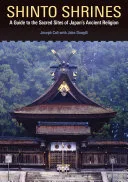
Shinto Shrines
 74
74

Shinto Shrines
Joseph Cali and John Dougill's "Shinto Shrines" offers a much-needed focus on the tangible aspects of Japan's native faith. While many texts address Shinto's philosophical underpinnings, this book excels in its detailed examination of the shrines themselves, treating them not as mere buildings but as living expressions of devotion and connection to the kami. The authors meticulously describe the layout and symbolism, such as the placement of the torii and the significance of the honden, grounding abstract spiritual concepts in concrete architectural forms. A minor limitation is that, in its effort to be exhaustive about sites, some of the deeper theological nuances might feel less explored than the physical structures. However, the strength lies in its visual and spatial analysis, particularly the discussion of how natural landscapes are integrated into shrine design. This is an essential volume for anyone seeking to understand the physical embodiment of Shinto.
This book provides a valuable lens through which to view the physical manifestations of Shinto worship.
📝 Description
74
Joseph Cali and John Dougill's 2005 book examines the physical shrines of Japan's indigenous religion.
This volume details the architectural and geographical aspects of Shinto shrines, the sacred spaces of Japan's native religion. It clarifies Shinto's distinct identity from Buddhism, a frequent point of confusion for Westerners, and explains its core customs, symbolic language, and guiding principles. The book analyzes how the natural world and human construction merge to create places of spiritual importance.
Central to the discussion are numerous Shinto shrines throughout Japan. The authors go beyond simple descriptions to scrutinize architectural designs, the placement of torii gates, purification fountains, and main halls. They explain how these features connect to the kami (deities or spirits) and the natural forces they embody, offering a visual and spatial understanding of Shinto worship. The book also investigates the concept of kami and their link to specific locations, showing how natural features like mountains and ancient trees often become focal points for shrine construction. It illuminates the relationship between the divine, the landscape, and the human need for connection and veneration, presenting Shinto as a lived experience tied to place.
Within the study of Paganism and Witchcraft, this book offers a detailed look at the material culture and spatial arrangements of Shinto. It connects the physical structures of shrines to their underlying spiritual principles and the worship of kami, or spirits. By focusing on the relationship between the natural environment and human construction, it illuminates how sacred geography functions in a living indigenous tradition. This approach provides insight into how beliefs are embodied and expressed through physical spaces, a common concern in the study of animistic and nature-based spiritualities.
💡 Why Read This Book?
• Learn about the distinct architectural elements of Shinto shrines, such as the function and placement of the torii gate, a concept explored in detail within the book's site analyses. • Understand the historical interplay between Shinto and Buddhism in Japan, a relationship clarified in the introductory sections, helping to demystify the two traditions. • Gain insight into the symbolism of specific shrine features, like the temizuya (purification fountain), and their role in ritual practice, as detailed through the examination of various sacred sites.
⭐ Reader Reviews
Honest opinions from readers who have explored this book.
❓ Frequently Asked Questions
What is the primary focus of 'Shinto Shrines'?
The book's main focus is on the physical sites of Shinto worship in Japan, exploring their architecture, symbolism, and geographical context rather than solely concentrating on the religion's philosophy or theology.
How does 'Shinto Shrines' differentiate Shinto from Buddhism?
It provides an extensive introduction that clarifies Shinto's unique customs, symbolism, and its distinct relationship with Buddhism, addressing common Western misunderstandings about the two traditions.
What kind of information is provided about the kami?
The work discusses the kami (deities or spirits) in relation to specific locations and natural features, explaining how they are venerated within the shrine spaces and connected to the landscape.
Who are the authors of 'Shinto Shrines'?
The authors are Joseph Cali and John Dougill. The book was first published in November 2012.
What is a significant aspect of Shinto shrines discussed in the book?
A significant aspect is the integration of natural elements into shrine design, highlighting how mountains, rivers, and trees are considered sacred and often form the basis for shrine construction.
Does the book cover specific examples of Shinto shrines?
Yes, it offers a detailed exploration of numerous Shinto shrines across Japan, analyzing their specific architectural styles, layouts, and symbolic components.
🔮 Key Themes & Symbolism
Shrine Architecture and Symbolism
The work meticulously dissects the physical components of Shinto shrines, from the imposing torii gates that mark transitions to sacred ground, to the purification fountains (temizuya) and the central honden housing the kami. It explains the intentionality behind each element, demonstrating how architectural choices are deeply interwoven with ritual practice and spiritual belief. The book illustrates how these structures are not merely buildings but are designed to facilitate a connection between the human and divine realms.
The Kami and Sacred Geography
Central to Shinto is the veneration of kami, spirits or deities often associated with natural phenomena. This book explores how specific landscapes—mountains, forests, rivers—are recognized as inherently sacred and become the sites for shrine construction. It examines the symbiotic relationship between the kami, the natural world, and the human-built shrines, revealing how Shinto perceives the divine as immanent within the environment. The placement and design of shrines are shown to be dictated by these sacred geographies.
Shinto's Distinction from Buddhism
A significant portion of the book is dedicated to clarifying the unique identity of Shinto, particularly in relation to Buddhism, with which it has historically coexisted and sometimes intertwined in Japan. It details Shinto's indigenous customs, its specific pantheon, and its focus on purity and nature, differentiating these from Buddhist doctrines and practices. This clarification is essential for understanding Shinto on its own terms, free from the common syncretic confusions.
Ritual and Practice at Shrines
Beyond static structures, the book implicitly explores the dynamic nature of worship within Shinto shrines. It touches upon the customs and rituals that take place at these sites, highlighting the importance of purification, offerings, and prayer. By detailing the spaces, the authors provide context for the actions performed by devotees, illustrating how the physical environment is designed to support and enhance these sacred activities and foster a sense of reverence and connection.
💬 Memorable Quotes
Direct passages from the work, attributed to the author.
“This work is the first in English to focus on sites where Shinto has been practiced since the dawn of Japanese history.”
— This statement highlights the book's unique contribution to Western scholarship by prioritizing the physical locations of Shinto worship over purely theological or philosophical discourse.
“Clarifying its relationship with Buddhism as well as its customs, symbolism, and”
— This excerpt from the original blurb indicates the book's intent to clarify Shinto by explaining its distinct practices and symbolic language, and importantly, its historical and theological distinctions from Buddhism.
“The authors look at the fascinating aspects of Shinto, clarifying its relationship with Buddhism as well as its customs, symbolism, and”
— This suggests the book aims to educate readers on the core elements of Shinto, including its unique cultural practices and symbolic meanings, while also addressing common points of confusion with other religions like Buddhism.
“This work is the first in English to focus on sites where Shinto has been practiced since the dawn of Japanese history.”
— This emphasizes the book's pioneering approach in concentrating on the tangible, geographical, and historical locations of Shinto practice, offering a novel perspective for English-speaking audiences.
“In an extensive introductory section, authors Joseph Cali and John Dougill look at the fascinating aspects of Shinto...”
— This points to a foundational section designed to provide readers with a thorough overview of Shinto's intriguing characteristics, setting the stage for a deeper exploration of its sacred sites.
🌙 Esoteric Significance
Tradition
While Shinto itself is not typically categorized within Western esoteric lineages like Hermeticism or Kabbalah, "Shinto Shrines" engages with the esoteric through its exploration of animism, nature veneration, and the concept of immanent divinity. It aligns with traditions that emphasize direct experience of the sacred in the natural world, such as certain forms of folk magic, shamanism, and the ecological spirituality found in some Theosophical interpretations. The book offers a bridge for those interested in non-dualistic spiritualities rooted in physical place.
Symbolism
Key symbols explored include the torii, marking the transition from the mundane to the sacred, and often representing a gateway to the divine or a connection to the spirit world. The *shimenawa*, a sacred rope often adorned with paper streamers, signifies purification and warding off evil spirits. The *honden*, the inner sanctuary, represents the dwelling place of the kami, embodying the sacred presence within the shrine's architecture.
Modern Relevance
Contemporary thinkers interested in eco-spirituality, place-based activism, and indigenous knowledge systems can draw parallels from this work. Architects and urban planners seeking to integrate spiritual or harmonious design principles might find inspiration. Furthermore, individuals exploring embodied spiritual practices or seeking to understand non-Abrahamic religious structures find value in its detailed examination of the physical manifestation of faith.
👥 Who Should Read This Book
• Students of comparative religion seeking to understand the physical manifestations of indigenous belief systems, particularly those interested in Japanese culture and spirituality. • Architectural historians and enthusiasts interested in the design, symbolism, and cultural context of sacred buildings, specifically Japanese shrine architecture. • Travelers and cultural explorers planning visits to Japan who wish to gain a deeper, informed appreciation for the significance of Shinto shrines beyond their aesthetic appeal.
📜 Historical Context
Published in November 2012, "Shinto Shrines" emerged during a period of continued academic interest in Japanese religions and their global dissemination. The early 21st century saw increased accessibility to diverse cultural studies, making works that focused on specific aspects of religious practice, like shrine architecture, particularly valuable. The book's focus on Shinto sites offered a counterpoint to the more prevalent scholarship on Buddhism in Japan. While not facing significant censorship, its reception likely contributed to the growing body of English-language resources on Japanese indigenous traditions, appealing to both academic researchers and culturally curious Western readers.
📔 Journal Prompts
The torii gate as a liminal space, marking the threshold between the mundane and the sacred.
Reflection on the integration of natural elements into shrine design and its spiritual implications.
The concept of purity (harae) as expressed through shrine architecture and purification rituals.
Comparing the spatial organization of Shinto shrines with other religious structures.
The role of kami in defining sacred geography and influencing shrine placement.
🗂️ Glossary
Kami
Spirits, deities, or divine essences that inhabit the natural world, ancestors, or significant phenomena in Shinto. They are not necessarily omnipotent but are forces to be respected and venerated.
Torii
A traditional Japanese gate most commonly found at the entrance of or within a Shinto shrine, symbolically marking the transition from the mundane to the sacred.
Honden
The innermost sanctuary of a Shinto shrine, where the go-shintai (object housing the kami) is enshrined. It is the most sacred part of the shrine complex.
Temizuya
A water basin found at the entrance of many Shinto shrines used for ritual purification of hands and mouth before entering the sacred precincts.
Shimenawa
A sacred rope, often made of straw, used to demarcate sacred spaces or objects believed to be pure or inhabited by kami, often adorned with zigzag paper strips called shide.
Jinja
The Japanese word for a Shinto shrine; a sacred site dedicated to the worship of kami.
Goshintai
An object, such as a mirror, sword, or rock, believed to house the spirit of a kami, typically kept within the honden of a Shinto shrine.