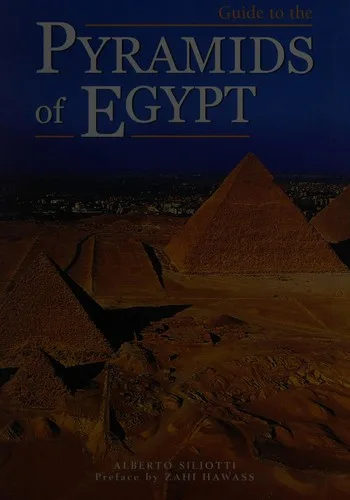
Guide to the Pyramids of Egypt
 84
84

Guide to the Pyramids of Egypt
Alberto Siliotti's Guide to the Pyramids of Egypt provides a thorough, if somewhat dry, account of its subject. The strength lies in its extensive use of plans, diagrams, and color photographs, which offer a clarity often missing in purely text-based descriptions. For instance, the detailed breakdown of the internal chambers of the Pyramid of Djoser, complete with reconstruction drawings, is particularly effective in conveying the architectural ingenuity of the era. However, the book sometimes feels more like a technical manual than an exploration of mystery. While it presents factual information about the purpose of each section, it stops short of deeply engaging with the more speculative or esoteric interpretations that many readers might seek from a publication under an 'Esoteric' category. The ambition to cover 'all the principal pyramids' results in a breadth that occasionally sacrifices depth on the more enigmatic aspects. It is a solid reference for the construction and layout, but less so for profound spiritual or symbolic interpretation.
📝 Description
84
Alberto Siliotti's 1997 Guide to the Pyramids of Egypt details the architectural complexities of Old Kingdom necropolises.
Published in 1997, Alberto Siliotti's Guide to the Pyramids of Egypt provides a detailed look at the major pyramid structures and the Memphite necropolis of the Old Kingdom. The book uses maps, plans, and reconstructions to explain the architectural design and layout of these ancient monuments. It discusses the purpose of different parts of the pyramid complexes. This work is for serious students of Egyptology, archaeology fans, and anyone interested in the architecture and less common interpretations of ancient Egyptian civilization.
Readers who want a visually rich and factually sound study of how pyramids were built, their purpose, and the surrounding burial sites will find this book valuable. It suits those who like detailed diagrams and photographs when studying historical locations. The book places its study within the context of Old Kingdom Egypt, a time of large-scale building and growing pharaonic authority. Its focus on the Memphite necropolis shows the religious and political importance of the area during dynasties like the Fourth Dynasty, which built the Giza pyramids.
While primarily an architectural and archaeological study, Siliotti's work touches upon the esoteric by presenting the pyramid complex not simply as a tomb but as a sacred space. It highlights the belief system that saw these structures as facilitating the pharaoh's journey into the afterlife and cosmic renewal. This aligns with esoteric traditions that interpret ancient monumental architecture as embodying complex cosmological and spiritual principles, beyond their purely functional or historical explanations.
💡 Why Read This Book?
• Gain a precise understanding of the architectural layout and function of Old Kingdom pyramid complexes, such as the precise spatial relationship between the Great Pyramid of Giza and its associated valley temple, as detailed in the book's plans. • Appreciate the technical execution of pyramid construction through Siliotti's use of diagrams and reconstructions, illustrating methods that enabled structures like the Step Pyramid of Djoser to be realized. • Explore the archaeological evidence surrounding funerary cults and rituals associated with specific necropolis sites, such as Saqqara, presented with photographic documentation of relevant relics.
⭐ Reader Reviews
Honest opinions from readers who have explored this book.
❓ Frequently Asked Questions
What period of Egyptian history does Guide to the Pyramids of Egypt primarily focus on?
The book concentrates on the Old Kingdom of Egypt, a pivotal era for pyramid construction. This period includes the reigns of powerful pharaohs responsible for some of the most iconic structures, particularly within the Memphite necropolis.
What types of visual aids are included in Alberto Siliotti's guide?
The guide features an abundant collection of maps, detailed plans, and reconstruction drawings. These are supplemented by large color photographs of the pyramids and archaeological relics, offering a comprehensive visual reference.
Does the book explain the purpose of different parts of a pyramid complex?
Yes, the work systematically explains the purpose of each section within the pyramid complexes. It covers elements like the main pyramid structure, mortuary temples, valley temples, and causeways, using diagrams to illustrate their functions.
Which specific necropolis is prominently featured in the guide?
The book gives significant attention to the great Memphite necropolis. This vast burial ground near Memphis was central to royal funerary practices during the Old Kingdom, housing numerous important pyramids and associated structures.
Is Guide to the Pyramids of Egypt suitable for beginners in Egyptology?
While comprehensive, the book's detailed approach with technical diagrams and specific terminology makes it particularly valuable for those with some existing interest or background in Egyptology or archaeology. Beginners may find it a rich, albeit dense, resource.
What is the original publication year of Alberto Siliotti's Guide to the Pyramids of Egypt?
The book was first published in 1997. This edition provides insights based on archaeological understanding and scholarship available at that time.
🔮 Key Themes & Symbolism
Architectural Blueprint of Eternity
The book meticulously dissects the physical architecture of the pyramids, treating them as complex machines designed for eternity. It details the precise dimensions, internal passageways, and chamber layouts, emphasizing how each element served a specific ritualistic or functional purpose within the pharaoh's journey to the afterlife. This focus on the tangible structure reveals a sophisticated understanding of engineering and spatial planning by the ancient Egyptians, presenting the pyramids not just as tombs but as monumental instruments of cosmic alignment and resurrection.
The Memphite Necropolis as Sacred Landscape
Beyond individual structures, Siliotti highlights the Memphite necropolis as an integrated sacred landscape. The work explores the interconnectedness of the pyramids, mortuary temples, valley temples, and causeways, illustrating how they formed a cohesive unit designed to facilitate the pharaoh's cult and ensure perpetual remembrance. This perspective emphasizes the holistic approach to death and afterlife beliefs, where the physical environment was as crucial as the burial itself for achieving immortality and maintaining cosmic order.
Engineering and Symbolism in Construction
The guide examines the construction methods employed during the Old Kingdom, often looking at the practicalities of quarrying, transporting, and lifting massive stone blocks. Simultaneously, it touches upon the symbolic significance embedded within these processes and the final structures. The orientation of the pyramids towards cardinal points, the specific alignment of internal shafts, and the symbolic representation of divine power are presented as integral aspects of their design, reflecting a profound synthesis of engineering prowess and spiritual purpose.
Archaeological Record and Interpretation
Siliotti’s work is rooted in the archaeological discoveries and scholarly interpretations available up to its publication date. It presents photographic evidence of artifacts and structural remains, guiding the reader through the process of understanding these ancient sites based on material evidence. The book serves as a record of Egyptological knowledge concerning the Old Kingdom pyramids, offering a factual basis for further contemplation on their construction, function, and the civilization that created them.
💬 Memorable Quotes
Direct passages from the work, attributed to the author.
“The work explains the purpose of each section of the pyramid complexes.”
— This statement underscores the book's methodical approach, aiming to clarify the intricate design of pyramid sites by detailing the specific roles and functions of every component, from the main structure to auxiliary buildings.
“An abundant collection of maps, plans, and reconstructions.”
— This highlights the visual emphasis of the guide, suggesting that understanding is achieved not just through text but through detailed cartography and architectural renderings that bring the ancient structures to life.
“Explores the heart of the pyramids and unravels their mysteries.”
— This suggests a deep dive into the inner workings and less understood aspects of pyramid construction and purpose, promising to shed light on the enigmatic nature of these ancient monuments.
“Focuses on the principal pyramids and the great Memphite necropolis of the Old Kingdom.”
— This defines the scope of the book, indicating a concentrated study on the most significant pyramid sites and their associated burial grounds from a specific, crucial period in Egyptian history.
“Includes information on archaeological relics.”
— This points to the book's grounding in empirical evidence, indicating that the textual explanations are supported by descriptions and visuals of actual artifacts recovered from the pyramid sites.
🌙 Esoteric Significance
Tradition
While not explicitly aligned with a single esoteric tradition, the book's focus on the pyramids as instruments of cosmic order and resurrection places it adjacent to Hermetic and Neoplatonic interests in ancient Egyptian cosmology. These traditions often viewed Egyptian monuments as repositories of profound wisdom, designed to harmonize earthly existence with celestial principles. Siliotti’s detailed architectural analysis provides the factual basis upon which esoteric interpretations, focusing on sacred geometry and celestial alignments, can be built.
Symbolism
The primary symbols explored are the pyramid itself, representing ascent, stability, and the primeval mound, and the complex's orientation towards cardinal directions, symbolizing cosmic order and universal balance. The internal chambers and shafts can be interpreted esoterically as pathways for the soul’s journey, connecting the earthly realm with the divine or the afterlife. The sheer scale and precision of construction symbolize the power and divine mandate of the pharaoh.
Modern Relevance
Contemporary esoteric practitioners and students of sacred geometry continue to draw inspiration from the architectural principles detailed in works like Siliotti's. Thinkers exploring consciousness, ancient technologies, and ley lines often reference the precise measurements and alignments of the Giza pyramids, using such guides as a foundation for their own theoretical frameworks concerning earth energies and cosmic consciousness.
👥 Who Should Read This Book
• Architecture enthusiasts and historians of ancient technology seeking detailed blueprints and construction analyses of Old Kingdom pyramids. • Students of comparative religion and mythology interested in the funerary practices and cosmological beliefs of ancient Egypt, supported by visual evidence. • Researchers of sacred geometry and ancient sites looking for precise measurements and site plans of major Egyptian pyramids and necropolis complexes.
📜 Historical Context
Published in 1997, Alberto Siliotti's Guide to the Pyramids of Egypt arrived at a time when Egyptology continued to grapple with the precise construction methods and symbolic meanings of Old Kingdom monuments. The work engaged with decades of archaeological fieldwork and scholarly debate, particularly concerning the Fourth Dynasty's monumental projects. While Siliotti’s approach is primarily descriptive and architectural, it implicitly participates in a broader discourse that includes more speculative interpretations of pyramid purpose, often found in esoteric literature. The book’s factual grounding contrasts with purely mystical accounts, offering a concrete counterpoint. Contemporaries like Mark Lehner were publishing significant works around this time, such as 'The Complete Pyramids' (1997), which also provided detailed architectural analysis and site surveys, contributing to a rich period of accessible, comprehensive scholarship on the subject.
📔 Journal Prompts
The architectural purpose of the mortuary temple within the Memphite necropolis.
The symbolic representation of cosmic order through pyramid orientation.
How the integration of maps and plans aids in understanding pyramid complexes.
The function of the valley temple in relation to the pyramid structure.
The engineering challenges presented by the construction of the Step Pyramid of Djoser.
🗂️ Glossary
Memphite Necropolis
The vast ancient Egyptian burial ground located near the city of Memphis. It served as a primary royal and elite cemetery during the Old and Middle Kingdoms, containing numerous pyramids and mastaba tombs.
Old Kingdom
A period in ancient Egyptian history spanning roughly from 2686 to 2181 BCE, characterized by the peak of pyramid building, strong centralized government, and significant artistic and architectural achievements.
Mortuary Temple
A temple located adjacent to a pyramid, dedicated to the cult of the deceased pharaoh. It was the site for offerings and rituals intended to sustain the pharaoh's spirit in the afterlife.
Valley Temple
A temple situated at the edge of the Nile flood plain, connected by a causeway to the mortuary temple and pyramid complex. It likely served as an entrance point and a place for purification rituals.
Causeway
A paved, often roofed, passageway connecting the Valley Temple to the Mortuary Temple, forming an integral part of the royal funerary complex and facilitating processions.
Mastaba
An ancient Egyptian tomb with a rectangular base and sloping sides, typically made of mudbrick or stone. They predated pyramids and often served as tombs for nobles and high officials.
Pharaoh
The title given to the rulers of ancient Egypt, considered both political leaders and divine figures responsible for maintaining cosmic order (Ma'at).