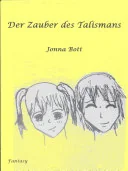
Der Zauber des Talismans
 71
71

Der Zauber des Talismans
Jonna Bott’s Der Zauber des Talismans presents a chilling premise: a fictional script becoming a blueprint for real-world assassination attempts. The narrative excels in building atmospheric dread, particularly as Audrina finds herself targeted in ways eerily identical to the character she unknowingly embodies within Marten’s game design. The central tension, whether Marten’s act of creation has literally summoned danger upon his sister, is the story's strongest asset. However, the resolution, while addressing the immediate threat, feels somewhat compressed, leaving certain thematic explorations of the siblings' agency against external forces less developed than the initial setup promised. A passage detailing the uncanny parallels between the script’s climax and the real-world events stands out for its effective suspense. The work ultimately succeeds as a suspenseful exploration of the artist's responsibility, though it could have benefited from a more expansive treatment of its philosophical underpinnings. It is a tightly plotted thriller with a significant speculative twist.
📝 Description
71
In Jonna Bott's 2017 novel, a scriptwriting competition unleashes a dangerous reality.
Der Zauber des Talismans follows Audrina and Marten, orphaned siblings facing dire circumstances and fleeing a secret police force. Their struggle for survival takes an unexpected turn when Marten enters a scriptwriting competition. This act inadvertently entangles Audrina in a reality that mirrors his fictional creation, blurring the lines between his story and their lives.
The narrative examines the potent and often dangerous nature of creative intent. A fictional construct, born from frustration, can manifest into tangible, life-threatening events. The story questions predetermination versus free will, the power of suggestion, and how art can become a self-fulfilling prophecy when infused with strong emotion or observed by unseen forces. It is a story about the consequences of creative acts and the struggle against oppressive systems.
Published in 2017, the novel echoes concerns found in earlier 20th-century speculative fiction that explored totalitarian regimes and the power of media or coded communication. The narrative of a secret police force and hidden protagonists reflects anxieties present in societies under intense political control, such as during the Cold War. It touches on themes of hidden forces influencing events and the potential for subjective belief to shape objective reality, a concept explored in various occult traditions.
💡 Why Read This Book?
• Understand the 'magic of the talisman' by exploring how creative intent can manifest tangible, dangerous outcomes, as depicted in the narrative's central conflict arising from Marten's script. • Gain insight into the psychological impact of oppressive regimes by examining Audrina and Marten's struggle to survive and evade the secret police in the story's underground setting. • Contemplate the nature of fate and free will through the story's exploration of how fictional elements, like the character Clarissa's predetermined death, begin to influence real events.
⭐ Reader Reviews
Honest opinions from readers who have explored this book.
❓ Frequently Asked Questions
What is the central premise of Der Zauber des Talismans?
The book centers on orphaned siblings Audrina and Marten. Marten submits a game script for a competition, but its fictional plot, including a character's death, begins to manifest as real-life assassination attempts on Audrina.
Who are the main characters in Der Zauber des Talismans?
The primary characters are Audrina and Marten, orphaned siblings living in hiding from a secret police force. Marten is the creator of the fateful script, and Audrina becomes the unwitting target.
What genre does Der Zauber des Talismans belong to?
It is a blend of speculative fiction, psychological thriller, and allegorical narrative, exploring themes of fate, creation, and survival.
When was Der Zauber des Talismans first published?
The book was first published on February 20, 2017.
What is the original blurb's main point?
The blurb highlights the plight of orphans Audrina and Marten, Marten's involvement in a script competition, and the terrifying realization that his fictional plot is becoming reality, endangering Audrina.
Does the story involve supernatural elements or psychological suspense?
The story leans heavily into psychological suspense and the uncanny, exploring how fictional creation can seem to possess a life of its own and influence reality, rather than explicit supernatural magic.
🔮 Key Themes & Symbolism
The Power of Creation
The narrative scrutinizes the profound and potentially perilous influence of creative acts. Marten's fictional script, born from frustration, becomes a catalyst for real-world danger, suggesting that intent and imagination can hold a potent, almost magical, power. This theme questions the responsibility of the artist and the inherent dangers of imbuing creations with strong emotional energy, especially when they are designed to resolve conflict through destruction, like Clarissa's scripted demise.
Fate and Predetermination
Der Zauber des Talismans grapples with the concept of destiny versus free will. The uncanny parallels between Marten's script and the attacks on Audrina raise questions about whether events are preordained or if they are a direct consequence of Marten's actions. The title itself, 'The Magic of the Talisman,' implies an object or force that exerts control, hinting at a larger, possibly inescapable, pattern influencing the siblings' lives.
Survival Against Oppression
Fundamentally, the story depicts a desperate struggle for survival against an oppressive force – the secret police. The siblings' existence in hiding underscores themes of vulnerability, resilience, and the constant threat of discovery. Their attempts to escape their dire circumstances, both physically and metaphorically through Marten's game, highlight the human will to persevere in the face of overwhelming adversity and systemic control.
Blurring Reality and Fiction
A central element is the insidious merging of Marten's fictional narrative with Audrina's lived reality. The book explores how the lines between imagination and the tangible world can become dangerously indistinct, especially when the fictional elements are designed to be compelling or cathartic. This theme creates a pervasive sense of unease and suspense as the characters, and the reader, question what is real and what is a dangerous construct.
💬 Memorable Quotes
Direct passages from the work, attributed to the author.
“The orphan siblings hid from the secret police, their lives a constant flight.”
— This captures the desperate, precarious existence of Audrina and Marten, establishing the oppressive atmosphere and their vulnerability from the outset.
“Marten submitted a script no one expected to win.”
— This highlights the impulsive, almost futile act that sets the main plot in motion, emphasizing the low expectations surrounding his creative endeavor.
💡 Key Ideas
Editorial paraphrase of the work's core concepts — not direct quotes.
Clarissa had to die; it was the only way the story felt complete.
This paraphrased concept reveals Marten's creative motivation, a desire for narrative resolution that inadvertently becomes the source of real-world peril.
The attacks on Audrina mirrored the script's plot points with chilling accuracy.
This paraphrased concept illustrates the core horror of the novel: the terrifying convergence of fiction and reality, where art imitates life with deadly consequences.
Could Marten's imagination truly endanger his sister?
This paraphrased concept poses the central question that drives the narrative's suspense and thematic exploration of creative responsibility.
🌙 Esoteric Significance
Tradition
While not explicitly a work of occult doctrine, Der Zauber des Talismans touches upon themes common in esoteric thought, particularly concerning the power of intent and manifestation, aligning loosely with concepts found in Hermeticism or ceremonial magic. It explores the idea that focused will and imagination can influence material reality, a principle often discussed in texts related to psychic phenomena or theurgy. The narrative departs from traditional magical systems by presenting this influence as an emergent property of creative expression rather than a structured ritual.
Symbolism
The 'talisman' in the title can be interpreted as a symbolic representation of Marten's script itself – an object imbued with the power to affect reality. The concept of Clarissa, the character designed to die, functions as a potent symbol of sacrifice and unintended consequence. The secret police represent an overarching, oppressive force, symbolizing external control or perhaps the darker, shadow aspects of the psyche that seek to suppress individual will and creativity.
Modern Relevance
Contemporary practitioners of manifestation techniques, artists exploring the psychology of creativity, and writers interested in speculative fiction that blurs genre lines might find resonance in this work. It speaks to modern discussions around the 'law of attraction' and the power of thought, albeit through a fictional lens that highlights potential dangers and ethical considerations. The book’s exploration of how digital creations can impact reality also connects with current debates on virtual reality, AI, and the ethics of simulated worlds.
👥 Who Should Read This Book
• Readers interested in speculative fiction that explores the psychological impact of oppressive regimes and the nature of survival. • Individuals fascinated by narratives that question the boundaries between imagination and reality, and the potential consequences of creative acts. • Those who appreciate thrillers with an allegorical undercurrent, examining themes of fate, free will, and the uncanny.
📜 Historical Context
Published in 2017, Der Zauber des Talismans emerged in a period marked by a resurgence of interest in dystopian narratives and anxieties surrounding information control and surveillance. While not directly tied to a specific historical event, its themes of secret police and hidden protagonists resonate with the historical realities of totalitarian regimes throughout the 20th century, such as those documented in George Orwell's *Nineteen Eighty-Four* (1949). The narrative's exploration of how fictional constructs can influence reality can also be seen as a contemporary echo of theories about memetics and the power of narrative, which gained traction in intellectual circles throughout the late 20th century, influenced by thinkers like Richard Dawkins. The reception of such works in the 2010s often reflected a broader cultural unease about technology, political instability, and the nature of truth in a digitally saturated world.
📔 Journal Prompts
The script's fatal flaw: Reflect on how Marten's desire for narrative closure led to real danger.
Audrina's survival: Consider the siblings' attempts to evade the secret police and their meaning.
Clarissa's programmed demise: Analyze the symbolism of this character's fate within the narrative.
The uncanny manifestation: Explore the concept of fiction bleeding into reality as presented in the book.
Marten's creative responsibility: How does the story portray the ethics of artistic creation?
🗂️ Glossary
Secret Police
An organization operating under a government, tasked with suppressing opposition, often through covert surveillance and enforcement, creating an atmosphere of fear and control.
Game Script
The written text that outlines the plot, dialogue, characters, and events for a video game, serving as a blueprint for its development and narrative structure.
Talisman
An object believed to possess magical properties, often worn or kept for protection or to bring good fortune; in this context, the script itself may function as a symbolic talisman.
Orphans
Children who have lost one or both parents, often implying vulnerability and a struggle for survival in harsh environments.
Manifestation
The act of making something real or visible; in esoteric contexts, it often refers to the bringing into existence of thoughts or desires through mental focus or will.
Allegory
A story, poem, or picture that can be interpreted to reveal a hidden meaning, typically a moral or political one, where characters and events represent abstract ideas.
Predetermination
The philosophical concept that all events, including human action, are determined by previously existing causes; a belief in fate or destiny.
This book appears in 1 collection
🔮 Readers Also Liked
Browse all →








From the “Talismans” Collection
View all →



More Free Occult Philosophy Books
View all →