The Book of Margery Kempe
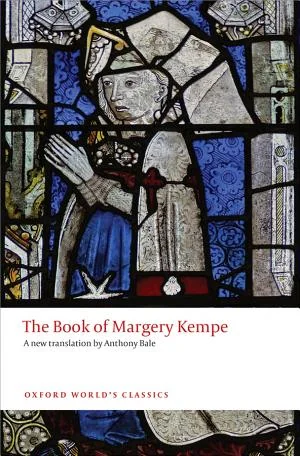
 82
82

The Book of Margery Kempe
Margery Kempe's account is a raw, unvarnished chronicle of a soul in extreme spiritual turmoil and ecstasy. Its primary strength lies in its unflinching depiction of a woman's inner life, providing a rare, unfiltered glimpse into medieval female spirituality. The sheer intensity of Kempe's visions, her unwavering conviction despite widespread condemnation, and her extensive travels to Jerusalem and Rome are documented with a visceral immediacy. However, the narrative's structure can be repetitive, and Kempe's self-justification, while understandable, sometimes strains the reader's patience. A particularly striking passage details her confrontation with the Bishop of London regarding her spiritual authority. The work’s value resides not in polished prose but in its startling authenticity, offering a powerful, albeit challenging, testament to faith.
📝 Description
82
Margery Kempe dictated her spiritual autobiography between 1431 and 1438.
The Book of Margery Kempe is the earliest known autobiography written in English. It records the life of a medieval mystic, Margery Kempe, who had intense religious visions and undertook long pilgrimages. Kempe commissioned the work, dictating her experiences to scribes over several years. The text offers a unique look at devotional practices and societal limits in late 14th and early 15th century England.
Kempe's account details her spiritual marriage to Christ, her public displays of piety, and her frequent, loud weeping during religious services. These actions often brought her into conflict with church authorities and social norms of the time. The book survived despite its sometimes controversial nature, providing a personal perspective on faith, suffering, and everyday life in the period.
This work belongs to the tradition of Christian vernacular mysticism, particularly prevalent in late medieval England. It sits alongside other devotional writings that sought to articulate direct, personal experiences of the divine, often outside formal theological structures. Kempe's intense affective piety, her emphasis on visions, and her physical manifestations of religious feeling are characteristic of certain mystical currents that valued subjective spiritual encounters. The book’s survival reflects a complex relationship between individual spiritual expression and institutional religious power.
💡 Why Read This Book?
• Gain insight into the lived experience of medieval female piety, understanding Kempe’s intense weeping and visions as specific expressions of devotion not found in more conventional spiritual guides. • Explore the practicalities and dangers of medieval pilgrimage by tracing Kempe’s journeys to Jerusalem and Rome, illustrating the physical and social challenges of such travel in the early 15th century. • Examine the challenges to ecclesiastical authority posed by lay mystics, as Kempe’s direct divine communications and public displays of faith often led to confrontations with figures like Archbishop Henry Chichele.
⭐ Reader Reviews
Honest opinions from readers who have explored this book.
❓ Frequently Asked Questions
When was The Book of Margery Kempe written?
Margery Kempe dictated her book over a period of years, with the writing likely concluding around 1438, shortly before her death. The first known manuscript dates from this period.
Who was Margery Kempe?
Margery Kempe was an English mystic, businesswoman, and pilgrim who lived from roughly 1373 to after 1438. She is known for her intense religious visions and her autobiography, the earliest in English.
What is the significance of Kempe's crying?
Kempe's loud, uncontrollable crying during moments of religious contemplation was a central and often controversial aspect of her spiritual practice. She interpreted it as a sign of divine grace and profound empathy with Christ's suffering.
What are some of the places Margery Kempe visited?
Kempe embarked on extensive pilgrimages. Key destinations included Jerusalem, Rome, Santiago de Compostela in Spain, and the shrine of St. Thomas Becket at Canterbury.
Was Margery Kempe ever persecuted?
Yes, Kempe faced significant suspicion and opposition from clergy and laity alike. Her intense emotional piety and claims of direct divine revelation led to accusations of heresy and numerous interrogations.
What is the historical context of The Book of Margery Kempe?
The book was written in the early 15th century, a time when the Church's authority was being challenged by movements like the Lollards. Kempe's experiences reflect the spiritual and social landscape of late medieval England.
🔮 Key Themes & Symbolism
Divine Revelation and Inner Voice
The work details Kempe's profound and frequent visions of Christ, the Virgin Mary, and saints. These are not presented as mere passive experiences but as active dialogues that guided her life decisions, from marriage and business to her extensive travels. This theme highlights a direct, personal connection to the divine, bypassing intermediary structures and emphasizing the authority of individual spiritual experience in an era of established religious hierarchy.
The Ascetic Body and Spiritual Warfare
Kempe's physical experiences—her intense weeping, fasting, and mortification—are central to her spiritual identity. The text portrays the body as a site of spiritual struggle and devotion, where suffering and self-denial become pathways to divine union. Her loud crying, in particular, is a manifestation of her empathy with Christ’s passion, serving as both a personal devotional act and a public witness that often provoked controversy and judgment.
Pilgrimage as Spiritual and Social Journey
Kempe's extensive pilgrimages to Jerusalem, Rome, and other holy sites are not simply acts of devotion but complex social and spiritual undertakings. The book documents the arduous physical journeys, the encounters with diverse people and cultures, and the ongoing spiritual testing she faced abroad. These travels underscore her determination to experience sacred geography firsthand and assert her spiritual authority on an international stage.
The Role of Women in Medieval Spirituality
As the earliest autobiography in English, the book offers invaluable insight into the challenges and possibilities for women seeking spiritual expression in the 15th century. Kempe navigated a patriarchal society, asserting her right to a direct relationship with God despite societal expectations for women as wives and mothers. Her experiences illuminate the tensions between personal piety and institutional control, particularly for women who claimed spiritual authority.
💬 Memorable Quotes
Direct passages from the work, attributed to the author.
“I have no will but God's will.”
— This statement expresses Kempe's complete surrender to divine will, a core tenet of her mystical experience. It reflects an aspiration to align her entire being with God's plan, transcending personal desires or societal pressures.
“I must weep and cry, for I may not do it by my own will.”
— This highlights the uncontrollable nature of Kempe's spiritual weeping. She presents it not as a chosen act but as a divine compulsion, a manifestation of her deep empathy and spiritual sensitivity that defined her public persona.
“I am a maid, and a wife, and a servant of God.”
— This declaration asserts Kempe's many-sided identity. It acknowledges her worldly roles (maid, wife) while prioritizing her spiritual calling, framing her life as a evidence of divine service.
“I have great sorrow when I think of Christ's Passion.”
— This expresses Kempe's profound emotional connection to the suffering of Christ. It is a direct reflection of her intense devotional practices and her belief in the power of empathetic suffering to draw one closer to God.
“The Cause is God, and I may not deny Him.”
— This reflects Kempe's unwavering commitment to her spiritual calling. It suggests that her actions and experiences are driven by divine imperative, making her an instrument of God's will that she cannot refuse.
🌙 Esoteric Significance
Tradition
Margery Kempe's work falls within the broad tradition of Christian mysticism, specifically the 'visionary' or 'affective' piety prevalent in late medieval Europe. While not subscribing to a formally defined esoteric school like Hermeticism or Kabbalah, her emphasis on direct, personal revelation, divine marriage, and the transformative power of spiritual experience aligns with perennial mystical themes found across various traditions. Her focus on interiority and divine encounter departs from purely dogmatic religion, seeking a lived, experiential truth.
Symbolism
The intense weeping that characterizes Kempe’s spiritual practice serves as a potent symbol. It represents not mere sadness, but a profound affective response to divine love and Christ’s suffering, acting as a conduit for spiritual purification and union. Her numerous pilgrimages, particularly to Jerusalem, symbolize a desire to physically inhabit sacred narratives and achieve spiritual renewal through direct engagement with holy sites, mirroring the soul’s journey towards God.
Modern Relevance
Contemporary interest in Kempe stems from her role as an early female autobiographer and a figure of intense, unconventional spirituality. Scholars of gender studies and medieval history examine her defiance of patriarchal norms. Mystics and contemplative practitioners today find resonance in her direct, unmediated experience of the divine, her emphasis on affective prayer, and her pursuit of spiritual truth outside rigid institutional frameworks.
👥 Who Should Read This Book
• Students of medieval English literature and history seeking primary source material on lay religious experience and the development of autobiography. • Aspiring mystics and contemplative practitioners interested in historical accounts of direct divine encounter, affective prayer, and the challenges of spiritual authenticity. • Scholars of women's studies and gender history looking for insights into the social and religious constraints faced by medieval women who sought public spiritual agency.
📜 Historical Context
The Book of Margery Kempe emerged from the spiritual ferment of early 15th-century England, a period marked by burgeoning lay piety and challenges to established Church authority. The Lollard movement, inspired by John Wycliffe, questioned transubstantiation and clerical privilege, creating an environment where unconventional religious expression could be viewed with suspicion. Kempe's own experiences, including her direct claims of divine communication and her sometimes disruptive public displays of emotion, placed her in direct conflict with figures like Archbishop Henry Chichele. While the Church was grappling with the Great Schism (which ended in 1417), individuals like Kempe sought personal, direct communion with the divine, a trend that both enriched and complicated the religious landscape. Her manuscript’s survival suggests it eventually found a place within certain devotional or scholarly circles, despite its controversial nature.
📔 Journal Prompts
Margery Kempe's overwhelming weeping during religious contemplation.
The concept of spiritual marriage to Christ as described by Kempe.
Your own experiences of seeking sacred sites, akin to Kempe's pilgrimages.
The tension between Kempe's business acumen and her spiritual calling.
Interpreting the significance of Kempe's visions of the Trinity.
🗂️ Glossary
Mystic
An individual who claims direct, intuitive experience of divine presence or ultimate reality, often through contemplation or altered states of consciousness.
Pilgrimage
A journey undertaken for religious or spiritual devotion, typically to a sacred place or shrine, involving hardship and often undertaken for penance or seeking divine favor.
Visions
Supernatural or mystical experiences perceived by the inner senses, often involving visual representations of divine figures, events, or symbolic imagery.
Lollardy
A pre-Reformation religious movement in England, followers of John Wycliffe, advocating for reforms such as the translation of the Bible into English and questioning Church hierarchy and sacraments.
Contemplation
A form of deep, reflective prayer or meditation focused on achieving union with God or a state of spiritual insight, often involving stillness and inner focus.
Affective Piety
A devotional practice emphasizing emotional response, particularly empathy and compassion, towards the suffering and humanity of Christ, common in late medieval spirituality.
Scribe
A person who copies documents by hand. In Kempe's case, she dictated her experiences to scribes due to her illiteracy.
🔮 Readers Also Liked
Browse all →








More Free Occult Philosophy Books
View all →