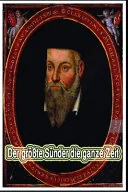
Der Größte Sünder Die Ganze Zeit
 83
83

Der Größte Sünder Die Ganze Zeit
The "Der Größte Sünder Die Ganze Zeit" (The Greatest Sinner All the Time) offers an unfiltered look at Nostradamus's prophetic output, largely sidestepping modern commentary to present the original text. Its strength lies in this direct access to the quatrains, allowing readers to form their own conclusions about the seer's foresight. The organization into "Centuries" remains the standard for navigating his work. However, the lack of extensive annotation or historical framing in this specific edition can be a significant hurdle for newcomers. The ambiguity inherent in the quatrains, such as those alluding to celestial events or political shifts, demands considerable prior knowledge or supplementary material for meaningful analysis. The work's power, for better or worse, rests entirely on the reader's interpretive framework. It serves as raw material for divination, not a guide to it.
📝 Description
83
Penned in 1554, Michel de Nostradame's prophetic verses are gathered here in ten 'Centuries'.
This volume contains the prophetic verses of Michel de Nostradame, known as Nostradamus. Composed in 1554 and first published in 1555 and 1558, these prophecies are arranged into ten sections, or 'Centuries,' each housing roughly 100 quatrains. The work established Nostradamus as a notable figure in the history of prophecy.
Its appeal lies in direct engagement with primary source material. Readers interested in the pre-modern worldview and its attempts to chart future events will find value here. The text is suited for serious students of prophetic traditions and historical occultism, offering a look into the enduring impact of Nostradamus's writings.
Nostradamus's prophecies belong to a tradition of Western esotericism that sought to understand and predict future events through coded language and symbolic interpretation. Emerging in the 16th century, a time of significant religious and intellectual change, his work drew on astrological knowledge and historical precedents. Unlike purely philosophical occult texts, Nostradamus focused on foretelling specific occurrences, using quatrains as his medium. This approach positioned his work within a long lineage of seers and diviners, connecting cosmic order to earthly events.
💡 Why Read This Book?
• Gain direct access to the original prophetic quatrains as compiled in the "Centuries," offering an unmediated glimpse into Nostradamus's alleged visions from the 16th century. • Understand the structure and thematic development within Nostradamus's "Centuries," allowing for a deeper appreciation of his method for cataloging future events. • Engage with the historical phenomenon of 16th-century prophecy, exploring how figures like Nostradamus attempted to map future occurrences through coded verse.
⭐ Reader Reviews
Honest opinions from readers who have explored this book.
❓ Frequently Asked Questions
When did Nostradamus begin writing his prophecies?
Nostradamus began writing his prophetic verses in 1554, dedicating himself to this task in Salon, France.
How are Nostradamus's prophecies organized?
The prophecies are organized into ten sections called "Centuries," each containing roughly 100 quatrains.
What is the significance of the term 'Centuries' in Nostradamus's work?
The term 'Centuries' refers to the number of verses within each section, not a measure of 100 years.
When were the first collections of Nostradamus's prophecies published?
The initial collections were published in 1555 and 1558, and have been continuously reprinted since.
What language are Nostradamus's prophecies written in?
Nostradamus wrote his prophecies in a deliberately obscure French, often incorporating Latin, Greek, and Provençal terms.
Is 'Der Größte Sünder Die Ganze Zeit' a direct translation of Nostradamus's original title?
No, 'Der Größte Sünder Die Ganze Zeit' is a German title for a collection of Nostradamus's prophecies, not an original title by Nostradamus himself.
🔮 Key Themes & Symbolism
Future Visionary Quatrains
The central theme is the presentation of Nostradamus's quatrains, which are cryptic, four-line poems allegedly foretelling future events. These verses are not straightforward historical accounts but allegorical and symbolic predictions, requiring significant interpretation. The work explores the concept of precognition through poetic language, aiming to capture glimpses of historical progressions and cataclysms across centuries, from the time of their writing into the distant future.
The 'Centuries' Structure
This theme focuses on the organizational principle of Nostradamus's prophecies: the division into ten "Centuries." Each Century contains approximately 100 quatrains, creating a systematic, albeit enigmatic, catalog of future occurrences. This structure suggests an attempt to impose order on the flow of time and events, presenting a comprehensive, if veiled, vision of history's unfolding path from the 16th century onwards.
Historical and Astrological Allusions
Nostradamus frequently embeds references to historical figures, places, and astronomical phenomena within his verses. This theme highlights how the prophecies are not purely abstract but are grounded in the seer's understanding of celestial movements and past events, which he uses as a lens to predict future parallels. The interplay between earthly events and cosmic cycles is a crucial element in deciphering his predictions.
The Nature of Prophecy
Beyond specific predictions, the work implicitly interrogates the nature of prophecy itself. It raises questions about divine inspiration, human foresight, and the role of symbolism in conveying future knowledge. The obscure language and allegorical style suggest a belief that future events cannot be stated plainly but must be encoded, accessible only to those with the key to interpretation.
💬 Memorable Quotes
Direct passages from the work, attributed to the author.
“The Centuries were published in 1555 and 1558 and have been printed continuously since.”
— This statement emphasizes the immediate and lasting impact of Nostradamus's work, highlighting its consistent presence in print and discussion for centuries.
“Nostradamus began writing his prophetic verses in 1554 in Salon.”
— This fact anchors the genesis of the prophecies to a specific time and place, providing a concrete starting point for the historical context of his visions.
“The Centuries refer to the number of verses in each section, not a unit of 100 years.”
— This clarifies a common point of confusion regarding the terminology used by Nostradamus, distinguishing between the structural element and temporal measurement.
“Michel de Nostradame is the most famous and accurate mystic and seer of all time.”
— This assertion, presented as fact within the text's framing, underscores the author's high regard for Nostradamus's prophetic abilities and fame.
“The verses are divided into ten sections, called Centuries.”
— This describes the fundamental organizational principle of the prophetic collection, outlining the structure that readers will encounter.
🌙 Esoteric Significance
Tradition
Nostradamus's work sits at the intersection of Renaissance esotericism and folk divination. While not strictly aligned with formal Kabbalistic, Hermetic, or Gnostic systems, his prophecies draw heavily on astrological interpretation, a practice central to Western esoteric traditions. His method of encoding future events through symbolic verse aligns with the Neoplatonic and Hermetic ideas of cosmic sympathy and the hidden correspondences between celestial and terrestrial realms.
Symbolism
Key symbols in Nostradamus's work include celestial bodies (Sun, Moon, planets) representing divine influence or cosmic cycles, and animal imagery (e.g., the lion, the eagle) often signifying nations, rulers, or impending conflicts. Water and fire also appear frequently, symbolizing purification, destruction, or transformation. These symbols are employed to obscure direct meaning, requiring an esoteric understanding to decode potential future events.
Modern Relevance
Nostradamus's prophecies continue to be referenced in various contemporary esoteric circles, from New Age interpretations of global events to discussions within historical occult study groups. His predictive method, though debated, influences modern approaches to channeling and symbolic interpretation. Contemporary occultists and futurists often revisit his quatrains when analyzing perceived patterns in world history or seeking frameworks for understanding societal shifts.
👥 Who Should Read This Book
• Students of Western esotericism interested in historical prophecy and divination, seeking to analyze primary source material from the 16th century. • Researchers of Renaissance intellectual history and the cultural impact of predictive arts, looking for foundational texts that shaped public perception. • Enthusiasts of cryptography and symbolic language who enjoy deciphering complex, layered texts with potential historical or future implications.
📜 Historical Context
Nostradamus's prophetic verses emerged in the tumultuous mid-16th century, a period rife with religious reformation, political intrigue, and widespread belief in astrology and divination. While figures like Paracelsus explored alchemical and medical theories, Nostradamus focused intensely on predictive astrology and cryptic verse. His "Centuries," first published in 1555 and 1558, quickly gained notoriety. This immediate reception, marked by continuous reprints, established him as a preeminent seer. Unlike more philosophical occultists, Nostradamus's appeal lay in his direct pronouncements on future events, which resonated with a populace anxious about upheaval. His work survived, even thrived, amidst the intellectual currents of Renaissance humanism and burgeoning scientific inquiry, largely due to its perceived accuracy and the enigmatic nature of its predictions.
📔 Journal Prompts
The ordering of the Centuries suggests a structured view of time; how might this framework influence one's perception of historical causality?
Nostradamus's reliance on astrological allusions implies a cosmic order; reflect on the perceived relationship between celestial events and human destiny.
The enigmatic nature of the quatrains necessitates interpretation; consider the challenges and potential pitfalls of decoding symbolic prophecy.
Analyze a specific quatrain for its potential historical or future references, noting any recurring symbols or themes.
Compare the 16th-century context of prophecy with modern attempts to predict or understand future events.
🗂️ Glossary
Centuries
The ten major divisions of Nostradamus's prophecies, each containing approximately 100 quatrains (four-line verses).
Quatrain
A stanza of four lines, which is the basic poetic form used by Nostradamus for his prophecies.
Seer
An individual believed to possess supernatural foresight or the ability to perceive future events.
Mystic
A person who seeks or attains spiritual knowledge and insight through direct experience or contemplation, often involving esoteric or divine understanding.
Prophetic Verses
Poetic or literary compositions claimed to foretell future events, attributed to divine inspiration or supernatural insight.
Salon
The town in Provence, France, where Nostradamus resided and is believed to have written his prophecies starting in 1554.
Michel de Nostradame
The birth name of the famous French astrologer and seer, known as Nostradamus, author of the 'Centuries'.
This book appears in 1 collection
🔮 Readers Also Liked
Browse all →








From the “Nostradamus” Collection
View all →






More Free Occult Philosophy Books
View all →