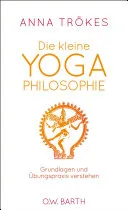
Die kleine Yoga-Philosophie
 81
81

Die kleine Yoga-Philosophie
Anna Trökes' "Die kleine Yoga-Philosophie" tackles the daunting task of introducing yoga's philosophical breadth with commendable clarity. The book's strength lies in its directness, presenting foundational texts like the Upanishads and Bhagavadgita without excessive academic jargon. Trökes successfully synthesizes centuries of thought, making the cosmic scope of yogic philosophy feel manageable. A limitation, however, is that its brevity occasionally leads to a surface-level treatment of intricate doctrines. For instance, the explanation of Karma, while present, could benefit from further expansion to fully capture its nuanced implications within the yogic worldview. Despite this, the book serves as an excellent primer for those new to the subject. Trökes' distillation of complex philosophical ideas offers a valuable starting point for anyone seeking to understand yoga's deeper dimensions.
📝 Description
81
Anna Trökes' 2013 book simplifies yoga's philosophical core.
Anna Trökes' "Die kleine Yoga-Philosophie" provides a direct path into the philosophical framework of yoga. Published in 2013, the book condenses complex philosophical ideas into a format that is easy to grasp. It is written for anyone curious about the intellectual and spiritual basis of yoga, going beyond the physical exercises. Students, teachers, and general readers will find it valuable for understanding the origins of yogic thought.
Trökes follows the intellectual history of yoga, starting with its foundational texts. Readers are introduced to the ancient Vedic traditions, the Bhagavadgita, and the Upanishads. The author highlights the central messages from these sources that have influenced yoga over centuries. The book aims to clarify essential philosophical concepts, drawing from original writings to make them comprehensible and relevant for today's world.
This book engages with the philosophical traditions that form the bedrock of yoga, a system often seen as a path to spiritual liberation and self-knowledge. It grounds the reader in the classical texts that have codified yogic thought for millennia. By examining works like the Upanishads and the Bhagavadgita, Trökes connects contemporary practice to ancient Indian metaphysical and ethical systems. The focus is on understanding the underlying principles that guide yogic disciplines, placing it within the broader context of Indian spiritual philosophy.
💡 Why Read This Book?
• Gain a foundational understanding of yoga's philosophical roots by exploring the insights from the ancient Vedas, as presented in "Die kleine Yoga-Philosophie", offering a distinct perspective from purely physical practice. • Grasp the core teachings of the Bhagavadgita as distilled by Anna Trökes, providing specific textual context that informs the ethical and spiritual dimensions of yogic life. • Understand the significance of the Upanishads within yogic philosophy, as explained in this work, equipping you with knowledge of these seminal texts and their lasting impact.
⭐ Reader Reviews
Honest opinions from readers who have explored this book.
❓ Frequently Asked Questions
What are the primary philosophical texts discussed in "Die kleine Yoga-Philosophie"?
The book primarily discusses foundational yogic texts including the ancient Vedas, the Bhagavadgita, and the Upanishads, tracing the lineage of yogic philosophy through these seminal works.
Who is the author of "Die kleine Yoga-Philosophie"?
The author is Anna Trökes, a well-known yoga teacher who aims to make yogic philosophy accessible to a wider audience.
When was "Die kleine Yoga-Philosophie" first published?
The book was first published on March 21, 2013, making it a relatively contemporary introduction to classical yogic philosophy.
Is this book suitable for beginners in yoga philosophy?
Yes, the book is designed for all interested individuals, offering an easily accessible and clear overview of the core messages from original yogic sources.
What kind of insights does the book offer from ancient yogic sources?
It summarizes key statements and their meanings from texts like the Vedas and Upanishads, emphasizing their continued relevance to contemporary understanding and practice.
What is the main goal of Anna Trökes' "Die kleine Yoga-Philosophie"?
The book's main goal is to introduce readers to the vast cosmos of yogic philosophy, presenting its essential core statements from original sources in an understandable manner.
🔮 Key Themes & Symbolism
Foundations in Ancient Texts
The work meticulously grounds yogic philosophy in its historical textual origins. It highlights the Vedic traditions, the profound narrative of the Bhagavadgita, and the philosophical depth of the Upanishads. Trökes focuses on extracting the essential teachings from these ancient sources, demonstrating how their wisdom remains pertinent today, offering a lens through which to understand the evolution of yogic thought from its earliest expressions to its modern interpretations.
Accessibility of Complex Ideas
A central theme is making the vast and often intricate philosophy of yoga understandable for a general audience. Trökes prioritizes clarity and conciseness, breaking down complex metaphysical concepts into digestible segments. This approach allows individuals unfamiliar with Sanskrit or dense philosophical discourse to engage with the core principles of yoga, fostering a deeper appreciation for its intellectual heritage.
Enduring Relevance of Yogic Wisdom
The book emphasizes that the philosophical insights derived from yoga's classical texts are not mere historical artifacts but possess enduring validity. Trökes illustrates how these ancient principles continue to offer guidance for contemporary life, addressing universal human concerns. The work implicitly argues for the practical application of yogic philosophy in navigating modern challenges and seeking inner balance.
The Cosmic Scope of Yoga
Trökes introduces readers to the expansive worldview inherent in yogic philosophy, often described as a 'cosmos.' This theme encompasses the interconnectedness of all things, the nature of consciousness, and the ultimate reality. The book serves as a gateway to understanding yoga not just as a personal practice but as a comprehensive system of understanding existence itself.
💬 Memorable Quotes
Direct passages from the work, attributed to the author.
“The work summarizes the most important core statements from original sources.”
— This highlights the book's primary function: to distill complex philosophical ideas from foundational yogic texts into their essential, understandable components for the reader.
“Insights from ancient texts retain their validity today.”
— This concept underscores the book's argument that yogic philosophy offers timeless wisdom applicable to contemporary life, bridging the gap between ancient traditions and modern concerns.
“Introduction to the vast cosmos of yogic philosophy.”
— This phrase captures the book's aim to present the expansive and all-encompassing nature of yogic thought, inviting readers to explore its profound depths.
“Easy-to-understand and clear presentation for interested individuals.”
— This speaks to the author's intention to make yogic philosophy accessible, moving away from overly academic or esoteric language towards a more direct and inclusive approach.
“Traces philosophical lineage from Vedas to Upanishads.”
— This indicates the book's structured approach, guiding the reader through the historical development and textual evolution of yogic philosophical concepts.
🌙 Esoteric Significance
Tradition
While not strictly adhering to a single Western esoteric lineage like Hermeticism or Kabbalah, "Die kleine Yoga-Philosophie" engages with the profound spiritual and philosophical dimensions of yoga, which share common ground with esoteric traditions worldwide. It draws from the Indic spiritual-philosophical heritage, exploring concepts of consciousness, reality, and the self that are central to many mystical paths, including those that influenced Western esotericism.
Symbolism
The work implicitly engages with symbols inherent in its source texts. For instance, the 'cosmos' of yogic philosophy can be seen as a symbolic representation of the totality of existence and consciousness, encompassing macrocosmic and microcosmic connections. Concepts like 'Karma,' though not detailed here, function symbolically within the yogic framework, representing cosmic law and causality that influences the cycle of rebirth and spiritual evolution.
Modern Relevance
Contemporary yoga practitioners and teachers seeking to deepen their understanding beyond asana are drawn to works like Trökes'. Thinkers and authors who advocate for a more holistic approach to yoga, integrating its ethical (Yamas and Niyamas) and philosophical aspects, find value in this distillation of core concepts. It supports the modern resurgence of interest in the contemplative and philosophical dimensions of yoga, often discussed in relation to mindfulness and spiritual psychology.
👥 Who Should Read This Book
• Yoga instructors seeking to enrich their teaching with the philosophical underpinnings of the practice, moving beyond postural instruction to address deeper meaning. • Students of comparative religion and philosophy interested in the core tenets of Indic thought, particularly as they manifest in the yogic tradition. • Individuals new to yoga philosophy who desire a clear, concise, and accessible introduction to foundational texts and concepts without overwhelming academic detail.
📜 Historical Context
Published in 2013, Anna Trökes' "Die kleine Yoga-Philosophie" emerged during a period of significant global interest in yoga, often characterized by a focus on its physical aspects. The book arrived as a counterpoint, seeking to re-emphasize its deep philosophical roots. Its publication year places it within a contemporary academic and popular discourse where scholars like Georg Feuerstein were actively exploring yoga's historical and philosophical traditions, often challenging simplistic interpretations. The work navigates a landscape where Western adaptations of yoga sometimes overshadowed the original Indian philosophical contexts derived from texts like the Yoga Sutras of Patanjali (composed c. 400 CE) or the earlier Upanishads. Trökes' approach, focusing on accessibility, implicitly responds to the need for introductory materials that connect modern practitioners to the philosophical traditions that informed yoga long before its global popularization, distinguishing itself from purely academic treatises.
📔 Journal Prompts
The Vedic traditions as a foundation for yogic philosophy.
Core statements from the Bhagavadgita and their present-day application.
The philosophical depth of the Upanishads and your understanding.
Accessibility of yogic philosophy for modern seekers.
The enduring validity of ancient yogic wisdom in your life.
🗂️ Glossary
Vedas
Ancient Sanskrit texts considered to be the oldest scriptures of Hinduism, forming the foundation of much of Indian philosophy and religious thought, including early yogic concepts.
Bhagavadgita
A 700-verse Sanskrit scripture that is part of the Hindu epic Mahabharata, discussing dharma, karma, devotion, and the nature of the divine and the self.
Upanishads
A collection of texts in the Vedas that contain some of the philosophical ideas and spiritual concepts of Hinduism, exploring themes of Brahman, Atman, and moksha.
Yogic Philosophy
The systematic study of the fundamental principles, concepts, and worldview underlying the practice and tradition of yoga, encompassing metaphysics, ethics, and epistemology.
Core Statements
The essential teachings or fundamental propositions derived from primary philosophical texts, which encapsulate key ideas and principles of a given tradition.
Ancient Sources
The original foundational texts and earliest writings from which a particular philosophical or spiritual tradition draws its knowledge and doctrines.
Enduring Validity
The quality of timeless relevance and applicability of philosophical or ethical principles across different historical periods and cultural contexts.