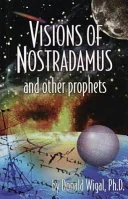
Visions of Nostradamus and Other Prophets
 83
83

Visions of Nostradamus and Other Prophets
Wigal's "Visions of Nostradamus and Other Prophets" offers a comprehensive overview of individuals throughout history who claimed prophetic gifts. The strength lies in its extensive cataloging of figures and methods, moving beyond mere sensationalism to consider the cultural and psychological dimensions. For instance, the discussion on the oracular traditions of Delphi provides a grounding in ancient practices that set a precedent for later seers. However, the work sometimes feels encyclopedic rather than deeply analytical, occasionally listing examples without fully dissecting the underlying belief systems or potential for self-deception. The exploration of Nostradamus's quatrains, while detailed, could benefit from more rigorous engagement with scholarly critiques of his interpretation. Ultimately, it serves as a valuable compendium for anyone seeking an introduction to the diverse landscape of historical prophecy.
📝 Description
83
Donald Wigal's 1999 book investigates prophecy across cultures and eras, examining those who claimed prescient abilities.
Donald Wigal's "Visions of Nostradamus and Other Prophets," published in 1999, examines the history and practice of prophecy across various cultures and eras. The book investigates individuals who claimed prescient abilities, detailing the methods they employed. These ranged from ancient oracles and divine revelations to astrological interpretations and spiritualistic mediums.
Wigal surveys a panorama of seers, mystics, and soothsayers, presenting their claims and the societal contexts in which they operated. This work is for readers interested in the historical and cultural phenomena of prophecy and divination. It appeals to those curious about figures like Nostradamus, Edgar Cayce, and Joan of Arc, and the enduring human fascination with predicting the future. Scholars of religious studies, history, and sociology will find its broad survey useful, as will anyone intrigued by the intersection of belief, psychology, and extraordinary claims.
Published in 1999, Wigal's work arrived during a period of renewed interest in esotericism. The rise of the internet facilitated wider access to obscure texts and fostered new communities around prophecy. This era also saw academic re-evaluations of historical figures once dismissed, allowing for a more considered examination of prophetic traditions. The book places itself within this intellectual climate, engaging with both historical accounts and the cultural fascination with predicting the future.
💡 Why Read This Book?
• Gain an understanding of diverse divination techniques, from ancient Greek oracles to modern mediums, as detailed in the sections on methods like scrying and trance states. • Explore the historical impact of specific prophets, such as the extensive coverage of Nostradamus and his quatrains, and their influence on subsequent generations. • Examine the societal roles fulfilled by seers across different eras, understanding how figures like Edgar Cayce functioned not just as predictors but as cultural influencers.
⭐ Reader Reviews
Honest opinions from readers who have explored this book.
❓ Frequently Asked Questions
What historical periods does "Visions of Nostradamus and Other Prophets" cover?
The book spans a vast historical range, examining prophetic claims from antiquity, including the oracles of ancient Greece, through the medieval period with figures like Joan of Arc, up to the 20th century with individuals like Edgar Cayce.
How does the book approach the credibility of the prophets discussed?
Wigal presents the claims and historical context of various prophets, allowing readers to draw their own conclusions. It explores the methods used, such as trance states and astrological interpretation, without definitively validating or debunking the prophetic claims themselves.
Which famous prophets are featured in Donald Wigal's book?
Key figures prominently discussed include Nostradamus, whose quatrains are a significant focus, along with Edgar Cayce, known for his psychic readings, and Joan of Arc, whose visions influenced historical events.
What are some of the divination methods described in the book?
The book details a variety of methods, such as scrying using reflective surfaces, interpreting celestial movements through astrology, entering ecstatic trance states, and receiving divine inspiration or messages from spirits.
Is "Visions of Nostradamus and Other Prophets" suitable for academic study?
Yes, the book's broad historical survey and examination of various prophetic traditions make it a useful resource for students and researchers in fields like religious studies, history, and sociology.
What distinguishes Nostradamus's prophecies as presented in the book?
The book highlights Nostradamus's unique use of quatrains—four-line poems—as his primary prophetic medium, and explores the ongoing debates and interpretations surrounding their cryptic verses.
🔮 Key Themes & Symbolism
The Art of Prediction
This theme examines the diverse methodologies employed by individuals claiming foresight. From the astrological charts meticulously calculated by medieval seers to the spontaneous trance states reported by 20th-century psychics, Wigal surveys the techniques that purported to unlock future events. It positions these practices within their historical and cultural frameworks, illustrating how societal beliefs shaped the interpretation and acceptance of predictive phenomena across different epochs.
Prophets as Cultural Forces
The work investigates the significant roles prophets have played within their societies, extending beyond mere fortune-telling. Figures like Nostradamus, whose quatrains influenced political and social discourse, or Edgar Cayce, who offered 'readings' on health and reincarnation, demonstrate how seers could act as advisors, spiritual guides, or even catalysts for social change. This theme explores the complex relationship between prophetic figures and the communities that sought their counsel.
Enduring Fascination with the Future
This theme addresses the persistent human desire to comprehend or influence what lies ahead. Wigal traces this fascination from ancient oracles to modern mediums, suggesting a fundamental aspect of the human psyche. The book posits that the study of prophecy reveals much about our anxieties, hopes, and the ways we construct meaning in the face of uncertainty, regardless of the perceived validity of the prophetic claims themselves.
Methods of Divination
Here, the focus is on the specific tools and states utilized for prophetic insight. Wigal details practices such as scrying, using reflective surfaces like crystals or water; bibliomancy, divination through books; and the interpretation of dreams and visions. Each method is presented with its historical background and the philosophical or spiritual underpinnings that gave it credence within its originating tradition.
💬 Memorable Quotes
Direct passages from the work, attributed to the author.
“From ancient oracles to modern mediums, individuals have claimed the ability to see beyond the veil of time.”
— This statement expresses the book's broad scope, highlighting the continuity of the human impulse to seek knowledge of the future across vastly different historical and cultural landscapes.
“Nostradamus's quatrains, often cryptic and multi-layered, continue to fuel debate and interpretation centuries later.”
— This points to the enduring mystery and controversial legacy of Nostradamus, emphasizing how his specific form of prophecy—poetic quatrains—has invited continuous analysis and diverse readings.
“Trance states and altered consciousness were frequently employed as pathways to divine or psychic revelation.”
— This highlights a recurring methodology discussed in the book, suggesting that altered states of mind were historically considered a primary conduit for accessing prophetic insights.
“The societal role of a prophet often extended beyond prediction to spiritual guidance and commentary.”
— This interpretation underscores that figures claiming prophetic abilities frequently served complex functions within their communities, influencing thought and behavior in ways beyond simple foresight.
“Astrology provided a structured framework for understanding celestial influences on human destiny.”
— This emphasizes the intellectual and systematic approach of astrological divination, presenting it as a method of interpreting cosmic patterns believed to govern earthly events.
🌙 Esoteric Significance
Tradition
The work engages with the broad Western esoteric tradition, particularly its interest in divination and prophecy as methods of accessing hidden knowledge. While not strictly adhering to a single lineage like Hermeticism or Kabbalah, it draws from the common thread of seeking divine or supra-rational information. It situates figures like Nostradamus within a historical continuum of seers, acknowledging their place in a lineage that values foresight as a spiritual or psychological faculty.
Symbolism
Key symbols explored include the cryptic quatrains of Nostradamus, which function as symbolic prophecies open to manifold interpretations, reflecting the esoteric principle of multiple layers of meaning. The use of astrological charts and celestial bodies also represents a symbolic language, where planetary positions are seen as potent signifiers of earthly events and human destiny, a common motif in divinatory traditions.
Modern Relevance
Contemporary interest in predictive technologies, data analysis, and even speculative fiction can be seen as secular traces of the age-old human fascination with prophecy that Wigal's book explores. Thinkers and practitioners exploring consciousness studies, the psychology of belief, and comparative religion continue to find value in understanding the historical context and cultural impact of prophetic claims, as documented in this survey.
👥 Who Should Read This Book
• Aspiring historians of esotericism seeking a broad overview of prophetic figures and practices across different eras. • Students of comparative religion interested in the phenomenon of prophecy and divination across various cultural belief systems. • General readers curious about the lives and claims of famous seers like Nostradamus and Edgar Cayce, and the historical context surrounding them.
📜 Historical Context
Donald Wigal's "Visions of Nostradamus and Other Prophets" emerged in 1999, a period marked by widespread public interest in esotericism, paranormal phenomena, and alternative histories. The rise of the internet facilitated unprecedented access to obscure texts and fostered online communities dedicated to exploring topics like prophecy and ancient mysteries. Academically, the late 20th century saw a growing willingness to re-examine figures like Nostradamus and Joan of Arc with greater nuance, moving beyond simplistic dismissals. Wigal's work arrived amidst this intellectual climate, offering a broad survey that resonated with a readership eager to connect with historical accounts of foresight. While not directly engaging with contemporaries in the same vein, the book implicitly responded to a broader cultural trend that saw figures like Carl Jung's explorations of archetypes and synchronicity gaining wider traction, providing a framework for understanding the psychological dimensions of prophetic experience.
📔 Journal Prompts
Nostradamus's quatrains and their enduring interpretive challenges.
The societal function of prophets across different historical periods.
Personal reflections on the concept of divine inspiration versus psychic ability.
The role of trance states in accessing purported prophetic insights.
Comparing ancient oracular practices with modern divination methods.
🗂️ Glossary
Quatrain
A stanza or poem of four lines, famously employed by Nostradamus in his prophetic works. These verses are often cryptic and subject to extensive interpretation.
Scrying
A form of divination involving gazing into a reflective surface, such as a crystal ball, polished mirror, or bowl of water, with the belief that visions or insights will appear.
Trance State
An altered state of consciousness characterized by deep relaxation, focused attention, and reduced awareness of external stimuli, often believed to facilitate communication with spiritual entities or access to psychic information.
Oracle
A person or agency considered to be a source of divine wisdom or prophetic prediction. Historically, this often referred to specific sites, like the Oracle of Delphi, where pronouncements were given.
Astrology
The study of the movements and relative positions of celestial bodies, interpreted as having an influence on human affairs and the natural world. Used as a method for divination and understanding destiny.
Medium
A person who claims to act as an intermediary between the world of the living and the world of spirits, or to possess extrasensory perception.
Bibliomancy
A method of divination that involves opening a book at random and selecting a passage, then interpreting it for guidance or prophecy.
This book appears in 1 collection
🔮 Readers Also Liked
Browse all →









From the “Nostradamus” Collection
View all →





More Free Occult Philosophy Books
View all →