The spiffiest giant in town
 72
72

The spiffiest giant in town
Julia Donaldson's "The Spiffiest Giant in Town" succeeds admirably in its primary goal: crafting an engaging and morally resonant children's tale. The rhyming narrative, a hallmark of Donaldson's writing, flows with a natural, pleasing cadence, making George's journey from perceived menace to amiable giant a delight to follow. A particular strength lies in the subtle subversion of the 'giant' archetype; George isn't inherently terrifying, but rather misunderstood. The limitation, however, is that its allegorical depth, while present, remains largely on the surface. While the concept of transforming perception through kindness is clear, the narrative doesn't significantly complicate this message. The passage where George gifts his belongings to those in need is a poignant illustration of his evolving character, demonstrating empathy over ego. It's a well-executed story for its intended audience, offering a gentle lesson in judging character beyond initial impressions.
📝 Description
72
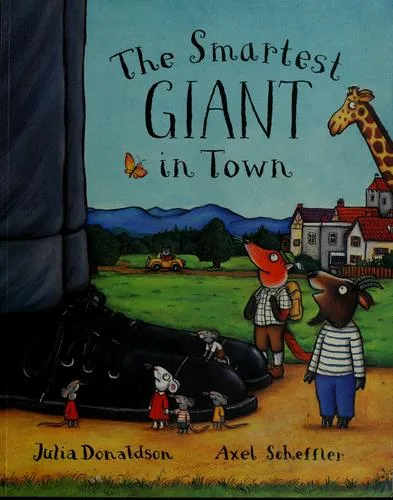
Julia Donaldson's 2016 book, 'The Spiffiest Giant in Town,' uses rhyme to explore social perception.
George, a giant who feels out of place, attempts to appear dapper for a city visit. His encounters with various animals lead him to lend them his clothes, leaving him increasingly naked. Eventually, he returns home, cold and unclothed, only to find the animals have gathered his clothes to make him a warm blanket. The narrative unfolds through rhyming couplets, a signature of Donaldson's style.
The story centers on the contrast between George's imposing size and his gentle, giving nature. His desire to fit in and be seen as more than just a giant drives his actions. The book gently questions assumptions about appearances and highlights the value of compassion and selflessness. It shows how outward presentation does not define a person's inner character or their capacity for kindness.
While not directly aligned with a specific historical esoteric movement, 'The Spiffiest Giant in Town' resonates with traditions that emphasize the transformation of the perceived 'outsider' or 'monster.' It reflects a modern narrative trend that seeks to demystify figures of fear and highlight their inherent worth. The story's focus on internal qualities over external presentation aligns with philosophical ideas about true selfhood and the superficiality of societal judgments, offering a simple yet direct allegory for recognizing the spirit within.
💡 Why Read This Book?
• Gain an understanding of how outward appearance can create false perceptions, as illustrated by George's transformation from a feared figure to a benevolent one, a concept explored in detail within the book's narrative arc. • Appreciate the power of narrative to reframe archetypes, learning how Donaldson uses the 'giant' figure to challenge common assumptions, a theme evident in the story's progression since its 2016 publication. • Experience a story that subtly encourages empathy and self-acceptance, particularly through George's acts of generosity which redefine his 'spiffiness' beyond mere size.
⭐ Reader Reviews
Honest opinions from readers who have explored this book.
❓ Frequently Asked Questions
What is the main message of 'The Spiffiest Giant in Town'?
The core message is that kindness and generosity are more important than appearance. The giant George learns this as he shares his belongings, transforming how others see him.
Who is the author of 'The Spiffiest Giant in Town'?
The author is Julia Donaldson, a renowned writer of children's books, with 'The Spiffiest Giant in Town' first published in 2016.
What makes George the giant 'spiffy'?
Initially, 'spiffy' refers to his appearance. However, as the story progresses, George becomes truly spiffy through his acts of kindness and willingness to help others.
What is the reading level for 'The Spiffiest Giant in Town'?
The book is written in rhyming couplets, making it suitable for early readers and engaging for read-aloud sessions with preschoolers and young children.
Are there other books by Julia Donaldson with similar themes?
Yes, many of Julia Donaldson's books, such as 'The Gruffalo' and 'Room on the Broom,' explore themes of friendship, overcoming challenges, and characters who defy expectations.
What is the publication year of 'The Spiffiest Giant in Town'?
The book was first published in 2016, adding to Julia Donaldson's extensive collection of popular children's literature.
🔮 Key Themes & Symbolism
Appearance vs. Character
The narrative hinges on the contrast between George the giant's imposing physical presence and his gentle, giving nature. Initially, his size and attire lead others to fear him, a common trope in folklore. However, the story actively deconstructs this, showing how his actions—sharing his scarf, shoes, and rocket—demonstrate his true character. This theme encourages readers to look beyond superficial traits and recognize the inner qualities of individuals, a concept often explored in allegorical literature since antiquity.
Redefining 'Spiffiness'
'Spiffiness' in the title initially suggests outward polish or flair. George strives for this, acquiring a smart blue coat. Yet, the story redefines the term through his acts of generosity. By giving away his possessions to creatures in need, he embodies a deeper, more meaningful kind of 'spiffiness'—one rooted in compassion and selflessness. This transformation suggests that true impressiveness comes not from what one possesses, but from how one uses it to help others, a moral lesson found in many ethical traditions.
Belonging and Social Integration
George's journey is also about finding his place within a community. His size initially alienates him, making him an outsider. The narrative arc shows how his kind deeds foster acceptance and camaraderie. The animals he helps eventually welcome him, creating a sense of belonging. This speaks to broader discussions about social inclusion and how empathy can bridge divides, allowing individuals, regardless of their perceived differences, to connect and form community bonds.
Narrative Subversion
Donaldson employs a common narrative technique: subverting the 'monster' or 'ogre' archetype. The giant, often a figure of fear in fairy tales and folklore, is presented here as a sympathetic protagonist. This subversion encourages critical thinking about stereotypes and preconceived notions. By making the giant the hero, the book prompts readers to question their own assumptions about characters based solely on their appearance or initial presentation, a technique used in various literary forms to provoke thought.
💬 Memorable Quotes
Direct passages from the work, attributed to the author.
“George the giant was a giant of a man. And he was afraid of nothing at all.”
— This opening establishes George's imposing stature and perceived fearlessness. However, the narrative quickly reveals his vulnerability and desire for connection, setting up the central theme of appearance versus reality.
“His heart felt as big as his feet.”
— This is an interpretation of George's inner state. It powerfully links his physical size to his emotional capacity for kindness and generosity, suggesting his empathy grows in proportion to his physical being.
“He felt spiffy, he felt grand.”
— This captures George's initial feeling of pride and self-satisfaction upon acquiring his new blue coat, highlighting the superficial aspect of 'spiffiness' that the story will later deepen.
“He was the spiffiest giant in town.”
— This concluding statement signifies George's ultimate transformation. It suggests that true 'spiffiness' is achieved not through outward appearance alone, but through acts of kindness and a generous spirit.
💡 Key Ideas
Editorial paraphrase of the work's core concepts — not direct quotes.
Then George said, 'I’m giving this hat away.'
This line marks a key moment where George chooses generosity over personal possession, signaling a shift in his understanding of what it means to be 'spiffy' and how to interact with the world.
🌙 Esoteric Significance
Tradition
While not explicitly aligned with a singular esoteric tradition, "The Spiffiest Giant in Town" can be viewed through the lens of Hermeticism's principle of correspondence, where the macrocosm (the world) and microcosm (the individual) reflect each other. George’s internal transformation mirrors a potential shift in societal perception. It also echoes Gnostic ideas of inner truth being obscured by outward form, suggesting a hidden divinity or goodness within the seemingly monstrous.
Symbolism
The giant himself, George, symbolizes the archetype of the misunderstood outsider, whose imposing exterior masks a benevolent nature. His blue coat represents initial vanity or the desire for social acceptance through superficial means, which is later transcended. The various animals (a thirsty mouse, a wrecked boat, a road-blocking Zog) represent obstacles or those in need, acting as catalysts for George's spiritual and social development.
Modern Relevance
Contemporary mindfulness and self-compassion movements can find resonance in George’s journey. His shift from external validation ('spiffy' coat) to internal satisfaction derived from kindness aligns with practices encouraging emotional intelligence and empathetic action. Thinkers in social psychology and narrative therapy might also draw parallels between George’s story and the power of reframing personal narratives to foster positive self-identity and community integration.
👥 Who Should Read This Book
• Early childhood educators and parents seeking engaging stories that promote empathy and challenge stereotypes about appearance. • Readers interested in narrative analysis who wish to examine how archetypes are subverted in contemporary children's literature. • Individuals exploring themes of self-acceptance and social integration, looking for accessible examples of character transformation through kindness.
📜 Historical Context
Published in 2016, "The Spiffiest Giant in Town" emerged during a period where children's literature increasingly focused on themes of inclusivity and challenging stereotypes. While not directly engaging with a specific esoteric movement, its narrative taps into a broader cultural undercurrent of clarifying perceived 'others.' The year 2016 saw continued discussions around diversity in media, and Donaldson's gentle approach to challenging the 'scary giant' trope aligns with this trend. Unlike earlier works that might have reinforced such archetypes, this book actively works to dismantle them. Its reception was generally positive, praised for its engaging rhyme and positive message, fitting into a market that valued socially conscious storytelling, contrasting with the more didactic moral tales of earlier centuries.
📔 Journal Prompts
George's initial fearlessness versus his later vulnerability.
The transformation of 'spiffiness' from external to internal.
The role of the animals in George's development.
How the giant's size impacts his social interactions.
The message conveyed by George giving away his belongings.
🗂️ Glossary
Spiffiest
Meaning most stylish, smart, or neat in appearance. In the book, it evolves from referring to clothing to embodying inner qualities like kindness and generosity.
Giant
A being of human-like form but of prodigious size and strength. Often depicted as fearsome in folklore, here the giant subverts this expectation by being kind-hearted.
Rhyming Couplets
Pairs of successive lines of verse that rhyme. This structure is characteristic of Julia Donaldson's writing, contributing to the book's musicality and memorability.
Archetype
A very typical example of a certain person or thing. The 'giant' is often an archetype of a monstrous or intimidating figure, which this book playfully subverts.
Allegory
A story, poem, or picture that can be interpreted to reveal a hidden meaning, typically a moral or political one. The book can be read allegorically regarding appearance versus character.
Social Integration
The process by which individuals or groups are incorporated into a society or community. George's journey illustrates how acts of kindness facilitate his integration.
Subversion
The undermining of power structures, traditions, or expectations. The book subverts the traditional 'scary giant' trope.
🔮 Readers Also Liked
Browse all →









More by Julia Donaldson
All books →





More Free Occult Philosophy Books
View all →