De Occulta Philosophia

 79
79

De Occulta Philosophia
Agrippa's *De Occulta Philosophia* is less a book to be read cover-to-cover and more a vast repository to be consulted, a dense thicket of Renaissance occult thought. Its strength lies in its encyclopedic scope, attempting to systematize a bewildering array of magical and philosophical traditions from antiquity through to Agrippa's own time. The detailed discussions on planetary influences, divine names, and the construction of talismans offer unparalleled historical insight into early modern magical theory. However, its sheer density and the archaic language, even in translation, present a formidable barrier. A particular passage detailing the correspondences between Hebrew letters and divine powers, while historically significant, can feel overwhelming without extensive prior knowledge of Kabbalah. The work's ambition to create a unified magical philosophy is admirable, but its exhaustive nature can also be its undoing for the casual reader. Ultimately, *De Occulta Philosophia* remains an indispensable, albeit challenging, cornerstone for understanding the historical roots of Western esotericism.
📝 Description
79
Heinrich Cornelius Agrippa began writing his *De Occulta Philosophia* around 1531.
Heinrich Cornelius Agrippa von Nettesheim's *De Occulta Philosophia* is a significant work on Western esotericism. First published in its complete form in 1986, it surveys magic, natural philosophy, and occult sciences from the early 16th century. Agrippa synthesized Neoplatonic philosophy, Kabbalah, Hermeticism, and older religious traditions. He aimed to present a unified view of the cosmos and humanity's place within it. The book details various types of magic, including natural, celestial, ceremonial, and divine magic. It examines their theoretical foundations and practical uses.
The work is more than a collection of magical practices; it is a philosophical treatise. It discusses the hidden forces of nature and the divine order. This book is for serious students of Western esotericism, scholars of Renaissance intellectual history, and practitioners of ceremonial magic or Hermetic philosophy. It appeals to those interested in the historical development of occult thought and its links to theology, philosophy, and science.
Agrippa's *De Occulta Philosophia* emerged during the Renaissance, a period of renewed interest in classical learning and esoteric traditions. It draws heavily on Neoplatonism, Hermeticism, and Kabbalah, systems that sought to understand the divine through correspondences and hidden meanings in nature and scripture. This intellectual environment was shaped by figures like Marsilio Ficino, who had translated Platonic and Neoplatonic texts, making them accessible to a wider scholarly audience. Agrippa's synthesis reflected a desire to reconcile these diverse streams of thought into a coherent system of occult philosophy.
💡 Why Read This Book?
• Gain a historical perspective on the synthesis of Neoplatonism and Kabbalah in Renaissance magic, specifically Agrippa's attempt to reconcile these with Christian theology, as detailed in his exploration of the three worlds (elemental, celestial, intellectual). • Understand the theoretical framework behind Renaissance magical practices, including the use of talismans, divine names, and planetary correspondences, concepts crucial to the development of Western Hermeticism. • Examine Agrippa's detailed cataloging of magical operations, such as the invocation of intelligences and spirits, providing insight into the intellectual and spiritual currents that led to its censorship by the Catholic Church in the 16th century.
⭐ Reader Reviews
Honest opinions from readers who have explored this book.
❓ Frequently Asked Questions
When was Heinrich Cornelius Agrippa's De Occulta Philosophia first published?
While Agrippa composed *De Occulta Philosophia* around 1531, its first complete publication occurred in 1533. Modern critical editions, like the one from 1986, aim to present the text more accurately based on historical manuscripts and early printings.
What is the significance of the three worlds in De Occulta Philosophia?
Agrippa structures his work around three interconnected worlds: the elemental (physical), the celestial (astral and planetary), and the intellectual or divine. He argues that magic functions by understanding and manipulating the sympathies and correspondences that link these realms.
Why was De Occulta Philosophia controversial?
The book was controversial because it explored magical practices and philosophies, including Kabbalah and Neoplatonism, which were viewed with suspicion by the Catholic Church. Its attempt to integrate these with Christian theology was seen by some as heretical, leading to its eventual inclusion on the Index of Forbidden Books.
Who was Heinrich Cornelius Agrippa?
Heinrich Cornelius Agrippa von Nettesheim (1486–1535) was a German occultist, physician, astrologer, and writer. He was a prominent figure in the Renaissance, known for his extensive learning and his controversial works on magic and philosophy, including *De Occulta Philosophia*.
What kind of magic does De Occulta Philosophia discuss?
The book covers various forms of magic: natural magic (working with the inherent virtues of nature), celestial magic (utilizing planetary and stellar influences), and divine magic (invoking divine powers through prayer and sacred names). It also details ceremonial aspects, talismans, and the power of imagination.
Is De Occulta Philosophia a practical guide to performing magic?
While it describes magical operations and theories, *De Occulta Philosophia* is primarily a philosophical and theoretical treatise rather than a step-by-step grimoire. It aims to explain the principles behind magic within a Renaissance worldview, requiring significant scholarly background for full comprehension.
🔮 Key Themes & Symbolism
The Three Worlds
Agrippa's cosmological framework divides reality into three interconnected realms: the elemental, the celestial, and the intellectual/divine. He posits that magic operates through understanding the sympathies and correspondences linking these worlds. The elemental world comprises earthly matter, the celestial encompasses planets, stars, and their influences, while the intellectual realm represents divine intelligences and powers. This tripartite structure underpins his entire system of occult philosophy, suggesting that by manipulating the lower realms, one can affect the higher, and vice-versa, through precise correspondences and divine assistance.
Natural Magic and Correspondences
A significant portion of *De Occulta Philosophia* is dedicated to natural magic, which Agrippa defines as the operation of nature's hidden virtues. This involves understanding the specific qualities and powers inherent in plants, stones, animals, and celestial bodies. The core principle here is 'correspondence' – the idea that elements, planets, divine names, and numbers all relate to each other in a hidden symbolic language. By correctly identifying and utilizing these correspondences, practitioners could allegedly harness natural forces for various purposes, from healing to influencing events.
Divine Names and Angelic Invocation
Agrippa elaborates on the power of divine and angelic names, particularly within the context of Kabbalistic and Hermetic traditions. He views these names not merely as labels but as potent keys to accessing divine power and communicating with spiritual entities. The book details methods for using specific names, often derived from Hebrew or Greek, in rituals and prayers to invoke intelligences, angels, or even God, thereby facilitating a connection to the divine realm and enabling spiritual ascent or magical efficacy.
Talismans and Magical Images
The construction and use of talismans and magical images form another crucial element of Agrippa's system. He explains how images or objects, when consecrated under specific astrological conditions and imbued with appropriate divine names or symbols, can capture and radiate celestial influences. These talismans are designed to attract particular virtues or powers from the cosmos, serving as conduits for magical effect. Agrippa meticulously details the planetary associations, materials, and timing required for creating effective talismans, reflecting a sophisticated understanding of sympathetic magic.
💬 Memorable Quotes
Direct passages from the work, attributed to the author.
“Nature does nothing in vain, but acts by the most direct and shortest ways possible.”
— This principle underscores Agrippa's view of natural philosophy as a rational pursuit of understanding divine order. It implies that by studying nature's efficient mechanisms, one can uncover the underlying principles of creation and divine will.
“The power of things is in their number.”
— This reflects the Pythagorean and Kabbalistic influence on Agrippa's thought. He believed numbers were not just abstract concepts but fundamental forces imbued with occult significance and capable of mediating spiritual and material energies.
“The imagination is the painter of the world.”
— Agrippa emphasizes the potent role of the human imagination in magic. He suggests that the faculty of imagination, when properly directed and amplified by faith and divine names, can shape reality and influence the subtle energies of the cosmos.
“For the world is a certain living creature, and the soul of the world is the Spirit of God.”
— This Neoplatonic concept of the *anima mundi* (world soul) is central to Agrippa's philosophy. It posits a universal consciousness or vital force pervading all creation, linking the physical universe to the divine source.
💡 Key Ideas
Editorial paraphrase of the work's core concepts — not direct quotes.
There are three worlds, by which all things are governed: the first is the world of elements, the second the world of stars, the third the world of intelligences.
This quote expresses Agrippa's foundational cosmological model. It highlights his belief in a hierarchical and interconnected universe where magic operates by understanding the relationships between the material, celestial, and spiritual realms.
🌙 Esoteric Significance
Tradition
Agrippa's work is a core part of the Western Esoteric Tradition, particularly within Hermeticism and Kabbalah. It represents a major attempt to systematize the magical philosophy of the Renaissance, bridging classical Neoplatonism, Jewish Kabbalah, and Christian mysticism. While drawing heavily on earlier sources like the *Corpus Hermeticum* and the Zohar, Agrippa aimed to create a unified intellectual framework that justified magic as a legitimate path to understanding God and nature, distinct from mere superstition or demonic pacts.
Symbolism
Key symbols in *De Occulta Philosophia* include divine names (e.g., Tetragrammaton, Adonai), which Agrippa believed held inherent power to invoke spiritual forces. Planetary symbols and astrological correspondences are also vital, representing the celestial influences that govern the material world. The Hebrew alphabet, with its numerical and symbolic meanings, is extensively used, particularly in Kabbalistic sections, to unlock hidden meanings and spiritual connections. Talismans, often depicted with specific geometric shapes and animal figures, serve as concrete manifestations of these symbolic correspondences.
Modern Relevance
Contemporary practitioners of ceremonial magic, occultists, and scholars of Western esotericism continue to engage deeply with Agrippa's work. Movements like the Hermetic Order of the Golden Dawn and subsequent magical traditions drew heavily on his systematization of magic. Modern thinkers in fields like comparative religion and the history of science also cite *De Occulta Philosophia* for its insights into Renaissance thought and the evolution of occult ideas. Its influence persists in contemporary discussions of consciousness, symbolism, and the relationship between the microcosm (human) and macrocosm (universe).
👥 Who Should Read This Book
• Students of Western Esotericism: Those studying Hermeticism, Kabbalah, or Renaissance magic will find this an indispensable primary source for understanding historical magical theory and practice. • Renaissance History Scholars: Researchers interested in the intellectual currents of the 16th century, including philosophy, religion, and the occult sciences, will gain crucial context from Agrippa's synthesis. • Practitioners of Ceremonial Magic: Individuals seeking to understand the historical underpinnings of modern magical systems will find detailed theoretical frameworks regarding correspondences, divine names, and talismanic magic.
📜 Historical Context
Heinrich Cornelius Agrippa's *De Occulta Philosophia* emerged in the early 16th century, a period of intense intellectual and religious upheaval. The Renaissance had revived interest in Neoplatonism, Hermeticism, and Kabbalah, largely through the efforts of scholars like Marsilio Ficino. Agrippa sought to synthesize these esoteric traditions with Christian theology, creating a comprehensive system of magic. This ambitious project placed him at odds with established religious authorities. His contemporary, Paracelsus, was also exploring natural philosophy and alchemy, albeit with a different focus. While Agrippa's work was widely circulated in manuscript and print, its exploration of occult forces and divine names led to suspicion. The Catholic Church, particularly during the Counter-Reformation, viewed such practices as potentially heretical. Consequently, *De Occulta Philosophia* was eventually placed on the Index Librorum Prohibitorum (Index of Forbidden Books), reflecting the era's anxieties about the boundaries between legitimate theological inquiry and dangerous occultism.
📔 Journal Prompts
The concept of the three worlds (elemental, celestial, intellectual) in Agrippa's system.
Agrippa's discussion on the power of divine names and their invocation.
Reflect on the role of natural magic and correspondences as presented by Agrippa.
The construction and purpose of talismans as detailed in *De Occulta Philosophia*.
Agrippa's philosophical reconciliation of magic with Christian theology.
🗂️ Glossary
Anima Mundi
Latin for 'world soul'. A concept found in Neoplatonism and Hermeticism, positing a universal consciousness or vital spirit that animates and connects all things in the cosmos, linking the material and divine realms.
Celestial Magic
A branch of magic discussed by Agrippa that focuses on harnessing the influences of stars, planets, and celestial bodies. It involves understanding astrological timings and correspondences to affect the terrestrial world.
Correspondences
The principle that elements, planets, numbers, divine names, and other entities in the universe are symbolically linked. Understanding these hidden relationships is key to Agrippa's system of magic and natural philosophy.
Divine Names
Specific appellations or words, often from Hebrew or other sacred languages, believed by Agrippa and others to possess inherent power. Reciting or invoking these names is a method for accessing divine or angelic forces.
Elemental World
The lowest of Agrippa's three worlds, comprising the four classical elements (earth, air, fire, water) and the physical matter they constitute. It is subject to the influences of the celestial and divine realms.
Hermeticism
A philosophical and religious tradition based primarily upon writings attributed to Hermes Trismegistus. It emphasizes divine knowledge, the interconnectedness of all things, and the possibility of human spiritual ascent.
Kabbalah
A body of Jewish mystical teachings. Agrippa incorporated elements of Kabbalistic concepts, such as divine names and the Tree of Life, into his magical system, viewing them as keys to understanding divine emanations.
🔮 Readers Also Liked
Browse all →









More by Heinrich Cornelius Agrippa von Nettesheim
All books →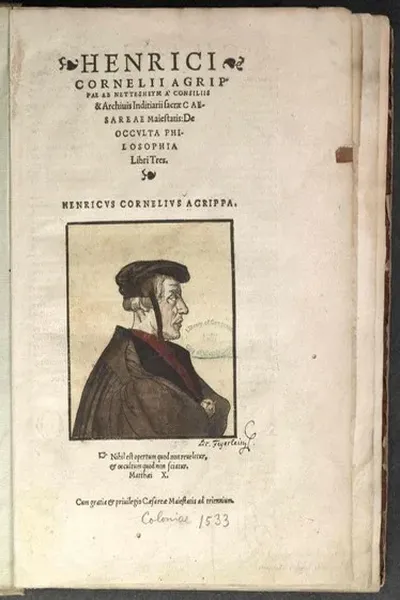





More Free Occult Philosophy Books
View all →