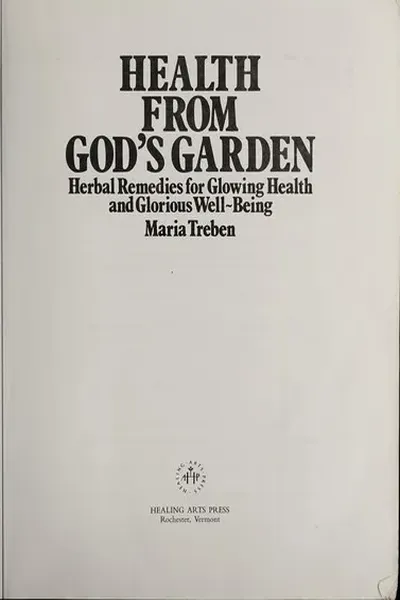
Knowing beyond knowledge

 82
82

Knowing beyond knowledge
Forsthoefel's exploration of knowledge acquisition beyond the usual channels is a welcome counterpoint to purely empirical philosophies. He adeptly questions the boundaries of what we deem 'knowable,' particularly when discussing the subjective experience of intuition. The work's strength lies in its rigorous deconstruction of common assumptions about certainty. However, the text could benefit from more explicit engagement with cross-cultural traditions of knowing, rather than remaining predominantly within a Western philosophical frame. A particularly compelling section details the concept of 'implicate order' as a precursor to explicit knowledge, suggesting an underlying coherence that consciousness can tap into. Ultimately, 'Knowing Beyond Knowledge' offers a valuable perspective for those seeking to expand their understanding of consciousness.
📝 Description
82
Thomas A. Forsthoefel's 2018 book examines knowing beyond empirical and rational limits.
Knowing Beyond Knowledge, published in 2018, questions how consciousness apprehends reality outside of standard verification and logic. Forsthoefel scrutinizes our usual ideas about knowledge, suggesting that our awareness can access truth through means other than senses or reason. The book is for those already contemplating consciousness, mysticism, and non-dual awareness, particularly those familiar with Western philosophy and open to subjective experience as a knowledge source. It arises from current discussions about consciousness and subjective experience in academic and esoteric fields, engaging with thinkers like Carl Jung and Maurice Merleau-Ponty. Forsthoefel also addresses the limits of science and materialism in explaining intuition and precognition.
This work situates itself within contemporary contemplations of consciousness and subjective experience, a dialogue increasingly present in academic and esoteric circles. It draws upon a lineage of thought that includes figures such as Carl Jung and the phenomenological approach of Maurice Merleau-Ponty. The book confronts the limitations of purely scientific or materialist viewpoints when attempting to account for phenomena like intuition and precognition, suggesting avenues for understanding that transcend conventional Western rationalism.
💡 Why Read This Book?
• Understand the concept of 'noetic knowing' as described by Forsthoefel, offering a distinct framework for intuitive apprehension not found in standard epistemology. • Gain practical perspectives on how intention and attention, as explored in the 2018 publication, can influence one's perception of reality and access to information. • Appreciate the philosophical critique of purely empirical knowledge, providing a basis for valuing subjective experience as a valid pathway to understanding.
⭐ Reader Reviews
Honest opinions from readers who have explored this book.
❓ Frequently Asked Questions
What does Thomas A. Forsthoefel mean by 'knowing beyond knowledge'?
'Knowing beyond knowledge' refers to modes of apprehension that bypass conventional sensory perception and logical reasoning, tapping into direct, intuitive insights or a form of direct apprehension of reality.
When was 'Knowing Beyond Knowledge' first published?
The book 'Knowing Beyond Knowledge' by Thomas A. Forsthoefel was first published in 2018.
Does the book discuss altered states of consciousness?
Yes, the work explores how altered states of consciousness can potentially serve as conduits for accessing deeper levels of understanding and knowledge not typically available through ordinary waking awareness.
What philosophical traditions does Forsthoefel engage with?
Forsthoefel's work engages with Western philosophical traditions, particularly concerning epistemology and the philosophy of mind, while also implicitly referencing figures like Carl Jung and phenomenological approaches.
Is this book suitable for beginners in esoteric studies?
While accessible, the book assumes a certain familiarity with philosophical inquiry. Beginners in esoteric studies might find it beneficial to first engage with foundational texts on consciousness before delving into Forsthoefel's specific epistemological arguments.
What is the core argument regarding subjective experience?
The core argument posits that subjective experience, often dismissed by purely empirical frameworks, is a valid and crucial source of knowledge, capable of revealing aspects of reality inaccessible through external observation alone.
🔮 Key Themes & Symbolism
The Nature of Noetic Knowing
This theme centers on 'noetic knowing,' a concept denoting direct apprehension of truth without reliance on sensory data or logical inference. Forsthoefel examines how this form of knowing bypasses conventional cognitive filters, suggesting it is an intrinsic human capacity. The book explores scenarios where individuals report sudden insights or profound understanding that arise spontaneously, challenging the primacy of rational thought and empirical evidence. It posits that this direct apprehension offers a valid pathway to apprehending reality's deeper structures.
Consciousness and Reality
The work studies the intricate relationship between consciousness and the nature of reality itself. It questions whether reality is a fixed, external construct or something that is, at least in part, shaped by the observer's consciousness. Forsthoefel investigates how focused attention and intention can influence perception and potentially interact with the fabric of existence, drawing parallels to ideas found in quantum physics and certain contemplative traditions regarding the observer effect.
Limitations of Empirical Epistemology
A significant theme is the critique of epistemological systems that rely solely on empirical observation and scientific method. Forsthoefel argues that such frameworks are inherently limited in their scope, failing to account for the full spectrum of human experience and knowledge acquisition. The book highlights phenomena like intuition, premonition, and profound subjective insights as evidence that our understanding of 'knowing' needs to be expanded to include these non-rational, non-empirical forms of apprehension.
The Role of Intuition
Intuition is presented not as mere guesswork but as a sophisticated cognitive faculty capable of accessing information beyond conscious reasoning. Forsthoefel analyzes the characteristics of intuitive experiences, distinguishing them from logical deductions or emotional impulses. The book explores how cultivating receptivity to intuitive signals can lead to a more comprehensive and nuanced understanding of oneself and the world, acting as a bridge between the known and the unknown.
💬 Memorable Quotes
Direct passages from the work, attributed to the author.
“The boundary of knowledge is not the boundary of reality.”
— This statement suggests that what we can currently prove or understand through established methods (knowledge) does not represent the entirety of what exists or can be known (reality).
“Direct apprehension bypasses the need for logical proof.”
— This highlights the concept of 'noetic knowing,' asserting that certain truths or understandings can be grasped instantaneously, without the step-by-step reasoning typically required by logic.
“Attention acts as a lens, focusing consciousness.”
— This interpretation emphasizes the active role of directed awareness in shaping our perception and experience of the world, suggesting that where we place our attention significantly influences what we apprehend.
“Subjectivity is not a barrier to truth, but a potential gateway.”
— Contrary to views that dismiss subjective experience, this suggests that our inner world and personal awareness can be a valid and even primary means of accessing deeper truths about existence.
“The implicit order holds potential knowledge.”
— This concept points to an underlying, unmanifest structure of reality from which explicit knowledge and phenomena emerge, implying that consciousness can connect with this foundational level.
🌙 Esoteric Significance
Tradition
This work fits within the broader Western esoteric tradition, specifically touching upon themes explored in Hermeticism and Gnosticism, which emphasize direct, inner knowledge (gnosis) over external dogma or empirical proof. It departs from strictly ritualistic or magical practices by focusing on the epistemological underpinnings of such experiences, grounding them in a philosophical exploration of consciousness itself.
Symbolism
The book implicitly engages with the symbolism of light, often representing enlightenment or direct apprehension of truth, as seen in Gnostic traditions. It also touches upon the concept of the 'implicate order,' a motif suggesting an underlying, ordered structure of reality, akin to the symbolic representation of the divine blueprint or the interconnectedness found in Kabbalistic thought.
Modern Relevance
Contemporary thinkers and practitioners in fields like transpersonal psychology, integral theory, and even certain branches of neuroscience are increasingly open to Forsthoefel's questioning of conventional epistemology. His work provides a philosophical basis for understanding subjective states and intuitive insights, relevant to modern mindfulness practices, consciousness hacking, and explorations into non-ordinary states of awareness.
👥 Who Should Read This Book
• Students of Western Esotericism: Those seeking to understand the philosophical underpinnings of direct knowing and intuition within traditions like Hermeticism and Gnosticism. • Philosophers of Mind: Readers interested in critiques of empirical epistemology and explorations of consciousness, subjective experience, and non-rational knowledge acquisition. • Contemplative Practitioners: Individuals engaged in meditation or mindfulness who seek to understand the nature of insight and awareness gained through inner work.
📜 Historical Context
Published in 2018, Thomas A. Forsthoefel's 'Knowing Beyond Knowledge' arrived during a period of renewed interest in consciousness studies and the philosophy of mind, particularly concerning subjective experience. This era saw ongoing dialogues between neuroscience, psychology, and contemplative traditions, attempting to bridge empirical observation with first-person accounts. Forsthoefel’s work implicitly engages with a lineage of thought that includes figures like Carl Jung, whose theories on archetypes and the collective unconscious explored non-rational pathways to knowledge. It also stands in contrast to the prevailing materialist philosophies that dominated much of the 20th century, offering a nuanced critique of their limitations. While not directly engaging with specific contemporaries in its text, the book’s themes resonate with the broader academic and esoteric discussions around psi phenomena and non-dual awareness that were gaining traction, often debated alongside or in opposition to analytical psychology and cognitive science.
📔 Journal Prompts
Reflect on a moment when 'direct apprehension bypasses the need for logical proof' in your own experience.
How does your 'attention act as a lens, focusing consciousness' on specific aspects of your daily life?
Consider the implications if 'the boundary of knowledge is not the boundary of reality' for your understanding of the world.
Explore instances where subjective experience provided a truth that empirical evidence did not yet support.
What might 'knowing beyond knowledge' reveal about a persistent question you hold?
🗂️ Glossary
Noetic Knowing
A form of direct apprehension of truth or reality that occurs independently of sensory perception or logical reasoning; intuitive insight.
Epistemology
The branch of philosophy concerned with the theory of knowledge, investigating its nature, scope, and how it is acquired.
Empirical Verification
The process of establishing the truth of a statement or theory through observation and experimentation rather than through theory or pure reason.
Implicate Order
A concept suggesting an underlying, enfolded reality from which the observable, unfolded universe emerges; a fundamental interconnectedness.
Subjective Experience
Consciousness and awareness from an individual's personal point of view, encompassing feelings, perceptions, and thoughts.
Phenomenology
A philosophical approach that focuses on the study of consciousness and the objects of direct experience from the first-person perspective.
Altered States of Consciousness
Any mental state significantly different from a normal waking state, achieved through various means such as meditation, hypnosis, or certain substances.
🔮 Readers Also Liked
Browse all →






More by Thomas A. Forsthoefel
All books →
More Free Occult Philosophy Books
View all →