Dao De Jing
 80
80

Dao De Jing
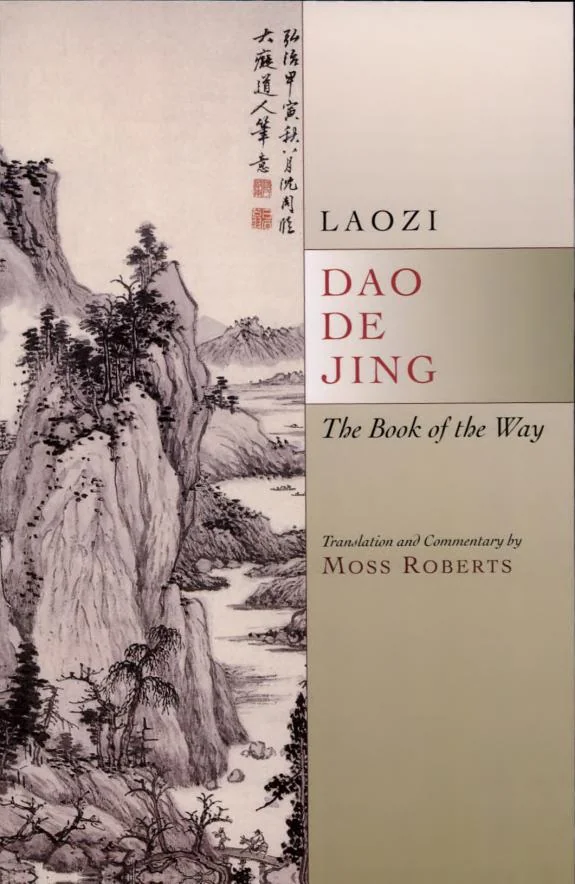
Moss Roberts' translation of the Dao De Jing offers a commendable scholarly approach, distinguished by its lucid prose and extensive contextualization. The literary quality is indeed apparent, particularly in Roberts' fresh renderings of certain stanzas, which manage to convey a sense of the original's enigmatic power without sacrificing clarity. The commentary is knowledgeable, providing essential historical and philosophical grounding that significantly enhances comprehension. However, for readers entirely new to Daoist thought, the sheer depth of Roberts' scholarly apparatus might feel somewhat dense, potentially overshadowing the poetic sparseness that is characteristic of the original text. A passage like Chapter 76, detailing the softness of water overcoming the hardness of rock, is rendered with a clarity that highlights its core message of yielding strength. Ultimately, this edition serves as a robust resource for those committed to a thorough engagement with Laozi's foundational text.
📝 Description
80
Written around the 4th century BCE, the Dao De Jing is a central text of Daoism.
Attributed to Laozi, the Dao De Jing is a foundational text for Daoism, a Chinese philosophy. Its verses offer guidance on living in harmony with the Dao, the fundamental principle of the universe. This edition, translated by Moss Roberts, emphasizes literary quality and contextual depth. It makes the text accessible to modern readers while maintaining its philosophical weight. The work is known for its poetic aphorisms and paradoxical statements.
Moss Roberts' translation suits students of Eastern philosophy, comparative religion scholars, and those wanting a deeper understanding of Daoist principles. It appeals to readers who appreciate scholarly commentary alongside poetic translation. The extensive notes and contextualization are beneficial for academic study or personal contemplation. The book emerged during a time of significant intellectual ferment in ancient China, roughly between the Spring and Autumn and Warring States periods (771-256 BCE).
The Dao De Jing is a key scripture within the Daoist tradition, a major Chinese philosophical and religious system. It presents a cosmology centered on the Dao, an ineffable, ultimate reality that guides all existence. The text's emphasis on 'wu wei' (effortless action) and living in accordance with natural patterns aligns with mystical traditions that seek harmony with cosmic forces rather than imposing human will upon them. Its aphoristic style and paradoxical pronouncements invite contemplation and direct experience, common in esoteric teachings.
💡 Why Read This Book?
• Gain a nuanced understanding of 'Wu Wei,' the principle of effortless action, as articulated in specific chapters of the Dao De Jing, learning how to align your endeavors with natural rhythms. • Explore the concept of 'De' (virtue) not as moralistic instruction, but as the inherent power or integrity that arises from living in accordance with the Dao, as detailed in the text's verses. • Appreciate the symbolic interplay between opposites, such as water and rock, illustrated in passages from the Dao De Jing, to grasp how yielding can achieve greater strength.
⭐ Reader Reviews
Honest opinions from readers who have explored this book.
❓ Frequently Asked Questions
When was the Dao De Jing first published in English by Moss Roberts?
Moss Roberts' translation and commentary on the Dao De Jing was first published on May 24, 2004, providing a contemporary scholarly interpretation of this ancient text.
Who is Laozi, the attributed author of the Dao De Jing?
Laozi is traditionally considered an ancient Chinese philosopher and the principal figure associated with the foundational text of Daoism, the Dao De Jing.
What is the central philosophy of the Dao De Jing?
The central philosophy revolves around the Dao, the ineffable natural order of the universe, and 'Wu Wei,' the practice of acting in accordance with this natural flow.
What makes Moss Roberts' translation of the Dao De Jing stand out?
Roberts' translation is noted for its literary quality, new renderings of stanzas, and extensive, knowledgeable commentary that contextualizes the text for modern readers.
Is the Dao De Jing considered a religious or philosophical text?
It is considered both a foundational philosophical text for Daoism and a significant spiritual and ethical guide, influencing religious and secular thought across East Asia.
What is the concept of 'Wu Wei' as presented in the Dao De Jing?
'Wu Wei' signifies effortless action or non-doing, emphasizing acting spontaneously and in harmony with the natural course of events, rather than through forceful or artificial means.
🔮 Key Themes & Symbolism
The Ineffable Dao
The text centers on the 'Dao,' an ultimate reality that is beyond human comprehension and description, yet is the source and governing principle of all existence. It is the natural way of things, the underlying current that all beings should strive to align with. The Dao De Jing emphasizes that direct experience and intuitive understanding are key to perceiving it, rather than intellectual analysis. Its ineffable nature means that any attempt to define it ultimately falls short, as stated in the opening lines of the text.
Wu Wei: Effortless Action
A central to Daoist practice is 'Wu Wei,' often translated as non-action or effortless action. This does not mean passivity, but rather acting in accordance with the natural flow of the Dao, without striving or force. The Dao De Jing illustrates this through natural phenomena, like water that yields yet can overcome the hardest stone. It suggests that true effectiveness comes from spontaneity and alignment with universal patterns, rather than imposing one's will.
The Harmony of Opposites
The Dao De Jing frequently employs the concept of complementary opposites, akin to yin and yang, to explain the dynamic balance of the universe. It suggests that seemingly contradictory forces are interdependent and essential for wholeness. For example, the text values emptiness (yin) for its utility, as in the usefulness of a bowl or a room, which is defined by the space it contains. Understanding this interplay is crucial for comprehending the text's view on balance and natural order.
Simplicity and Humility
The work advocates for a return to simplicity, detachment from worldly desires, and a cultivation of humility. It critiques ambition, excessive knowledge, and societal artifice, suggesting they lead away from the natural state of being. By embracing 'Pu' (the uncarved block or primal simplicity), individuals can achieve a state of contentment and genuine power, free from the complications of artificial distinctions and striving. This theme underscores the value of naturalness and unadorned existence.
💬 Memorable Quotes
Direct passages from the work, attributed to the author.
“The Dao that can be told is not the eternal Dao. The name that can be named is not the eternal name.”
— This opening statement immediately establishes the ineffable nature of the Dao. It asserts that any attempt to define or articulate the ultimate reality using language is inherently limited and cannot capture its true, eternal essence.
“Nature does not hurry, yet everything is accomplished.”
— This aphorism highlights the principle of Wu Wei, or effortless action. It suggests that the natural world operates according to its own rhythms, achieving its ends without strain or haste, offering a model for human conduct.
“To the mind that is still, the whole universe surrenders.”
— This illustrates the power of inner stillness and mental quietude. By quieting the incessant chatter of the mind, one can achieve a state of receptivity and harmony with the greater cosmic order.
“When I let go of what I am, I become what I might be.”
— This speaks to the transformative potential of relinquishing fixed identities and attachments. By releasing preconceptions and expectations, one opens up to new possibilities and a more authentic way of being.
💡 Key Ideas
Editorial paraphrase of the work's core concepts — not direct quotes.
He who knows does not speak. He who speaks does not know.
This quote reflects the Daoist emphasis on intuitive wisdom over verbose intellectualism. True understanding, it implies, is often silent and experiential, while excessive speech may indicate a lack of genuine insight.
🌙 Esoteric Significance
Tradition
The Dao De Jing is the foundational scripture of philosophical and religious Daoism, a tradition deeply embedded in Chinese esoteric thought. While distinct from Western Hermeticism or Kabbalah, it shares common ground with these traditions in its exploration of an ultimate, ineffable reality (the Dao mirroring the 'Ain Soph' or 'The All') and its emphasis on aligning the microcosm (human being) with the macrocosm (universe). Its principles of naturalness and effortless action offer a unique path to spiritual attainment, distinct from asceticism or rigid dogma.
Symbolism
Key symbols include the 'Dao' itself, representing the unmanifest source and underlying principle of reality. 'Water' is a pervasive symbol of yielding strength, adaptability, and purity, demonstrating how softness can overcome hardness. 'The Uncarved Block' (Pu) symbolizes primal simplicity, the state of pure potential before societal conditioning and artificial distinctions obscure one's natural essence. These symbols are not mere metaphors but represent fundamental modes of existence and spiritual practice.
Modern Relevance
Contemporary thinkers and practitioners in fields ranging from psychology and leadership studies to martial arts and environmentalism draw inspiration from the Dao De Jing. Its principles of 'Wu Wei' inform concepts of mindful leadership and sustainable practices. Modern Daoist practitioners continue to engage with the text for spiritual guidance, while its emphasis on balance, nature, and inner stillness finds resonance with secular mindfulness movements and those seeking alternatives to hyper-rational, materialistic worldviews.
👥 Who Should Read This Book
• Students of comparative religion and Eastern philosophy seeking foundational texts that offer a contrasting perspective to Confucianism and Buddhism. • Individuals interested in practical applications of ancient wisdom for personal development, leadership, and navigating life's challenges with greater ease. • Seekers of spiritual paths focused on naturalness, intuition, and alignment with universal principles, rather than dogma or rigid structures.
📜 Historical Context
The Dao De Jing emerged from the vibrant intellectual milieu of ancient China's Spring and Autumn and Warring States periods (circa 771–256 BCE). This era was marked by profound social and political upheaval, fostering a flourishing of philosophical inquiry known as the Hundred Schools of Thought. Laozi, traditionally placed as a contemporary of Confucius, is credited with its authorship, though scholarly debate continues regarding his historicity and the text's precise compilation date. The text presented a radical counterpoint to the hierarchical and ritualistic emphasis of emerging Confucianism, advocating instead for naturalness, simplicity, and alignment with the Dao. Its influence was not immediate; early commentaries, such as those attributed to scholars during the Han Dynasty (206 BCE – 220 CE), helped solidify its canonical status within Daoism. Unlike the more overtly structured philosophical systems, the Dao De Jing's poetic and often paradoxical verses allowed for diverse interpretations, contributing to its enduring appeal across centuries and cultures.
📔 Journal Prompts
The concept of the 'Uncarved Block' (Pu): How might embracing simplicity alter your daily interactions?
Reflect on a time when 'Wu Wei' guided your actions, even if unnamed at the time.
Analyze the paradoxes presented in the Dao De Jing concerning knowledge and speech.
Consider the symbolic meaning of water in relation to your own resilience.
How does the Dao De Jing's view of the Dao contrast with your understanding of ultimate reality?
🗂️ Glossary
Dao (Tao)
The fundamental, ineffable principle of the universe in Daoism. It is the natural order, the source from which all things arise and to which they return. It is beyond human comprehension and description.
De (Te)
Often translated as virtue, power, or integrity. It is the manifestation of the Dao within individuals and phenomena; the inherent quality or potency that arises from living in accordance with the Dao.
Wu Wei
Literally 'non-action' or 'effortless action.' It signifies acting in harmony with the natural flow of the Dao, without striving, force, or artificiality. It implies spontaneity and effectiveness through alignment.
Pu
The 'uncarved block' or primal simplicity. It represents the natural, unadulterated state of being before societal conditioning, desires, and artificial distinctions obscure one's true nature.
Yin and Yang
Complementary, interdependent forces that represent the dualistic, yet unified, nature of reality. Yin is typically associated with passivity, darkness, and femininity, while Yang represents activity, light, and masculinity.
Laozi (Lao Tzu)
The ancient Chinese philosopher traditionally credited with writing the Dao De Jing and founding Daoism. His historicity is debated, but he is a central figure in the tradition.
Spring and Autumn period
An era in Chinese history (c. 771–476 BCE) known for political fragmentation and intellectual dynamism, during which many foundational Chinese philosophies emerged.
This book appears in 1 collection
🔮 Readers Also Liked
Browse all →









From the “Taoism” Collection
View all →




More Free Occult Philosophy Books
View all →