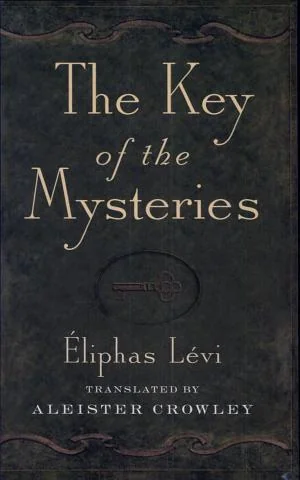
Key of the Mysteries
 71
71

Key of the Mysteries
Eliphas Lévi's "Key of the Mysteries" offers a dense, often intricate, exploration of Qabalistic principles as they relate to Western magic. Lévi’s strength lies in his ability to synthesize diverse esoteric traditions, presenting the Qabalah not as a static doctrine but as a living, adaptable system for understanding reality. The work's subtle irony, as noted in its original blurb, is indeed present, lending a critical yet accessible tone to complex subjects. However, the sheer density of symbolism and Lévi's sometimes idiosyncratic interpretations can be challenging for newcomers. The section on "fluidic phantoms," while fascinating, feels somewhat tangential to the core Qabalistic framework. Lévi masterfully connects the macrocosm and microcosm, demonstrating how the structure of the divine is reflected in human consciousness and the natural world. It's a work that rewards careful study and contemplation, offering a foundational text for those serious about the Qabalistic underpinnings of Western occultism.
📝 Description
71
Eliphas Lévi's 1972 posthumous publication, Key of the Mysteries, details his mature Qabalistic thought.
First appearing in 1972, Key of the Mysteries distills Eliphas Lévi's lifetime of study into Western magic and Qabalah. He sought to decode the symbolic language present in religious doctrines and arcane sciences, presenting a system for understanding the cosmos through numerical and symbolic connections. The book examines spiritualism and ephemeral phenomena within this framework.
This text is for serious students of Western esotericism interested in the Qabalah as a core component of occult practice. It offers insights into the historical development of magical theory, particularly as interpreted by Lévi. Individuals exploring the philosophical bases of religious symbolism and consciousness beyond materialist views will also find it valuable. Lévi's work aimed to synthesize ancient knowledge with contemporary understanding, standing apart from purely spiritualist or philosophical trends of his time.
Eliphas Lévi, an influential figure in the 19th-century occult revival, engaged deeply with Qabalistic studies. Though Key of the Mysteries was published posthumously in 1972, it reflects his extensive work synthesizing esoteric traditions. His approach sought to bridge ancient wisdom with the understanding of his era, differentiating itself from more purely spiritualist or philosophical movements by focusing on the practical application of symbolic systems in magic.
💡 Why Read This Book?
• Gain an understanding of the Qabalistic Tree of Life as presented by Eliphas Lévi, a cornerstone of Western magic, and learn how its structure informs magical theory. • Explore Lévi's "prophetic theology of numbers," a unique method for deciphering cosmic laws and spiritual truths through numerical symbolism, as detailed in his writings. • Examine Lévi's concept of "fluidic phantoms" and spiritual manifestation, offering an esoteric perspective on phenomena that bridges the material and immaterial realms.
⭐ Reader Reviews
Honest opinions from readers who have explored this book.
❓ Frequently Asked Questions
What is the original publication date of Eliphas Levi's 'Key of the Mysteries'?
While Eliphas Lévi (Alphonse Louis Constant) wrote extensively in the 19th century, 'Key of the Mysteries' saw its first publication in 1972, long after his death.
What is the primary esoteric tradition discussed in 'Key of the Mysteries'?
The book's primary focus is the Qabalah, particularly as interpreted through the lens of Western esotericism and Rosicrucianism, which Lévi synthesized.
Does 'Key of the Mysteries' discuss tarot?
Yes, Eliphas Lévi frequently links the Qabalistic Paths and Sephiroth to the symbolism found within the Tarot, viewing them as a key to understanding esoteric principles.
What does Eliphas Lévi mean by the 'prophetic theology of numbers'?
This refers to Lévi's belief that numbers possess inherent symbolic meanings that can reveal divine truths and the underlying structure of the universe, akin to prophecy.
Is 'Key of the Mysteries' suitable for beginners in occult studies?
While foundational, the book is quite dense and assumes some familiarity with esoteric concepts. Beginners might benefit from reading introductory texts on Qabalah first.
What is a 'fluidic phantom' according to Lévi?
Lévi describes 'fluidic phantoms' as semi-corporeal manifestations or energetic imprints that can appear, often linked to spiritualistic phenomena or intense emotional states.
🔮 Key Themes & Symbolism
Qabalistic Synthesis
The work presents a comprehensive synthesis of the Qabalah, integrating it with Hermetic philosophy, Rosicrucian symbolism, and Christian mysticism. Lévi views the Tree of Life not merely as a mystical diagram but as a blueprint for the cosmos and human consciousness. He meticulously maps correspondences between the Sephiroth, Paths, Hebrew letters, and various esoteric systems, demonstrating the interconnectedness of all things through this ancient framework.
The Prophetic Theology of Numbers
A central concept is Lévi's belief in the divine intelligence embedded within numerical relationships. He argues that numbers are not arbitrary but are carriers of profound spiritual meaning, capable of revealing cosmic laws and prophetic insights. This 'theology' suggests that by understanding the inherent qualities and relationships of numbers, one can unlock secrets of creation and divine will, influencing magical practice.
Spiritualism and Fluidic Forms
Lévi addresses phenomena such as spiritualism and the nature of apparitions, which he terms 'fluidic phantoms.' He attempts to explain these occurrences through an esoteric lens, positing that they are manifestations of subtle energies or psychic impressions. This exploration connects the abstract Qabalistic principles to observable, albeit often controversial, supernatural phenomena, seeking to clarify them within an occult framework.
The Tarot as a Key
The book emphasizes the profound connection between the Tarot and the Qabalah. Lévi posits that the Tarot's Major Arcana, in particular, serve as visual representations of the Qabalistic Paths on the Tree of Life. Understanding the Tarot's symbolism is presented as crucial for unlocking the deeper meanings of the Qabalah and for the practice of Western magic, acting as a mnemonic and divinatory tool.
💬 Memorable Quotes
Direct passages from the work, attributed to the author.
“The greatest symbol of the Qabalah is the Tree of Life.”
— This statement highlights the central importance of the Tree of Life in Lévi's system. It's presented not just as a diagram, but as the foundational structure upon which all esoteric understanding and magical practice are built, embodying the divine order.
“Numbers are the alphabet of the language of God.”
— This captures Lévi's concept of the 'prophetic theology of numbers.' It suggests that mathematical and numerical relationships are divinely ordained and hold the key to understanding creation's secrets, functioning as a divine communication system.
“The astral light is the universal agent, the fluidic phantom of the universe.”
— This defines Lévi's concept of the astral light as a pervasive energetic medium. It's the substance through which manifestations occur, linking the spiritual and material, and is the basis for phenomena like spiritualism and apparitions.
“Magic is the science of the secrets of nature.”
— This concise definition frames magic as an intellectual and practical discipline focused on uncovering the hidden laws and workings of the natural world, viewed through an esoteric perspective.
“The Tarot is the key to the ancient hieroglyphic language of the sanctuaries.”
— This emphasizes the Tarot's role as a sacred language and a tool for initiation. Lévi suggests it holds the ancient wisdom of esoteric traditions, providing access to profound spiritual knowledge when properly understood.
🌙 Esoteric Significance
Tradition
This work is firmly situated within the Western Esoteric Tradition, specifically drawing from Hermeticism, Neoplatonism, and Christian Cabala. Lévi's unique contribution was to synthesize these disparate threads, presenting the Qabalah not just as a Jewish mystical system but as a universal key to understanding the cosmos. He adapted Qabalistic concepts to align with Rosicrucian ideals and ceremonial magic, making them accessible to a non-Jewish audience and forming a core part of modern occultism.
Symbolism
The Qabalistic Tree of Life is the dominant symbol, representing the divine emanations and the structure of reality. Lévi meticulously correlates its ten Sephiroth and twenty-two Paths with Hebrew letters, planets, tarot cards, and divine names. Another key motif is the 'astral light,' described as the universal fluidic medium or animating force of the universe, which Lévi believed was the substance of both spiritual and subtle physical phenomena, including 'fluidic phantoms.'
Modern Relevance
Lévi's interpretations, particularly his synthesis of Qabalah and Tarot, profoundly influenced subsequent generations of occultists. Thinkers and practitioners in modern Western Esotericism, including ceremonial magicians, Qabalists, and tarot scholars, continue to draw heavily on his work. His systematic approach to magic and his integration of diverse traditions laid the groundwork for many contemporary magical orders and individual practitioners seeking a structured path of spiritual development.
👥 Who Should Read This Book
• Students of Western Esotericism seeking to understand the Qabalah's role in ceremonial magic and occult philosophy. • Practitioners of magic and divination who wish to deepen their theoretical knowledge of Qabalistic correspondences and symbolism. • Scholars of comparative religion and mysticism interested in 19th-century occult revivalism and Eliphas Lévi's influential interpretations.
📜 Historical Context
Eliphas Lévi, born Alphonse Louis Constant in 1809, was a central figure in the 19th-century occult revival. "Key of the Mysteries," published in 1972, posthumously distills his mature thought on the Qabalah, a system he rigorously studied and reinterpreted for Western practitioners. This period saw a burgeoning interest in spiritualism and esoteric philosophies, partly as a reaction against rigid materialism and scientific positivism. Lévi’s work stood apart from purely spiritualistic circles, aiming to provide a systematic, intellectual framework for magic, deeply rooted in Kabbalistic and Hermetic traditions. He engaged with contemporary esotericists like Papus, though his own influence was perhaps more profound through his foundational texts. His synthesis of Qabalah, Tarot, and ceremonial magic significantly shaped later occult orders like the Hermetic Order of the Golden Dawn, which emerged in the late 19th century.
📔 Journal Prompts
The Tree of Life as a map of consciousness: how do the Sephiroth correspond to your inner states?
Reflect on the 'prophetic theology of numbers' and its implications for understanding universal patterns.
Consider Lévi's concept of 'fluidic phantoms' in relation to unexplained phenomena you have encountered or read about.
Analyze the connection Lévi draws between the Tarot's Major Arcana and the Paths of the Tree of Life.
How does Lévi's synthesis of Qabalah with Western traditions differ from purely Jewish Kabbalistic approaches?
🗂️ Glossary
Qabalah
A complex system of Jewish mysticism and esoteric philosophy concerned with the divine nature, creation, and the relationship between God and humanity, often represented by the Tree of Life.
Tree of Life
A diagram central to Qabalistic thought, consisting of ten interconnected spheres (Sephiroth) and twenty-two paths, symbolizing the emanations of God and the structure of the universe.
Sephiroth
The ten divine emanations or attributes of God described in the Qabalah, represented as spheres on the Tree of Life.
Paths
The twenty-two connections between the Sephiroth on the Tree of Life, often associated with the letters of the Hebrew alphabet and the Major Arcana of the Tarot.
Astral Light
In Lévi's cosmology, a universal, subtle, luminous fluid that permeates all existence, acting as a medium for manifestation and spiritual influence.
Fluidic Phantom
A term used by Lévi to describe semi-corporeal or energetic manifestations, often associated with spiritualism, apparitions, or psychic phenomena.
Rosicrucianism
A mystical and esoteric tradition tracing its origins to legendary secret societies of alchemists and sages in the 17th century, emphasizing spiritual transformation and hidden knowledge.
This book appears in 1 collection
🔮 Readers Also Liked
Browse all →









From the “Occultism” Collection
View all →







More Free Occult Philosophy Books
View all →