Libro de los seres imaginarios
 75
75

Libro de los seres imaginarios
Borges's *Libro de los seres imaginarios* presents a fascinating, if somewhat dry, taxonomy of the unreal. Its strength lies in its sheer breadth and the author's characteristic precision; the entries are concise, scholarly, and often startling in their erudition, drawing from a dizzying array of ancient and modern texts. However, the book's encyclopedic nature, while admirable, can also feel like its primary limitation. It offers little in the way of interpretation or narrative cohesion between entries, presenting the reader with a collection of disparate wonders rather than an integrated exploration of their significance. A passage detailing the intricate, paradoxical nature of the 'Simurgh' exemplifies this: it is presented as a creature of immense antiquity and wisdom, yet the entry remains purely descriptive, a testament to Borges's encyclopedic recall rather than his speculative delving. Ultimately, it is a valuable reference for the sheer density of its compiled lore.
📝 Description
75
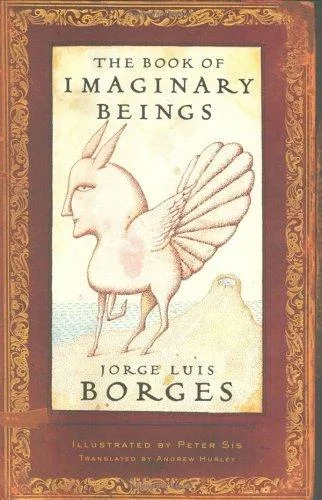
Jorge Luis Borges published the *Libro de los seres imaginarios* in 1967, a catalog of mythical creatures.
Jorge Luis Borges's *Libro de los seres imaginarios*, published in 1967, is an encyclopedia of creatures from myth, legend, and literature. It functions as a catalog rather than a narrative, blending academic detail with imagination. Each concise entry examines the origins and traits of fantastical beings, from the familiar to the rare, drawing on global traditions. This work appeals to those interested in the connections between literature, mythology, and esoteric thought, especially those who value precise descriptions of the unreal. It is suitable for students of comparative mythology, critics of symbolic representation, and anyone curious about the persistent appeal of imagined beings. The book is particularly useful for understanding the archetypal forms of divine or monstrous figures that appear in human imagination.
The book operates on the idea that cataloging imaginary creatures acts as a way to map existence and culture. By describing beings such as the Griffin or the Basilisk, Borges implicitly addresses humanity's need to define the self. This is not a book of spells or rituals, but a reflection on how humans create and understand the non-human through stories and symbols. Borges, a known bibliophile, was influenced by the breadth of human knowledge and how different cultures perceived the non-human. The work reflects a 20th-century focus on semiotics and how meaning is built through language and symbols.
While not a manual for occult practices, the *Libro de los seres imaginarios* engages with esoteric traditions by cataloging beings often found in grimoires, alchemical texts, and mystical lore. It taps into the long history of bestiaries, which historically served not just as zoological records but as symbolic maps of the spiritual or hidden world. Borges's meticulous documentation of creatures like demons, angels, and chimeras reflects an engagement with the symbolic language of various mystical systems, treating these imaginary beings as manifestations of collective human consciousness and cultural narratives.
💡 Why Read This Book?
• You will learn specific details about creatures like the Siren, drawing from diverse classical and medieval sources, providing a concrete understanding of their mythological evolution. • You can explore the concept of the 'Ch'i-lin' and its symbolic role in East Asian cosmology, offering a distinct perspective not found in Western bestiaries. • You will gain appreciation for the meticulous way Borges compiles entries, as seen in the detailed description of the 'Ape,' demonstrating how literary tradition shapes monstrous forms.
⭐ Reader Reviews
Honest opinions from readers who have explored this book.
❓ Frequently Asked Questions
What is the primary focus of Jorge Luis Borges's Libro de los seres imaginarios?
The book is an encyclopedia of imaginary creatures from mythology, literature, and folklore worldwide, first published in 1967. It details their origins and characteristics with scholarly precision.
Which historical periods and cultures does the book draw from?
It references a vast array of periods and cultures, including ancient Greek myths, medieval bestiaries, East Asian legends, and European folklore, spanning millennia of human storytelling.
Is the Libro de los seres imaginarios a fictional narrative?
No, it is a non-fiction catalog or encyclopedia. It presents factual entries about legendary beings rather than a story with characters and plot.
What is the significance of the creature 'Anfisbena' in the book?
The entry for the Anfisbena describes it as a serpent with a head at each end, drawing from classical sources and highlighting its paradoxical, self-contained nature within mythological bestiaries.
How does Borges approach the concept of 'imaginary' beings?
Borges treats these beings with encyclopedic seriousness, cataloging them as if they were real entities documented in ancient texts, thereby exploring the power and persistence of collective imagination.
When was the first edition of Libro de los seres imaginarios published?
The first edition of the Libro de los seres imaginarios was published in 1967.
🔮 Key Themes & Symbolism
The Taxonomy of the Unreal
Borges approaches creatures like the 'Centaur' not as mere fantasy, but as documented entities within specific cultural and literary traditions. The book's meticulously compiled entries function as a form of pseudo-scientific classification for beings that exist only in text and imagination. This thematic exploration looks at how humanity has historically sought to categorize and understand the unknown through the creation of monstrous or wondrous figures, treating each entry as a factual report from the annals of myth and legend.
The Power of Collective Conception
Through detailed descriptions of beings such as the 'Phoenix' or the 'Dragon,' the work implicitly argues for the reality of shared imaginary constructs. These creatures persist across centuries and cultures because they embody fundamental human desires, fears, or philosophical concepts. Borges's cataloging of these entities suggests that their collective conceptualization grants them a unique form of existence, shaping worldviews and influencing narrative across diverse societies, highlighting the potency of shared belief.
Literary Archetypes and Their Origins
The book dissects the archetypal forms of fantastical beings, tracing their lineage through various literary and oral traditions. For example, the entry on the 'Sphinx' explores its complex symbolic roles from Egyptian riddles to Greek mythology. This theme examines how certain archetypal creatures become embedded in the human psyche, serving as recurring motifs that comment on human nature, destiny, and the boundaries of the knowable world.
The World as Text
Borges's approach in *Libro de los seres imaginarios* reflects his broader philosophical stance that reality itself can be understood as a vast text. By cataloging imaginary beings, he treats the entire corpus of human myths and stories as a field of study akin to natural history. The book’s structure, a lexicon of the impossible, underscores the idea that our understanding of existence is heavily mediated by the narratives we create and preserve, turning the world into a library of infinite references.
💬 Memorable Quotes
Direct passages from the work, attributed to the author.
“The Chimera is a creature of composite origin, a hybrid of lion, goat, and serpent.”
— This concise description of the Chimera exemplifies the book's method: presenting fantastical beings by detailing their constituent parts, drawing from classical zoological and mythological traditions.
“The Basilisk is said to kill with a glance.”
— This entry captures the essence of the Basilisk's fearsome reputation, highlighting how a single, potent attribute can define a creature's mythical power and its place in lore.
“The Leucrocota is a beast from Ethiopia, possessing the speed of a stag and the jaws of a lion.”
— This entry demonstrates Borges's synthesis of disparate attributes, combining geographical origin with hybrid physical characteristics to define a creature that exists primarily in textual accounts.
“The Hydra is a multi-headed serpent, whose severed heads regenerate.”
— This describes a core characteristic of the Lernaean Hydra, emphasizing its regenerative horror and its symbolic representation of an intractable, ever-returning threat within mythology.
💡 Key Ideas
Editorial paraphrase of the work's core concepts — not direct quotes.
The Roc is a bird of enormous size, capable of carrying elephants.
This paraphrased concept illustrates how the book grounds even the most fantastical creatures in descriptive detail, referencing their scale and legendary feats from sources like the tales of Sinbad.
🌙 Esoteric Significance
Tradition
While not strictly within a defined esoteric tradition like Hermeticism or Gnosticism, *Libro de los seres imaginarios* engages with the archetypal imagery that permeates these lineages. It functions as a secularized bestiary, cataloging creatures that often embody dualistic principles, cosmic forces, or transformative potentials found in older mythologies and occult lore. Its approach is more akin to comparative mythology or literary analysis, yet it provides fertile ground for those exploring the symbolic language common to many esoteric paths.
Symbolism
The book details numerous symbolic figures. For instance, the 'Dragon' often represents primordial chaos, untamed nature, or a guardian of hidden knowledge, a motif recurring in alchemical and Gnostic texts. The 'Phoenix,' symbolizing rebirth and eternal recurrence, speaks to cycles of destruction and regeneration vital in many spiritual traditions. The 'Griffin,' a hybrid of lion and eagle, frequently denotes sovereignty, divine power, and the union of earthly and celestial realms, bridging different symbolic registers.
Modern Relevance
Contemporary thinkers and creators in fields ranging from speculative fiction to comparative psychology continue to draw upon the archetypal creatures cataloged by Borges. Artists exploring mythic themes, writers building fantasy worlds, and scholars of Jungian archetypes find in this book a foundational reference for the enduring symbolic forms that populate the collective unconscious. Its precise, detached cataloging style also influences modern approaches to world-building and the systematic exploration of imaginary cosmologies.
👥 Who Should Read This Book
• Students of comparative mythology and folklore seeking a comprehensive catalog of legendary creatures with detailed textual references. • Literary critics and scholars interested in the origins and evolution of archetypal figures in global narratives. • Readers fascinated by the intersection of language, imagination, and belief, who appreciate a systematic approach to the unreal.
📜 Historical Context
Published in 1967, *Libro de los seres imaginarios* emerged in a post-war intellectual landscape where literature and philosophy grappled with meaning, language, and the nature of reality. Borges, already a celebrated figure, drew upon his vast bibliographical knowledge, engaging with a tradition of bestiaries and encyclopedic works that stretched back to antiquity. This period saw scholars like Umberto Eco beginning to explore semiotics and medieval texts, a field that Borges’s work anticipates. While not aligned with any single esoteric sect, the book resonated with a growing interest in comparative mythology and the symbolic underpinnings of human culture, offering a meticulously curated compendium that stood apart from the more mystical or overtly magical texts of contemporary esoteric movements.
📔 Journal Prompts
The 'Ape' as described in the text: its textual lineage and symbolic representation.
Reflect on the 'Simurgh' and its connection to avian symbolism across cultures.
The concept of the 'Basilisk' and its power of the lethal gaze.
Compare and contrast the 'Centaur' and 'Satyr' as hybrid beings.
Borges's cataloging of 'imaginary beings' as a form of reality construction.
🗂️ Glossary
Anfisbena
A mythical serpent with a head at each end, known from classical sources and bestiaries, symbolizing paradox or self-sufficiency.
Basilisk
A legendary reptile, often called the 'king of serpents,' reputed to be deadly and capable of killing with a single glance or its breath.
Centaur
A creature from Greek mythology with the upper body of a human and the lower body of a horse, symbolizing a blend of intellect and wildness.
Chimera
A monstrous creature of Greek legend, typically depicted as a lion with the head of a goat arising from its back and a serpent for a tail.
Dragon
A large, reptilian creature, often winged and fire-breathing, appearing in the mythologies of many cultures, symbolizing power, chaos, or wisdom.
Phoenix
A mythical bird that cyclically regenerates or is otherwise born again, symbolizing immortality, resurrection, and the sun.
Sphinx
A mythical creature with the head of a human and the body of a lion, famously associated with riddles and guarding sacred places in Greek and Egyptian mythology.
🔮 Readers Also Liked
Browse all →









More by Jorge Luis Borges
All books →


![The Widow Ching Pirate [5 stories]](/img/thumb/the-widow-ching-pirate-5-stories-jorge-luis-borges.webp)
More Free Occult Philosophy Books
View all →