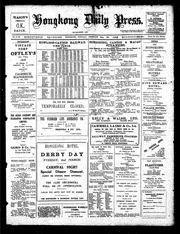
Crossfield chronicle (1945-02-09)

 84
84

Crossfield chronicle (1945-02-09)


Alaric Kestrel, Metaphysical Studies Reviewer: The 'Crossfield Chronicle' is a fascinating document, less a direct incantation and more a tapestry of mundane reality imbued with latent esoteric potential. Its strength lies in the juxtaposition of everyday concerns with nascent technological marvels, mirroring humanity's perpetual search for deeper meaning amidst societal shifts. While not overtly occult, the chronicle invites readers to seek symbolic interpretations, particularly within its local news and community updates, suggesting a connection to pagan cycles and earthly wisdom. It appeals to scholars of esoteric history and practitioners seeking to understand how ancient beliefs might subtly permeate seemingly secular records. A compelling, if understated, glimpse into the hidden currents of consciousness.
📝 Description
84
Published in early 1945, the Crossfield Chronicle documents local life alongside veiled esoteric knowledge.
The Crossfield Chronicle, appearing in early 1945, presents itself as a local record but contains layers of hidden meaning. While detailing everyday events and community matters such as governance and remembrance, the text subtly weaves in references to arcane practices. It captures a society looking towards new technologies like rocket planes while still engaged with fundamental human concerns. For those familiar with pagan traditions and witchcraft, the chronicle's seemingly mundane entries, from household tips to public notices, may reveal symbolic significance. The work invites readers to find deeper patterns related to natural cycles, communal ties, and possibly, early forms of nature worship or elemental magic.
This book is not a direct manual for magical practice but rather illustrates how mystical elements persist within ordinary existence. Its value is in recognizing the underlying currents of the esoteric that flow beneath the surface of daily life. It speaks to an enduring connection with natural rhythms, accessible to those who look beyond the obvious.
This chronicle emerges from a period when interest in folk magic and pagan survivals gained traction, particularly in the wake of World War II. It reflects an esoteric sensibility that sought to find the sacred or magical within the mundane, rather than in overtly religious or ceremonial contexts. The text aligns with traditions that emphasize the inherent spiritual qualities of nature and community, suggesting that occult knowledge was not confined to specialized texts but could be found embedded in everyday observations and local customs. It points to a belief in cyclical time and the presence of subtle energies influencing daily life.
💡 Why Read This Book?
This chronicle offers a unique lens into the subtle interplay between the mundane and the mystical, perfect for seekers interested in how witchcraft and paganism might manifest in everyday life. Scholars will find its historical context invaluable for understanding post-war societal undercurrents, while practitioners can glean symbolic insights from its seemingly ordinary entries. It's a treasure trove for those who believe magic resides not just in ritual, but in the fabric of existence itself.
⭐ Reader Reviews
Honest opinions from readers who have explored this book.
❓ Frequently Asked Questions
What is the primary genre of the 'Crossfield Chronicle'?
While presented as a local chronicle, its deeper resonance lies in themes of witchcraft and paganism, inviting esoteric interpretation and symbolic analysis beyond its surface narrative.
Who is the intended audience for this text?
The 'Crossfield Chronicle' is ideal for esoteric scholars, history buffs interested in post-war occult undercurrents, and practitioners of witchcraft and paganism seeking symbolic insights within everyday records.
Does the chronicle contain explicit spells or rituals?
No, the chronicle does not contain explicit spells or rituals. Its esoteric value lies in the symbolic interpretation of its content and the subtle hints of pagan worldview within mundane accounts.
What historical period does the 'Crossfield Chronicle' cover?
The primary focus is around February 9, 1945, with references to events in 1943. This places it firmly in the latter stages of World War II and its immediate aftermath.
Can this chronicle be used for practical magical work?
While not a direct grimoire, its symbolic richness and connection to natural cycles can inspire contemplation and personal magical practice for those who understand esoteric correspondences.
🔮 Key Themes & Symbolism
Elements of the Old Ways in Modernity
This theme explores how ancient pagan beliefs and practices might subtly persist and manifest within the seemingly secular and rapidly modernizing range of post-war society. The 'Crossfield Chronicle' serves as a tangible example, where everyday occurrences, local news, and burgeoning technological advancements are viewed through a lens that hints at an underlying cyclical understanding of nature, community, and perhaps even elemental forces. It suggests that the 'old ways' are not entirely forgotten but are woven into the fabric of daily life, waiting to be perceived by those with attuned senses.
The Mundane as a Gateway to the Mystical
The chronicle highlights the potent idea that the esoteric is not confined to hidden temples or ancient texts, but can be found within the most ordinary of records. From 'house plant care' to 'dog pound' notices, each entry, when approached with an esoteric perspective, becomes a potential symbol or allegory. This theme encourages readers to re-examine their own surroundings and daily experiences, seeking the hidden correspondences and deeper meanings that connect the material world to the spiritual and magical realms, thereby transforming the mundane into a gateway for mystical discovery.
Post-War Consciousness and Esoteric Currents
Emerging from the shadow of World War II, the 'Crossfield Chronicle' captures a unique moment of societal transition. This theme explores how the collective consciousness of the era, grappling with unprecedented destruction and rapid technological innovation (like rockets and helicopters), might have simultaneously fostered a renewed interest in or a subconscious resonance with esoteric philosophies. It examines how the anxieties, hopes, and the search for meaning in a changed world could have made individuals more receptive to the wisdom of ancient traditions and the enduring power of nature-based spirituality.
💬 Memorable Quotes
Direct passages from the work, attributed to the author.
“Stan Hodgson Appointed Assessor”
— This seemingly bureaucratic appointment can be interpreted as a nod to the establishment of order and the grounding of community foundations, a necessary precursor for any sustained magical practice or societal evolution.
“House Plant Care”
— A simple act of nurturing plant life, symbolizing a connection to the Earth's generative forces and the cyclical nature of growth, decay, and rebirth, fundamental to many pagan traditions.
“Building Helicopter - Has Been Done Before”
— This phrase speaks to the cyclical nature of invention and the rediscovery of ancient principles, hinting that modern innovations may echo forgotten wisdom or natural laws.
“Rocket Plane Did It”
— A proof of human ingenuity and the harnessing of elemental power (air and fire), reflecting a modern manifestation of control over natural forces, a theme resonant in many magical systems.
“Smile Awhile”
— A simple, yet profound, reminder of the power of positive emotion and inner disposition in navigating life's challenges, a principle often emphasized in spiritual and esoteric disciplines.
🌙 Esoteric Significance
Tradition
The 'Crossfield Chronicle' subtly aligns with traditions that emphasize the immanence of the sacred in the natural world, such as various forms of Neo-Paganism, Earth-based spiritualities, and folk magic. It speaks to the belief that magical forces are not external but are interwoven with the fabric of everyday life, community, and the cycles of nature. The chronicle invites an interpretation that sees the divine or the mystical present in the mundane, a core tenet of many animistic and pantheistic beliefs.
Symbolism
Key symbols emerge from the juxtaposition of elements: the 'assessor' represents societal order and structure; 'house plant care' signifies nurturing life and connection to the Earth; 'rocket plane' and 'helicopter' embody human ambition and control over natural forces; 'dog pound' could symbolize containment or societal management of the wild; and 'local news' represents the interconnectedness of the community. These mundane elements become potent symbols when viewed through an esoteric lens, hinting at larger cosmic or elemental principles.
Modern Relevance
In our contemporary world, saturated with digital information and often disconnected from natural rhythms, the 'Crossfield Chronicle' serves as a vital reminder of the enduring power of the tangible and the local. Its esoteric significance lies in its ability to inspire a re-evaluation of everyday life as a source of magical insight. It encourages mindfulness, a deeper appreciation for nature, and the recognition of symbolic meaning in seemingly ordinary events, offering a path to re-enchantment in a secularized age.
👥 Who Should Read This Book
This chronicle is a potent resource for several distinct groups. For **beginners** in esoteric studies, it offers a gentle introduction to the concept that magic and spirituality are not confined to obscure texts but are woven into the fabric of reality. **Scholars** of history and cultural studies will find it an invaluable primary source for understanding the subtle undercurrents of post-war society and the persistence of folk beliefs. **Seekers** of deeper meaning will be drawn to its invitation to find symbolism in the mundane, fostering a more enchanted worldview. **Practitioners** of witchcraft and paganism can utilize its entries for contemplation, finding inspiration for meditations on community, nature, and the cyclical flow of life, connecting the past to their present practices.
📜 Historical Context
The 'Crossfield Chronicle' emerges from the unique temporal crucible of early 1945, a period when the world teetered on the precipice of profound change. The final throes of World War II were underway, casting long shadows of devastation and uncertainty, while simultaneously, the seeds of technological revolution were being sown with rapid advancements in aviation and rocketry. This era witnessed a societal landscape deeply scarred by conflict, yet brimming with a desperate hope for reconstruction and a future defined by innovation. For those seeking solace or meaning, there was often a turning towards older traditions, a rekindling of interest in nature-based spiritualities, and a quiet exploration of the occult as a counterpoint to the overwhelming rationalism and mechanization of the modern age. The chronicle, by its very nature, captures this blend of the hyper-modern and the enduring human spirit, reflecting a world grappling with both terrestrial destruction and the nascent dreams of cosmic exploration.
📔 Journal Prompts
Reflect on a seemingly mundane aspect of your daily routine. How could it be interpreted through a lens of natural cycles or elemental energies?
Consider the technological advancements mentioned (rocket plane, helicopter). How do these represent humanity's relationship with the forces of nature, both constructively and potentially destructively?
The chronicle lists various community matters. How does the health and organization of a local community reflect or influence the well-being of its inhabitants on a deeper, perhaps energetic, level?
If the 'Crossfield Chronicle' is a coded text, what hidden messages about nature worship or elemental connection might be encoded within its seemingly ordinary news items?
How does the concept of 'order' (e.g., 'Assessor') interact with the wild or 'untamed' aspects of life (e.g., 'Dog Pound') in your own life or community?
🗂️ Glossary
Assessor
An official appointed to evaluate or determine the value or status of something, in this context likely pertaining to local governance or community affairs, symbolizing structure and order.
Witchcraft
A broad term encompassing a range of spiritual or religious traditions, often involving the practice of magic, nature veneration, and the use of symbolic rituals for personal or communal benefit.
Paganism
A broad term referring to polytheistic or nature-based religions that predate or exist outside of the major Abrahamic faiths. Often emphasizes reverence for nature, cyclical time, and earth-centered spirituality.
Esoteric
Intended for or likely to be understood by only a small number of people with a specialized knowledge or interest; relating to hidden or secret knowledge.
Symbolism
The use of symbols to represent ideas and qualities by giving them meanings that are different from their literal sense. In esoteric contexts, everyday objects or events can carry deeper spiritual or magical significance.
This book appears in 2 collections
🔮 Readers Also Liked
Browse all →



From the “Witchcraft” Collection
View all →



![An answer of a letter from a gentleman in Fife, to a nobleman, containing a brief acccount [sic] of the barbarous and illegal treatment, these poor women accused of witchcraft, met with from the baillies of Pittenweem and others, ... To which is adde](/img/thumb/an-answer-of-a-letter-from-a-gentleman-in-fife-to-a-nobleman-containing-a-brief-acccount-sic-of-the-barbarous-and-illegal-treatment-these-poor-women-accused-of-witchcraft-met-with-from-the-baillies-of.webp)


More Free Witchcraft & Paganism Books
View all →