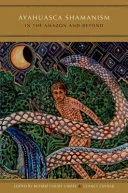
Ayahuasca Shamanism in the Amazon and Beyond
 77
77

Ayahuasca Shamanism in the Amazon and Beyond
The scholarly dissection of ayahuasca's journey from the Amazon to global stages in Beatriz Caiuby Labate and Clancy Cavnar's work offers a necessary counterpoint to sensationalized accounts. The authors excel in presenting complex anthropological theories about Amerindian epistemology with clarity, particularly in their examination of how these concepts are translated (and sometimes distorted) for Western audiences. A notable strength is the detailed attention paid to the mestizo and cosmopolitan adaptations, moving beyond a simple binary of indigenous versus Western. However, at times, the academic rigor, while commendable, can make the narrative feel somewhat detached, occasionally obscuring the lived spiritual experiences of practitioners. The discussion on the spread of Santo Daime, for instance, effectively illustrates the intricate cultural negotiations at play. It serves as a vital academic resource for understanding shamanic globalization.
📝 Description
77
Beatriz Caiuby Labate and Clancy Cavnar's 2014 book chronicles ayahuasca shamanism's global spread.
Ayahuasca Shamanism in the Amazon and Beyond documents the movement of Amazonian shamanic practices, particularly those involving the psychoactive brew ayahuasca, into wider global awareness. The authors examine the significant philosophical differences necessary to grasp Amerindian ways of knowing and being, setting them against Western scientific and spiritual viewpoints. They map the transformation of these forest traditions, once limited by geography and culture, as they are reshaped by various groups around the world.
The book follows the expansion of ayahuasca practices from their Amazonian origins, which began to gain traction with increased outside contact and academic study in the mid-20th century. The period after the 1960s counterculture and the subsequent rise of the New Age movement are highlighted as crucial times for the international dissemination of shamanic traditions. The authors discuss how indigenous worldviews, initially viewed only through an ethnographic lens, started to become part of Western spiritual and therapeutic conversations.
This work engages with the tradition of comparative spirituality and ethnobotany, focusing on the appropriation and adaptation of indigenous Amazonian shamanic practices. It situates the global diffusion of ayahuasca within discussions of altered states of consciousness, plant-based medicines, and their integration into Western spiritual, therapeutic, and even recreational contexts. The book addresses the complex interplay between traditional cosmologies and modern interpretations, a common thread in contemporary esoteric thought concerning the rediscovery and recontextualization of ancient practices.
💡 Why Read This Book?
• Learn about the specific concepts of "Amerindian epistemology and ontology" as distinct from Western philosophical traditions, as detailed in the book's comparative analyses. • Understand the historical trajectory of ayahuasca's global spread, with specific reference to its reinterpretation by "mestizo" and "cosmopolitan" cultures since the mid-20th century. • Gain insight into the ethical considerations of cross-cultural shamanic practices, examining how forest traditions are engaged with and transformed beyond their Amazonian origins.
⭐ Reader Reviews
Honest opinions from readers who have explored this book.
❓ Frequently Asked Questions
What is the primary focus of 'Ayahuasca Shamanism in the Amazon and Beyond'?
The book focuses on the spread of indigenous Amazonian shamanic rituals, especially those involving ayahuasca, into Western societies and how these traditions are transformed by diverse cultures.
Who are the authors of 'Ayahuasca Shamanism in the Amazon and Beyond'?
The authors are Beatriz Caiuby Labate and Clancy Cavnar, with the book first published in 2014.
What is ayahuasca?
Ayahuasca is a psychoactive brew central to many indigenous shamanic rituals in the Amazon, used for spiritual, medicinal, and divinatory purposes.
What does the book mean by 'Amerindian epistemology and ontology'?
It refers to the specific ways of knowing (epistemology) and being (ontology) that are characteristic of indigenous Amazonian cultures, particularly as they relate to shamanic practices.
How has ayahuasca use spread beyond the Amazon?
The book details its diffusion into countries far beyond its Amazonian origin, driven by interest from Western societies and adapted by various indigenous, mestizo, and cosmopolitan groups.
What is the significance of 'mestizo' and 'cosmopolitan' cultures in relation to ayahuasca traditions?
These terms describe the groups that have engaged with and transformed Amazonian forest traditions, representing hybrid or globally influenced adaptations distinct from purely indigenous practices.
🔮 Key Themes & Symbolism
Cross-Cultural Transmission
The work meticulously details how indigenous Amazonian shamanic practices, particularly those involving ayahuasca, have moved beyond their original geographical and cultural confines. It examines the complex processes of adaptation and reinterpretation as these traditions are encountered by Western, mestizo, and cosmopolitan societies, highlighting both the continuity and the significant transformations that occur during this diffusion.
Indigenous Epistemology
A core theme is the exploration of Amerindian epistemology and ontology – the unique ways of knowing and existing central to Amazonian shamanism. The book argues for understanding these frameworks on their own terms, rather than through purely Western philosophical lenses, emphasizing their deep connection to the natural world and ritual practice.
Ayahuasca as a Nexus
Ayahuasca, the psychoactive brew, serves as a central nexus around which many of these cultural exchanges and transformations revolve. The book analyzes its role in traditional indigenous rituals and its subsequent integration into new spiritual, therapeutic, and social contexts in societies far removed from the Amazon.
Mestizo and Cosmopolitan Adaptations
The authors differentiate between indigenous traditions and their adaptations by mestizo (mixed heritage) and cosmopolitan (globally influenced) populations. This theme addresses how these groups engage with, modify, and sometimes commercialize forest traditions, creating hybrid forms of practice and belief that reflect their specific cultural positions.
💬 Memorable Quotes
Direct passages from the work, attributed to the author.
“Amerindian epistemology and ontology concerning indigenous shamanic rituals of the Amazon have spread to Western societies.”
— This foundational statement sets the stage for the book's exploration of how distinct indigenous worldviews related to shamanism are being encountered and integrated into globalized contexts.
“Indigenous, mestizo, and cosmopolitan cultures have engaged with and transformed these forest traditions.”
— This highlights the active, rather than passive, role of various cultural groups in reshaping Amazonian shamanic practices as they become part of a broader global dialogue.
“The volume focuses on the use of ayahuasca, a psychoactive drink essential in many indigenous shamanic rituals of the Amazon.”
— This clarifies the central psychoactive substance around which much of the book's analysis of ritual, culture, and transmission is centered.
“Ayahuasca use has spread to countries far beyond its Amazonian origin.”
— This indicates the geographical scope of the phenomenon being studied, emphasizing the global reach of practices once confined to a specific region.
“The work examines how these forest traditions have been engaged with and transformed.”
— This emphasizes the dynamic nature of cultural exchange, suggesting that the practices are not merely transplanted but are actively modified and given new meanings.
🌙 Esoteric Significance
Tradition
While not strictly belonging to a single Western esoteric lineage like Hermeticism or Kabbalah, this work engages with the broader stream of nature-based spirituality and shamanic revivalism that gained prominence in the late 20th century. It acts as a critical bridge, analyzing how ancient indigenous cosmologies intersect with contemporary Western desires for alternative spiritual paths and healing modalities.
Symbolism
The primary 'symbol' is ayahuasca itself, representing a potent connection to the spirit world and a vehicle for profound psychological and spiritual transformation. Other motifs explored include the 'forest' as a locus of sacred knowledge and power, and the figure of the 'shaman' as a mediator between human and non-human realms, embodying ancient wisdom.
Modern Relevance
This work is highly relevant to contemporary discussions surrounding psychedelic-assisted therapy, the ethics of spiritual tourism, and the ongoing search for sustainable and authentic spiritual practices. Thinkers and practitioners in fields ranging from consciousness studies to comparative religion continue to draw on its analysis of cultural transmission and adaptation.
👥 Who Should Read This Book
• Anthropologists and religious studies scholars examining the globalization of spiritual practices and the complexities of cultural exchange. • Practitioners and students of shamanism interested in the specific role of ayahuasca and its cultural diffusion beyond the Amazon. • Individuals curious about the ethical considerations and transformations involved when indigenous knowledge systems encounter Western secular and spiritual contexts.
📜 Historical Context
Published in 2014, Ayahuasca Shamanism in the Amazon and Beyond emerged during a period of intense global interest in psychedelic substances and shamanic practices, often framed within the New Age movement and burgeoning psychedelic therapy research. This era saw a proliferation of ayahuasca retreats and ceremonies catering to Westerners seeking spiritual or therapeutic experiences. The book's intellectual backdrop includes post-colonial studies and critical anthropology, questioning the ethics and implications of cultural appropriation and the commodification of indigenous knowledge. Contemporaries like anthropologist Alex Mar convinced many readers of shamanism's global appeal. The work implicitly engages with debates surrounding entheogenic use, contrasting academic analysis with the lived experiences of practitioners and indigenous communities, while working through the complex reception of these traditions in secularized Western societies.
📔 Journal Prompts
The transformation of Amazonian forest traditions by mestizo and cosmopolitan cultures.
The distinct Amerindian epistemology and ontology discussed in relation to ritual practice.
Ayahuasca's role as a psychoactive substance essential to indigenous shamanic rituals.
The ethical dimensions of engaging with indigenous shamanic practices outside their origin context.
The comparison between traditional Amazonian shamanism and its globalized manifestations.
🗂️ Glossary
Ayahuasca
A psychoactive brew made from specific Amazonian plants, used in indigenous shamanic rituals for spiritual, medicinal, and divinatory purposes.
Shamanism
A range of indigenous spiritual practices characterized by a practitioner's ability to access and interact with the spirit world, often for healing or guidance.
Amerindian Epistemology
The specific ways of knowing, understanding, and validating knowledge characteristic of indigenous peoples of the Americas, often deeply tied to nature and spiritual experience.
Amerindian Ontology
The philosophical study of being and existence within indigenous American cultures, encompassing their views on the nature of reality, consciousness, and the interconnectedness of all things.
Mestizo Cultures
Cultures resulting from the mixing of indigenous American and European (primarily Spanish and Portuguese) populations and traditions.
Cosmopolitan Cultures
Cultures characterized by global influences and a broad, international outlook, often associated with urban centers and the exchange of ideas across national borders.
Forest Traditions
A term used to refer to the traditional knowledge, practices, and belief systems originating from indigenous cultures residing in the Amazon rainforest.