Cosmic Consciousness
 79
79

Cosmic Consciousness
Bucke's central thesis—that humanity is demonstrably evolving towards a higher, intuitive state of awareness—is as audacious as it is meticulously argued. He constructs his case by surveying figures from Buddha to Christ, and even contemporary poets like Walt Whitman, to illustrate what he terms "cosmic consciousness." The sheer breadth of his historical survey is impressive, though at times it feels like an assertion of faith rather than purely empirical evidence. The strength lies in his passionate conviction and the vivid descriptions of subjective experience, like the "flame-colored cloud" he himself experienced. Its limitation, however, is a tendency to categorize individuals into pre-defined stages, potentially oversimplifying the nuances of human genius and spiritual attainment. Nevertheless, for anyone contemplating the furthest reaches of human perception, Bucke's 1901 treatise remains a significant, if sometimes controversial, landmark.
📝 Description
79
In 1901, Richard Maurice Bucke proposed humanity was evolving toward a higher consciousness.
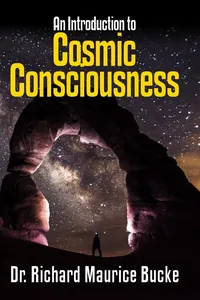
Richard Maurice Bucke, a Canadian psychiatrist, wrote Cosmic Consciousness in 1901. He argued that human awareness was progressing toward a superior state, which he called cosmic consciousness. Bucke charted this development through historical figures and personal accounts. He divided consciousness into three levels: simple consciousness, like that of animals; self-consciousness, the rational thought of humans; and the ultimate state, cosmic consciousness. This final stage is a direct, intuitive understanding of the universe, often felt as a sudden illumination.
The book examines figures such as Buddha, Jesus, and Plato, suggesting they experienced this elevated awareness. Bucke's work emerged during a period of interest in spiritualism and psychology. He also admired Walt Whitman, seeing him as an example of this advanced consciousness. Cosmic Consciousness offers a psychological perspective on experiences often considered purely spiritual.
Published in 1901, Cosmic Consciousness appeared as Western interest in spiritualism, psychology, and Eastern thought grew. Bucke's work provided a psychological interpretation for phenomena previously confined to religious or mystical explanations. It fit within a broader milieu that included movements like Theosophy, seeking to understand consciousness and spiritual development through various lenses, blending scientific inquiry with speculative philosophy.
💡 Why Read This Book?
• Gain an understanding of Bucke's tripartite model of consciousness (simple, self, cosmic), offering a unique framework for human mental evolution, as detailed in his survey of historical figures. • Explore the concept of "cosmic consciousness" through firsthand accounts and Bucke's own transformative experience, providing a direct glimpse into states of heightened awareness. • situate your own understanding of consciousness within the intellectual currents of the late 19th and early 20th centuries, a period marked by burgeoning interest in psychology and esoteric thought.
⭐ Reader Reviews
Honest opinions from readers who have explored this book.
❓ Frequently Asked Questions
What is the primary argument of Richard Maurice Bucke's Cosmic Consciousness?
Bucke argues that human consciousness is evolving towards a higher, intuitive state he calls "cosmic consciousness." He posits this is the third and highest stage of awareness, following simple and self-consciousness, marked by illumination and a sense of universal unity.
When was Cosmic Consciousness first published, and what was its initial reception?
The book was first published in 1901. It gained significant attention within esoteric and psychological circles, becoming a foundational text for discussions on spiritual evolution and altered states of consciousness.
Who are some of the historical figures Bucke uses as examples of cosmic consciousness?
Bucke cites numerous figures, including the Buddha, Jesus Christ, Plotinus, Dante Alighieri, William Blake, and his personal friend, the poet Walt Whitman, as individuals who exhibited this higher form of awareness.
What does Bucke mean by 'simple consciousness' and 'self-consciousness'?
Simple consciousness refers to the basic awareness found in animals, focused on immediate sensory experience. Self-consciousness is the rational, intellectual awareness characteristic of modern humans, involving self-reflection and abstract thought.
Is Cosmic Consciousness considered a scientific or a spiritual text?
It bridges the two. Bucke, a psychiatrist, approached the subject with a scientific inclination, seeking patterns and evolution. However, the phenomena he describes—mystical experiences and higher consciousness—are often considered spiritual or transcendental.
Where can I find more information about Richard Maurice Bucke?
Richard Maurice Bucke was a prominent Canadian psychiatrist and author. Further biographical and critical information can be found in academic journals and historical texts concerning late 19th-century psychology and esoteric movements.
🔮 Key Themes & Symbolism
Evolution of Consciousness
Bucke posits a linear progression of human awareness, moving from basic sensory input (simple consciousness) through rational thought (self-consciousness) to an intuitive, universal apprehension (cosmic consciousness). He meticulously documents historical figures believed to embody this highest state, suggesting it represents the next stage of human development. This evolutionary framework provides a lens through which to interpret spiritual and mystical experiences not as anomalies, but as indicators of a species-wide ascent.
Mystical Experience
Central to Bucke's thesis are descriptions of sudden, transformative moments of insight, often accompanied by intense joy and a profound sense of universal connection. He refers to these as "cosmic consciousness." The book details numerous accounts, including his own famous "flame-colored cloud" experience, presenting them as direct, intuitive knowledge of the universe's underlying reality, transcending ordinary sensory and intellectual perception.
The Illumination
The hallmark of cosmic consciousness is a moment of "illumination" or "splendor"—a flash of direct understanding that permanently alters the individual's perception of reality. Bucke describes this as an intellectual and emotional awakening, where the universe's order and meaning are apprehended instantaneously. This concept underscores the intuitive, rather than purely rational, nature of this advanced state of awareness.
Exemplars of Higher Awareness
Bucke identifies numerous historical and contemporary figures as possessing or having attained cosmic consciousness. By analyzing their lives, writings, and reputed experiences, he builds a case for the existence and development of this elevated state. Figures like Buddha, Jesus, and Walt Whitman are presented not merely as religious or artistic figures, but as pioneers of human consciousness, demonstrating its potential for evolution.
💬 Memorable Quotes
Direct passages from the work, attributed to the author.
“Man is the product of evolution, and the evolution is not yet ended.”
— This statement articulates Bucke's core thesis: that humanity is not a finished product but is actively undergoing further evolutionary development. It frames spiritual and mystical experiences as evidence of this ongoing, upward trajectory.
“The universe is alive, and we are its children.”
— This interpretation of a recurring sentiment in the book conveys the deep sense of interconnectedness and vitalism inherent in cosmic consciousness. It suggests an awareness of a living, conscious cosmos and humanity's intrinsic place within it.
💡 Key Ideas
Editorial paraphrase of the work's core concepts — not direct quotes.
All at once, without warning of any kind, he found himself wrapped around as it were by a flame colored cloud.... Directly afterwards came upon him a sense of exultation, of immense joyousness accompanied or immediately followed by an intellectual illumination quite impossible to describe.
This passage vividly describes Bucke's own profound, life-altering experience of cosmic consciousness. It captures the sudden, overwhelming nature of the illumination, emphasizing the accompanying emotional ecstasy and outstanding intellectual clarity.
The next few moments were the most sublime and glorious of his whole life. He had a sense of infinite space, infinite time, infinite knowledge.
This quote expresses the overwhelming, boundless perception characteristic of cosmic consciousness. It highlights the subjective experience of transcending normal limitations of space, time, and understanding, suggesting a direct apprehension of universal truths.
The sight was a revelation, and the man who had seen it was transformed into a new being.
This paraphrased concept emphasizes the radical, transformative impact of achieving cosmic consciousness. It suggests that the experience fundamentally alters an individual's nature, creating a 'new being' with a permanently changed perspective.
🌙 Esoteric Significance
Tradition
Bucke's work can be seen as a bridge between late 19th-century spiritualism, early psychology, and esoteric thought. While not strictly adhering to any single lineage like Hermeticism or Gnosticism, it draws upon a universalist interpretation of spiritual enlightenment found across many traditions. His evolutionary model offers a psychological lens for understanding phenomena traditionally described through religious or mystical language, making it accessible to a broader audience interested in inner development.
Symbolism
The "flame-colored cloud" is a central symbol, representing the sudden, overwhelming influx of cosmic awareness. It signifies a purification or baptism of consciousness, moving beyond the limitations of the physical senses. The "Brahmic Splendor" is another key motif, evoking the luminous, all-encompassing nature of this higher consciousness, often associated with Eastern concepts of divine light and universal truth.
Modern Relevance
Bucke's ideas continue to influence contemporary discussions on consciousness, transpersonal psychology, and spiritual evolution. Thinkers and practitioners in fields ranging from mindfulness and meditation to psychedelic research often reference his work as a foundational text. His evolutionary perspective on consciousness provides a framework for understanding peak experiences and the potential for human beings to attain higher states of awareness.
👥 Who Should Read This Book
• Students of comparative religion and mysticism: To understand how spiritual experiences across diverse traditions can be viewed through a unified psychological and evolutionary lens. • Aspiring explorers of consciousness: For individuals interested in altered states, intuition, and the potential for human mental and spiritual development beyond ordinary perception. • Researchers in psychology and philosophy of mind: To engage with a historical perspective on the evolution of consciousness and the subjective nature of clear insights.
📜 Historical Context
Cosmic Consciousness emerged in 1901, a period ripe with spiritual and intellectual ferment. The late Victorian and Edwardian eras witnessed a surge of interest in psychical research, Theosophy, and comparative religion, fueled by increased global contact and a questioning of purely materialistic worldviews. Bucke, a contemporary and admirer of Walt Whitman, positioned his work within this milieu, seeking a psychological framework for experiences often relegated to the mystical. His approach engaged with the burgeoning field of psychology but also drew from philosophical idealism. While not a direct response to Nietzsche, Bucke's evolutionary ideas about consciousness resonated with broader discussions of human potential and transformation occurring across Europe. The book found a receptive audience among those exploring the frontiers of human experience, bridging the gap between scientific inquiry and spiritual aspiration.
📔 Journal Prompts
Reflect on the "flame-colored cloud" experience described by Bucke. What might such a sudden illumination symbolize for personal growth?
Consider the concept of "cosmic consciousness." How does Bucke's description of intellectual illumination differ from purely rational understanding?
Analyze the historical figures Bucke identifies as exemplars. What commonalities might link Buddha, Jesus, and Walt Whitman in their perceived awareness?
How does Bucke's evolutionary model of consciousness propose humanity is progressing?
Explore the "Brahmic Splendor" concept. What does it suggest about the universe's fundamental nature?
🗂️ Glossary
Cosmic Consciousness
The highest stage of human awareness described by Bucke, characterized by a sudden, intuitive, and joyous apprehension of the universe's order and meaning, often accompanied by intellectual illumination.
Simple Consciousness
The basic awareness possessed by animals, focused primarily on sensory experience and immediate environmental interaction, lacking self-reflection.
Self-Consciousness
The rational, intellectual consciousness characteristic of modern humans, involving self-awareness, reason, and the ability to reflect upon oneself and the world.
Illumination
A key aspect of cosmic consciousness, described as a momentary "lightning-flash" of clear insights and understanding that permanently transforms the individual's perception.
Brahmic Splendor
A term Bucke uses, drawing from Eastern traditions, to describe the radiant, all-pervading light and consciousness associated with the highest spiritual realization.
Exaltation
An intense feeling of joy and elation that often accompanies the experience of cosmic consciousness, signifying a profound emotional upliftment.
Evolution
Bucke's central thesis is that human consciousness is not static but is undergoing a continuous evolutionary process towards higher states of awareness.
This book appears in 1 collection
🔮 Readers Also Liked
Browse all →









From the “Cosmic Consciousness” Collection
View all →





More Free Occult Philosophy Books
View all →