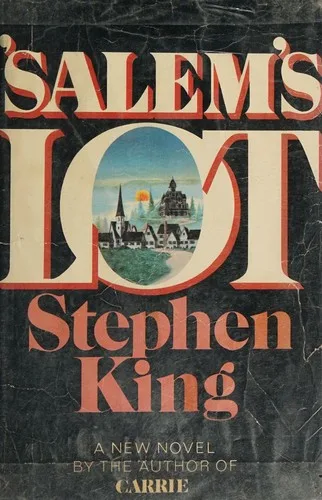
'Salem’s Lot

 79
79

'Salem’s Lot
Stephen King's 'Salem's Lot arrived in 1975 as a potent reimagining of the vampire mythos, anchoring it firmly in the American gothic tradition. The novel’s strength lies in its meticulous build-up of dread; the slow corruption of Jerusalem's Lot feels palpably insidious. King excels at rendering the mundane terror of a familiar place becoming alien and dangerous. The introduction of Father Callahan, a priest whose faith is tested to its absolute limit, provides a compelling, albeit tragic, character arc that humanizes the struggle against overwhelming evil. A notable limitation, however, is the somewhat rushed climax in the latter chapters, which, while action-packed, sacrifices some of the earlier atmospheric tension for a more conventional confrontation. The passage detailing the discovery of the vampire's lair in the Marsten House, with its palpable sense of decay and ancient evil, remains a high point, showcasing King's early mastery of setting and mood. It's a novel that, despite minor pacing issues, effectively redefines the vampire for a modern audience. 'Salem's Lot offers a deeply unsettling portrait of a town consumed by darkness.
📝 Description
79
Stephen King's 1975 novel 'Salem's Lot reimagines the vampire myth in a small Maine town.
Ben Mears returns to Jerusalem's Lot, the Maine town that haunted his childhood, only to discover it is falling victim to a vampiric plague. King's novel moves beyond a simple horror tale to examine dread, the creeping nature of evil, and the corruption of the idealized American small town.
The narrative follows Mears as he confronts a specific house on a hill, but the darkness he finds is not confined to one location. Instead, the entire town becomes a consuming entity. This story appeals to those who appreciate atmospheric horror and character development, where the psychological toll of supernatural intrusion is central. It will resonate with readers who enjoy King's earlier, more grounded horror and with scholars interested in how the pastoral ideal is subverted.
Published in 1975, 'Salem's Lot arrived during a period of American cultural uncertainty. The book tapped into a growing unease about community and hidden corruption, offering a stark contrast to earlier, more optimistic portrayals of small-town life. It gained recognition within a burgeoning horror literature scene, helping to establish King as a significant voice.
While not explicitly occult, 'Salem's Lot taps into gothic traditions that explore the darkness beneath surface appearances. The vampiric entity functions as a metaphor for parasitic forces that drain a community's vitality and soul. The novel also considers the concept of a 'haunted place,' suggesting locations can carry a psychic weight from past events and present evils. This resonates with esoteric ideas about places being imbued with spiritual or psychological energy, and how such energies can manifest and corrupt.
💡 Why Read This Book?
• Understand the subversion of the American small-town ideal, learning how King uses Jerusalem's Lot to explore societal decay and hidden corruption, a theme he revisits in works like *It*. • Grasp the modern interpretation of vampirism, seeing how the 'master vampire' concept and their human thralls function as parasitic entities consuming a community, a departure from earlier European folklore. • Experience the narrative power of atmospheric dread, recognizing how King builds suspense through the familiar becoming terrifying, particularly in his depiction of the Marsten House and its pervasive influence.
⭐ Reader Reviews
Honest opinions from readers who have explored this book.
❓ Frequently Asked Questions
What is the significance of the Marsten House in 'Salem's Lot?
The Marsten House represents the locus of evil in Jerusalem's Lot. It's a physical manifestation of the town's corruption and a focal point for the vampiric invasion, serving as the residence of the primary antagonist, Barlow.
Who are the main characters confronting the vampires in 'Salem's Lot?
The primary group includes writer Ben Mears, local teacher Matt Burke, Father Callahan, and young Mark Petrie, who becomes crucial due to his knowledge of occult lore.
When was Stephen King's 'Salem's Lot first published?
'Salem's Lot was first published in 1975, establishing Stephen King as a significant voice in contemporary horror fiction.
How does 'Salem's Lot differ from Bram Stoker's Dracula?
Unlike Dracula's aristocratic European setting, 'Salem's Lot grounds vampirism in a contemporary American small town, focusing on the slow, insidious corruption of an entire community rather than individual aristocratic predation.
What is the 'vampire plague' concept in 'Salem's Lot?
The 'vampire plague' refers to the methodical transformation of Jerusalem's Lot's inhabitants into vampires, spreading the evil like a disease and turning the town itself into a monstrous entity.
Does 'Salem's Lot have any connections to other Stephen King works?
Yes, elements like the town of Jerusalem's Lot and characters such as Father Callahan appear or are referenced in later King novels, notably *The Dark Tower* series and *Insomnia*.
🔮 Key Themes & Symbolism
Corruption of the Pastoral
King deconstructs the idyllic American small town. Jerusalem's Lot, initially presented with nostalgic undertones, becomes a breeding ground for a parasitic evil. The vampiric infestation represents a societal decay that consumes the community from within, mirroring anxieties about hidden corruption beneath a seemingly peaceful surface. This theme challenges the notion of the 'safe haven' often associated with rural settings.
The Nature of Evil
The novel portrays evil not just as an external force but as an insidious, consuming presence. The master vampire, Barlow, and his human collaborators embody a parasitic entity that thrives on draining the lifeblood of a community. This concept extends to the idea that evil can take root in the most familiar places, transforming them into sources of profound dread.
Loss of Innocence and Faith
Many characters, particularly Father Callahan, face profound crises of faith as they confront the inexplicable horror of the vampire plague. The narrative explores the shattering of innocence when ordinary people are forced to face monstrous realities. The children of Jerusalem's Lot, especially the lost boys, become symbols of innocence corrupted and preyed upon by the darkness.
The Haunted Place
Beyond the Marsten House, the entire town of Jerusalem's Lot becomes a haunted space. This concept suggests that locations can absorb and reflect the evil committed within them. The narrative implies that the town's history and its current state of corruption are intertwined, making the physical environment itself a source of terror and a character in its own right.
💬 Memorable Quotes
Direct passages from the work, attributed to the author.
“The Marsten House was the most obvious symbol of the town's decay. It was where the evil began.”
— This interpretation highlights the Marsten House's role as the physical and symbolic epicenter of the vampiric infestation. It represents the deep-seated corruption that allows the external evil to take root and spread throughout Jerusalem's Lot.
“They were the lost boys, forever wandering in the woods of night.”
— This evocative phrase describes the young vampires, particularly the 'lost boys' who have succumbed to the curse. It speaks to their eternal, tragic state of existence, forever trapped in darkness and hunger.
💡 Key Ideas
Editorial paraphrase of the work's core concepts — not direct quotes.
The town itself was a vampire. It fed on the life of the people who lived there.
This paraphrase captures the essence of how King portrays Jerusalem's Lot. The community's slow decay and the insidious spread of vampirism transform the town into a parasitic entity, draining its inhabitants' vitality and soul.
There are things in the darkness, Ben. And they are hungry.
This quote reflects the pervasive sense of unseen threat and primal hunger that permeates 'Salem's Lot. It speaks to the ancient, predatory nature of the vampires and the constant danger lurking just beyond the edge of perception.
He thought of the town as a dying patient, and he was the doctor.
This paraphrase reflects Ben Mears's perspective as he grapples with the vampiric plague. He sees himself and his allies as trying to diagnose and combat a terminal illness afflicting the entire community.
🌙 Esoteric Significance
Tradition
While not explicitly aligned with a single esoteric tradition, 'Salem's Lot draws heavily from the Western occult tradition's fascination with vampirism, demonology, and the corruption of sacred spaces. It echoes Gnostic themes of a corrupt demiurge (Barlow) imposing its will upon a community and Western magical concepts of parasitic entities feeding on psychic energy. The narrative also touches upon folk magic and the need for specific rituals and knowledge to combat supernatural threats.
Symbolism
The Marsten House functions as a potent symbol of a 'haunted place,' a structure imbued with malevolent energy, often seen in ley line or geomancy lore as a nexus of negative power. The vampire itself, particularly in its 'master' form and as a corrupting influence on the populace, symbolizes parasitic entities that drain vitality and spiritual essence, a concept found in various demonological traditions. The 'lost boys' represent corrupted innocence, souls trapped between worlds, a motif recurring in folklore and certain spiritualist narratives.
Modern Relevance
Contemporary horror writers and occult practitioners continue to engage with King's portrayal of vampirism as a metaphor for societal decay and parasitic control. Modern urban fantasy and dark fantasy often explore similar themes of hidden evil within mundane settings. Thinkers in critical theory and cultural studies analyze 'Salem's Lot for its commentary on American identity and the subversion of pastoral ideals, finding its anxieties about community and corruption perpetually relevant in discussions of social and political malaise.
👥 Who Should Read This Book
• Students of American Gothic literature seeking modern interpretations of classic horror tropes, particularly how the vampire is reimagined in a contemporary, rural American setting. • Readers interested in the psychological underpinnings of horror, who appreciate narratives that explore the decay of community and the insidious nature of evil rather than relying solely on jump scares. • Those fascinated by the symbolic representation of vampirism as a parasitic force that consumes societal health, offering a lens through which to examine real-world corruption and decay.
📜 Historical Context
Published in 1975, 'Salem's Lot emerged during a period of profound societal introspection in the United States, following the Vietnam War and the Watergate scandal. The novel tapped into a pervasive unease about the corruption of institutions and the subversion of idealized American values. King's work offered a dark counter-narrative to the pastoral myth of the small town, presenting it instead as a site of insidious evil. This resonated with a readership grappling with disillusionment. While Stephen King was solidifying his reputation, contemporaries like Peter Straub were also exploring darker, more psychological themes in horror. The novel's reception was strong, marking a significant commercial success for King and cementing his place in the burgeoning genre of modern horror literature, which was moving beyond Gothic tropes into more visceral and psychological territory.
📔 Journal Prompts
The Marsten House as a locus of corruption.
Father Callahan's crisis of faith amidst the vampire plague.
Jerusalem's Lot as a vampiric entity.
The transformation of the familiar into the terrifying.
Mark Petrie's acquisition of forbidden knowledge.
🗂️ Glossary
The Marsten House
A large, ominous house in Jerusalem's Lot with a dark history, serving as the primary residence of the vampire Kurt Barlow and the symbolic center of the town's evil.
Kurt Barlow
The ancient, aristocratic master vampire who arrives in Jerusalem's Lot, orchestrating the town's vampiric infestation and representing the ultimate evil.
Lost Boys
A term used to describe the young victims of vampirism who have been transformed and now serve Barlow, retaining a semblance of their former selves but driven by vampiric hunger.
Vampire Plague
The systematic spread of vampirism throughout Jerusalem's Lot, turning a significant portion of the town's inhabitants into undead servants of Kurt Barlow.
Straker
Richard Straker, an antiques dealer and Barlow's human accomplice, who facilitates the vampire's arrival and operations in Jerusalem's Lot.
Mass Reading
A term referring to the specific, ritualistic process by which Kurt Barlow transforms multiple victims into vampires, often depicted as a communal, horrific event.
The House on the Hill
A childhood moniker for the Marsten House, representing the source of Ben Mears's early fears and a key motivation for his return to Jerusalem's Lot.
🔮 Readers Also Liked
Browse all →








More by Stephen King
All books →

More Free Occult Philosophy Books
View all →