Pagans and Christians

 81
81

Pagans and Christians
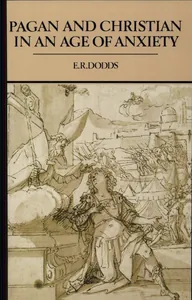
Robin Lane Fox’s "Pagans and Christians" is a monumental undertaking, offering a panoramic view of late Roman religious life. Its strength lies in the sheer breadth of its research and the vividness with which it reconstructs the sensory world of pagan ritual and early Christian gatherings. Lane Fox masterfully illustrates the fluidity of belief and practice, demonstrating how readily individuals might engage with multiple cults. A particular passage detailing the sensory overload of a Roman festival, contrasted with the more austere early Christian assemblies, is powerfully rendered. However, the book’s vast scope can occasionally lead to a sense of diffusion, with so many threads being pursued that the central argument sometimes feels submerged. Despite this, it remains an indispensable account of a world in profound spiritual transition.
Verdict: A scholarly achievement that illuminates a critical epoch in Western religious history.
📝 Description
81
Robin Lane Fox's 1986 book examines Roman religion's shift from polytheism to Christianity.
Robin Lane Fox's "Pagans and Christians" details the religious world of the Roman Empire as it transformed from polytheism to Christianity. The book focuses on the social and intellectual history of this period, rather than theological arguments. It charts the beliefs and practices of various pagan cults, including Roman state religion, mystery cults, and Eastern imports, alongside the growth of Christianity.
Lane Fox sets this narrative against the backdrop of the 3rd and 4th centuries CE, a time of considerable religious change. Emperors like Diocletian and Constantine play a role in shaping the empire's religious direction. The work considers how concepts like magic were viewed by both pagans and Christians, and the influence of imperial support on religious groups. It also looks at the philosophical ideas that drew people to Christianity and the reasons paganism appealed to Romans, from civic duty to personal salvation.
While not strictly an esoteric text, "Pagans and Christians" investigates the spiritual currents and belief systems that existed alongside and eventually supplanted the dominant state religions of Rome. It details mystery cults and the appeal of personal salvation, elements often found in esoteric traditions. The book's examination of how individuals sought meaning and connection through various religious practices, including those outside the mainstream, places it in conversation with the broader study of ancient spiritualities and the human search for the sacred.
💡 Why Read This Book?
• Gain a nuanced understanding of the diverse pagan cults (like Mithraism and the cult of Sol Invictus) that coexisted and competed with early Christianity, as detailed in the book's exploration of Roman religious practices. • Learn about the specific socio-political conditions, such as the reforms under Diocletian, that shaped the spread and eventual dominance of Christianity in the Roman Empire. • Appreciate the author's detailed reconstruction of everyday religious life, moving beyond abstract theology to the lived experiences of individuals navigating belief in the 3rd and 4th centuries.
⭐ Reader Reviews
Honest opinions from readers who have explored this book.
❓ Frequently Asked Questions
What is the primary focus of Robin Lane Fox's "Pagans and Christians"?
The book focuses on the religious landscape of the Roman Empire during its transition from paganism to Christianity, exploring the beliefs, practices, and social dynamics of both during the 3rd and 4th centuries CE.
When was "Pagans and Christians" first published?
Robin Lane Fox's seminal work "Pagans and Christians" was first published in 1986.
Does "Pagans and Christians" cover specific pagan deities?
Yes, the work explores various pagan traditions, including the worship of deities like Jupiter, Sol Invictus, and the mysteries associated with figures like Mithras, contrasting them with early Christian beliefs.
What historical figures are prominent in the discussion of Christianity's rise?
Key figures such as Emperors Diocletian, whose reign saw intense persecution of Christians, and Constantine the Great, whose conversion and policies favored Christianity, are central to the narrative.
Is "Pagans and Christians" a theological text?
No, it is primarily a work of social and intellectual history, focusing on the historical development, cultural context, and lived experiences of religious adherents rather than theological doctrine.
What makes this book important for understanding the Roman Empire?
It provides crucial insight into the religious pluralism and eventual monotheistic shift within the Roman Empire, explaining how cultural and political forces facilitated Christianity's ascendancy.
🔮 Key Themes & Symbolism
Religious Syncretism and Transition
Lane Fox extensively documents the syncretic nature of Roman religion, where individuals often participated in multiple cults, blending local traditions with imperial cults and mystery religions. The work meticulously traces how Christianity, initially one among many cults, gradually supplanted traditional paganism. It highlights the gradual nature of this shift, not as an overnight replacement but as a complex negotiation of beliefs and practices that spanned centuries, influenced by imperial policies and popular adherence to both old and new faiths. The book illustrates the permeable boundaries between differing religious expressions in the ancient world.
Imperial Influence on Belief
A significant theme is the role of imperial power in shaping religious landscapes. The book examines how emperors like Diocletian attempted to enforce religious uniformity through persecution, while figures like Constantine later leveraged Christianity for imperial unity and legitimacy. Lane Fox illustrates how state patronage and suppression directly impacted the visibility and growth of various religious movements. The conversion of the empire is presented not just as a spiritual awakening but as a profound political and social transformation driven, in part, by the needs and actions of the ruling elite.
The Lived Experience of Faith
Beyond political and social structures, "Pagans and Christians" emphasizes the personal and communal experiences of faith. It reconstructs the appeal of mystery cults, the civic duties associated with Roman state religion, and the burgeoning community and eschatological promises of Christianity. Lane Fox brings to life the diverse motivations of individuals—whether seeking personal salvation, community belonging, or divine favor—in their engagement with the religious options available in the late antique world. This focus on lived experience counters simplistic narratives of religious change.
Concepts of Magic and Purity
The work explores contemporary understandings of magic, ritual, and purity, which were central to both pagan and Christian practices. Lane Fox analyzes how accusations of sorcery were used to demonize opposing groups and how concepts of ritual purity influenced social interactions and religious acceptability. The book details practices such as divination, amulets, and exorcisms, showing their prevalence and perceived efficacy across different belief systems, and how Christianity adapted or rejected these elements as it gained prominence.
💬 Memorable Quotes
Direct passages from the work, attributed to the author.
“The reign of Diocletian (284-305 CE) witnessed a significant escalation in the persecution of Christians.”
— This statement underscores a critical turning point where imperial policy shifted from intermittent suppression to systematic, empire-wide attempts to eradicate Christianity, highlighting the political stakes involved in religious adherence.
“Constantine's conversion and subsequent patronage fundamentally altered the trajectory of Christianity within the Roman Empire.”
— This points to the immense impact of Constantine's support, which transitioned Christianity from a persecuted minority faith to a favored, and eventually dominant, religion of the state, reshaping its institutional power and cultural influence.
“The appeal of mystery cults often lay in their promise of personal salvation and initiation into secret knowledge.”
— This highlights a key factor in the competition for adherents: mystery religions offered a more individualistic and potentially transformative spiritual experience compared to the more civic-focused traditional Roman cults.
“Early Christian assemblies were often characterized by a sense of community and shared ritual distinct from pagan practices.”
— This interpretation emphasizes the social and communal dimensions of early Christianity, suggesting that its structure and practices fostered strong bonds among believers, contributing to its growth and distinct identity.
“The perception of 'magic' was fluid and often used to delegitimize rival religious groups.”
— This observation reveals how accusations of magic served as a rhetorical weapon in religious polemics, blurring the lines between legitimate ritual and forbidden practices depending on the accuser's perspective.
🌙 Esoteric Significance
Tradition
While not strictly an esoteric text in the vein of Hermeticism or Gnosticism, "Pagans and Christians" is crucial for understanding the milieu from which many esoteric traditions emerged or were suppressed. It details the fertile ground of late antique religious pluralism, where diverse beliefs, including magical practices and mystery cults, coexisted. Its focus on the historical mechanisms of belief formation and the interplay between popular piety and elite discourse provides a foundational context for appreciating later esoteric developments that drew upon or reacted against the dominant monotheistic structures.
Symbolism
The book implicitly engages with symbols by detailing their varied interpretations and uses. For instance, imperial iconography, which often carried religious weight, is contrasted with the evolving Christian symbols like the Chi-Rho or the cross, which gained potent meaning beyond their literal forms. The symbolism of pagan rituals, often tied to natural cycles or chthonic deities, is presented alongside Christian symbolism of sacrifice, resurrection, and divine presence, illustrating how meaning was contested and transformed during this era.
Modern Relevance
Contemporary scholars and practitioners interested in the historical roots of Western esotericism often reference Lane Fox's work to grasp the broader religious and cultural landscape that shaped or was reshaped by Christianity. Thinkers exploring the historical contingency of religious truth, the dynamics of cultural conversion, and the persistence of 'magical' worldviews find his detailed account invaluable. It provides a critical historical lens for understanding how established religious structures interacted with, absorbed, or marginalized alternative spiritual pathways.
👥 Who Should Read This Book
• Students of comparative religion and classical antiquity seeking a comprehensive overview of the religious dynamics in the Roman Empire during its central transition. • Academic researchers specializing in late antique history, social history, or the history of Christianity and paganism who require detailed factual grounding and nuanced analysis. • General readers with a deep interest in the historical forces that shaped Western civilization and the evolution of religious thought, looking for an authoritative and engaging narrative.
📜 Historical Context
Published in 1986, Robin Lane Fox's "Pagans and Christians" emerged during a period of intense scholarly interest in late antiquity and the transition from classical to medieval worlds. The intellectual currents favored social and cultural history, moving beyond purely theological or political analyses. Contemporaries like Peter Brown were similarly re-examining the late Roman world with a focus on cultural practices and belief systems. Lane Fox's work distinguished itself by its sheer narrative scope and detailed reconstruction of the lived religious experience, challenging earlier, more simplified accounts of Christianity's triumph. The book's reception was largely positive, lauded for its erudition and vivid prose, though its comprehensive nature meant it was primarily engaged by specialists in Roman history and classical studies, solidifying its place as a major scholarly contribution.
📔 Journal Prompts
The myriad pagan cults existing alongside early Christianity.
The impact of Emperor Constantine's policies on religious adherence.
The sensory details of Roman festivals versus early Christian gatherings.
The perceived differences between pagan 'magic' and Christian ritual.
The social and community aspects of early Christian assemblies.
🗂️ Glossary
Paganism
A broad term referring to polytheistic religious practices and beliefs prevalent in the Roman Empire prior to and during the rise of Christianity. It encompassed a wide array of cults, from state-sanctioned worship to mystery religions and local traditions.
Mystery Cults
Religious traditions within the Roman Empire characterized by secret initiation rites, often promising personal salvation, spiritual enlightenment, or a closer connection to a deity. Examples include the cults of Dionysus, Mithras, and Isis.
Diocletian
Roman Emperor from 284 to 305 CE, known for his administrative reforms and, notably, for initiating the 'Great Persecution,' the most severe and systematic persecution of Christians in the empire's history.
Constantine the Great
Roman Emperor from 306 to 337 CE, famous for ending the persecution of Christians with the Edict of Milan and for his eventual conversion to Christianity, profoundly influencing the religion's status and spread.
Sol Invictus
A Roman imperial cult whose name translates to 'Unconquered Sun.' It gained prominence in the late 3rd century CE and was promoted by emperors like Aurelian and Constantine, representing a significant solar deity.
Edict of Milan
Issued in 313 CE by Emperors Constantine I and Licinius, this proclamation granted religious tolerance throughout the Roman Empire, officially ending the persecution of Christians and permitting freedom of worship.
Chthonic Deities
Gods and goddesses associated with the underworld, the earth, fertility, and the cycle of life and death. Worship of these deities was common in many ancient pagan traditions.
🔮 Readers Also Liked
Browse all →






More by Robin Lane Fox
All books →
More Free Witchcraft & Paganism Books
View all →