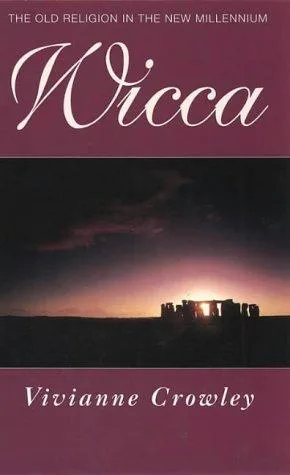
Wicca
 83
83

Wicca
Vivianne Crowley's "Wicca" provides a sober and academic, yet deeply respectful, overview of the modern Craft. Unlike many earlier, more romanticized or sensationalized accounts, Crowley grounds her exploration in the historical development of Wicca, particularly noting its divergence from earlier occult revivals and its post-World War II emergence. Her treatment of the God and Goddess as archetypal forces, rather than literal deities, offers a nuanced perspective for those wary of simplistic dualism. A notable strength is the clear delineation of different Wiccan traditions and their shared foundational elements. However, for those seeking deeply personal, experiential accounts, the book's academic tone might feel somewhat detached; it is more of a scholarly survey than a practitioner's memoir. The discussion of the ethics of magic, particularly the concept of "harm none," is particularly well-articulated, offering a vital counterpoint to common misconceptions. "Wicca" serves as an essential, if somewhat dispassionate, primer for understanding the modern Craft.
📝 Description
83
Published in 1998, Vivianne Crowley's Wicca examines modern practice beyond sensationalized accounts.
Vivianne Crowley's 1998 book offers a detailed look at contemporary Wiccan beliefs and practices. It moves past earlier, often exaggerated, portrayals to discuss Wicca's theological foundations, ritual structures, and ethical guidelines. The work serves as a thorough introduction for those new to Wicca or with some previous knowledge. It will also interest students of religion, anthropology, and sociology, as well as experienced practitioners seeking to refine their understanding. Crowley's text situates Wicca within its historical development and acknowledges its growth since the mid-20th century. It highlights the diversity within Wiccan traditions and their connection to older occult streams.
The book addresses core Wiccan concepts, including the divine couple of God and Goddess, the cyclical understanding of life, death, and rebirth tied to Sabbats and Esbats, and the ethical principles that inform Wiccan actions. It explains the importance of initiation and the role of ritual within the tradition. Crowley's approach is methodical, aiming for a clear and accurate depiction of a spiritual path. The work emerged as Wicca became more widely documented and analyzed, contributing to a more mature scholarly and practical engagement with the subject.
Crowley's work emerged during a time when Wicca, influenced by figures like Gerald Gardner and Doreen Valiente, was receiving increased scholarly and practitioner attention. This book contributed to a growing body of literature that moved past sensationalism and conspiracy theories. It represents a more considered engagement with the subject, recognizing the variations in Wiccan expression and its links to earlier occult traditions, while also mapping its modern evolution. It is part of a broader trend to document and understand contemporary Pagan and witchcraft movements.
💡 Why Read This Book?
• Learn about the foundational theology of Wicca, including the concept of the God and Goddess as archetypal forces, which offers a distinct perspective from monotheistic or polytheistic frameworks. • Understand the historical development of Wicca from its early 20th-century roots, distinguishing it from historical witchcraft accusations and pagan survivals. • Grasp the core ethical principles of Wicca, such as "Harm None," and their practical application in ritual and daily life.
⭐ Reader Reviews
Honest opinions from readers who have explored this book.
❓ Frequently Asked Questions
What is the difference between Wicca and general witchcraft?
Wicca is a specific, modern religious tradition that emerged in the mid-20th century, often associated with figures like Gerald Gardner. General witchcraft is a broader term encompassing various folk magic traditions and spiritual practices, some of which predate Wicca and may not share its specific theology or structure.
When was Vivianne Crowley's "Wicca" first published?
Vivianne Crowley's "Wicca" was first published in 1998, offering a contemporary perspective on the religion at the close of the 20th century.
Does "Wicca" by Vivianne Crowley discuss initiation rituals?
Yes, the book explores the significance of initiation within Wiccan covens, detailing its role in formalizing a practitioner's commitment and progression within the tradition.
What are the main festivals celebrated in Wicca according to this book?
The book outlines the Wheel of the Year, detailing the eight major festivals (Sabbats) which mark the solstices, equinoxes, and seasonal changes, alongside lunar cycles (Esbats).
Is "Wicca" by Vivianne Crowley suitable for absolute beginners?
Yes, the book is structured to provide a clear and comprehensive introduction for those new to Wicca, explaining its core beliefs, practices, and historical context without assuming prior knowledge.
How does Crowley's "Wicca" address the concept of magic?
Crowley's work examines magic within Wicca as a natural force and a means of spiritual connection and personal development, emphasizing ethical considerations and the importance of intention.
🔮 Key Themes & Symbolism
The Wiccan God and Goddess
Crowley examines the divine as represented by the God and Goddess, framing them as archetypal forces rather than literal deities. This duality is central to Wiccan cosmology, symbolizing the balance of nature, the cycle of life, and complementary energies. The book explores how this divine pairing informs Wiccan theology, ritual, and the understanding of the sacred in both the immanent and transcendent realms. It contrasts this with other religious paradigms, highlighting its unique approach to the divine.
The Wheel of the Year
A significant theme is the Wiccan celebration of the Wheel of the Year, comprising the eight seasonal festivals (Sabbats) and the lunar cycles (Esbats). Crowley details how these observances mark the turning of the seasons, reflecting natural rhythms and the cyclical nature of existence. Each festival is linked to specific myths, energies, and correspondences, serving as focal points for ritual practice and spiritual growth. This cyclical understanding is fundamental to Wiccan worldview.
Ethics and Practice
The book addresses the practical and ethical dimensions of Wiccan life, most notably the principle of "Harm None." Crowley elucidates this ethical guideline, exploring its interpretations and implications for magical workings and interpersonal conduct. It also covers aspects of ritual, covens, initiation, and the importance of personal responsibility within the practice of Wicca, distinguishing it from sensationalized or misconstrued notions of witchcraft.
Historical Development of Wicca
Crowley situates modern Wicca within its historical context, tracing its lineage from figures like Gerald Gardner and its development through the 20th century. The work moves beyond earlier, often inaccurate, portrayals to offer a more academic and nuanced understanding of Wicca's emergence as a distinct religious path. It highlights the evolution of its practices, beliefs, and its separation from earlier folk magic and historical witchcraft allegations.
💬 Memorable Quotes
Direct passages from the work, attributed to the author.
“Ritual is a means of focusing will and energy.”
— This highlights the functional aspect of Wiccan ritual, presenting it not merely as symbolic action but as a practical tool for directing consciousness and manifesting change.
“The God and Goddess represent complementary forces, not opposition.”
— This interpretation underscores the non-antagonistic relationship between the divine masculine and feminine in Wicca, portraying them as essential, balanced aspects of a greater whole.
“The Wheel of the Year marks the cycles of nature and life.”
— This statement emphasizes the cosmological significance of the seasonal festivals in Wicca, linking them directly to the observable rhythms of the Earth and the broader cycles of existence.
💡 Key Ideas
Editorial paraphrase of the work's core concepts — not direct quotes.
The divine is both within us and around us.
This paraphrased concept emphasizes the immanent and transcendent nature of the divine in Wicca, suggesting a spiritual presence that is both internal to the practitioner and external in the natural world.
Ethics are central to responsible practice.
This paraphrased concept points to the foundational importance of moral guidelines, such as "Harm None," within Wiccan tradition, stressing accountability in magical and personal actions.
🌙 Esoteric Significance
Tradition
Crowley's work fits within the broader tradition of Western Esotericism, specifically addressing the modern development of Wicca. While Wicca draws inspiration from various esoteric currents, including ceremonial magic and folklore, it has evolved into a distinct Neopagan religion. Crowley's approach, particularly her academic and psychological interpretations of deities and ritual, aligns with post-occultist scholarship that seeks to understand these traditions as living religions and psychological frameworks, rather than solely as survivalist or purely magical systems.
Symbolism
Key symbols explored include the Pentacle, representing the five elements and the human form, and the Horned God, symbolizing virility, nature, and the wild. The Book of Shadows, a personal or coven record of spells and rituals, is also significant, representing the transmission of knowledge and the evolution of practice. These symbols are interpreted not just as magical tools but as representations of cosmic principles and the interconnectedness of the divine, human, and natural worlds.
Modern Relevance
Crowley's "Wicca" remains relevant for contemporary practitioners and scholars of Neopaganism. Her work provides a foundational understanding for many new Wiccans and serves as a reference for those studying the evolution of esoteric movements. Thinkers and practitioners in the fields of comparative religion, gender studies, and ecotheology continue to draw upon her analysis of Wiccan theology, ethics, and its relationship with nature. The book's balanced perspective aids in understanding Wicca's place within the diverse field of modern spirituality.
👥 Who Should Read This Book
• Aspiring Wiccans and Pagans: Individuals new to the Craft seeking a clear, authoritative introduction to Wiccan beliefs, practices, and historical context. • Students of Religion and Anthropology: Researchers interested in modern religious movements, Neopaganism, and the sociology of belief systems. • Occult History Enthusiasts: Those curious about the development of esoteric traditions in the 20th century and the evolution of witchcraft from historical perceptions to modern religious expression.
📜 Historical Context
Published in 1998, Vivianne Crowley's "Wicca" emerged during a period of increasing academic and public interest in Neopaganism, following decades where witchcraft was largely sensationalized or misrepresented. The mid-20th century saw the public emergence of modern Wicca, notably through Gerald Gardner and his successors like Doreen Valiente, who established foundational practices and theology. Crowley's work was part of a scholarly and practitioner-led effort to provide a more accurate and nuanced account, moving beyond the moral panic that often surrounded occultism. It engaged with the burgeoning field of religious studies focused on new religious movements. While not directly engaging in public debate, its publication offered a counter-narrative to persistent stereotypes and contributed to a growing body of literature that legitimized Wicca as a distinct spiritual path, distinct from both historical folklore and contemporary Satanic panics.
📔 Journal Prompts
The concept of the God and Goddess as archetypal forces.
Personal reflections on the cyclical nature of the Wheel of the Year.
The ethical implications of the principle 'Harm None' in daily life.
How the historical context of Wicca influences its modern practice.
The role and meaning of ritual in personal spiritual development.
🗂️ Glossary
Coven
A group of Wiccans, typically numbering between 3 and 13 members, who practice together. Covens often have a hierarchical structure, with High Priestesses and High Priests leading.
Sabbats
The eight major festivals celebrated by Wiccans throughout the year, marking significant points in the solar cycle (e.g., solstices, equinoxes) and agricultural seasons.
Esbats
Rituals or celebrations that typically coincide with the phases of the Moon, particularly the full moon, focusing on lunar energies and the divine feminine.
Book of Shadows
A personal or coven grimoire containing rituals, spells, magical correspondences, and other esoteric knowledge. It is often passed down through generations or developed by individual practitioners.
Harm None
A central ethical principle in Wicca, often interpreted as 'An it harm none, do what thou wilt.' It guides practitioners to act responsibly and avoid causing harm to themselves or others.
Pentacle
A five-pointed star, typically inscribed within a circle. It is a significant symbol in Wicca, often representing the five elements (Earth, Air, Fire, Water, Spirit) and the human form.
Initiation
A formal ceremony marking a person's entry into a Wiccan tradition or coven, often signifying a progression in their spiritual path and commitment.