The Aesthetics of Enchantment in the Fine Arts
 82
82

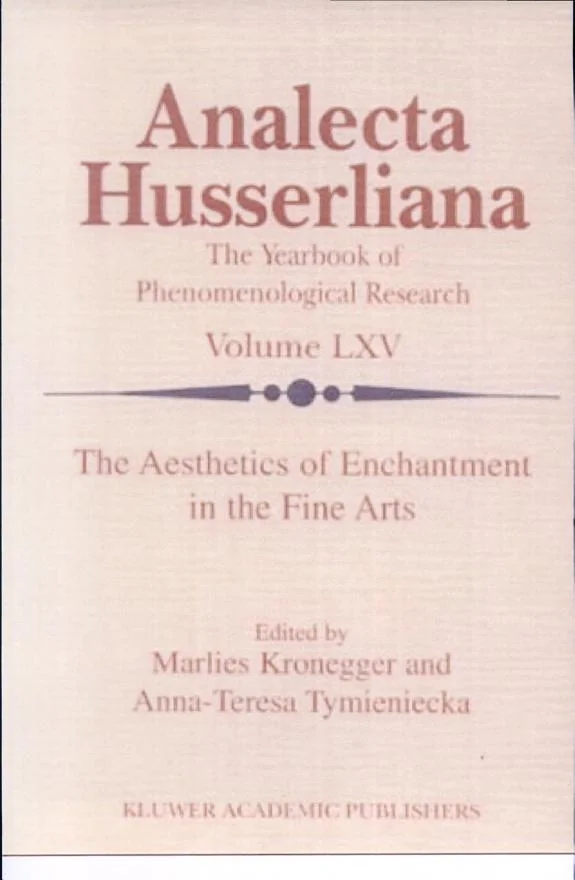
The Aesthetics of Enchantment in the Fine Arts
Marlies Kronegger and Anna-Teresa Tymieniecka's edited volume, born from a 1998 Harvard symposium, offers a scholarly exploration of aesthetic enchantment. The strength lies in its interdisciplinary approach, drawing on phenomenology to dissect the experience of art's captivating power. One particularly engaging section examines the 'ambiguous meaning of musical enchantment in Kant's Third Critique,' a dense but rewarding analysis. However, the collection occasionally suffers from the inherent unevenness of multi-authored conference proceedings; some essays feel more like theoretical sketches than fully developed arguments. While the focus on specific artists like Henri Matisse provides concrete anchors, the overall theoretical framework can sometimes feel overly academic, demanding significant prior knowledge. It is a valuable resource for specialists but may prove challenging for the casual reader seeking straightforward explanations.
📝 Description
82
Nineteen essays from a 1998 Harvard congress examine enchantment in the fine arts.
This volume gathers nineteen essays presented at an international congress on phenomenology and the arts, held at Harvard University in April 1998. The collection considers how enchantment appears across different artistic fields. It looks at the personal experience of aesthetic appeal and how art can create feelings of wonder. The book is for academics and advanced students in art history, art philosophy, phenomenology, and cultural studies. It will interest those studying the connection between personal experience and artistic creation, and historical ideas about enchantment. Researchers in art semiotics and the psychological effects of art will also find it useful. The essays reflect on art and enchantment at the end of the 20th century, a time when subjective experience and phenomenological approaches saw renewed attention. This work discusses thinkers from various periods, such as Kant and Leonardo da Vinci, placing current ideas within a larger intellectual history. The book covers the phenomenology of enchantment, the semiotics of artistic appeal, and art's role in what is called the 'reenchantment' of human life. It includes case studies on musical enchantment from Kant's Third Critique, the impact of visual arts, and the appeal of cultural expressions like the Naza. The author's creative voice and how art is received are also key topics.
This collection emerges from a phenomenological inquiry into the aesthetic experience of enchantment, a concept often touched upon in occult and esoteric traditions that seek to understand the non-rational or deeply affective dimensions of human consciousness. While not explicitly occult, the focus on subjective states of wonder and captivation, and art's capacity to evoke them, resonates with esoteric interests in altered states of awareness and the power of symbolic representation to access deeper realities. The book's engagement with thinkers like Kant, particularly his Third Critique concerning aesthetic judgment, provides a philosophical framework for exploring these less tangible aspects of human perception and experience.
💡 Why Read This Book?
• Gain a phenomenological understanding of aesthetic enchantment, moving beyond simple appreciation to analyze the *experience* itself, as explored in the essays on the phenomenology of enchantment. • Grasp the historical philosophical discourse surrounding art's power, particularly through discussions like the 'ambiguous meaning of musical enchantment in Kant's Third Critique,' offering unique insights into Kantian aesthetics. • Understand the concept of 'art and the reenchantment of sensuous human activity,' providing a framework for how contemporary art can restore a sense of wonder to everyday experience, as discussed in the congress's proceedings.
⭐ Reader Reviews
Honest opinions from readers who have explored this book.
❓ Frequently Asked Questions
What is the primary focus of 'The Aesthetics of Enchantment in the Fine Arts'?
The book focuses on the phenomenology of enchantment as it appears in various fine arts, exploring how subjective experiences of wonder and captivation are evoked by artistic works and practices.
When and where was the congress that inspired this book held?
The international congress that forms the basis for this collection was held in April 1998 at Harvard University.
Which philosophers' ideas are referenced in the book?
The book references thinkers such as Immanuel Kant, particularly in relation to his Third Critique and musical enchantment, and historical figures like Leonardo da Vinci.
What does the term 'reenchantment of sensuous human activity' mean in this context?
It refers to the idea that art can restore a sense of magic, wonder, or profound engagement to everyday human activities, which may have become dulled or disenchanted through modern life.
Who are the main editors or key figures associated with this publication?
The book is edited by Marlies Kronegger and Anna-Teresa Tymieniecka, and was published under the auspices of The World Institute for Advanced Phenomenological Research and Learning.
What artistic disciplines are covered in the essays?
The essays cover a range of disciplines, including visual arts (e.g., Henri Matisse), music (in relation to Kant), and broader concepts of creative voice and artistic reception.
🔮 Key Themes & Symbolism
Phenomenology of Enchantment
This theme investigates the subjective, lived experience of being enchanted by art. It moves beyond aesthetic judgment to explore the psychological and emotional states evoked – wonder, awe, captivation. The essays analyze how art forms, whether visual, musical, or literary, can suspend ordinary perception and create a distinct experiential field for the observer, connecting to broader phenomenological inquiries into consciousness and perception.
Art and Reenchantment
The concept of 'reenchantment' suggests that art possesses the capacity to restore a sense of magic, meaning, or vitality to human experience, particularly to our engagement with the sensuous world. This theme examines how artistic creation and reception can counter modern disenchantment, offering new ways of perceiving and interacting with reality, thereby revitalizing our connection to the world.
Kant and Musical Enchantment
This thread specifically dissects Immanuel Kant's ideas on music and its power to enchant. It probes the 'ambiguous meaning' of this enchantment within Kant's aesthetic philosophy, particularly as presented in his Third Critique. The analysis likely explores how music, as a non-representational art form, can affect the listener in ways that challenge or illuminate Kant's broader theories of beauty and the sublime.
Case Studies in Artistic Allure
Beyond theoretical frameworks, the collection examines specific instances of artistic enchantment. This includes analyzing figures like Leonardo's 'enchantress,' the allure of the Naza cultural expression, and the critical reception of Henri Matisse's early works. These case studies ground the abstract discussions in concrete artistic phenomena, demonstrating how enchantment operates within particular historical and stylistic contexts.
💬 Memorable Quotes
Direct passages from the work, attributed to the author.
“The ambiguous meaning of musical enchantment in Kant's Third Critique.”
— This phrase highlights a core analytical point: Kant's view on music's captivating power isn't straightforward. It suggests an exploration into the complex, perhaps even contradictory, ways music functions aesthetically according to Kant's framework.
“Art and the reenchantment of sensuous human activity.”
— This concept posits that art can actively reintroduce wonder and deep engagement into our everyday physical and sensory lives, countering a perceived modern decline in such experiences.
“The phenomenology of the experience of enchantment.”
— This refers to the direct, first-person study of what it is like to feel enchanted by an artwork, focusing on the subjective qualities of that state of mind.
“Leonardo's enchantress.”
— This likely points to an analysis of a specific artwork or figure by Leonardo da Vinci, examining the elements within it that contribute to an aura of enchantment or magical allure.
“The creative voice.”
— This phrase suggests an investigation into the unique expressive quality or style that characterizes an artist's work, and how this 'voice' contributes to the artwork's overall impact and potential for enchantment.
🌙 Esoteric Significance
Tradition
While not explicitly tied to a single esoteric lineage like Hermeticism or Theosophy, the work engages with concepts that resonate within esoteric thought, particularly the idea of art as a vehicle for transformative experience and altered states of consciousness. Its phenomenological approach to enchantment aligns with esoteric traditions that emphasize subjective experience and inner vision as pathways to deeper understanding.
Symbolism
The book explores enchantment not through specific occult symbols, but through the broader symbolic power of art itself. Concepts like Leonardo's 'enchantress' or the allure of the 'Naza' function as motifs representing deeper, perhaps archetypal, forces of attraction and wonder. The ambiguity in Kant's musical enchantment can be seen as a symbol for the ineffable qualities that esoteric practices often seek to access.
Modern Relevance
Contemporary artists and theorists interested in art's potential for spiritual or transcendent experience, or those exploring the psychological effects of aesthetic immersion, find relevance here. The book's focus on the 'reenchantment of sensuous human activity' speaks to modern practices in mindfulness, art therapy, and experiential design that seek to deepen our engagement with the world through sensory and aesthetic means.
👥 Who Should Read This Book
• Scholars of art history and aesthetics seeking to integrate phenomenological methods into their analysis of artistic experience. • Philosophy students and researchers interested in Kantian aesthetics and the nature of subjective perception in relation to art. • Cultural theorists examining the role of art in contemporary society, particularly concerning concepts of wonder, meaning, and the 'reenchantment' of experience.
📜 Historical Context
This volume emerged from a 1998 international congress, a period marked by a significant engagement with phenomenology and hermeneutics in interpreting art. It reflects a move away from purely formalist or deconstructionist analyses toward understanding the subjective, lived experience of art. The essays engage with a lineage of thought stretching back to figures like Immanuel Kant, whose Third Critique is specifically discussed regarding musical enchantment. This occurred amidst ongoing philosophical debates, including those influenced by post-structuralism, where the notion of inherent meaning was often questioned. The publication, under the World Institute for Advanced Phenomenological Research and Learning, situates it within a specific academic and philosophical tradition, distinct from more popular occult or esoteric publishing trends.
📔 Journal Prompts
The phenomenology of enchantment: Describe a personal experience of artistic enchantment.
Analysis of Kant's Third Critique: How does music evoke enchantment for you?
The creative voice: Identify an artist whose 'voice' you find particularly enchanting.
Reenchantment of sensuous activity: How can art help reconnect you with your senses?
The allure of the Naza: What cultural expressions hold a similar 'allure' for you?
🗂️ Glossary
Phenomenology
A philosophical approach that focuses on the structures of consciousness as experienced from the first-person point of view, emphasizing subjective experience and lived reality.
Enchantment
A state of being under a spell, characterized by wonder, fascination, and a suspension of ordinary perception, often evoked by art or extraordinary experiences.
Reenchantment
The process of restoring a sense of magic, wonder, or profound meaning to aspects of life, particularly to human activities and the natural world, often perceived as having become disenchanted.
Sensuous human activity
Refers to the broad spectrum of human actions and experiences that involve the senses – seeing, hearing, touching, tasting, smelling – and our engagement with the physical world.
Kant's Third Critique
Refers to Immanuel Kant's 'Critique of Judgment' (1790), the third of his major critical works, which deals extensively with aesthetic judgments (beauty and the sublime) and teleology.
Naza
An unspecified cultural phenomenon or art form referenced in the book, likely representing a specific instance of artistic allure or enchantment being analyzed.
Creative voice
The distinctive style, perspective, and expressive quality that characterizes an artist's work, making it uniquely identifiable and impactful.
This book appears in 1 collection
🔮 Readers Also Liked
Browse all →









From the “Enchantment” Collection
View all →





More Free Occult Philosophy Books
View all →