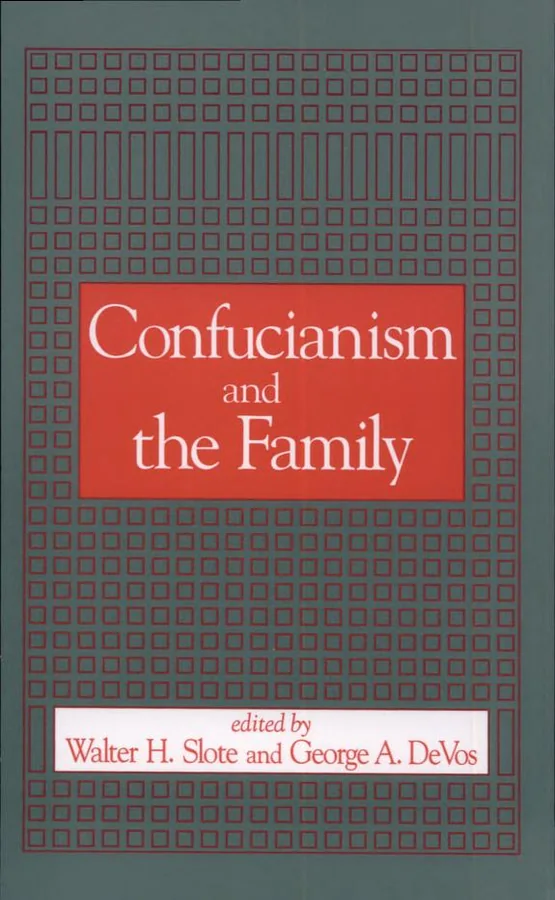
Confucianism and the Family
 71
71

Confucianism and the Family
Slote and De Vos's "Confucianism and the Family" moves beyond simplistic portrayals of Confucianism, presenting a nuanced psychocultural lens on its familial structures. The strength lies in its rigorous interdisciplinary synthesis, particularly in its exploration of how gender roles were codified and experienced within the patrilineal system. The authors illuminate the psychological underpinnings of obedience and hierarchy, a perspective often overlooked in purely philosophical analyses. A limitation, however, is the dense academic prose which may present a barrier to the casual reader. The section discussing the concept of "face" (mien-tzu) and its influence on family honor is particularly illuminating, demonstrating the subtle yet powerful social mechanisms at play. This study is a valuable, albeit demanding, resource for understanding a critical aspect of East Asian social organization.
📝 Description
71
Walter H. Slote and George A. De Vos analyzed Confucian family structure in East Asia, first published in 1998.
Published in 1998, Confucianism and the Family by Walter H. Slote and George A. De Vos examines the Confucian family system as it developed across East Asia. The authors use historical records, psychocultural analysis, and gender studies to present a complete view. They place Confucianism not just as a philosophy but as a living tradition tied to family and social organization. The book tracks how these structures changed over time in East Asia, showing the lasting effect of Confucian ideas on relationships, order, and customs as these societies modernized.
Key concepts discussed include filial piety (xiao), the significance of lineage, roles based on gender and age, and the ethical systems guiding interactions. The work shows how these principles built social unity and personal identity within the traditional East Asian family.
While not strictly esoteric in the sense of occult or mystical traditions, this book delves into the deep structures of family and social organization that underpin a major world philosophy. Confucianism's emphasis on ritual, hierarchy, and ethical conduct within relationships forms a core of its worldview, impacting personal identity and societal order. Understanding these familial tenets offers insight into the lived experience and the psychological dimensions of a tradition that shaped East Asian culture for centuries, revealing a profound, though not overtly mystical, approach to human existence and social harmony.
💡 Why Read This Book?
• Gain a psychocultural understanding of filial piety (xiao) and its impact on individual identity formation, moving beyond a superficial definition. • Analyze the historical evolution of gender roles within Confucian families, understanding specific societal expectations established by 1998. • Grasp the concept of "face" (mien-tzu) as a crucial social mechanism that reinforced familial hierarchy and collective honor in East Asia.
⭐ Reader Reviews
Honest opinions from readers who have explored this book.
❓ Frequently Asked Questions
What is the primary focus of "Confucianism and the Family"?
The book focuses on the interdisciplinary exploration of the Confucian family in East Asia, examining its historical development, psychocultural dimensions, and gender studies perspectives.
When was "Confucianism and the Family" first published?
The initial publication date for "Confucianism and the Family" was July 10, 1998.
Who are the authors of "Confucianism and the Family"?
The authors are Walter H. Slote and George A. De Vos.
What academic fields does the book draw upon?
It draws upon historical studies, psychocultural analysis, and gender studies to provide a comprehensive view of the Confucian family.
What core Confucian concept related to family is explored in depth?
The book delves into concepts such as filial piety (xiao), lineage importance, and the ethical frameworks governing interpersonal relationships within the family structure.
What is a key psychocultural element discussed regarding family in the book?
A key psychocultural element is the examination of "face" (mien-tzu) and its role in maintaining family honor and social standing.
🔮 Key Themes & Symbolism
Filial Piety and Hierarchy
The work scrutinizes filial piety (xiao) not just as a duty but as a psychocultural construct that underpins familial hierarchy. It details how this principle, central to Confucianism, shaped intergenerational relationships and dictated social roles, reinforcing a patriarchal structure. The text examines the internalisation of these hierarchical demands, impacting individual identity and behavior within the extended family unit, a critical aspect for understanding East Asian social dynamics.
Gendered Roles and Expectations
Slote and De Vos meticulously analyze the gendered division of labor and status within the Confucian family. The book explores how societal expectations, codified through Confucian tenets, defined distinct roles for men and women, impacting their autonomy, education, and social interactions. This perspective highlights the construction of gender within a specific cultural and philosophical framework, offering insights into the historical experiences of women and men.
The Concept of "Face"
A significant theme is the exploration of "face" (mien-tzu), a complex social currency vital to maintaining individual and familial reputation. The authors explain how the pursuit and preservation of face influenced decisions, interpersonal conduct, and the adherence to social norms. This concept is presented as integral to understanding the social pressures and motivations that governed family life and community relations in East Asia.
Continuity and Change
The book examines the persistence of Confucian family structures despite modernization. It discusses how traditional values and practices related to kinship, lineage, and social obligation have adapted or endured. This theme addresses the dynamic interplay between enduring philosophical ideals and the evolving socio-economic landscapes of East Asia, particularly as observed around the late 20th century.
💬 Memorable Quotes
Direct passages from the work, attributed to the author.
“The Confucian family system emphasizes the continuity of lineage.”
— This highlights the profound importance placed on ancestral ties and the perpetuation of the family name and traditions across generations, a core element of Confucian social structure.
“Filial piety (xiao) is central to ethical conduct within the family.”
— This points to the foundational role of respect, obedience, and care for elders and ancestors as a primary virtue in Confucian thought and practice.
“Gender roles were distinctly defined by Confucian ideology.”
— This suggests that the philosophical framework of Confucianism prescribed specific societal functions and expectations based on one's sex, impacting family dynamics.
“The concept of 'face' influences social interactions and reputation.”
— This indicates that maintaining social standing and avoiding shame are critical motivators for behavior, deeply intertwined with family honor in the East Asian context.
“Psychocultural analysis reveals the internalization of social norms.”
— This interpretation suggests the book examines how external societal rules and values, like those of the Confucian family, become part of an individual's psychological makeup.
🌙 Esoteric Significance
Tradition
While not strictly an esoteric text in the Western sense (Hermetic, Kabbalistic), "Confucianism and the Family" engages with a profound 'inner tradition' of moral cultivation and cosmic harmony. It examines a lineage of thought that, for millennia, has guided the development of the self in relation to the family and society, aiming for a state of ethical order that mirrors celestial principles. It offers a lens into how collective consciousness and individual psychology are shaped by deeply ingrained familial and social philosophies.
Symbolism
The primary 'symbol' is the family unit itself, functioning as a microcosm of the state and the cosmos in Confucian thought. Filial piety (xiao) acts as a symbolic lynchpin, representing the flow of respect and order from subordinate to superior, mirroring cosmic principles. The concept of lineage symbolizes continuity and the interconnectedness of past, present, and future generations, embodying a form of ancestral reverence that transcends mere memory.
Modern Relevance
Contemporary thinkers and practitioners exploring ethical frameworks for technology, artificial intelligence, and global governance often draw implicitly or explicitly from East Asian philosophies. The book's analysis of hierarchical structures, social obligation, and the psychocultural impact of familial norms remains relevant for understanding cross-cultural communication, organizational psychology, and the enduring influence of tradition in a globalized world. It informs discussions on collectivism versus individualism.
👥 Who Should Read This Book
• Scholars of East Asian Religions and Philosophies: To deepen their understanding of Confucianism as a lived social and familial practice, beyond abstract doctrine. • Anthropologists and Sociologists: For detailed case studies and psychocultural analysis of family structures and their impact on social cohesion and individual identity. • Gender Studies Researchers: To examine the historical construction and reinforcement of gender roles within a specific, influential philosophical tradition.
📜 Historical Context
Published in 1998, "Confucianism and the Family" emerged during a period of significant global interest in Asian cultures and their philosophical underpinnings. The intellectual currents included post-structuralist critiques and renewed attention to comparative religion and sociology. While Confucianism was widely studied, much scholarship focused on its philosophical texts. This work distinguished itself by integrating psychocultural and gender studies perspectives, offering a more granular view of family life. It engaged with the ongoing debate about the compatibility of traditional Confucian values with modernization and Western democratic ideals. Its reception was largely academic, noted by scholars in anthropology and sociology for its interdisciplinary synthesis, particularly in contrast to earlier, more monolithic interpretations of Confucian society. Contemporary scholars like Tu Weiming were also exploring Neo-Confucianism, though often with a greater philosophical emphasis.
📔 Journal Prompts
The psychocultural implications of filial piety (xiao) on individual identity.
The role of "face" (mien-tzu) in shaping familial decision-making processes.
How historical gender roles within the Confucian family influenced women's autonomy.
The enduring significance of lineage continuity in modern East Asian societies.
Comparing the Confucian family structure to other kinship systems studied.
🗂️ Glossary
Filial Piety (Xiao)
A core Confucian virtue emphasizing respect, obedience, and duty towards one's parents, elders, and ancestors. It is fundamental to the ethical structure of the family and society.
Lineage
A line of descent tracing ancestry, particularly through the male line in Confucian societies. Maintaining and honoring the lineage was a significant familial and social obligation.
Mien-tzu (Face)
A complex concept representing social standing, reputation, and honor. Preserving one's own 'face' and the 'face' of one's family is crucial in social interactions.
Psychocultural
Pertaining to the interaction and mutual influence between psychological processes and cultural factors. It examines how cultural norms shape individual minds and behavior.
Gender Studies Perspectives
An academic approach that analyzes the social, cultural, and political construction of gender, examining roles, identities, and inequalities based on sex.
Interdisciplinary
Involving or drawing upon knowledge from two or more different academic fields or subject areas.
Patriarchal
A social system in which males hold primary power and predominate in roles of political leadership, moral authority, social privilege, and control of property.
This book appears in 1 collection
🔮 Readers Also Liked
Browse all →









From the “Confucianism” Collection
View all →



More Free Occult Philosophy Books
View all →