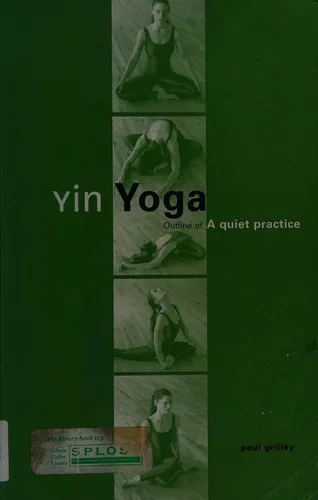
Yin yoga
 75
75

Yin yoga
Paul Grilley's *Yin Yoga* is less a literary masterpiece and more a precise anatomical and physiological manual for a specific yoga practice. It eschews flowery prose for clear, direct instruction, which is its greatest strength. Grilley meticulously details the biomechanics involved in holding poses for extended periods, explaining how to target the deeper fascial networks and joint capsules. A particularly illuminating section discusses the concept of 'finding your edge,' emphasizing the subtle difference between productive tension and injurious strain. However, the book's didactic tone, while informative, can feel somewhat dry, lacking the inspirational spark found in other yogic texts. Its focus is almost exclusively on the physical mechanics, with less emphasis on the philosophical or spiritual underpinnings that often accompany yoga. Despite this limitation, for practitioners seeking a deep, technical understanding of how Yin Yoga affects the body, Grilley's foundational work remains an essential, if clinically presented, guide.
📝 Description
75
Paul Grilley's 2002 book, Yin Yoga, systematized a meditative yoga style targeting deep connective tissues.
Yin Yoga, published in 2002, details a yoga practice focused on passive, long-held stretches designed to affect the body's deeper connective tissues like fascia, ligaments, and joints. Unlike more active yoga forms emphasizing muscular engagement, this method uses gravity and time, with poses held for three to five minutes or more. The book lays out the principles behind this approach, explaining its physical effects and energetic benefits. It is suitable for practitioners looking to balance dynamic routines with a practice that increases flexibility, supports joint health, and encourages deep relaxation. Athletes, dancers, and those experiencing stiffness will find it beneficial. It also appeals to individuals interested in subtle energy, mindfulness, and a contemplative physical discipline, serving both experienced yogis and newcomers seeking a gentle yet potent path to somatic awareness.
Grilley's work emerged as Western yoga diversified beyond traditional Hatha. Emerging in the late 20th century, Yin Yoga's articulation by Grilley, alongside figures like Paulie Zink and Sarah Powers, helped codify a style focused on stillness and stimulating connective tissues. This approach often referenced Traditional Chinese Medicine's meridian theory, moving yoga exploration into energetic and meditative dimensions beyond purely physical postures.
💡 Why Read This Book?
• Learn the specific anatomical targets of Yin Yoga, differentiating it from muscularly focused practices by understanding the focus on 'connective tissues' like fascia and ligaments. • Grasp the unique principle of 'finding your edge' to safely and effectively stimulate deeper tissues without causing harm, a core concept introduced by Grilley. • Understand the energetic implications of long-held poses, connecting the physical practice to subtle body concepts that Grilley explores in relation to meridian theory.
⭐ Reader Reviews
Honest opinions from readers who have explored this book.
❓ Frequently Asked Questions
What is the primary difference between Yin Yoga and other yoga styles according to Paul Grilley?
Paul Grilley explains that Yin Yoga targets the deeper 'plastic' tissues—fascia, ligaments, joints, and bones—through long, passive holds. This contrasts with more active styles that primarily engage the 'elastic' tissues, namely muscles.
How long should one hold a Yin Yoga pose?
According to Grilley's foundational work, Yin Yoga poses are typically held for extended durations, ranging from three to five minutes, and sometimes longer, to allow the connective tissues to respond to gentle stress.
What does Paul Grilley mean by 'finding your edge' in Yin Yoga?
'Finding your edge' refers to locating the point of moderate sensation or resistance in a pose, where you feel a stretch in the targeted connective tissues without experiencing sharp pain or discomfort.
Does Yin Yoga have any connection to Traditional Chinese Medicine?
Yes, Paul Grilley's approach to Yin Yoga often draws parallels to Traditional Chinese Medicine, particularly concerning the stimulation of meridians and the flow of qi (vital energy) through the body.
Is Yin Yoga suitable for beginners?
Yes, Yin Yoga is generally suitable for beginners, as it is a slower, more passive practice. However, understanding Grilley's principles of 'finding your edge' and respecting the body's signals is crucial for safe practice.
What are the main physical benefits of practicing Yin Yoga as described in the book?
The book highlights benefits such as increased joint mobility, improved circulation in the joints, enhanced flexibility in the connective tissues, and the potential for releasing deep-seated physical tension.
🔮 Key Themes & Symbolism
Connective Tissue Focus
Grilley's seminal text differentiates Yin Yoga by its deliberate targeting of the body's deeper 'plastic' tissues—fascia, ligaments, tendons, and joint capsules. This contrasts with more muscular or 'elastic' tissue-focused practices. The book meticulously explains how sustained, gentle stress applied to these tissues over time can improve their hydration, elasticity, and overall health, leading to greater joint mobility and reduced stiffness. This emphasis on the often-neglected fascial network offers a unique perspective on somatic well-being and physical resilience.
The Principle of 'Finding Your Edge'
A core part of Grilley's methodology is the concept of 'finding your edge.' This isn't about pushing to the limit of pain but rather finding a point of significant sensation or resistance in a pose where the targeted connective tissues are appropriately stressed. The book guides practitioners to hold this edge with stillness and mindful breathing, allowing the tissues to gradually adapt and release. It emphasizes patience and keen internal awareness, promoting a respectful dialogue with the body rather than forceful manipulation.
Energetic and Meridian Theory
While primarily a physical practice, Grilley's Yin Yoga is often discussed in relation to its energetic effects. The book explores how the long-held passive stretches can stimulate the body's subtle energy channels, or meridians, drawing parallels with Traditional Chinese Medicine. By applying gentle stress to specific areas, practitioners can theoretically influence the flow of qi (vital energy), potentially aiding in the release of energetic blockages and promoting a sense of balance and vitality throughout the body.
Stillness and Patience
In direct opposition to the dynamic nature of many yoga styles, Yin Yoga, as presented by Grilley, champions stillness and patience. The extended duration of the poses (three to five minutes or more) is not merely a physical requirement but a meditative practice in itself. This sustained quietude allows the mind to settle, fostering introspection and a deeper connection to bodily sensations. The book underscores that true transformation in the connective tissues occurs through consistent, unhurried effort and mindful observation.
💬 Memorable Quotes
Direct passages from the work, attributed to the author.
“The muscles are elastic, the ligaments are plastic.”
— This concise statement expresses the core anatomical distinction Grilley makes. It explains why Yin Yoga requires long, passive holds to affect the less pliable connective tissues, contrasting with active yoga's focus on dynamic muscle engagement.
“Find your edge and then resolve the pose.”
— This directive highlights the practice's nuanced approach: locate the point of beneficial tension ('edge') and then remain steady and still within that sensation, allowing the body to adapt without forcing.
“We are trying to hydrate the fascia.”
— This interpretation of the physical effect of Yin Yoga suggests a goal beyond simple stretching; it's about nourishing and revitalizing the connective tissues, improving their function and resilience through sustained pressure.
“Bones and joints are the target.”
— This emphasizes the unique focus of Yin Yoga, which aims to improve the health and range of motion of the skeletal structure and its surrounding tissues, rather than primarily building muscular strength.
“Stillness is the key.”
— This principle underscores the meditative aspect of Yin Yoga. Remaining motionless in poses allows for deeper physical release and cultivates mental calm, facilitating the body's adaptation to stress.
🌙 Esoteric Significance
Tradition
Yin Yoga, as articulated by Grilley, draws significantly from Taoist principles and Traditional Chinese Medicine (TCM). While not strictly a Hermetic or Kabbalistic text, it engages with the concept of subtle energy (qi/prana) and its flow through meridians, a core tenet of TCM. This aligns with broader esoteric interests in understanding the body's energetic anatomy, complementing practices found in Qigong and acupuncture. Grilley's work provides a physical practice framework that can be seen as a modern, somatic interpretation of these ancient energetic systems.
Symbolism
While Grilley's text is largely anatomical and physiological, the practice itself carries symbolic weight. The prolonged stillness in poses can symbolize introspection, patience, and the acceptance of limitations. The targeting of deep tissues can be seen as a metaphor for confronting and releasing deeply held physical and emotional patterns. The concept of 'finding your edge' can symbolize the process of self-discovery and mindful boundary setting in all aspects of life, moving beyond superficial engagement.
Modern Relevance
Grilley's foundational work on Yin Yoga continues to be highly relevant in contemporary wellness and somatic practices. Therapists, yoga teachers, and mindfulness practitioners draw on his principles for addressing chronic tension, improving joint health, and cultivating mental stillness. The emphasis on fascia and connective tissues has gained significant traction in scientific research, validating many of Grilley's observations. His approach informs modern movement therapies and rehabilitation techniques that prioritize gentle, sustained stress for tissue health and resilience.
👥 Who Should Read This Book
• Yoga practitioners seeking to balance dynamic styles with a restorative, deeply stretching practice that enhances joint mobility and releases fascial tension. • Athletes and dancers looking to improve flexibility, prevent injuries, and aid recovery by understanding how to safely work with their deeper connective tissues. • Individuals interested in mindfulness and contemplative practices who wish to cultivate patience, stillness, and a deeper connection to their physical and energetic bodies.
📜 Historical Context
Paul Grilley's *Yin Yoga*, first published in 2002, emerged during a significant period of diversification within the Western yoga landscape. As the 20th century drew to a close, practitioners and teachers began exploring and articulating styles that moved beyond the dominant Vinyasa and Ashtanga lineages. Grilley, alongside contemporaries like Paulie Zink and Sarah Powers, was instrumental in defining and popularizing Yin Yoga. This practice offered a counterpoint to the increasingly athletic and fast-paced yoga trends, emphasizing slowness, introspection, and a focus on the deeper connective tissues. It drew inspiration from Taoist principles and Traditional Chinese Medicine's meridian theory, proposing a different understanding of how to work with the body's energetic and physical structures. While Hatha Yoga texts have existed for centuries, Grilley's work provided a specific, biomechanically-informed framework for this particular style, gaining traction among those seeking a more therapeutic and meditative approach to asana.
📔 Journal Prompts
The sensation of 'finding your edge' in a Yin Yoga pose.
The contrast between 'elastic' and 'plastic' tissues in your own body.
How sustained stillness in a pose affects your mental state.
The potential energetic flow or blockages experienced during long holds.
Integrating the principle of patience from Yin Yoga into daily life.
🗂️ Glossary
Fascia
A connective tissue that surrounds muscles, bones, and organs. Grilley emphasizes that fascia is 'plastic,' meaning it can be reshaped over time with sustained stress, unlike 'elastic' muscle tissue.
Plastic Tissue
Tissues, such as ligaments and fascia, that respond best to slow, sustained stress over time. Grilley identifies these as the primary targets of Yin Yoga.
Elastic Tissue
Tissues, primarily muscles, that respond best to dynamic, repetitive movements. These are typically worked in more active styles of yoga.
Finding Your Edge
The point in a yoga pose where you feel a significant sensation or resistance in the targeted connective tissues, but without pain. It's the optimal point for sustained stretching.
Resolving the Pose
The act of remaining still and breathing mindfully once your 'edge' has been found, allowing the body to adapt and release tension over the duration of the hold.
Meridians
In Traditional Chinese Medicine, these are pathways through which vital energy (qi) flows. Yin Yoga's long holds are thought to stimulate these channels.
Qi
The vital life force or energy believed to flow through the body in Traditional Chinese Medicine. Yin Yoga aims to promote its smooth circulation.
🔮 Readers Also Liked
Browse all →









More Free Occult Philosophy Books
View all →