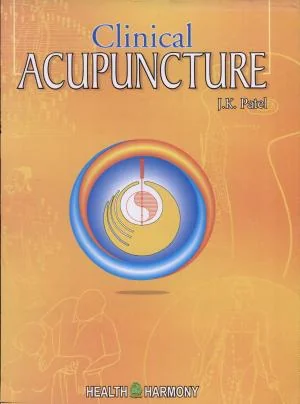
Clinical Acupuncture
 79
79

Clinical Acupuncture
J. K. Patel's *Clinical Acupuncture* provides a commendable overview for the uninitiated, particularly physicians seeking a primer on this ancient healing art. Its strength lies in its direct, no-nonsense approach, stripping away some of the more esoteric philosophical underpinnings to focus on the practical mechanics and clinical utility. The original blurb accurately captures its intent: a manual for the skeptical doctor. However, this very focus can be its limitation. While the work explores the essential techniques, it sometimes feels like a functional manual rather than an exploration of the deeper energetic or philosophical dimensions that have made acupuncture a cornerstone of healing for centuries. A passage detailing the treatment protocols for, say, lumbar pain, is clinically sound but might lack the richer context of how Qi stagnation is understood to cause such discomfort. Ultimately, *Clinical Acupuncture* serves its stated purpose effectively as an introductory guide for Western medical practitioners.
📝 Description
79
J. K. Patel's Clinical Acupuncture, published in 2003, examines acupuncture's core principles for medical professionals.
First published in 2003, J. K. Patel's Clinical Acupuncture provides a clear examination of acupuncture's fundamental principles and applications. The book aims to serve as an accessible manual for medical professionals unfamiliar with the practice, breaking down complex concepts into understandable segments. It focuses on practical aspects, detailing techniques and diagnostic approaches, guiding readers from basic theories to clinical use. The volume is primarily intended for physicians and other healthcare providers lacking formal acupuncture training, offering a foundational understanding for potential integration into their practice. Individuals with a serious interest in complementary medicine, the mechanics of Traditional Chinese Medicine (TCM), or students of anatomy and physiology looking to grasp energetic pathways will also find its systematic presentation valuable.
Clinical Acupuncture emerged in the early 2000s, a period marked by increasing global interest in integrating traditional healing modalities with Western medicine. Patel's work appeared as acupuncture gained recognition for its therapeutic potential, transitioning from a fringe practice toward wider consideration within various healthcare systems. The book reflects a trend of scientific inquiry into practices historically rooted in empirical observation and energetic theories, distinct from purely biomedical reductionism. It addresses the need to bridge these differing paradigms, presenting TCM concepts in a format accessible to those trained in Western medical science.
💡 Why Read This Book?
• Gain a foundational understanding of Qi and meridian theory, essential concepts in acupuncture, directly from Patel's systematic explanation, allowing you to comprehend the energetic framework behind point selection. • Learn about the precise mechanics of needle insertion and manipulation, detailed in sections discussing therapeutic techniques, which offers practical knowledge beyond theoretical discussions of healing. • Understand the historical trajectory of acupuncture's integration into Western medicine, as discussed in the context of its 2003 publication, providing insight into the growing acceptance of complementary therapies.
⭐ Reader Reviews
Honest opinions from readers who have explored this book.
❓ Frequently Asked Questions
What is the primary audience for Clinical Acupuncture by J. K. Patel?
The book is primarily aimed at medical doctors and healthcare professionals who have no prior training in acupuncture. It serves as a concise manual offering a broad overview of the practice for those unfamiliar with its principles and techniques.
When was Clinical Acupuncture first published?
Clinical Acupuncture by J. K. Patel was first published in 2003, reflecting a period of increasing interest in integrating traditional healing methods with Western medicine.
Does the book cover the historical development of acupuncture?
Yes, the work explores the historical development of acupuncture, situating its practice within a tradition that spans millennia and explaining its evolution.
What are the core concepts of acupuncture discussed in the book?
The book introduces fundamental concepts such as Qi (vital energy), the meridian system, diagnostic principles, and the selection of specific acupoints for therapeutic outcomes.
Is Clinical Acupuncture suitable for someone entirely new to complementary medicine?
While designed for medical professionals, individuals with a serious interest in complementary medicine and Traditional Chinese Medicine (TCM) will find its systematic presentation valuable for understanding acupuncture's mechanics.
What distinguishes this book from more esoteric texts on acupuncture?
This book distinguishes itself by focusing on clinical application and practical mechanics, aiming to provide a clear overview for practitioners less concerned with the deeper philosophical or energetic theories.
🔮 Key Themes & Symbolism
Qi and Meridian Theory
The foundational concept of Qi, or vital energy, and its flow through specific pathways known as meridians is central to Clinical Acupuncture. Patel explains how the disruption or imbalance of Qi is believed to cause illness, and how specific acupuncture points along these meridians can be stimulated to restore harmonious flow. This section details the interconnectedness of the body's energetic system, a departure from purely anatomical understanding, and how practitioners diagnose and treat based on these energetic principles.
Diagnostic Principles
This book outlines the diagnostic methods employed in acupuncture, which differ significantly from Western medical approaches. It covers observation of the tongue and pulse, palpation, and inquiry into the patient's symptoms and lifestyle. These methods are used to identify patterns of disharmony related to Qi, Blood, and other vital substances. Understanding these diagnostic tools is crucial for selecting appropriate acupoints and treatment strategies, moving beyond symptom management to address underlying energetic imbalances.
Acupoint Selection and Technique
A core theme is the practical application of acupuncture, focusing on the selection of specific acupoints and the techniques for their stimulation. Patel details various methods, including needle insertion (with emphasis on depth and angle), moxibustion, and cupping. The rationale behind choosing particular points for specific conditions is explored, linking the energetic properties of the points to their therapeutic effects. This practical guidance is essential for safe and effective clinical practice.
Bridging Traditional and Modern Medicine
Clinical Acupuncture addresses the challenge of integrating a system rooted in millennia of empirical observation and energetic theory with the reductionist, evidence-based framework of modern Western medicine. The book serves as a bridge, presenting acupuncture in a manner accessible to practitioners trained in conventional science. It highlights the potential for complementary therapies to address conditions not adequately managed by standard treatments, fostering a more holistic approach to patient care.
💬 Memorable Quotes
Direct passages from the work, attributed to the author.
“It provides a doctor not trained in acupuncture with a small manual from which he will get a bird's eye view of acupuncture.”
— This statement from the original blurb underscores the book's primary objective: to offer a concise, accessible introduction for medical professionals unfamiliar with acupuncture, focusing on a broad understanding rather than deep specialization.
“Understanding the flow of Qi through meridians is fundamental to diagnosis and treatment.”
— This interpretation emphasizes the book's focus on the theoretical underpinnings of Traditional Chinese Medicine, specifically the concept of vital energy (Qi) and its pathways (meridians), as crucial for effective acupuncture practice.
“Specific acupoint selection is guided by diagnostic patterns of disharmony.”
— This highlights the practical, clinical focus of the book, illustrating how theoretical diagnostic principles directly inform the choice of therapeutic points, linking energetic assessment to tangible treatment strategies.
“Needle insertion and manipulation are described with clinical precision.”
— This interpretation points to the book's practical, technical guidance, suggesting that it details the 'how-to' of acupuncture treatment with a focus on accuracy and safety for the practitioner.
💡 Key Ideas
Editorial paraphrase of the work's core concepts — not direct quotes.
The work explores the essential elements of acupuncture in a comprehensive manner.
This paraphrase highlights the book's ambition to cover the key aspects of acupuncture thoroughly, suggesting it serves as a complete, albeit introductory, resource for understanding the discipline's core components.
🌙 Esoteric Significance
Tradition
While *Clinical Acupuncture* is framed for a clinical audience, its roots lie in the ancient Chinese medical tradition, which itself possesses esoteric dimensions concerning the flow of vital energy (Qi) and spiritual well-being. It departs from the purely philosophical or mystical interpretations often found in Hermetic or Taoist texts by focusing on the measurable physiological effects and therapeutic outcomes. However, by detailing the meridian system and acupoint energetics, it engages with concepts that, in other contexts, are deeply embedded in esoteric cosmology and the understanding of subtle bodies.
Symbolism
The primary symbolism within acupuncture, as presented in this clinical context, revolves around the concept of Qi, the vital life force. Meridians, the pathways through which Qi flows, can be seen as symbolic representations of the body's energetic circuitry, analogous to channels of consciousness or subtle anatomy found in other esoteric traditions. Acupoints themselves act as symbolic gateways or loci where this energy can be accessed and influenced, allowing for the restoration of balance—a concept that appeals to many esoteric philosophies focused on harmonizing internal and external forces.
Modern Relevance
In contemporary practice, *Clinical Acupuncture* serves as a foundational text for practitioners seeking to integrate acupuncture into modern healthcare settings. Thinkers and practitioners in integrative medicine, pain management specialists, and researchers investigating the neurobiological mechanisms of acupuncture continue to draw upon the clinical principles outlined in works like Patel's. Its approach informs the development of evidence-based protocols and contributes to the ongoing dialogue about how ancient healing systems can be validated and applied within contemporary scientific and medical frameworks.
👥 Who Should Read This Book
• Medical Doctors and Healthcare Professionals: Those seeking a clear, practical introduction to acupuncture's principles, diagnostic methods, and treatment techniques to potentially integrate into their practice. • Students of Traditional Chinese Medicine (TCM): Individuals beginning their study of TCM who need a solid overview of the clinical application and energetic concepts before looking at more complex theoretical texts. • Researchers in Integrative Medicine: Scholars and scientists interested in understanding the practical basis of acupuncture for designing studies or exploring its physiological effects within a biomedical context.
📜 Historical Context
Published in 2003, *Clinical Acupuncture* by J. K. Patel emerged during a period of significant expansion for complementary and alternative medicine (CAM) within mainstream healthcare discourse. The early 2000s saw a global push for evidence-based integrative medicine, with acupuncture increasingly studied for its efficacy in pain management and other conditions. This era was marked by a growing scientific interest in traditional systems, contrasting with earlier skepticism. While competing schools of thought in Traditional Chinese Medicine (TCM) might emphasize different philosophical nuances, Patel's work aimed for a more universally applicable clinical framework. The book addressed a growing demand from Western medical practitioners for accessible, practical knowledge of acupuncture, moving beyond its historical association with esoteric or purely philosophical traditions. Its publication reflects the broader trend of seeking to bridge the gap between biomedical paradigms and time-tested healing practices.
📔 Journal Prompts
The concept of Qi stagnation and its clinical manifestations.
Diagnostic patterns and their relation to specific acupoint selection.
The mechanics of needle insertion and manipulation for therapeutic effect.
How the meridian system maps energetic pathways in the body.
The historical context of acupuncture's integration into Western medicine.
🗂️ Glossary
Qi (Chi)
The fundamental concept of vital energy or life force that circulates throughout the body in Traditional Chinese Medicine. Imbalances in Qi are believed to lead to illness.
Meridians
Specific pathways or channels within the body through which Qi and Blood circulate. Acupuncture points are located along these meridians.
Acupoints
Specific locations on the body, typically along meridians, that are stimulated (e.g., with needles) to regulate the flow of Qi and Blood and treat various conditions.
Moxibustion
A form of heat therapy in traditional Chinese medicine in which dried mugwort (Artemisia vulgaris) is burned near the surface of the skin, often over acupuncture points.
Tongue Diagnosis
A diagnostic method in TCM that involves observing the color, shape, coating, and moisture of the tongue to assess the state of internal organs and the body's energetic balance.
Pulse Diagnosis
A diagnostic technique in TCM where the practitioner palpates the radial pulse at different positions and depths to assess the condition of Qi and Blood and identify patterns of disharmony.
Disharmony
In TCM, a state of imbalance in the body's systems, including Qi, Blood, Yin, and Yang, which underlies disease and illness.
This book appears in 1 collection
🔮 Readers Also Liked
Browse all →








From the “Acupuncture” Collection
View all →







More Free Occult Philosophy Books
View all →