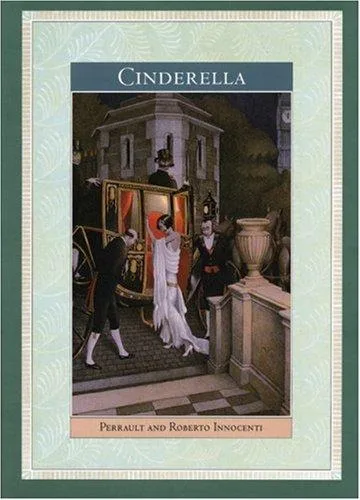
Proclus

 82
82

Proclus
Radek Chlup’s *Proclus* presents a clear exposition of a philosopher whose thought is notoriously intricate. Chlup successfully navigates Proclus’s hierarchical cosmology, from the ineffable One down to the material realm, illuminating the philosopher’s commitment to an ordered, divinely structured universe. The explanation of the henads, those divine unities that mediate between the One and the Intellect, is particularly well-articulated, offering a vital key to understanding Proclus’s theological framework. However, the work occasionally feels overly academic, potentially leaving readers without a strong philosophical background struggling with the dense terminology. A more extended discussion on the practical implications of Proclus’s philosophy for later esoteric practitioners, beyond the brief mentions of theurgy, might have offered a richer connection for some readers. Nonetheless, Chlup’s study provides an accessible yet rigorous account of a pivotal figure in Neoplatonism.
📝 Description
82
Radek Chlup's 2016 study offers a detailed look at the philosopher Proclus.
Published in 2016, Radek Chlup's book examines the late antique philosopher Proclus and his philosophical system. The work places Proclus within the intellectual currents of late antiquity, considering both his systematic thought and his lasting impact. It serves as an introduction for those new to the subject and a reference for those already familiar with ancient philosophy.
Chlup's study appears during a period of increased attention to late antique thought, especially figures like Proclus. Recent decades have seen new scholarly editions and analyses of Neoplatonic texts. This book engages with current scholarly discussions about Proclus's theological and metaphysical doctrines and their place within Hellenistic paganism as it responded to the growth of Christianity.
The book covers Proclus's metaphysical hierarchy, including the One, Intellect (Nous), and Soul. It also analyzes his theological system, particularly his commentaries on Plato and his own systematic writings such as the 'Elements of Theology'. Concepts like henads, theurgy, and the soul's ascent are central, illustrating Proclus's view of a divinely ordered universe and the human way back to the divine.
This book situates Proclus within the lineage of Western esotericism, a tradition that has drawn on Neoplatonic thought for centuries. Proclus's complex hierarchical cosmology, his ideas on divine emanations, and his practices aimed at spiritual ascent have been influential. His systematic approach provided a framework for later occult philosophers seeking to understand the structure of reality and the means of achieving union with the divine. The book's examination of his doctrines thus connects directly to traditions that later incorporated Neoplatonic elements into their own mystical and magical systems.
💡 Why Read This Book?
• Understand Proclus's concept of the henads, divine unities that bridge the ultimate reality and the sensible world, providing a unique framework for understanding mediation in metaphysical systems. • Grasp the philosophical underpinnings of theurgy as presented by Proclus, learning how ancient philosophers envisioned ritual practice as a means of divine communion and cosmic participation. • Explore the late antique intellectual climate of the 5th century CE, situating Proclus’s synthesis of Platonism within a world influenced by both pagan traditions and emergent Christianity.
⭐ Reader Reviews
Honest opinions from readers who have explored this book.
❓ Frequently Asked Questions
What is the primary philosophical contribution of Proclus discussed in Radek Chlup's book?
The book highlights Proclus's systematic elaboration of Neoplatonic metaphysics, particularly his hierarchical cosmology extending from the ineffable One through Intellect and Soul, culminating in the material world. His concept of henads is a key focus.
How does Chlup's book explain Proclus's view on theurgy?
Chlup's work details Proclus's understanding of theurgy as a vital set of sacred rites and practices designed to facilitate the soul's ascent and reunification with the divine principles, serving as a bridge between the human and the celestial.
When was Proclus alive, and what was the intellectual environment like?
Proclus lived from 412 to 485 CE. Chlup's book places him in the context of late antique philosophy, a period marked by the synthesis of Platonic and Aristotelian thought and increasing engagement with emerging Christian theology.
What is the significance of the 'Elements of Theology' by Proclus?
The 'Elements of Theology' is Proclus's most systematic exposition of his metaphysics, presented in a series of propositions similar to Euclid's geometry. Chlup's book analyzes this work as a cornerstone of his philosophical system.
Does the book discuss Proclus's influence on later thought?
Yes, Radek Chlup's study touches upon Proclus's considerable influence on medieval Islamic philosophy, Christian mysticism, and Renaissance Neoplatonism, illustrating the enduring legacy of his complex philosophical system.
What is the 'One' in Proclus's philosophy as described by Chlup?
The 'One' is the ultimate, ineffable principle of all reality in Proclus's system, transcending existence and thought. It is the source from which all subsequent levels of reality emanate, as explored in Chlup's analysis.
🔮 Key Themes & Symbolism
The Hierarchical Cosmos
Chlup elucidates Proclus's intricate vision of reality as a series of emanations descending from the ultimate, ineffable One. This hierarchy includes Intellect (Nous), Soul, and the sensible world, each level dependent on the one above. The book details concepts like the henads, divine unities that serve as intermediaries, and explains how this structure ensures the coherence and stability of the entire cosmos, reflecting a deeply ordered and purposeful existence.
Theurgy and Divine Ascent
A significant focus is placed on Proclus's development of theurgy, the practice of sacred rituals and invocations believed to facilitate communion with the divine. The work explains how Proclus viewed these practices not as mere superstition, but as essential philosophical tools for the soul's purification and ascent towards its divine origins. This theme connects his abstract metaphysics to a practical path of spiritual realization.
Commentary and Systematization
The book examines Proclus's role as both a commentator on Plato and a systematic philosopher in his own right. Chlup highlights Proclus’s method of interpreting Plato’s dialogues to reveal a coherent, unified philosophical system, and his own major work, the 'Elements of Theology', which systematically lays out his metaphysical doctrines in a logical, almost geometrical fashion.
Late Antique Philosophical Synthesis
Chlup situates Proclus within the vibrant intellectual milieu of 5th-century Athens, a period of intense philosophical activity and the complex interaction between Hellenistic paganism and early Christianity. The work explores how Proclus sought to preserve and synthesize the philosophical traditions of the past, offering a sophisticated pagan response to the changing religious landscape.
💬 Memorable Quotes
Direct passages from the work, attributed to the author.
“The henads are divine unities that precede the Intellect.”
— This statement captures a core element of Proclus's theology: the existence of divine principles that are both singular and plural, acting as crucial mediators between the absolute oneness of the ultimate God and the multiplicity of divine hypostases within Intellect.
“The One is beyond being and intellect.”
— This highlights the radical transcendence of the ultimate principle in Neoplatonism. Proclus's system posits a God so fundamentally other that it cannot be described by any positive attribute or conceived by the rational mind.
“The soul's journey is one of purification and return.”
— This interpretation points to the ethical and soteriological dimension of Proclus's philosophy, emphasizing the Neoplatonic belief that human existence is a descent from the divine and that spiritual practice aims at reversing this process.
“Proclus provided a comprehensive system for understanding reality.”
— This is an interpretation of the book's overarching thesis, suggesting that Proclus's philosophical project was characterized by its ambition to create a totalizing framework for explaining all aspects of existence, from the highest divine principles to the lowest material forms.
💡 Key Ideas
Editorial paraphrase of the work's core concepts — not direct quotes.
Theurgy is a science that brings about union with the divine.
This paraphrased concept underscores Proclus's view of ritual practice not as arbitrary magic, but as a structured, philosophical discipline aimed at achieving spiritual enlightenment and a return to the divine source.
🌙 Esoteric Significance
Tradition
Proclus is a central figure in the Neoplatonic tradition, a significant branch of Hellenistic esotericism that synthesized Plato's philosophy with other mystical and philosophical streams. His work represents a highly developed, systematic articulation of Neoplatonism, aiming to provide a comprehensive metaphysical and theological framework for understanding the cosmos and the human soul's place within it, influencing subsequent Hermetic, Kabbalistic, and later Western esoteric thought.
Symbolism
Key symbols in Proclus's thought include the 'One,' representing the ultimate, ineffable source of all reality, and the 'henads,' divine unities that mediate between the One and the multiplicity of the world. The concept of 'theurgy' itself functions symbolically, representing the sacred arts and rituals by which the human soul can purify itself and ascend back towards its divine origins, bridging the material and the spiritual realms.
Modern Relevance
Contemporary esoteric practitioners and scholars of Western esotericism continue to draw from Proclus's complex metaphysical systems. His ideas on hierarchical reality, divine intermediaries, and the possibility of spiritual ascent through ritual are foundational for many modern magical and philosophical systems. Thinkers in comparative religion and philosophy of religion also engage with his work to understand the evolution of Western thought and the perennial philosophical questions concerning existence and divinity.
👥 Who Should Read This Book
• Students of ancient philosophy and classical metaphysics seeking a rigorous introduction to Proclus's intricate system of Neoplatonic thought. • Practitioners of Western esoteric traditions interested in the philosophical roots of concepts like divine mediation, spiritual ascent, and theurgy. • Comparative religion scholars examining the synthesis of pagan philosophy in late antiquity and its interaction with emergent Christian theology.
📜 Historical Context
Radek Chlup’s *Proclus* examines an important figure of 5th-century Athens, a period when Hellenistic philosophy was reaching its zenith and facing challenges from Christianity. Proclus, the last great pagan philosopher of antiquity, flourished in 412-485 CE. His work represents a comprehensive synthesis of Platonic, Aristotelian, and Pythagorean traditions, attempting to articulate a coherent pagan worldview. This era saw significant intellectual currents, including the waning influence of Neoplatonism as a dominant force and the ascendance of Christian scholasticism. Key contemporaries included the Christian theologian Cyril of Alexandria. Proclus's own philosophical legacy was immense, profoundly shaping subsequent thought in both the Islamic world and Christian mysticism, and his rigorous systematic approach was distinct from the more eclectic spiritualities that sometimes characterized earlier Neoplatonists.
📔 Journal Prompts
Proclus's concept of the henads: how might these divine unities function as mediators in your own understanding of reality?
Reflect on the role of 'theurgy' as a philosophical science for spiritual advancement.
Consider the structure of Proclus's hierarchical cosmos and its implications for order and emanation.
How does Proclus's interpretation of Plato's dialogues contribute to a systematic understanding of reality?
Analyze the challenges Proclus faced in articulating a pagan philosophy during the rise of Christianity.
🗂️ Glossary
The One
The ultimate, ineffable, and transcendent principle in Neoplatonism, from which all existence emanates. It is beyond being, thought, and all categories.
Nous (Intellect)
The divine Intellect, the first hypostasis to emanate from the One. It contains the Platonic Forms and is the area of pure thought and being.
Soul
The third hypostasis in the Neoplatonic triad, mediating between Intellect and the material world. It is the principle of life, motion, and individual existence.
Henads
Divine unities that form a divine class of beings, mediating between the One and the Intellect. They are individual divine principles that possess a unity and plurality.
Theurgy
Sacred rites and practices believed to facilitate the soul's ascent and communion with the divine, viewed by Proclus as a philosophical science.
Emanation
The process by which reality flows or proceeds from a higher principle (like the One) to lower levels, without diminishing the source.
Elements of Theology
Proclus's major systematic work, presenting his metaphysical doctrines in a series of propositions akin to geometric proofs.
🔮 Readers Also Liked
Browse all →







More by Radek Chlup
All books →
More Free Occult Philosophy Books
View all →