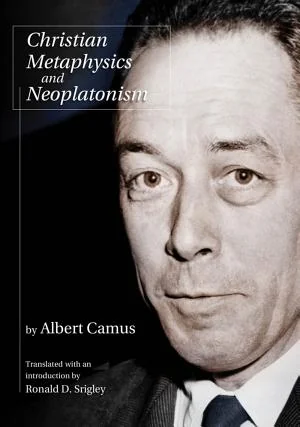
Christian Metaphysics and Neoplatonism
 81
81

Christian Metaphysics and Neoplatonism
Albert Camus's "Christian Metaphysics and Neoplatonism" offers a compelling, albeit dense, re-evaluation of his intellectual lineage. Rather than solely focusing on his existentialist output, this work, published posthumously in 2007, demonstrates Camus's deep engagement with the philosophical architecture of early Christianity and its Neoplatonic roots. His assertion that the transition from Hellenism to Christianity was "the true and only turning point in history" provides a strong interpretive frame. The book excels in meticulously tracing how ancient metaphysical concepts, particularly those of Plotinus, were absorbed and transmuted into Christian dogma, thereby shaping Western consciousness. A notable strength is the detailed analysis of the aspiration for a reoriented human existence, extending from political to religious life, a concept Camus clearly felt resonated with his own concerns. However, the work's academic rigor can also be its limitation; the prose is often abstract, demanding significant prior knowledge of both Neoplatonism and patristic thought. For instance, his exposition on the Christian adaptation of the Neoplatonic concept of 'the One' is particularly intricate. Ultimately, this is a crucial text for understanding the full spectrum of Camus's thought, revealing a philosopher deeply attuned to historical philosophical continuities.
📝 Description
81
Albert Camus's 2007 posthumous work examines Christian metaphysics through Neoplatonism.
Albert Camus's "Christian Metaphysics and Neoplatonism" investigates the philosophical foundations of Christianity as they were shaped by Neoplatonic thought. First published in 2007, the book analyzes how early Christian thinkers adopted and altered classical Greek philosophical concepts. Camus argues that this fusion of Hellenistic and Christian ideas marked a significant historical change, influencing the intellectual and spiritual development of the West.
The text explores the connections and breaks between ancient philosophy and the formation of Christian doctrine. It traces the intellectual lineage and transformations that occurred as Christian theology emerged. This work offers a detailed look at how metaphysical ideas from antiquity informed the early Christian worldview and theological systems. It is intended for serious academic study rather than casual reading.
This book emerges from Camus's deep consideration of historical philosophy, a facet often overshadowed by his fame as an existentialist writer. It engages with scholarship on the period of transition from classical antiquity to the Christian era. This was a time of intense intellectual activity, involving figures like Plotinus and the early Church Fathers. Camus saw this shift as a crucial moment in history, linking ancient philosophical aims with later Christian expressions.
This work situates itself within the history of ideas that bridge classical philosophy and religious thought. It examines how Neoplatonic concepts, such as emanation and the One, were reinterpreted within a Christian framework. This engagement with ancient metaphysical systems by early Christian writers can be seen as part of a broader tradition of philosophical theology. Such traditions often seek to reconcile or synthesize diverse intellectual currents to articulate spiritual or theological truths, demonstrating a continuity of philosophical inquiry into ultimate reality.
💡 Why Read This Book?
• Understand the philosophical lineage of Christian thought by examining its Neoplatonic roots, specifically how concepts like 'the One' were reinterpreted by early Christian thinkers. • Gain insight into Albert Camus's own intellectual development, appreciating his view of the Hellenistic-Christian transition as a pivotal "turning point in history" beyond his existentialist fame. • Explore the philosophical articulation of early Christian doctrines and their impact on societal reorientation, as discussed in the book's analysis of religious and political aspirations.
⭐ Reader Reviews
Honest opinions from readers who have explored this book.
❓ Frequently Asked Questions
When was Albert Camus's "Christian Metaphysics and Neoplatonism" first published?
Albert Camus's "Christian Metaphysics and Neoplatonism" was first published posthumously in 2007, long after the author's death in 1960.
What is the primary focus of Camus's "Christian Metaphysics and Neoplatonism"?
The book focuses on the philosophical connections between Neoplatonism and early Christian thought, arguing that this synthesis was a crucial historical turning point.
What ancient philosophical tradition does Camus connect with Christianity in this book?
Camus primarily connects Christianity with Neoplatonism, exploring how concepts from philosophers like Plotinus were integrated into Christian metaphysics.
Does this book discuss Camus's existentialist philosophy?
While it illuminates his intellectual background, the book's main focus is historical and philosophical, examining the pre-Christian and early Christian periods rather than Camus's later existentialist works.
Who would benefit most from reading "Christian Metaphysics and Neoplatonism"?
Scholars of philosophy, theology, late antiquity, and intellectual history, as well as readers interested in the deep roots of Western thought, would find this book particularly valuable.
What historical period does Camus identify as a key turning point?
Camus identifies the transition from Hellenism to Christianity as "the true and only turning point in history," a period he thoroughly examines in this work.
🔮 Key Themes & Symbolism
Hellenistic-Christian Synthesis
This work meticulously examines how classical Greek philosophical concepts, particularly those of Neoplatonism, were adopted, adapted, and integrated into the foundational doctrines of Christianity. Camus highlights this intellectual fusion not merely as an influence, but as a fundamental "turning point in history." He demonstrates how figures within the early Church wrestled with and reinterpreted Platonic and Neoplatonic ideas, such as the nature of the divine, the structure of reality, and the destiny of the soul, to articulate Christian theology. This synthesis laid the groundwork for much of subsequent Western philosophical and theological discourse.
The Reorientation of Human Life
Camus posits that the advent of Christianity, informed by Neoplatonic thought, represented a profound "reorientation of human life." This involved shifts in understanding humanity's place in the cosmos, the purpose of existence, and the ethical framework for living. The book explores how these philosophical underpinnings influenced both religious aspirations and political structures, suggesting that the intellectual currents of antiquity provided the vocabulary and conceptual tools for articulating these new visions of human existence and societal organization.
Neoplatonic Influence on Christian Doctrine
Central to the book is the detailed analysis of specific Neoplatonic doctrines and their impact on Christian metaphysics. Camus investigates how concepts like Plotinus's "the One," emanation, and the ascent of the soul were either adopted directly or transformed to fit Christian cosmology. This examination sheds light on the sophisticated philosophical work undertaken by early Christian thinkers to explain mysteries like the Trinity, the Incarnation, and salvation, using the advanced philosophical language available to them from the Hellenistic period.
Camus's Historical Perspective
This study reveals a less-discussed facet of Albert Camus's intellectual engagement: his deep consciousness of historical continuities and ruptures. Contrary to being solely a philosopher of the present, Camus viewed the transition from antiquity to Christianity as the essential historical event for understanding modernity. The book serves as evidence of his commitment to tracing the lineage of ideas, demonstrating how ancient aspirations, articulated through Neoplatonism, found their most potent expression in Christianity, thereby shaping the trajectory of Western civilization.
💬 Memorable Quotes
Direct passages from the work, attributed to the author.
“He called the transition from Hellenism to Christianity "the true and only turning point in history."”
— This statement, attributed to Camus, frames his entire analysis, positioning the Christian adoption of Hellenistic philosophy as the singular event that fundamentally altered Western historical and intellectual development, shaping all subsequent eras.
“These aspirations amounted to a fundamental reorientation of human life in politics, religion...”
— This concept highlights Camus's view that the philosophical shifts discussed had practical consequences, leading to a radical reimagining of not only spiritual beliefs but also the organization of society and the conduct of political life.
“Contemporary scholarship tends to view Albert Camus as a modern...”
— This opening observation sets up Camus's own historical consciousness, contrasting with how he is often perceived. It indicates the book will explore his engagement with the past, not just his engagement with the present.
“The book examines how classical philosophical concepts were adapted and transformed by early Christian thinkers.”
— This describes the core methodology of the work, focusing on the intellectual process by which ancient ideas were transmuted to form the basis of Christian metaphysics and theology.
💡 Key Ideas
Editorial paraphrase of the work's core concepts — not direct quotes.
Modernity was not fully comprehensible without an examination of the aspirations that were first articulated in antiquity and that later received their clearest expression in Christianity.
This paraphrase suggests Camus's belief that understanding contemporary thought requires looking back to ancient philosophical desires, particularly those found in Neoplatonism, which he saw as finding their most complete form within Christian frameworks.
🌙 Esoteric Significance
Tradition
This work engages with the Hermetic and Neoplatonic traditions, which are foundational to many Western esoteric lineages. While not a practitioner's manual, it dissects the philosophical architecture that early esoteric thinkers and later occultists would draw upon. Camus analyzes how Neoplatonic concepts of emanation, the divine One, and the soul's journey informed a worldview that sought understanding beyond the material, a core tenet in esoteric thought. It fits within the lineage by exploring the philosophical roots of spiritual cosmology.
Symbolism
The work implicitly engages with symbols inherent in Neoplatonism and early Christianity. 'The One' symbolizes ultimate, ineffable divine unity, a concept echoed in mystical traditions seeking direct experience of the divine. The 'ascent of the soul' symbolizes spiritual progression and purification, a motif vital in Gnostic and Hermetic paths. The adaptation of Platonic Forms into Christian theology reflects a symbolic reinterpretation of ideal realities as divine attributes or aspects of creation, mirroring esoteric views of hidden correspondences.
Modern Relevance
Contemporary thinkers in comparative religion, philosophy of religion, and esoteric studies continue to find value in Camus's analysis. His work is relevant to modern interpretations of Gnosticism, Hermeticism, and theosophy, which often trace their lineage through Neoplatonism and early Christian mysticism. Academics exploring the philosophical origins of consciousness studies and the perennial philosophy also draw on this understanding of how ancient metaphysics shaped Western spirituality and continues to inform contemporary seekers of deeper meaning.
👥 Who Should Read This Book
• Scholars of late antiquity and early Church history: They will find a rigorous examination of the philosophical dialogue that shaped Christian doctrine and Western thought. • Students of comparative philosophy and religion: This book offers clear insights into the complex interplay between Hellenistic and Christian metaphysical systems. • Readers interested in Albert Camus's intellectual breadth: Those familiar with his existentialist works will discover his profound engagement with the historical and philosophical roots of Western civilization.
📜 Historical Context
Albert Camus's "Christian Metaphysics and Neoplatonism," published in 2007, emerges from a rich scholarly tradition examining the intellectual bridge between late antiquity and early Christianity. The work situates itself against the backdrop of the 3rd and 4th centuries CE, a period dominated by the philosophical system of Neoplatonism, pioneered by Plotinus, and the burgeoning influence of Christianity. This era saw intense philosophical debate, with figures like Porphyry and Iamblichus developing Neoplatonic thought, while Church Fathers such as Origen and Augustine grappled with integrating Greek philosophy into Christian doctrine. Camus's perspective, viewing this synthesis as a singular "turning point," stands in dialogue with scholars who analyze the philosophical underpinnings of Christian dogma. The intellectual currents of this time were complex, with various pagan philosophical schools competing for intellectual dominance before Christianity became the state religion of the Roman Empire under Constantine, a period often termed the "Constantinian shift."
📔 Journal Prompts
The Neoplatonic concept of 'the One' and its Christian reinterpretation.
Camus's assertion of the Hellenistic-Christian transition as a singular historical turning point.
The aspiration for a fundamental reorientation of human life in politics and religion.
Tracing the philosophical lineage from antiquity to early Christian expression.
The role of philosophical concepts in articulating religious doctrines.
🗂️ Glossary
Neoplatonism
A philosophical system originating in the 3rd century CE, most notably associated with Plotinus, which developed Plato's ideas. It posits a hierarchical structure of reality emanating from an ultimate, ineffable 'One' and emphasizes mystical union with the divine.
The One
The supreme principle in Neoplatonism, representing absolute unity, simplicity, and the source from which all existence emanates. It is beyond being and comprehension, accessible only through mystical experience.
Emanation
In Neoplatonism, the process by which reality flows or proceeds from 'The One' in a hierarchical series of hypostases (like Intellect, Soul) without diminishing the source. This contrasts with creation ex nihilo.
Logos
A Greek term meaning 'word,' 'reason,' or 'principle.' In Hellenistic philosophy and early Christian theology, it refers to the divine reason or creative power through which God orders the universe. Early Christians identified Jesus Christ with the Logos.
Hellenism
The period and culture following the death of Alexander the Great (323 BCE), characterized by the spread of Greek language, art, and philosophy throughout the ancient world, often blending with local traditions.
Patristics
The study of the writings of the early Church Fathers, who were influential theologians and writers in the early Christian Church, often engaging with classical philosophy.
Metaphysics
A branch of philosophy that deals with the first principles of things, including abstract concepts such as being, knowing, substance, cause, identity, time, and space. It explores the fundamental nature of reality.
This book appears in 1 collection
🔮 Readers Also Liked
Browse all →









From the “Gnosticism” Collection
View all →
![Serrano Miguel Adolf Hitler The Ultimate Avatar [ 2000]](/img/thumb/serrano-miguel-adolf-hitler-the-ultimate-avatar-2000.webp)




More Free Occult Philosophy Books
View all →