The Shining

 78
78

The Shining
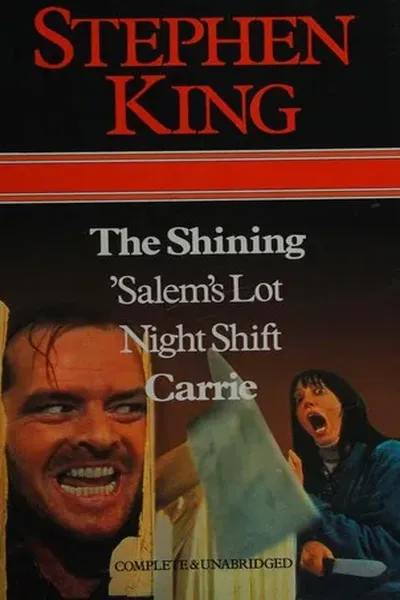
Stephen King’s *The Shining* frequently gets pigeonholed as mere horror, a narrative of a haunted hotel and a man’s descent into axe-wielding madness. However, the true power of the 1977 novel lies in its unnerving portrayal of psychic vulnerability and the corrupting influence of potent environments. The work brilliantly captures how a place can amplify latent weaknesses, a concept familiar to students of geomancy or psychogeography. Danny's 'shining' is not just a plot device; it’s a compelling depiction of extrasensory perception struggling against overwhelming negativity. The novel’s primary limitation, for the esoteric reader, is King’s relentless focus on Jack’s psychological unraveling, which sometimes overshadows the more subtle, almost elemental, nature of the Overlook’s malevolence. A particularly potent passage is when Jack, already succumbing to the hotel's whispers, is shown drinking with the spectral Grady, a chilling illustration of psychic possession. Ultimately, *The Shining* is an effective, if often unsubtle, exploration of psychic contagion and environmental influence, transcending its genre trappings.
📝 Description
78
Stephen King's 1977 novel *The Shining* tracks a family's breakdown at the isolated Overlook Hotel.
Jack Torrance, a recovering alcoholic writer, takes a winter caretaker position at the Overlook Hotel, bringing his wife Wendy and son Danny. Danny has psychic abilities, a gift King calls 'the shining'. As winter isolates them, the hotel's history and malevolent presence begin to affect Jack's sanity, amplifying his inner demons. Wendy struggles to protect herself and Danny from Jack's descent.
The narrative examines how an environment can interact with a person's psychological state. King weaves elements of addiction, domestic abuse, and the supernatural into a story that questions the nature of reality and the sources of evil. The Overlook Hotel itself acts as a character, its past traumas and spiritual residue influencing the present.
Published in 1977, *The Shining* arrived when popular culture showed a rising interest in the paranormal and psychological themes. The novel taps into broader fascinations with Jungian archetypes and the idea of places holding psychic energy. King's story, with its focus on Danny's precognition and the hotel's oppressive atmosphere, connects to traditions that consider how consciousness interacts with unseen forces. It speaks to occult ideas about residual hauntings and the mind's susceptibility to external influences.
💡 Why Read This Book?
• Gain insight into the concept of psychic sensitivity through Danny's 'shining,' understanding how such abilities might interact with deeply negative environments, as depicted in the Overlook Hotel. • Explore the idea of place as an active agent of corruption, a theme central to the hotel’s influence on Jack Torrance and his family, mirroring concepts found in psychogeography. • Witness a detailed fictional study of psychological breakdown exacerbated by perceived supernatural forces, offering a lens through which to examine the interplay between internal states and external pressures, particularly as explored in the novel's 1977 publication context.
⭐ Reader Reviews
Honest opinions from readers who have explored this book.
❓ Frequently Asked Questions
What is 'the shining' in Stephen King's novel?
'The shining' refers to Danny Torrance's psychic ability, a form of extrasensory perception that allows him to see the past and future, communicate telepathically, and sense the malevolent presence of the Overlook Hotel.
Is the Overlook Hotel based on a real place?
Stephen King was inspired by a stay at the Stanley Hotel in Estes Park, Colorado, in 1974, though the fictional Overlook Hotel in *The Shining* is a composite and exaggerated entity designed for narrative effect.
How does the novel differ from the 1980 film adaptation?
Stanley Kubrick's film adaptation, while iconic, significantly alters plot points and character interpretations. King himself has expressed reservations, noting the film downplays the supernatural elements and Jack's internal struggle with alcoholism, which are central to the 1977 novel.
What is the primary theme of The Shining?
The primary themes include the corrupting influence of place, the fragility of the human psyche under pressure, the cyclical nature of abuse and violence, and the struggle between free will and external forces, particularly for Jack Torrance.
Does Stephen King believe in ghosts?
While King has acknowledged his personal skepticism regarding literal ghosts, he often states that the 'ghosts' in his stories represent deeper psychological fears, unresolved trauma, or the lingering impact of past events and emotions.
What year was The Shining first published?
The Shining was first published in 1977 by Doubleday, marking a significant success in Stephen King's early career.
🔮 Key Themes & Symbolism
Psychic Sensitivity and Corruption
Danny Torrance's 'shining' is a manifestation of heightened psychic awareness, a capacity for precognition and telepathy. In the Overlook Hotel, this gift becomes a conduit for perceiving profound malevolence. The hotel's history of violence and despair doesn't just haunt its halls; it actively preys upon psychic sensitivity, threatening to overwhelm Danny and even influence his father. This theme explores how latent spiritual or psychic energies can be twisted and corrupted by environments saturated with negative psychic residue, a concept explored in various occult traditions concerning haunted locations.
The Corrupting Influence of Place
The Overlook Hotel is more than a setting; it functions as a malevolent entity in itself. Its isolation and history of bloodshed create a psychic miasma that amplifies the weaknesses of its inhabitants. Jack Torrance's struggles with alcoholism and temper are not merely internal issues; they are actively stoked by the hotel's influence, leading to his complete psychological disintegration. This concept aligns with ideas found in geomancy and psychogeography, where specific locations are believed to possess inherent energies that can affect human consciousness and behavior.
The Cycle of Violence and Addiction
Jack's battle with alcoholism and his violent past are central to his vulnerability. The novel suggests that addiction can act as a gateway for external negative forces, making the individual more susceptible to psychic manipulation and environmental corruption. The hotel's spectral inhabitants, particularly Delbert Grady, embody the destructive patterns that Jack is desperately trying to escape. This theme underscores how personal struggles can become entangled with larger, possibly supernatural, forces, perpetuating cycles of abuse and destruction across generations.
The Fragility of the Psyche
King masterfully depicts the thin veneer of sanity under extreme duress. The isolation of the winter caretaker job, coupled with the psychological pressures and the hotel's spectral intrusions, pushes Jack to the brink. Danny's precognitive visions and Wendy's growing terror highlight the psychological toll of their circumstances. The narrative examines how the mind can fracture when confronted with the uncanny, the isolation, and the amplification of personal demons, blurring the lines between psychological breakdown and genuine supernatural assault.
💬 Memorable Quotes
Direct passages from the work, attributed to the author.
“Danny saw the caretaker's broom and shovel standing against the wall. He saw the caretaker himself, coming up the stairs.”
— This represents Danny's precognitive 'shining' in action. He perceives future events or the presence of the hotel's spectral inhabitants through his psychic ability, demonstrating the intrusive and overwhelming nature of his gift within the hotel's oppressive environment.
“All work and no play makes Jack a dull boy.”
— Repeated ad nauseam by Jack, this phrase becomes a chilling mantra. It symbolizes his descent into obsessive madness, the erosion of his identity, and the hotel's insidious influence twisting a common saying into a threat, reflecting his own impending dullness or death.
“He heard the awful, joyous laughter of the hotel.”
— This personification of the hotel as actively experiencing 'joyous laughter' emphasizes its conscious malevolence. It portrays the building not as a passive haunted space, but as a living, delighted antagonist reveling in the unfolding tragedy.
💡 Key Ideas
Editorial paraphrase of the work's core concepts — not direct quotes.
The hotel had been empty for years. It was a place that held its breath, waiting.
This passage captures the essence of the Overlook as a dormant, malevolent entity. It suggests the hotel possesses a consciousness, a predatory patience, and an atmosphere thick with anticipation for victims whose psychic or emotional weaknesses it can exploit.
You're the party, Jack. You've always been the party.
Spoken by the spectral Grady, this line suggests that Jack's susceptibility to the hotel’s influence is not entirely external. It implies that the hotel merely amplifies pre-existing tendencies or a hidden desire within Jack to embrace chaos and violence.
🌙 Esoteric Significance
Tradition
While not explicitly tied to a single esoteric lineage, *The Shining* engages with themes resonant in Western esotericism, particularly concerning the influence of place and psychic sensitivity. It touches upon concepts found in traditions exploring the power of location (geomancy) and the potential for individuals with heightened awareness ('shining' akin to psychic gifts) to be influenced or corrupted by negative spiritual energies or environmental loci.
Symbolism
The Overlook Hotel symbolizes a nexus of negative psychic energy, a place where past traumas and violence have imprinted themselves onto the very fabric of reality, acting as a spiritual amplifier. Danny's 'shining' represents innate psychic potential, a form of clairvoyance or telepathy that, in this context, becomes a dangerous liability. The maze, a recurring motif, can symbolize the labyrinthine nature of the human psyche, the entrapment within one's own psychological or spiritual confusion, and the perilous journey towards (or away from) self-knowledge.
Modern Relevance
Contemporary discussions of psychogeography, the study of the psychological effects of geographical environments, often draw parallels with the Overlook's influence. Furthermore, explorations of psychic phenomena, trauma manifestation in physical spaces, and the impact of addiction on spiritual awareness find echoes in the novel's enduring appeal to those interested in the intersection of the psychological and the potentially supernatural.
👥 Who Should Read This Book
• Readers interested in psychological horror with a supernatural bent, who seek to explore how external environments can exacerbate internal psychological struggles. • Students of esoteric concepts like psychogeography or the influence of place, looking for fictional narratives that illustrate these ideas through compelling character arcs. • Those fascinated by depictions of psychic abilities and their potential downsides, particularly when confronted with overwhelming negative energies or historical trauma.
📜 Historical Context
Published in 1977, Stephen King's *The Shining* emerged during a cultural moment receptive to explorations of the supernatural and psychological horror. The late 1970s witnessed continued interest in the occult, fueled by New Age philosophies and a resurgence of interest in Jungian archetypes. King's novel tapped into this zeitgeist, offering a modern take on the haunted house trope that resonated with a public fascinated by the paranormal and the darker aspects of the human psyche. While authors like Shirley Jackson had previously explored similar themes of isolation and mental breakdown in domestic settings, King brought a contemporary, visceral edge. The novel's success solidified King's reputation, though its profound thematic depths were often overshadowed by its genre classification. Its reception was largely positive, contributing to the burgeoning popularity of horror as a significant literary and commercial force, a trend that would continue throughout the 1980s.
📔 Journal Prompts
The Overlook Hotel's capacity to amplify weakness: what personal vulnerabilities might such a place exploit?
Danny's 'shining': how does precognition function as both a warning and a burden?
The cyclical nature of violence: how does Jack's past addiction and temper feed the hotel's influence?
The maze as a symbol: what does entrapment in the Overlook's physical and psychological maze represent?
The horror of isolation: how does extreme solitude affect perception and sanity in the narrative?
🗂️ Glossary
The Shining
Danny Torrance's psychic ability, encompassing precognition, telepathy, and the capacity to sense paranormal presences and past events.
Overlook Hotel
The isolated, seemingly sentient hotel that serves as the primary antagonist, possessing a malevolent history that corrupts its inhabitants.
Psychic Residue
The lingering energetic imprint of past events, emotions, or traumas within a location, believed to influence the present.
Psychogeography
The study of the specific psychological effects of geographic environments on individuals and society.
Locus
A specific place or site, often considered to have unique spiritual or energetic properties.
Precognition
The ability to perceive or know future events.
Telepathy
Communication of thoughts or ideas by means other than the known senses.
🔮 Readers Also Liked
Browse all →









More by Stephen King
All books →



More Free Occult Philosophy Books
View all →