Sacred Sites--contested Rites/rights
 71
71

Sacred Sites--contested Rites/rights
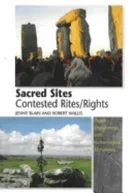
Jenny Blain's "Sacred Sites--contested Rites/rights" offers a sharp critique of how heritage is managed and perceived, particularly concerning its intersection with modern Paganism. Blain excels in demonstrating how contemporary spiritual practitioners view prehistoric sites not as inert relics but as living landscapes inhabited by deities and spirits. The book's strength lies in its detailed exploration of the ideological clashes between traditional heritage bodies and evolving spiritual interpretations of places like stone circles. A particularly compelling section discusses how Pagan identities actively contest assumptions of a 'closed' past. However, the work could benefit from a more explicit engagement with specific archaeological methodologies that might support or challenge the 'enchanted landscape' perspective. The core argument that heritage is a site of ongoing negotiation, rather than a settled domain, makes this a vital text for understanding the contemporary spiritual relationship with ancient British landscapes.
📝 Description
71
Jenny Blain's 2007 book challenges the static view of prehistoric British landscapes.
Published in 2007, Sacred Sites--contested Rites/rights examines how contemporary Pagan identities interact with the preservation of prehistoric sacred landscapes across the British Isles. Blain argues against treating heritage sites as unchanging relics. Instead, she proposes a living, spiritual perspective on these ancient places, seeing them not just as historical objects but as active sites of engagement with deities, ancestors, and the natural world.
The book speaks to those involved in heritage politics, especially individuals whose spiritual practices connect with pre-Christian terrains. Pagans, Druids, and other nature-based practitioners will find theoretical support for their relationship with ancient sites. Additionally, archaeologists interested in how public views, religious practices, and monument management intersect will find value in Blain's analysis.
This work addresses the tangible threats facing prehistoric monuments like stone circles and burial cairns, which have experienced economic pressures and debates over access and interpretation. It appeared as academic archaeology was beginning to consider the spiritual and experiential aspects of landscapes, diverging from more traditional, object-focused approaches.
This book is situated within contemporary Pagan studies, specifically focusing on the re-enchantment of the land. It engages with the idea that ancient sites are not merely historical markers but active spiritual centers. Blain's work connects with traditions that emphasize animism and the presence of spirits or 'wights' within the landscape, bridging academic discourse on heritage with lived spiritual practice.
💡 Why Read This Book?
• Understand the 'contested rites/rights' concept, learning how contemporary Pagan spiritualities actively reclaim and reinterpret prehistoric sites, moving beyond passive historical observation. • Gain insight into the 'enchanted landscape' perspective, appreciating how Pagans view ancient monuments like stone circles as actively inhabited by deities and 'wights,' fostering a living connection to the past. • Analyze the socio-politics of heritage preservation, recognizing how economic and political threats to sites discussed in the 2007 publication continue to influence modern spiritual access and interpretation.
⭐ Reader Reviews
Honest opinions from readers who have explored this book.
❓ Frequently Asked Questions
What is the primary argument of Sacred Sites--contested Rites/rights regarding prehistoric sites?
The book argues that contemporary Pagan identities contest the traditional, often 'closed' view of heritage, asserting instead that prehistoric sites like stone circles are part of a living, enchanted landscape with ongoing spiritual significance.
How does Jenny Blain's work address the 'rights' aspect of sacred sites?
Blain highlights the 'rights' of contemporary spiritual practitioners, particularly Pagans, to engage with and interpret these ancient places, challenging the exclusive domain often held by heritage institutions and academic archaeology.
What threats does the book mention concerning British prehistoric archaeology?
The book discusses socio-political and economic threats to prehistoric monuments, including stone circles and burial cairns, which are subject to development pressures and debates over access and interpretation.
Who are the 'wights' mentioned in relation to sacred sites?
'Wights' are non-human entities or spirits that, in the Pagan worldview presented, inhabit and animate ancient landscapes and prehistoric monuments, contributing to their living, enchanted character.
When was Sacred Sites--contested Rites/rights first published?
The book was first published in 2007, a period marked by the growing visibility of Paganism in Britain and ongoing discussions about heritage.
What is the 'enchanted landscape' concept explored in the book?
It's the idea that prehistoric sites and the surrounding natural environment are not merely historical artifacts but are imbued with spiritual presence, deities, ancestors, and non-human entities, forming a dynamic, living spiritual geography.
🔮 Key Themes & Symbolism
Contested Heritage and Spiritual Claims
The work critically examines how contemporary spiritual movements, particularly Paganism, actively challenge established notions of heritage. It illustrates how the interpretation and access to prehistoric sites are sites of ongoing negotiation, moving beyond a static, academic-only understanding. Blain emphasizes the 'rites' and 'rights' that Pagans assert in their engagement with these ancient landscapes, positioning them as living spiritual resources rather than mere historical relics.
The 'Enchanted Landscape' Paradigm
Central to Blain's thesis is the concept of the 'enchanted landscape,' where prehistoric monuments like stone circles are understood as integral parts of a vibrant, spiritually active environment. This perspective posits the presence of deities, ancestors, and 'wights' (non-human entities), fostering a dynamic relationship between practitioners and the land, distinct from purely archaeological or historical interpretations.
Pagan Identity and Place
The book explores how Pagan identities are intrinsically linked to specific sacred sites and landscapes within the British Isles. It details how Pagans construct their sense of self and spirituality through direct engagement with these ancient places, often perceiving them as imbued with a potent, living energy that influences contemporary spiritual practice and worldview.
Critique of 'Closed Past' Narratives
Blain confronts the tendency within heritage discourse to present the past as a fixed, inaccessible entity. She argues that this 'closed' narrative fails to account for the lived experiences and spiritual connections of contemporary groups. By advocating for an 'open' and 'enchanted' view, the book seeks to reintegrate these ancient sites into a living spiritual and ecological continuum.
💬 Memorable Quotes
Direct passages from the work, attributed to the author.
“Pagan identities and constructions of sacredness contest assumptions of a 'closed' past and untouchable heritage.”
— This highlights the core conflict: modern spiritualities that view ancient sites as living and accessible clash with official heritage frameworks that often treat them as historically sealed and off-limits to lived religious practice.
“Prehistoric archaeology... is itself subject to political and economic threats.”
— This points to the vulnerability of ancient sites, not just to physical decay, but to external forces like development and funding cuts, which impact how these places are preserved and accessed by all groups.
“Pagans see prehistoric monuments in a living, enchanted range of deities, ancestors, spirits, 'wights,' and other non-human age”
— This captures the Pagan perspective where ancient stones are not just objects but active participants in a spiritually vibrant environment, connecting contemporary practitioners to a wider network of beings and forces.
“Paganism is held to be the fastest growing 'religion' in Britain today.”
— This contextualizes the book's focus, indicating the growing social and spiritual significance of Paganism, which necessitates a re-evaluation of how its adherents interact with and perceive historical and sacred landscapes.
“the stone circles, burial cairns, and rock art of the British Isles”
— These specific examples ground the discussion in tangible archaeological contexts, illustrating the types of sites that are central to the book's exploration of contested heritage and spiritual landscapes.
🌙 Esoteric Significance
Tradition
While not strictly aligned with a single established esoteric lineage like Hermeticism or Theosophy, Blain's work resonates strongly with modern animistic and shamanic traditions. It draws upon and validates indigenous and nature-based spiritual perspectives that perceive the world as alive with spirit and interconnectedness. The book fits within the broader contemporary esoteric movement that seeks to reconnect with pre-Christian European roots and earth-centered spirituality.
Symbolism
The primary symbols are the prehistoric sites themselves: stone circles, burial cairns, and rock art. These function as potent symbols of deep time, ancestral connection, and the enduring power of the land. They represent portals to the sacred, embodying the 'enchanted landscape' where deities, spirits, and 'wights' are perceived to reside, acting as focal points for ritual and spiritual communion.
Modern Relevance
Contemporary Pagan and Druid leaders and practitioners frequently reference the importance of sacred sites and the need for respectful engagement. Thinkers exploring ecospirituality, landscape phenomenology, and the revitalization of indigenous European traditions often draw upon the principles discussed in Blain's work to articulate the spiritual significance of ancient places in the modern world.
👥 Who Should Read This Book
• Contemporary Pagan and nature-based spiritual practitioners seeking to understand the theoretical basis for their connection to ancient sites and the politics of heritage. • Archaeologists and heritage professionals interested in engaging with the spiritual and experiential dimensions of prehistoric landscapes and the perspectives of living communities. • Scholars of religion and sociology examining the rise of new religious movements and their relationship with historical sites and cultural memory.
📜 Historical Context
First published in 2007, Jenny Blain's "Sacred Sites--contested Rites/rights" emerged during a period of increasing visibility for contemporary Paganism in Britain, often cited as the fastest-growing 'religion'. This was also a time when academic archaeology was undergoing theoretical shifts, with some scholars beginning to engage with landscape archaeology and phenomenology, though often distinct from the spiritual interpretations Blain explores. The book directly addressed the socio-political pressures on prehistoric monuments – such as stone circles and burial cairns – which faced threats from development and competing claims over access and meaning. Blain's work implicitly engaged with, and often critiqued, the dominant heritage management discourse, which tended towards a more conservationist and historically detached approach, contrasting with the living spiritual engagement advocated by Pagan practitioners.
📔 Journal Prompts
The concept of the 'enchanted landscape' in relation to a specific site you know.
Contesting assumptions of a 'closed' past for a personal memory.
The political and economic threats facing contemporary sacred sites.
Your own 'rites' and 'rights' when engaging with ancient places.
Identifying 'wights' or non-human presences in your environment.
🗂️ Glossary
Wights
A term used in some Pagan and Heathen traditions to refer to spirits or non-human entities that inhabit specific places, landscapes, or natural phenomena.
Enchanted Landscape
A worldview or perspective that perceives natural and ancient sites as imbued with spiritual presence, energy, and consciousness, rather than being inert or solely historical.
Contested Rites/Rights
The idea that contemporary spiritual practices and the rights of modern practitioners to engage with ancient sacred sites are often in conflict with established heritage management and historical interpretations.
Closed Past
A notion of history and heritage that treats the past as a fixed, inaccessible entity, often detached from living spiritual or cultural engagement.
Prehistoric Archaeology
The study of human history before the advent of written records, focusing on material remains like stone circles, burial cairns, and rock art found in regions like the British Isles.
Paganism
A broad term for contemporary nature-based or earth-centered spiritualities that often draw inspiration from pre-Christian European traditions, characterized by a reverence for the natural world and polytheistic or animistic beliefs.
Heritage
The traditions, achievements, and beliefs that are part of the history of a group or country; in this context, referring specifically to the preservation and interpretation of ancient sites.