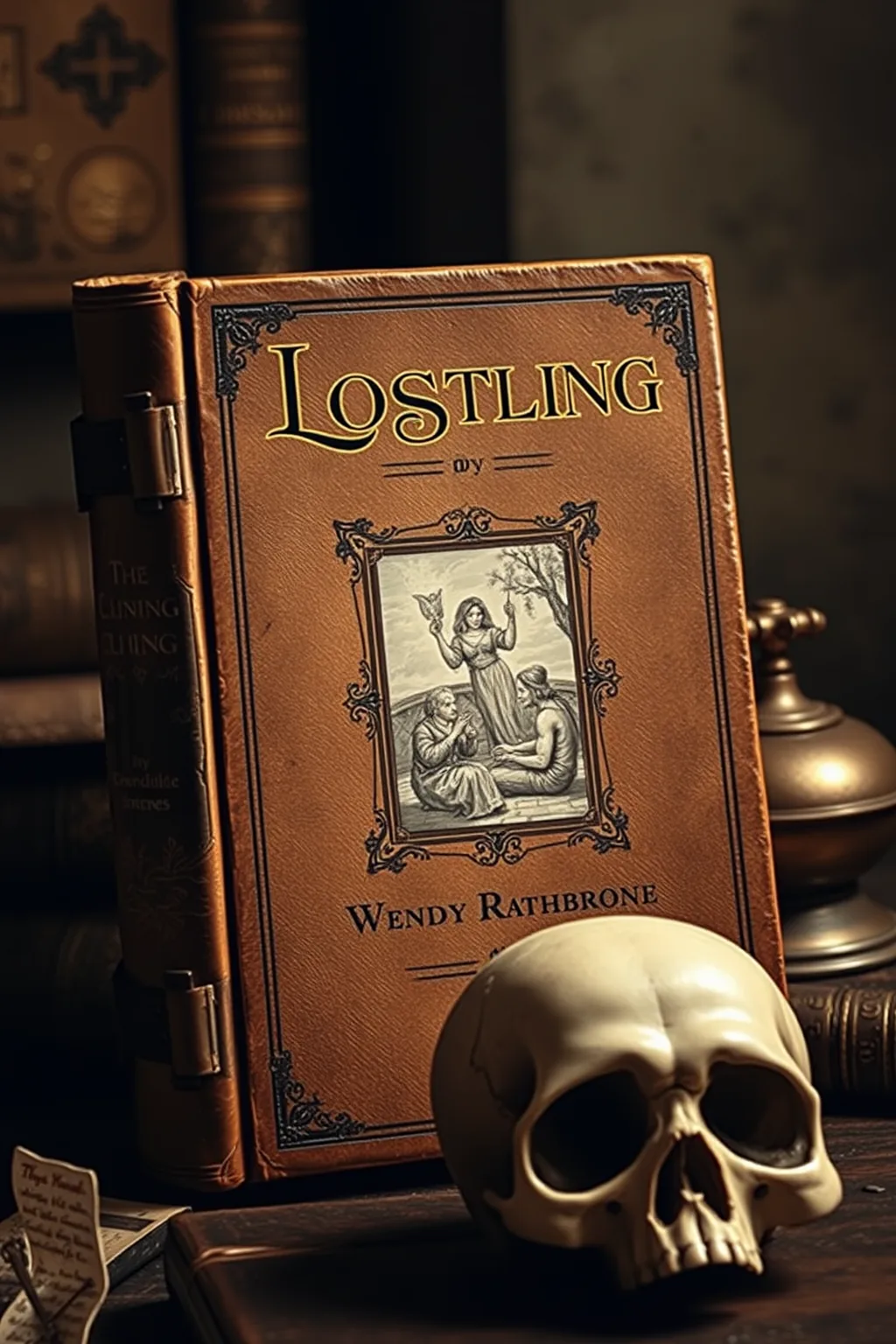
Lostling
 61
61

Lostling



Isolde Whitaker (Sacred Texts Editor) — Wendy Rathbone's 'Lostling' is a masterful exploration of the liminal spaces where desire meets divination. The novel's strength lies in its unflinching gaze into the esoteric undercurrents of human connection, particularly within the gay erotic spectrum. Rathbone employs a rich tapestry of symbolism, drawing parallels between tarot archetypes and the characters' unfolding destinies. This is not just erotica; it's a deeply philosophical inquiry into self-discovery and the acceptance of one's shadow self, presented through a narrative that is both compelling and spiritually charged. Ideal for seasoned practitioners and curious minds alike, 'Lostling' offers a unique lens through which to view the interplay of fate, freedom, and forbidden knowledge.
📝 Description
61
Wendy Rathbone's 2016 novel Lostling examines the occult through a narrative of shadowed destinies.
Lostling plunges readers into a world where the mundane brushes against the mystical. The novel follows characters who confront their own hidden fates and the pervasive connections between all elements of existence. It is a work that demands attention from those curious about the hidden forces governing life.
The narrative invites contemplation on identity, intuition, and the power of accepting an unconventional path. Rathbone blends sensuality with metaphysical ideas, creating a unique atmosphere. It is a story for those drawn to the forbidden and the sacred interplay of desire and the divine. The book does not shy away from potent imagery or complex themes.
This novel engages with Western esotericism, touching on themes often found in occult literature. It explores the idea of hidden forces influencing human lives, a common motif in traditions like Hermeticism or certain strands of ceremonial magic. The narrative's focus on the thin veil between the ordinary and the extraordinary, and characters grappling with their inner and outer worlds, resonates with magical thinking and the search for deeper meaning beyond material reality.
💡 Why Read This Book?
Embark on a journey of self-discovery where tarot symbolism intertwines with raw human passion. 'Lostling' offers a unique, esoteric lens into the complexities of desire, destiny, and the hidden currents of existence. Ideal for seekers of mystical narratives, practitioners of divination, and anyone drawn to literature that explores the sacred dimensions of love and identity. Uncover profound insights and embrace the transformative power of embracing one's authentic self.
⭐ Reader Reviews
Honest opinions from readers who have explored this book.
❓ Frequently Asked Questions
What are the primary esoteric themes explored in 'Lostling'?
'Lostling' delves into themes of fate versus free will, the archetypal journey, the power of intuition, and the alchemical transformation of the self. It uses tarot imagery as a framework to explore these profound concepts.
Is 'Lostling' suitable for readers new to esoteric literature?
While rich in esoteric depth, 'Lostling' is also a compelling narrative. Newcomers may find the immersive storytelling an engaging entry point into mystical themes, with the symbolism unfolding organically through the plot.
How does the erotic element contribute to the book's esoteric nature?
The erotic elements in 'Lostling' are not merely titillating; they represent the raw, primal energies of desire and connection, which are central to many esoteric traditions. This passion becomes a catalyst for spiritual awakening and self-understanding.
What role does divination, specifically tarot, play in the narrative?
Tarot serves as a narrative and symbolic backbone in 'Lostling.' The cards' archetypes and meanings are woven into the characters' lives, guiding their choices, revealing hidden truths, and mirroring their internal journeys.
What kind of reader will most appreciate 'Lostling'?
Readers who appreciate literary fiction with a strong spiritual and mystical undercurrent, particularly those interested in gay fiction, erotica, and the symbolic language of divination, will find 'Lostling' deeply rewarding.
🔮 Key Themes & Symbolism
The Alchemical Journey of Self
Fundamentally, , 'Lostling' explores the profound alchemical process of self-transformation. Characters navigate their inner landscapes, confronting shadows and integrating fragmented aspects of their psyche. This journey mirrors the ancient alchemical pursuit of turning base metals into gold, symbolizing the transmutation of the ordinary self into a more enlightened and integrated being. The novel suggests that true liberation comes from embracing all facets of one's identity, including the often-suppressed desires and hidden potentials, leading to a profound spiritual awakening.
Tarot as a Labyrinth of Fate and Free Will
The intricate symbolism of tarot cards acts as both a map and a mirror within 'Lostling.' Rathbone masterfully employs archetypes and spreads to illuminate the characters' destinies, but crucially, it is their choices within these divinatory frameworks that truly define them. The book posits that while the universe may offer signs and portents, the power to shape one's path ultimately lies in conscious decision-making. This creates a compelling dialogue between predetermined fate and the agency of the individual soul.
The Sacredness of Desire and Connection
Contrary to conventional views, 'Lostling' elevates desire and intimate connection to a spiritual plane. The erotic encounters are portrayed not just as physical acts, but as profound exchanges of energy and soul-communion, often mirroring the archetypal union of divine masculine and feminine principles. This perspective suggests that embracing one's sensuality and forging deep, authentic bonds can be a powerful path to spiritual growth and self-realization, revealing the sacred within the seemingly profane.
💬 Memorable Quotes
Direct passages from the work, attributed to the author.
“The cards whispered secrets only the brave dared to hear.”
— This highlights the inherent risk and reward in seeking divinatory knowledge, suggesting that true wisdom often lies beyond comfort zones.
“Desire, a raw current, pulled him towards an unknown shore.”
— This evokes the primal power of longing as a guiding force, leading towards transformative experiences and uncharted territories of the self.
“He saw his own shadow reflected in the moon's pale eye.”
— A poignant image of self-reflection and confrontation with one's darker, unacknowledged aspects, illuminated by the mystical light of the moon.
“The labyrinth of the heart held more truths than any map.”
— This emphasizes the internal, intuitive wisdom of emotional experience over external guidance, positioning the heart as the ultimate source of profound understanding.
“In the stillness, the universe breathed its ancient song.”
— This speaks to the profound spiritual revelation found in moments of deep quietude, connecting the individual to the cosmic rhythm and universal consciousness.
🌙 Esoteric Significance
Tradition
While not strictly adhering to a single doctrine, 'Lostling' draws heavily from Jungian archetypes, Hermetic principles of correspondence, and the symbolic language of Western esotericism, particularly the Tarot. It echoes Gnostic ideas of hidden knowledge and the pursuit of gnosis (spiritual insight) through personal experience and often unconventional means. The narrative emphasizes the interconnectedness of the microcosm (individual) and the macrocosm (universe), a core tenet found in numerous mystical traditions.
Symbolism
The novel is rich with symbolism, with the Tarot serving as a central interpretive framework. Archetypes like The Fool, The Lovers, and The Hermit are woven into the characters' journeys, representing stages of initiation, union, and introspection. The moon, shadows, labyrinths, and water frequently appear, symbolizing the unconscious, hidden aspects of the psyche, complex paths of self-discovery, and emotional depths, respectively. These elements combine to create a multi-layered symbolic language that invites deep contemplation.
Modern Relevance
'Lostling' speaks profoundly to contemporary seekers grappling with identity, spirituality, and authentic connection in a complex world. Its exploration of desire as a spiritual force appeals to modern movements that seek to de-stigmatize sexuality and integrate it into a holistic understanding of the self. The novel offers a potent antidote to spiritual materialism, emphasizing inner transformation and the power of symbolic understanding in navigating life's challenges and finding meaning beyond the superficial.
👥 Who Should Read This Book
This novel is a treasure for the discerning reader. Beginners to esoteric studies will find a compelling narrative that gently introduces profound concepts through relatable characters and vivid storytelling. Scholars of comparative religion and mythology will appreciate the nuanced exploration of archetypes and symbolic systems. Seekers of spiritual awakening will be drawn to its exploration of self-transformation and the sacred nature of desire. Practitioners of divination, particularly tarot enthusiasts, will delight in the intricate way these tools are integrated into the narrative, offering new perspectives on their practice and personal insights.
📜 Historical Context
Wendy Rathbone's 'Lostling' emerges from a contemporary literary landscape that increasingly embraces hybrid genres and challenges traditional boundaries. Written in the early 21st century, the novel reflects a growing openness to exploring spirituality, sexuality, and identity in tandem. This era has seen a resurgence of interest in esoteric traditions, occult studies, and diverse forms of divination, moving them from the fringes into more mainstream discourse. The book also aligns with a wave of LGBTQ+ literature that looks at complex psychological and spiritual dimensions, moving beyond simple representation to explore the unique lived experiences and inner worlds of its characters. Rathbone’s work contributes to this wide range by seamlessly blending potent eroticism with profound metaphysical inquiry, mirroring a broader cultural shift towards embracing the many-sided nature of human existence.
📔 Journal Prompts
Reflect on a time when your own desires led you towards an unexpected, transformative path. What did you learn?
Consider a Tarot card that resonates deeply with your current life situation. How can its symbolism guide your next steps?
Explore the concept of 'shadow work.' What aspects of yourself do you tend to suppress, and what might be gained by acknowledging them?
How does the idea of 'fate versus free will' play out in your own life? Where do you feel most agency, and where do you feel guided?
Write about a connection you've experienced that felt deeply spiritual or alchemical, transcending mere physical attraction.
🗂️ Glossary
Alchemy
An ancient practice aiming at the transmutation of base metals into gold, often interpreted metaphorically as the spiritual purification and transformation of the human soul.
Archetype
Universal, primordial patterns of the human psyche that influence our thoughts, feelings, and behaviors, often represented by figures in myths, dreams, and symbols like those in Tarot.
Gnosis
Spiritual knowledge or insight, particularly that which is mystical and experiential, leading to salvation or enlightenment. Central to Gnostic traditions.
Liminal Space
A threshold or transitional phase, often characterized by uncertainty and the potential for profound change. It is a space 'in-between' established states.
Microcosm/Macrocosm
The principle that the human being (microcosm) is a reflection of the universe (macrocosm), and vice versa, suggesting a fundamental interconnectedness.
This book appears in 3 collections
🔮 Readers Also Liked
Browse all →









More by Wendy Rathbone
All books →
From the “Tarot” Collection
View all →









More Free Divination & Tarot Books
View all →



![Arcana philosophica [sic] or, Chymical secrets](/img/thumb/arcana-philosophica-sic-or-chymical-secrets-john-headrich.webp)