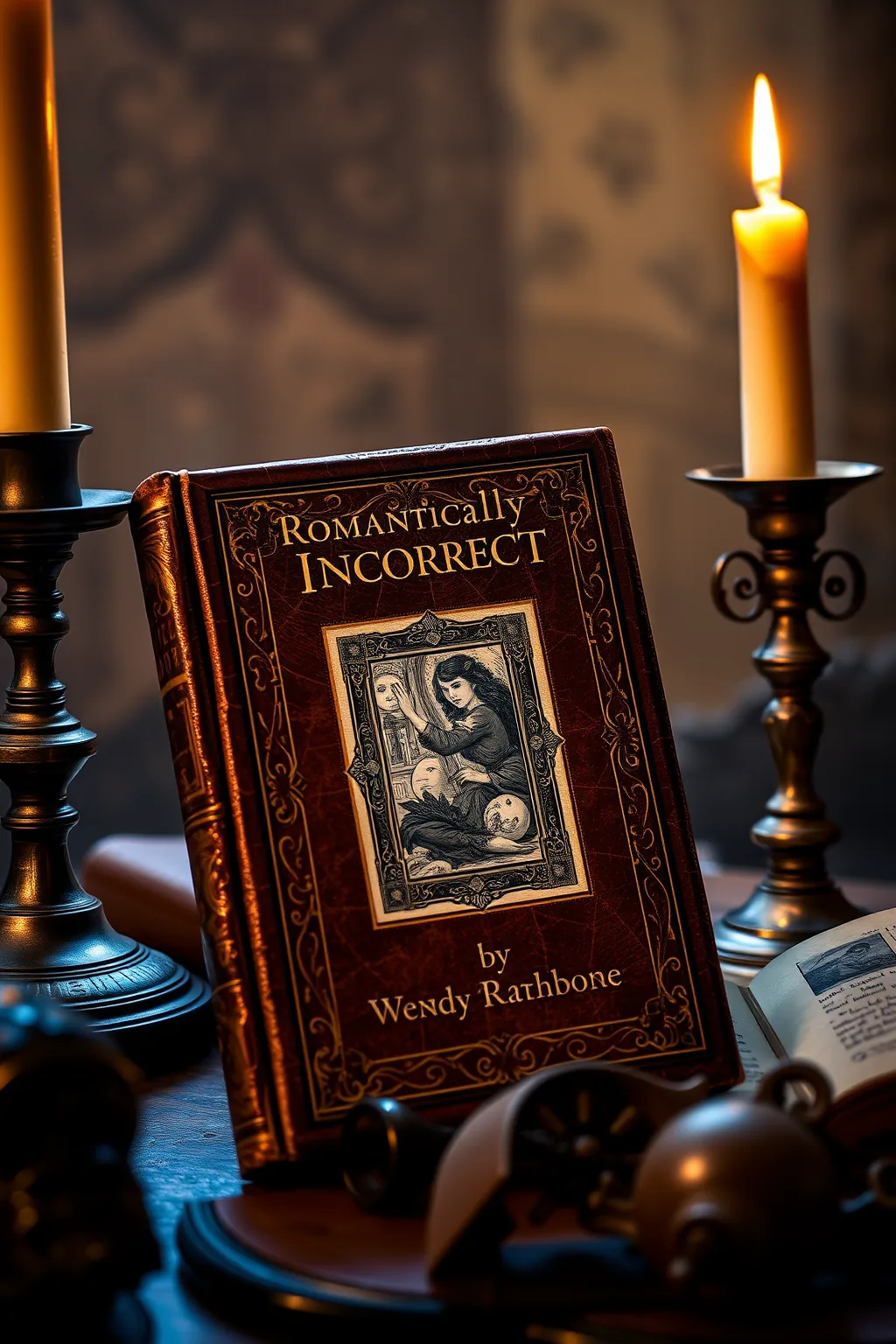
Romantically Incorrect
 61
61

Romantically Incorrect



Aurelia Blackwood (Occult Philosophy Critic) — 'Romantically Incorrect' is a bold exploration of the intersection between Eros and the esoteric arts. Wendy Rathbone skillfully imbues her narrative with a palpable sense of mystical inquiry, using the archetypal language of the Tarot to illuminate the complexities of human relationships and personal transformation. The erotic elements serve as a powerful, primal force, mirroring the raw energies often explored in occult traditions. This book will resonate deeply with readers who appreciate a sophisticated fusion of sensuality, spirituality, and the pursuit of hidden knowledge. It’s a compelling read for those who understand that the deepest truths can often be found in the most unexpected, and indeed, 'incorrect' places, offering a unique perspective on divination and desire.
📝 Description
61
Wendy Rathbone's 'Romantically Incorrect' (2014) examines desire as a spiritual catalyst.
Wendy Rathbone's 2014 novel, 'Romantically Incorrect,' approaches the themes of desire and destiny through an esoteric lens. The narrative follows characters as they interact with tarot symbolism, seeking insights into human connection and hidden truths. Rathbone uses eroticism as a tool to unlock primal energies and explore the dynamics of attraction and fate.
The book positions desire not just as a personal experience but as a force capable of spiritual illumination and self-knowledge. It invites readers to consider how longing can act as a guide toward liberation. The work is written for those interested in unconventional explorations of love and the self, blending sensuality with spiritual inquiry.
This novel situates itself within traditions that view sexuality and desire as integral to spiritual development, rather than separate from it. Similar to alchemical or tantric perspectives, it suggests that the energies associated with attraction and longing can be harnessed for personal transformation and self-discovery. The use of tarot further grounds it in divination practices common in modern esotericism, linking symbolic interpretation to the unfolding of personal destiny.
💡 Why Read This Book?
Discover a unique fusion of eroticism and divination, where tarot symbolism unlocks profound personal insights and forbidden desires become pathways to spiritual awakening. Ideal for seekers of unconventional wisdom, scholars of esoteric fiction, and practitioners exploring the interconnectedness of love, destiny, and hidden knowledge. Experience a narrative that challenges norms and illuminates the sacred within sensuality.
⭐ Reader Reviews
Honest opinions from readers who have explored this book.
❓ Frequently Asked Questions
What is the primary esoteric element in 'Romantically Incorrect'?
The primary esoteric element is the integrated use of Tarot symbolism, which acts as a guiding force and a source of hidden knowledge for the characters, mirroring real-world divination practices.
Who is the intended audience for this book?
This book is intended for adult readers who appreciate literary fiction that blends erotic themes with mystical and philosophical explorations, particularly those interested in tarot, divination, and unconventional relationships.
How does the erotic content relate to the esoteric themes?
The erotic content is presented not just for titillation, but as a manifestation of primal energy and a potent catalyst for self-discovery and spiritual awakening, mirroring concepts found in various esoteric traditions.
Does the book offer practical advice on Tarot reading?
While the book uses Tarot symbolism extensively, it is primarily a fictional narrative. It offers insight into the archetypal meanings and their application in personal journeys rather than a practical guide to reading cards.
What makes 'Romantically Incorrect' stand out from other erotic or mystical fiction?
Its unique strength lies in the seamless integration of overt eroticism with deep dives into Tarot archetypes and their philosophical implications, creating a narrative that is both sensually charged and intellectually stimulating.
🔮 Key Themes & Symbolism
Tarot as Destiny's Compass
The narrative masterfully employs the archetypal imagery and divinatory wisdom of the Tarot not merely as a plot device, but as a profound symbolic language. Each card drawn and interpreted by the characters serves as a mirror to their inner states, a predictor of unfolding events, and a guide through the intricate maze of their desires and destinies. This theme explores how ancient symbols can illuminate personal paths, revealing hidden currents of influence and offering useful insights into the choices and consequences that shape our lives, urging readers to consider the universal archetypes that govern human experience.
The Sacredness of Sensual Awakening
Beyond mere eroticism, 'Romantically Incorrect' posits desire as a potent spiritual force, a sacred fire that ignites self-awareness and fosters transformation. The intimate encounters within the story are depicted as conduits for unlocking primal energies, breaking down societal inhibitions, and connecting with the raw, untamed aspects of the self. This theme looks at the idea that true liberation and deeper understanding can be found by embracing, rather than suppressing, one's sensual nature, viewing pleasure and connection as integral to spiritual growth and the pursuit of authentic being.
Navigating Forbidden Connections
This theme explores the allure and complexity of relationships that defy conventional norms, looking at the magnetic pull of attraction that exists outside societal expectations. The characters' journeys are marked by their willingness to explore connections that might be deemed 'incorrect' by societal standards, highlighting the idea that authentic desire often transcends rigid boundaries. It suggests that within these unconventional bonds lie opportunities for profound self-discovery and the challenging of preconceived notions about love, intimacy, and the very definition of what constitutes a meaningful connection.
💬 Memorable Quotes
Direct passages from the work, attributed to the author.
“Desire is the oldest magic, a fire that illuminates the dark.”
— This highlights the powerful, primal nature of desire, framing it as a fundamental force capable of revealing hidden truths and guiding one through life's obscurities.
“In the spaces between touch, the universe whispers its secrets.”
— This poetic line emphasizes the profound intimacy and spiritual connection that can be found in physical closeness, suggesting that true understanding can emerge from shared sensuality.
“The most incorrect choices often lead to the most correct truths.”
— This expresses the book's provocative premise, suggesting that defying societal norms and embracing the unconventional can be the most direct route to authentic self-discovery and profound realization.
💡 Key Ideas
Editorial paraphrase of the work's core concepts — not direct quotes.
The cards don't lie, they simply show the paths before you.
This quote underscores the book's central theme of tarot as a tool for understanding destiny and choice, suggesting that divination reveals potential futures rather than dictating them.
We are all seeking a mirror for our deepest selves.
This quote speaks to the universal human need for connection and validation, suggesting that relationships, even unconventional ones, are often driven by a quest for self-understanding and acceptance.
🌙 Esoteric Significance
Tradition
The esoteric underpinnings of 'Romantically Incorrect' draw heavily from Western Esotericism, particularly its engagement with Tarot archetypes. The narrative mirrors practices found in traditions like Hermeticism and Kabbalah, where symbols are not merely decorative but represent cosmic principles and stages of spiritual development. The emphasis on desire as a transformative force also aligns with certain Gnostic and alchemical concepts, viewing the material and sensual world as a crucible for spiritual refinement and awakening, suggesting that the path to enlightenment can be found through embracing, rather than rejecting, earthly passions.
Symbolism
The Tarot serves as the central symbolic language, with each card's archetypal meaning deeply woven into the characters' journeys and the narrative's unfolding destiny. Beyond the Tarot, the book employs rich sensual imagery and metaphors to represent primal energies, the interplay of light and shadow within the psyche, and the transformative power of intimacy. These symbols collectively function to illustrate the interconnectedness of the physical and spiritual realms, suggesting that the mundane act of desire can be a profound gateway to understanding the deeper, often hidden, currents of existence.
Modern Relevance
In a contemporary landscape often characterized by both hyper-connectivity and profound isolation, 'Romantically Incorrect' offers a potent exploration of authentic human connection and self-acceptance. Its willingness to challenge societal norms around relationships and sexuality appeals to modern discussions on identity and liberation. Furthermore, its sophisticated use of Tarot symbolism provides an accessible entry point for individuals seeking to understand esoteric concepts within a relatable, narrative context, demonstrating the enduring relevance of ancient wisdom in reading through the complexities of modern life and personal growth.
👥 Who Should Read This Book
This book is a compelling read for several distinct groups. For **beginners** interested in the esoteric, it offers an engaging narrative that subtly introduces Tarot symbolism and the idea of desire as a spiritual path. **Scholars** of literature and occult studies will appreciate its nuanced integration of eroticism with divinatory arts and its contribution to contemporary queer fiction. **Seekers** of unconventional wisdom and spiritual exploration will find its philosophical depth and provocative themes immensely rewarding. Finally, **practitioners** of divination or those exploring the intersection of sexuality and spirituality may find new perspectives and resonant insights within its pages.
📜 Historical Context
While 'Romantically Incorrect' is a contemporary work, its thematic resonance can be traced to a wide range of historical and literary traditions. The exploration of desire as a spiritual force reflects the mystical traditions of Sufism and Tantra, which view eroticism as a pathway to the divine. The use of tarot as a narrative and divinatory tool connects to its 18th-century origins and its subsequent adoption by occultists and artists throughout the 19th and 20th centuries, notably within movements like the Hermetic Order of the Golden Dawn and later, occult-inspired literary circles. The novel also engages with the burgeoning queer literature of recent decades, which has increasingly sought to reclaim and redefine narratives of love, intimacy, and self-expression, often challenging traditional societal structures and exploring the liberating potential of non-normative relationships.
📔 Journal Prompts
Reflect on a time when a seemingly 'incorrect' choice led you to a profound truth. How did this experience shape your understanding of yourself?
Consider the archetype of one of the Tarot cards presented in the book that appeals to your current life situation. What message does it hold for you?
Explore the concept of desire as a spiritual force. In what ways can embracing your desires lead to personal growth and self-discovery?
How do societal norms influence our understanding of love and connection? Where do you feel these norms are most restrictive, and where do they offer guidance?
Write about a time when you felt a deep, almost mystical connection with another person. What elements contributed to this profound sense of union?
🗂️ Glossary
Archetype
In Jungian psychology and esoteric thought, a universal, inherited pattern of thought or image derived from the life experience of humankind, present in the collective unconscious and manifesting in symbols, myths, and dreams.
Divination
The practice of seeking knowledge of the future or the unknown by supernatural means, often through tools like Tarot cards, astrology, or runes.
Esotericism
A broad category of spiritual or mystical traditions, beliefs, and practices that are concerned with the inner spiritual life and often involve secret or hidden knowledge passed down through initiation.
Hermeticism
A spiritual, philosophical, and esoteric tradition based on writings attributed to Hermes Trismegistus, emphasizing the unity of all things and the principle of 'as above, so below'.
Tantra
A complex spiritual tradition originating in India that often involves rituals, meditation, and the use of sensory experiences, including sexuality, as a means of spiritual realization and liberation.
This book appears in 3 collections
🔮 Readers Also Liked
Browse all →









More by Wendy Rathbone
All books →
From the “Tarot” Collection
View all →






More Free Divination & Tarot Books
View all →