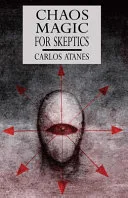
Chaos Magic For Skeptics
 74
74

Chaos Magic For Skeptics
Carlos Atanes's "Chaos Magic For Skeptics" attempts to demystify a potent, if often misunderstood, magical current. The book's strength lies in its accessible prose and its direct address to the skeptical mind, framing magical concepts in a way that invites rational inquiry rather than blind faith. Atanes avoids the typical esoteric jargon, which is refreshing. A notable passage discusses the creation and use of sigils, explaining their psychological underpinnings rather than relying solely on arcane lore. However, the book occasionally feels more like an extended essay than a comprehensive guide; some readers might desire deeper dives into specific techniques or historical lineages that influenced Chaos Magic. The work's primary limitation is its brevity, leaving certain avenues of exploration feeling somewhat curtailed. Nevertheless, for its attempt to bridge the gap between the occult and rationalism, "Chaos Magic For Skeptics" offers a valuable, albeit concise, introduction.
📝 Description
74
Carlos Atanes's Chaos Magic For Skeptics (2013) argues for the practical efficacy of a contemporary occult movement.
This book examines Chaos Magic, an occult movement that began in the late 20th century. Atanes breaks down its basic theories, methods, and advantages, aiming to reach both newcomers and experienced practitioners. He advocates for a way of working that is both intellectually sound and useful in practice, questioning standard occult ideas. The book is suitable for those already involved in occult studies, offering fresh views on a movement that has changed modern esotericism. It also invites people who tend to be skeptical, giving a clear introduction to Chaos Magic's principles and effectiveness. It asks for an open mind and a readiness to question established beliefs, whether they are mystical or material.
Atanes places Chaos Magic within its historical setting, showing its impact since its start in the late 20th century. He points out the movement's countercultural origins and how it differed from older, more structured magical traditions. The work notes the intellectual atmosphere that allowed for this shift, especially the growing interest in postmodern ideas and their challenge to large, unifying theories. Central to the book is an analysis of Chaos Magic's main ideas, such as using belief as a tool, the changeable nature of magical systems, and the power of altered states of consciousness. It shows how practitioners use sigils, gnosis, and ritual, often borrowing from various sources without strict rules. The book supports the effectiveness of these techniques, even from a skeptical viewpoint, by focusing on noticeable outcomes and psychological processes.
Chaos Magic emerged in the late 20th century as a reaction against established magical systems. It emphasizes practical results and the subjective nature of belief, drawing from a wide array of esoteric traditions without adhering to dogma. This approach often incorporates elements of postmodern philosophy, questioning grand narratives and fixed systems of knowledge. Atanes's work situates this movement within that context, highlighting its experimental and adaptive nature.
💡 Why Read This Book?
• Gain an understanding of sigil magic, a core Chaos Magic technique, as presented in the "Key Concepts" section, allowing you to explore practical applications for personal change. • Grasp the historical emergence of Chaos Magic in the late 20th century, as detailed in "Historical Context," to appreciate its disruptive role and its departure from older occult traditions. • Learn how the book frames magical efficacy through a pragmatic lens, as discussed in "What It Is," providing tools to evaluate esoteric practices without necessarily requiring belief in supernatural forces.
⭐ Reader Reviews
Honest opinions from readers who have explored this book.
❓ Frequently Asked Questions
When was Chaos Magic For Skeptics first published?
Chaos Magic For Skeptics by Carlos Atanes was first published on October 31, 2022. This date marks its entry into the discourse on contemporary esoteric practices.
What is the primary goal of Chaos Magic as presented in the book?
The book presents Chaos Magic's primary goal as the pragmatic disruption and transformation of belief systems through flexible and heterodox methods, focusing on practical results rather than adherence to dogma.
Does the book require prior knowledge of occultism?
No, the book is explicitly addressed to both seasoned practitioners of magical arts and readers who approach such topics with healthy skepticism, aiming to make Chaos Magic accessible to a broad audience.
Who is Carlos Atanes?
Carlos Atanes, born in Barcelona in 1971, is the author of Chaos Magic For Skeptics. He is described as an essayist, underground filmmaker, playwright, and seeker of the occult.
What distinguishes Chaos Magic from traditional occultism, according to the book?
The book highlights Chaos Magic's departure from traditional occultism through its emphasis on belief as a malleable tool, its heterodox approach to theory and practice, and its countercultural origins.
Can Chaos Magic For Skeptics be considered a beginner's guide?
Yes, given its focus on pragmatic principles and its aim to engage skeptics, the book functions as an accessible introduction to the core ideas and methods of Chaos Magic for newcomers.
🔮 Key Themes & Symbolism
Belief as a Tool
The work fundamentally reorients the concept of belief, positing it not as a fixed truth but as a dynamic and adaptable instrument for magical work. This approach challenges traditional esotericism, which often anchors practice in established cosmologies or divine hierarchies. Atanes explores how practitioners can consciously adopt and discard belief systems to achieve desired outcomes, emphasizing the pragmatic utility of faith over its ontological status. This concept is central to understanding the heterodox nature of Chaos Magic, allowing for experimentation and innovation.
Methodological Fluidity
Chaos Magic, as discussed in the book, is characterized by its rejection of rigid dogma and its embrace of diverse, often eclectic, methodologies. Unlike established magical traditions with centuries of codified practices, Chaos Magic encourages practitioners to draw from any available source—be it ancient mythology, pop culture, or psychological techniques—and adapt them to personal needs. This fluidity is presented as a virtue, enabling practitioners to create highly personalized and effective magical systems that evolve with their own understanding and experience.
Sigils and Gnosis
The book examines specific techniques central to Chaos Magic, notably sigil creation and the attainment of gnosis. Sigils are presented as condensed symbols of intent, charged through altered states of consciousness. Gnosis, the state of heightened awareness or altered consciousness achieved during ritual, is discussed as the crucial catalyst for imbuing these sigils with power. Atanes explores various methods for achieving gnosis, highlighting the movement's focus on psychological states and practical application over elaborate ceremonial structures.
Countercultural Roots
Chaos Magic For Skeptics situates the movement within a broader countercultural context that emerged in the latter half of the 20th century. It highlights how this paradigm challenged not only mainstream society but also the established norms within occultism itself. By embracing a spirit of rebellion against tradition and authority, Chaos Magic offered a space for individual experimentation and subversion, resonating with a generation questioning established structures of knowledge and power.
💬 Memorable Quotes
Direct passages from the work, attributed to the author.
“Chaos Magic burst into the last quarter of the 20th century to irreversibly disrupt the foundations and practice of occultism.”
— This statement captures the book's core thesis regarding the impact of Chaos Magic. It emphasizes the movement's radical nature and its role in fundamentally altering how occult practices are understood and performed, moving away from rigid traditions.
“The essay discusses their theories, methods, and virtues, and is addressed to both the reader versed in the magical arts as well as the reader who practices a healthy and steady skepticism.”
— This highlights the book's inclusive approach. It aims to bridge the gap between esoteric practitioners and rational inquirers, suggesting that Chaos Magic's principles can be understood and even applied by those who question supernatural claims.
“Pragmatic, heterodox and countercultural...”
— These three adjectives serve as a concise descriptor for Chaos Magic. They point to its focus on practical results, its non-conformist ideology, and its origins outside mainstream societal and spiritual norms.
“The methods employed are often eclectic, drawing from diverse sources without adherence to strict dogma.”
— This interpretation emphasizes the flexible and adaptable nature of Chaos Magic techniques. It underscores how practitioners synthesize information from various systems to create personalized magical frameworks.
💡 Key Ideas
Editorial paraphrase of the work's core concepts — not direct quotes.
This work conceives of belief as a tool, not as an ultimate truth.
This paraphrased concept captures a central tenet explored in the book. It reframes belief from a static conviction to a dynamic, instrumental element within magical practice, crucial for achieving specific outcomes.
🌙 Esoteric Significance
Tradition
Chaos Magic, as presented in "Chaos Magic For Skeptics," represents a radical departure from traditional Western esoteric lineages like Hermeticism or the Golden Dawn. It functions as a meta-tradition, or anti-tradition, prioritizing results and personal experimentation over adherence to any single dogma or historical lineage. While it may borrow techniques or concepts from various sources, its core innovation lies in its rejection of inherent authority and its focus on belief as a malleable psychological tool, aligning it with more contemporary, post-modern approaches to spirituality.
Symbolism
While Chaos Magic is known for its fluid use of symbols, the book likely touches upon the creation and utilization of sigils. These are often abstract or personalized symbols representing a specific intent, charged through altered states of consciousness. Another motif is the idea of 'gnosis'—a state of heightened awareness or trance—which acts as the vehicle for imbuing sigils or intentions with magical power. The book would explore how these symbols and states are not tied to fixed meanings but are potent precisely because of their subjective charge and flexible application.
Modern Relevance
The pragmatic and adaptable nature of Chaos Magic has made it highly relevant in contemporary esoteric circles. Thinkers and practitioners interested in digital occultism, meme magic, and experimental approaches to consciousness often draw upon its principles. Its emphasis on results and psychological mechanisms also finds resonance in modern self-help and psychological exploration, bridging the gap between esoteric practice and secular self-improvement. Schools of thought focusing on individual empowerment and the deconstruction of belief systems continue to engage with its core ideas.
👥 Who Should Read This Book
• Individuals curious about contemporary occult movements who are wary of dogma, as the book offers a pragmatic and rational entry point into Chaos Magic. • Skeptics and rationalists interested in exploring the psychological underpinnings and practical efficacy of magical practices without necessarily subscribing to supernatural beliefs. • Practitioners of other esoteric traditions seeking to understand a different paradigm that challenges traditional occult structures and emphasizes personal experimentation.
📜 Historical Context
Emerging in the latter decades of the 20th century, Chaos Magic represented a significant departure from the established esoteric landscape. This period, marked by postmodern thought and a burgeoning interest in counterculture, provided fertile ground for a magical system that prioritized individual experience and pragmatic results over adherence to ancient lineages or fixed cosmologies. Unlike the more structured approaches found in traditions like Thelema or Golden Dawn ceremonial magic, Chaos Magic, as explored in Atanes's work, embraced a heterodox and experimental ethos. Key figures and groups, though not always formally recognized, began developing practices that emphasized psychological techniques, altered states, and the malleable nature of belief. This intellectual current offered an alternative to the often rigid structures of older occult orders, resonating with a generation seeking more immediate and personally relevant spiritual or magical engagement. The movement's disruptive potential challenged the very foundations of what constituted 'occultism' at the time.
📔 Journal Prompts
Reflect on the concept of 'belief as a tool' and how it might be applied to a personal goal.
Consider the 'methodological fluidity' of Chaos Magic; how could you adapt a technique from one area of your life to another?
Analyze the function of 'gnosis' in achieving altered states, drawing parallels to everyday experiences.
Explore the 'countercultural roots' of Chaos Magic and its implications for challenging personal or societal norms.
If you were to create a 'sigil', what would be its underlying intent and how might you charge it?
🗂️ Glossary
Chaos Magic
A contemporary magical practice characterized by its heterodox, pragmatic, and results-oriented approach, drawing eclectically from various traditions and emphasizing belief as a tool.
Sigil
A symbol created to represent a specific magical intention, often charged through an altered state of consciousness to bypass the conscious mind and impress itself upon the subconscious.
Gnosis
A state of altered consciousness, heightened awareness, or trance achieved during magical operations, crucial for empowering intentions or sigils.
Heterodox
Not conforming to established or generally accepted beliefs or standards; unconventional.
Pragmatic
Dealing with things sensibly and realistically in a way that is based on practical rather than theoretical considerations.
Countercultural
Relating to or characteristic of a culture whose values and norms of behavior differ substantially from those of mainstream society.
Belief as a Tool
The Chaos Magic concept that belief should be treated as a functional instrument, adopted or discarded as needed for magical efficacy, rather than as an absolute truth.