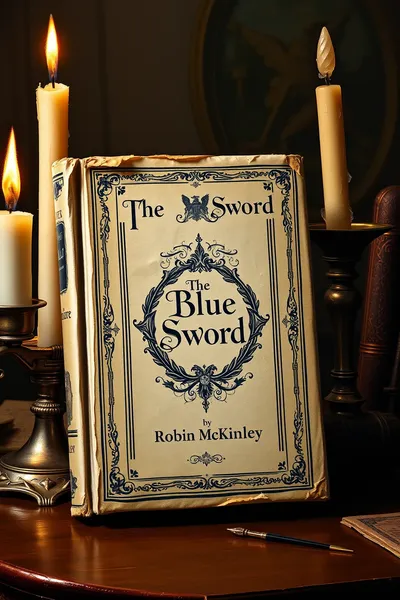
Liber null & psychonaut

 79
79

Liber null & psychonaut
Peter J. Carroll's "Liber Null & Psychonaut" is less a gentle introduction and more a bracing plunge into the mechanics of belief manipulation. The work’s strength lies in its ruthless pragmatism; it strips magic down to its observable effects, treating consciousness itself as the primary laboratory. Carroll champions the idea that reality is a construct of perception and belief, a notion explored with a scientist’s detachment and an alchemist’s ambition. The section detailing sigil construction and charging, for instance, offers a clear, actionable method divorced from mystical baggage. However, the text can feel arid at times, its clinical dissection of subjective experience occasionally bordering on the sterile. While the exploration of gnosis is compelling, the sheer density of concepts can be overwhelming for the uninitiated, demanding significant reader effort. It’s a challenging, rewarding manual for the self-directed occultist.
📝 Description
79
Peter J. Carroll published 'Liber Null & Psychonaut' in 1987, defining chaos magic.
Published in 1987, Peter J. Carroll's 'Liber Null & Psychonaut' is a key text for chaos magic. The book separates into two parts. 'Liber Null' lays out the theory and methods of magic, focusing on how belief can alter consciousness and reality. It sets up a system where practitioners create their own rituals and creeds, prioritizing tangible results over adherence to dogma.
'Psychonaut' moves into practical application. It guides readers through personal magical experimentation and exploration. The work encourages a skeptical yet active approach to occultism, appealing to those who question established traditions and seek a self-directed path. It's suited for individuals interested in the overlap of psychology, spirituality, and unconventional belief systems. Readers should be prepared to question their own assumptions and engage with challenging ideas.
Emerging in the late 20th century, 'Liber Null & Psychonaut' arrived during a period of renewed interest in occultism. Carroll's work was instrumental in shaping chaos magic, a movement that diverged from older traditions like ceremonial magic or Wicca. It distinguished itself by emphasizing the subjective nature of belief and the malleability of magical reality. The book presented an alternative to the rigid structures of existing magical orders, advocating for a more fluid and personal approach to esoteric practice.
💡 Why Read This Book?
• Gain practical techniques for altering consciousness and perception, as exemplified by the detailed methods for sigil creation and charging presented in "Psychonaut," allowing for direct experimentation with belief. • Understand the theoretical framework of chaos magic, including Carroll's post-1987 conceptualization of magic as a science of reality alteration, which provides a non-dogmatic approach to esoteric practices. • Learn about achieving gnosis, a crucial altered state for magical efficacy, through specific techniques like sensory overload or inhibition described within the book, offering a direct path to enhanced subjective experience.
⭐ Reader Reviews
Honest opinions from readers who have explored this book.
❓ Frequently Asked Questions
What is chaos magic as presented in Liber Null & Psychonaut?
Chaos magic, as detailed by Peter J. Carroll in "Liber Null & Psychonaut," is a modern magical paradigm emphasizing pragmatism and results. It treats belief as a tool, encouraging practitioners to adopt and discard belief systems experimentally to achieve desired outcomes, rather than adhering to fixed dogma.
What are sigils and how are they used in this book?
Sigils in "Liber Null & Psychonaut" are symbolic representations of desires or intentions. Carroll outlines methods for creating these symbols, charging them with psychic energy, and then releasing them into the subconscious mind, often through specific techniques to bypass conscious censorship and manifest the desired outcome.
What is the concept of gnosis in Peter J. Carroll's work?
Gnosis, as defined in "Liber Null & Psychonaut," refers to an altered state of consciousness characterized by intense focus and reduced self-awareness. Carroll posits that this state is optimal for magical operations, as it allows the practitioner's intent to be impressed upon reality without conscious interference.
Is Liber Null & Psychonaut suitable for beginners in occult studies?
While "Liber Null & Psychonaut" offers foundational chaos magic principles, its dense, experimental nature can be challenging for absolute beginners. Readers with some background in psychology or philosophy, and a strong inclination for self-directed study and experimentation, may find it more accessible.
What is the relationship between Liber Null and Psychonaut?
"Liber Null" lays the theoretical groundwork and principles of chaos magic, while "Psychonaut" provides practical exercises, techniques, and explorations for the practitioner. Together, they offer a comprehensive guide to Carroll's approach to magic.
When was Liber Null & Psychonaut first published?
The seminal work "Liber Null & Psychonaut" by Peter J. Carroll was first published in 1987, consolidating ideas that had been circulating within occult circles for some time.
🔮 Key Themes & Symbolism
Belief as a Tool
Carroll radically posits that belief is not a passive state but an active, malleable force. "Liber Null & Psychonaut" argues that the magician's primary work is to construct and deconstruct belief systems as needed. This is demonstrated through the application of sigils and the adoption of temporary 'god-forms' or paradigms. The book encourages readers to view different belief systems not as truth, but as functional tools for achieving specific results in consciousness and external reality. This pragmatic stance liberates the practitioner from the confines of any single dogma.
Gnosis and Altered States
A core part of chaos magic as presented in this work is the deliberate induction of gnosis, a state of heightened awareness and reduced self-consciousness. Carroll details various methods for achieving this, ranging from intense sensory stimulation to complete inhibition. The aim is to access a state where the magician's will can be directly impressed upon the universe, bypassing the critical faculty of the conscious mind. This concept is central to the efficacy of many of the practical techniques described, including spellcasting and ritual.
The Psychonautical Exploration
The "Psychonaut" section specifically encourages an inward exploration of the self and consciousness. It frames magic as a form of psychological exploration, where the practitioner acts as a 'psychonaut' charting the territories of their own mind. This involves confronting internal archetypes, exploring altered states, and understanding the subjective nature of reality. The book advocates for a scientific, empirical approach to these inner journeys, focusing on observable changes in perception and behavior as evidence of successful magical work.
Magic as Science
Peter J. Carroll frames magic within "Liber Null & Psychonaut" as a practical science, distinct from religion or philosophy. He emphasizes experimentation, observation, and reproducible results. The focus is on what works, regardless of the underlying metaphysical explanation. This scientific attitude underpins the entire chaos magic system, encouraging practitioners to develop hypotheses about reality and test them through magical operations, thereby advancing their understanding and control over subjective and objective phenomena.
💬 Memorable Quotes
Direct passages from the work, attributed to the author.
“Belief is a tool. When it is no longer useful, discard it.”
— This captures Carroll's pragmatic approach to magic. It suggests that any belief system, however deeply held, should be evaluated based on its utility in achieving desired outcomes, and readily abandoned if it ceases to serve its purpose.
“The universe is a magician and you are one of its conjurations.”
— This statement highlights the interconnectedness of all things and the dynamic, illusionary nature of reality. It implies that reality itself is a form of magic, and individuals are manifestations or creations within this grand magical display.
“Gnosis is the key to the magic of the future.”
— Carroll identifies gnosis, or altered states of consciousness, as the fundamental element enabling magical effects. This emphasizes the internal, subjective aspect of magic and its power to influence external circumstances through focused will in specific states of mind.
“We are all gods playing at being mortals.”
— This reflects a Gnostic or Hermetic concept of inherent divinity obscured by mundane existence. It suggests a potential for transcendence and the realization of one's true, powerful nature beyond ordinary limitations.
💡 Key Ideas
Editorial paraphrase of the work's core concepts — not direct quotes.
The only true authority is personal experience.
This quote champions empiricism and self-discovery in esoteric practice. It dismisses reliance on external authorities or dogmas, urging practitioners to trust their own experimental results and subjective encounters as the ultimate arbiter of truth.
🌙 Esoteric Significance
Tradition
Carroll’s work is a significant departure from, yet builds upon, Western Esoteric traditions like Hermeticism and Gnosticism. It shares the Gnostic emphasis on subjective reality and the power of knowledge (gnosis) to liberate. However, it jettisons much of the historical symbolism and ritualistic baggage, adopting a radically pragmatic and often nihilistic stance. It functions as a modern synthesis, stripping down magical principles to their perceived core mechanics and presenting them within a post-modern, scientific-materialist framework.
Symbolism
Key symbols in "Liber Null & Psychonaut" include the sigil, a personalized glyph charged with intent, representing the focused will of the magician. The Chaos Star, a five-pointed star often depicted with a spiral, symbolizes the dynamic, ever-changing nature of reality and the practitioner's engagement with it. The concept of the 'daemon' or internal god-form serves as a symbol of the practitioner's higher self or ultimate potential, to be integrated or embodied.
Modern Relevance
The influence of "Liber Null & Psychonaut" is undeniable in contemporary esoteric circles. Chaos magic has become a prominent branch of modern occultism, influencing practitioners across various magical and pagan traditions. Thinkers and practitioners in fields ranging from digital magic and cyber-occultism to psychological exploration and even certain strains of performance art draw inspiration from Carroll's emphasis on belief manipulation, sigil magic, and the scientific approach to consciousness alteration.
👥 Who Should Read This Book
• Aspiring chaos magicians seeking the foundational texts of the paradigm, to understand its core principles of belief manipulation and gnosis. • Practitioners of Western Esotericism interested in comparative magical systems, to explore a non-dogmatic, experimental approach distinct from traditional ceremonial magic. • Individuals exploring the intersection of psychology and spirituality, who are drawn to empirical methods for altering consciousness and understanding subjective reality.
📜 Historical Context
Published in 1987, "Liber Null & Psychonaut" emerged during a significant resurgence of interest in occultism, fueled by counter-cultural movements and a growing dissatisfaction with traditional structures. Peter J. Carroll’s work was instrumental in defining and popularizing chaos magic, a contemporary paradigm that distinguished itself from older systems like Ceremonial Magic or Thelema by prioritizing pragmatism and the subjective nature of belief. Unlike the more dogmatic approaches prevalent at the time, chaos magic advocated for a flexible, experimental methodology. Carroll's ideas gained traction within a milieu that also saw figures like Robert Anton Wilson exploring similar themes of perception and belief. The book offered a radical departure, presenting magic as a science of consciousness manipulation, which resonated with a generation seeking empirical and self-directed spiritual paths, largely free from the constraints of established magical orders.
📔 Journal Prompts
The concept of 'gnosis' as a tool for altering consciousness.
Developing a personal sigil for a specific, tangible goal.
Critically examining a deeply held personal belief system for its utility.
The 'psychonaut's' map of the inner self.
Designing a ritual based on achieving a specific altered state, not a prescribed outcome.
🗂️ Glossary
Chaos Magic
A magical paradigm characterized by pragmatism, experimentalism, and the use of belief as a tool. It rejects dogma, encouraging practitioners to adopt and discard belief systems as needed to achieve desired results.
Gnosis
An altered state of consciousness characterized by intense focus and a reduction in self-awareness, considered by chaos magicians to be optimal for magical operations and the direct impressing of will upon reality.
Sigil
A symbolic representation of a desire or intention, created through specific methods, charged with psychic energy, and then released into the subconscious mind for manifestation.
Paradigm Shifting
The deliberate act of adopting and embodying a specific belief system or worldview for a defined period to influence perception and reality, then discarding it once its purpose is served.
Daemon
In Carroll's system, this refers to a personal god-form or archetype, representing the practitioner's highest potential or autonomous magical agent, which can be invoked or integrated.
Psychonaut
An individual who undertakes exploration of the mind and consciousness, often through altered states or psychological techniques, viewing these inner journeys as a form of empirical investigation.
Servitor
An artificial thought-form or entity created by a magician to perform a specific task or function, often sustained by conscious energy and intention.
🔮 Readers Also Liked
Browse all →







More by Peter J. Carroll
All books →


More Free Magic & Ritual Books
View all →


![The book of magickal [sic] and occult rites and ceremonies](/img/thumb/the-book-of-magickal-sic-and-occult-rites-and-ceremonies-richard-dea-morelli.webp)