The Roman Breviary
 75
75

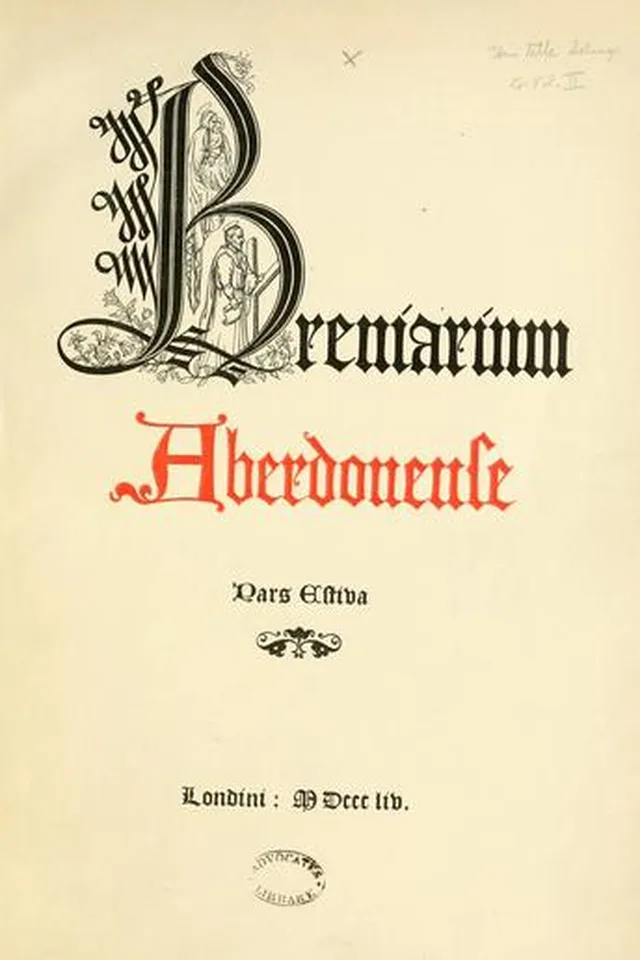
The Roman Breviary



Alaric Kestrel (Metaphysical Studies Reviewer) — A monumental testament to the enduring power of structured contemplation, 'The Roman Breviary' is far more than a prayer book. It is a meticulously crafted vessel of Western spiritual knowledge, its cyclical prayers and hagiographies acting as keys to unlocking deeper layers of consciousness. The inclusion of early hymns and scriptural passages, particularly those pertaining to major feasts like Christmas, reveals a rich symbolic grammar. For scholars of comparative religion, practitioners of contemplative prayer, and seekers of ancient wisdom, this facsimile offers an unparalleled gateway into the heart of Catholic mystical tradition. Its systematic approach fosters a discipline of mind and spirit, essential for any serious metaphysical inquiry.
📝 Description
75
Last officially sanctioned by Pope Leo XIII, the Roman Breviary structures Catholic liturgical prayer.
The Roman Breviary functions as the official prayer book for the Divine Office in the Catholic Church. This liturgical text organizes daily and nightly prayer into a cycle of psalms, hymns, readings, and antiphons. Its last official sanction came under Pope Leo XIII, indicating a specific historical iteration of this devotional practice. Beyond its role in communal and private worship, the Breviary contains a rich collection of patristic writings and hagiography, offering devotional exercises alongside historical and theological content.
This work has guided the faithful for centuries, marking the canonical hours with structured prayer. The selection of texts within the Breviary reflects a deep tradition of Western spirituality. Its verses and readings encourage meditation on religious themes and the lives of saints. The structure itself, encompassing the entire year, serves as a framework for spiritual reflection and a connection to enduring Christian traditions.
Within esoteric traditions, the Roman Breviary is sometimes studied for its underlying symbolic structures and the spiritual symbolism embedded in its prayers and scriptural selections. The cyclical nature of the Divine Office, mirroring cosmic and temporal rhythms, aligns with certain esoteric concepts of order and recurrence. The careful arrangement of psalms, hymns, and readings, along with the veneration of saints, can be interpreted through lenses that seek hidden meanings in religious forms. This perspective views the Breviary not just as a devotional tool but as a repository of Western spiritual symbolism that informs an understanding of spiritual consciousness.
💡 Why Read This Book?
Embark on a journey into the heart of Western contemplative practice. 'The Roman Breviary' offers seekers profound spiritual insights, scholars a vital historical document, and practitioners a disciplined framework for daily prayer. Uncover the rich symbolism and meditative depth embedded within its ancient structure. Ideal for those interested in liturgical traditions, Christian mysticism, and the evolution of spiritual thought.
⭐ Reader Reviews
Honest opinions from readers who have explored this book.
❓ Frequently Asked Questions
What is the primary purpose of the Roman Breviary?
The Roman Breviary's primary purpose is to serve as the official book of daily public and private prayer for clergy and religious in the Catholic Church, known as the Divine Office or Liturgy of the Hours.
What kind of content can be found within the Breviary?
It contains Psalms, hymns, readings from Scripture and the Church Fathers, prayers, and liturgical calendars, structured around the canonical hours of the day and night.
Is this a historical facsimile or a modern translation?
This edition is presented as a facsimile, aiming to preserve the original appearance and content of the historical Roman Breviary, offering an authentic historical experience.
Who was Pope Leo XIII and why is his approval significant?
Pope Leo XIII (pontificate 1878-1903) was a significant figure in modern Catholic history. His approval signifies the text's adherence to established Catholic doctrine and its authoritative status within the Church's tradition.
How does the Breviary relate to esoteric or mystical practices?
While primarily a devotional text, its structured prayers, rich symbolism, and scriptural readings can offer profound meditative experiences and insights into the mystical dimensions of faith for dedicated practitioners and scholars.
🔮 Key Themes & Symbolism
The Divine Office as a Spiritual Discipline
The Roman Breviary meticulously structures the day and night through the Divine Office, a practice designed to sanctify time and maintain constant communion with the divine. This cyclical rhythm of prayer, scripture, and meditation fosters a profound spiritual discipline, cultivating mindfulness, devotion, and an awareness of God's presence throughout all moments. It transforms the mundane into the sacred, offering a systematic path for the soul's ascent and a continuous dialogue with the Eternal.
Symbolic Resonance and Hidden Meanings
Beyond its devotional function, the Breviary is a repository of Western Christian symbolism. The choice of Psalms, the hymns sung at specific hours, and the readings selected for feast days all carry layers of esoteric meaning. These elements are not merely decorative but function as keys to unlocking deeper spiritual truths, offering insights into the cosmic order, the nature of salvation, and the hidden pathways of the soul's journey towards union with the divine. Its structure mirrors ancient initiatory patterns.
The Liturgical Year and Cosmic Cycles
The Roman Breviary intricately maps the liturgical year, aligning its observances with significant Christian feasts and seasons, such as Christmas. This temporal structure is not arbitrary but reflects a deeper understanding of cosmic cycles and divine revelation unfolding through time. By participating in this annual rhythm, the faithful connect with timeless truths and the unfolding mystery of God's plan for humanity, experiencing the sacred as it is revealed through the procession of days, weeks, and seasons.
💬 Memorable Quotes
Direct passages from the work, attributed to the author.
“O God, come to my assistance; O Lord, make haste to help me.”
— This opening versicle expresses the human condition of dependence on divine grace and the urgent need for spiritual aid in navigating life's challenges.
“The Lord is my shepherd; I shall not want.”
— A foundational declaration of faith, affirming trust in divine providence and the fulfillment of all spiritual and material needs through God's care.
“Light of all lights, splendor of the Father, come now, Holy Spirit.”
— An invocation for divine illumination, seeking the transformative power of the Holy Spirit to enlighten the mind and guide the soul towards truth and understanding.
“Grant us, O Lord, that we may serve thee with a pure heart.”
— A humble petition for purity of intention and dedication in service to the divine, recognizing the importance of an unblemished heart in spiritual devotion.
“May the souls of the faithful departed, through the mercy of God, rest in peace.”
— A timeless prayer for the departed, expressing hope for divine mercy and eternal rest for those who have passed from this earthly realm.
🌙 Esoteric Significance
Tradition
The Roman Breviary is deeply rooted in the Western Christian esoteric tradition, specifically within the contemplative and mystical branches of Catholicism. It draws upon the rich symbolic language of scripture, the wisdom of the Church Fathers, and the structured prayer of the monastic orders. Its emphasis on the cyclical nature of prayer, the veneration of saints, and the profound theological underpinnings of its liturgy align it with practices aimed at direct experience of the divine and inner spiritual transformation.
Symbolism
Key symbols within the Breviary include the canonical hours (representing stages of spiritual progress and the sanctification of time), the Psalms (as a vehicle for expressing the full spectrum of human emotion and spiritual longing), hymns (often rich in allegorical and theological meaning), and the lives of saints (serving as exemplars of divine virtue and spiritual attainment). The cyclical repetition of prayers and readings itself symbolizes the eternal return and the unending nature of divine love and mercy.
Modern Relevance
In an age of rapid change and spiritual seeking, the Roman Breviary offers a powerful anchor of stability and profound depth. Its structured approach to prayer provides a discipline for the modern mind, while its timeless wisdom speaks to enduring human questions about meaning, purpose, and transcendence. For those interested in contemplative practices, the history of Western mysticism, or seeking a deeper connection to the sacred through ancient liturgical forms, the Breviary remains a vital and relevant source of spiritual insight.
👥 Who Should Read This Book
This facsimile of 'The Roman Breviary' is an invaluable resource for a diverse audience. **Beginners** seeking to understand the foundations of Western liturgical prayer will find a comprehensive introduction. **Scholars** of religious history, theology, and comparative literature will appreciate its historical accuracy and depth. **Seekers** of spiritual enlightenment and contemplative practices will discover a body of meditative material. **Practitioners** of Catholic prayer, including clergy and devout lay individuals, will find an authentic and authoritative text for their devotional lives. It is for anyone yearning to connect with the profound spiritual heritage of Western Christendom.
📜 Historical Context
The Roman Breviary developed over centuries, evolving from earlier monastic and Roman liturgical traditions. Its standardization and significant revisions, particularly those leading up to the Council of Trent and later under Pope Leo XIII, reflect the Catholic Church's ongoing efforts to unify its liturgy and preserve its spiritual heritage. This period saw a resurgence of interest in patristic literature and Gregorian chant, elements deeply interwoven into the Breviary. As a product of a time when the Church was a central pillar of Western civilization, the Breviary served not only as a spiritual guide but also as a repository of theological thought, historical memory, and cultural identity. Its influence extended beyond the clergy, shaping the spiritual consciousness of the laity and contributing to the intellectual field of Europe for over a millennium.
📔 Journal Prompts
Reflect on the concept of sanctifying time through the Divine Office. How can this practice be integrated into a modern, busy life?
Consider the Psalms as a dialogue with the divine. Which Psalm resonates most deeply with your current spiritual state, and why?
Explore the symbolism of light and darkness within the Breviary's structure, particularly in relation to morning and evening prayers.
Meditate on the lives of the saints presented. What virtues do they embody, and how can these virtues be cultivated in your own life?
How does the cyclical nature of the Breviary's prayers reflect the eternal nature of God or spiritual truths?
🗂️ Glossary
Divine Office
The official set of daily prayers prescribed by the Catholic Church, also known as the Liturgy of the Hours. It is recited by clergy and religious at specific times throughout the day and night.
Breviary
The book containing the Divine Office, including Psalms, hymns, readings, and prayers, arranged for recitation throughout the liturgical year.
Facsimile
An exact reproduction or copy of an original document, in this case, preserving the historical appearance and content of the Roman Breviary.
Liturgical Year
The annual cycle of feasts and seasons in the Christian Church, beginning with Advent and ending with the feast of Christ the King.
Canonical Hours
The specific times of the day designated for the recitation of the Divine Office, such as Matins, Lauds, Prime, Terce, Sext, None, Vespers, and Compline.
This book appears in 3 collections
🔮 Readers Also Liked
Browse all →







More by Catholic Church
All books →


From the “Tarot” Collection
View all →








More Free Divination & Tarot Books
View all →