Carl Jung, Darwin of the Mind
 84
84

Carl Jung, Darwin of the Mind
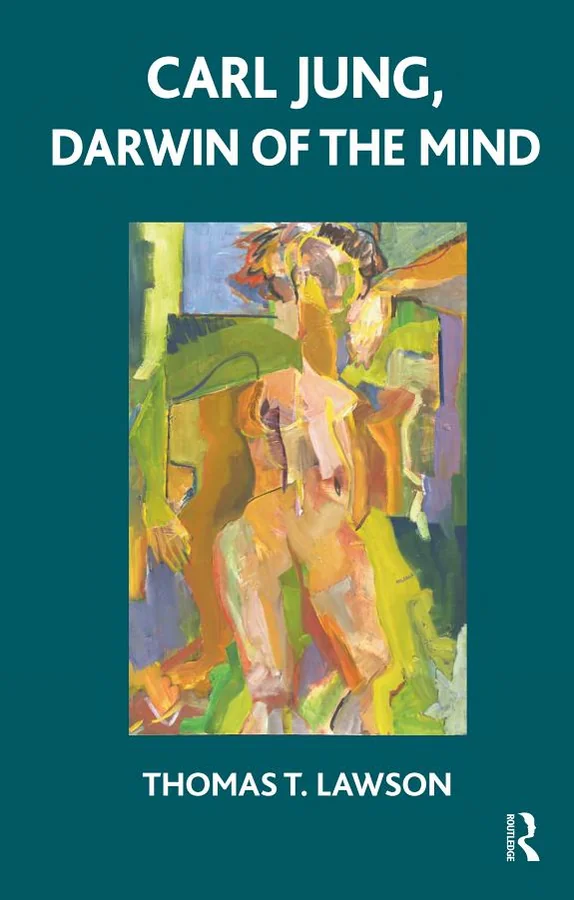
Thomas T. Lawson’s *Carl Jung, Darwin of the Mind* attempts a significant feat: contextualizing the vast landscape of Jungian psychology within the framework of evolutionary theory. Lawson succeeds admirably in demonstrating how Jung’s lifelong exploration of the psyche, from archetypes to the collective unconscious, can be understood as deeply rooted in our species' biological past. The book’s strength lies in its clear exposition of Jung’s complex ideas, making them accessible without oversimplification. A particularly compelling section discusses the archetypal mother as a biological imperative for infant survival. However, the central thesis, while intriguing, sometimes feels like a post-hoc rationalization rather than a fully integrated argument; the evolutionary parallels, while present, do not always illuminate Jung’s more mystical or alchemical investigations with equal clarity. Lawson’s prose is academic and measured, offering a solid scholarly assessment rather than a purely inspirational one. Ultimately, it serves as a valuable corrective, grounding Jung’s often ethereal concepts in the tangible reality of human evolution.
📝 Description
84
Thomas T. Lawson's 2018 book frames Carl Jung's work through an evolutionary lens.
Carl Jung, Darwin of the Mind examines the Swiss psychiatrist Carl Jung's ideas using an evolutionary perspective. Thomas T. Lawson's analysis connects Jung's theories on the collective unconscious, archetypes, and individuation to human biological and psychological development over vast periods. The book details Jung's research, which found links between contemporary psychological patterns and ancient myths, rituals, and global spiritual practices.
Lawson's study is for readers familiar with psychological concepts and interested in the connections between psychology, anthropology, and evolutionary theory. It will appeal to students of depth psychology, comparative mythology, and the history of ideas. Those interested in Jung's lasting significance within a broader humanistic and biological framework will find Lawson's exposition helpful. The book requires engagement with complex theoretical ideas.
Published in 2018, Lawson's book revisits Carl Jung's thought, a figure central to depth psychology and esoteric traditions. Unlike earlier analyses that focused on clinical or alchemical aspects, Lawson integrates Jungian concepts with evolutionary biology and neuroscience. This approach echoes thinkers like Joseph Campbell, who also explored mythology's role in human experience. Lawson positions Jung within a lineage of thinkers who saw biological foundations as key to understanding the psyche, bridging psychological theory with broader scientific and historical perspectives.
💡 Why Read This Book?
• Gain a novel perspective on Carl Jung's theories by understanding his concepts, like the collective unconscious, through the lens of evolutionary biology, as detailed in Lawson's 2018 analysis. • Explore how archetypes are presented not just as psychic patterns but as evolutionary adaptations that aided human survival and development across millennia. • Grasp the process of individuation as an evolutionary drive towards psychological completeness, providing a biological basis for Jung's therapeutic goals.
⭐ Reader Reviews
Honest opinions from readers who have explored this book.
❓ Frequently Asked Questions
What is the primary argument of Carl Jung, Darwin of the Mind?
The book argues that Carl Jung's extensive work on the human psyche, including concepts like the collective unconscious and archetypes, can be best understood as a reflection of evolutionary processes shaping human psychology over vast timescales.
Who is the author, Thomas T. Lawson, and what is his background?
Thomas T. Lawson is an author and scholar whose work focuses on psychology and its historical and theoretical underpinnings. His background suggests a deep engagement with Jungian thought and related disciplines.
When was Carl Jung, Darwin of the Mind first published?
The book was first published on May 8, 2018, positioning it as a contemporary interpretation of Jung's legacy.
Does the book explain Jung's concepts like archetypes and the collective unconscious?
Yes, the book provides explanations of key Jungian concepts such as archetypes and the collective unconscious, reframing them within an evolutionary context to show their biological and developmental significance.
What esoteric traditions did Carl Jung explore, as mentioned in the book?
The book notes Jung's deep engagement with esoteric traditions including Eastern mysticism and Gnosticism, suggesting these were avenues through which he explored universal psychological patterns.
How does this book differ from standard introductions to Carl Jung?
Unlike many introductions, this book specifically frames Jung's entire oeuvre through an evolutionary perspective, attempting to unify his psychological theories with biological development rather than focusing solely on clinical or symbolic aspects.
🔮 Key Themes & Symbolism
Evolutionary Archetypes
The work posits that Jung's archetypes are not merely abstract psychic constructs but are deeply embedded evolutionary mechanisms. Lawson explores how these universal patterns, found in myths and dreams, likely served adaptive functions throughout human history, facilitating social cohesion and individual survival. This perspective reframes archetypes as biological blueprints shaped by natural selection, offering a materialist interpretation of Jung's symbolic realm.
Collective Unconscious as Biological Inheritance
Lawson reinterprets Jung's concept of the collective unconscious as a form of psychic inheritance passed down through generations, influenced by evolutionary pressures. This 'psychic DNA' contains predispositions and patterns that have proven beneficial for the species' survival. The book examines how this inherited psychic structure manifests in universal human experiences, myths, and symbolic expressions across cultures and epochs.
Individuation and Species Development
The process of individuation, Jung's path toward psychological wholeness, is presented as mirroring evolutionary imperatives for adaptation and complexity. Lawson suggests that the drive to become a fully realized individual is intrinsically linked to the broader development of the human species. This connection highlights how personal growth and collective progress are intertwined, with individuation serving as a crucial stage in psychological evolution.
Esoteric Traditions and Evolutionary Psychology
The book acknowledges Jung's deep dive into esoteric traditions like Gnosticism and Eastern mysticism. Lawson interprets these explorations not as mere antiquarian interests but as symbolic attempts to articulate fundamental truths about the human psyche's evolutionary journey. These ancient wisdom systems, in this view, contain coded insights into the archetypal structures and developmental stages inherent in our species' psychological history.
💬 Memorable Quotes
Direct passages from the work, attributed to the author.
“Jung explored the human psyche throughout his long life.”
— This simple statement underscores the immense scope of Jung's research, highlighting his lifelong dedication to understanding the depths of the human mind and its myriad manifestations across cultures and time.
“His writings, of astonishing scope and depth, elaborate on imagery that can be found in rituals, myths and fables worldwide.”
— This points to the universality of Jungian symbols and narratives, suggesting that the images arising from the unconscious are not unique to individuals but connect to a shared human heritage expressed through global folklore and spiritual practices.
“Jung pursued common threads of meaning to the point of becoming deeply versed in the esoterica of Eastern mysticism, Gnosticism.”
— This emphasizes Jung's rigorous methodology, showing his willingness to engage with diverse and often obscure spiritual traditions to uncover the underlying patterns of the human psyche and its symbolic language.
“Carl Jung, Darwin of the Mind is a review and an explanation of Jung's thought set in an evolutionary context.”
— This concise description frames the book's central purpose: to interpret Jung's complex psychological theories through the lens of biological evolution, revealing potential adaptive functions and developmental trajectories.
“imagery that can be found in rituals, myths and fables worldwide as well as in the dreams, visions and fantasies of his patients and himself.”
— This highlights the remarkable consistency of symbolic content across different domains of human experience, from ancient narratives to individual psychological phenomena, suggesting a common source within the psyche.
🌙 Esoteric Significance
Tradition
While Carl Jung's work draws broadly from numerous esoteric traditions, Lawson's framing places it within a lineage that seeks to understand the psyche through universal, inherited patterns. It implicitly connects to Hermeticism's focus on correspondences and Gnosticism's exploration of inner knowledge, but Lawson reinterprets these through an evolutionary lens, suggesting their symbolic language reflects biological imperatives rather than solely mystical revelations.
Symbolism
The book frequently engages with Jungian archetypes, such as the Anima/Animus and the Shadow. Lawson interprets these symbols not just as psychological complexes but as representations of evolutionary adaptations. For instance, the Shadow might symbolize the primal, survival-oriented instincts that needed to be managed for social integration, while the Anima/Animus could represent the evolutionary development of gender roles and relational dynamics.
Modern Relevance
Contemporary thinkers in evolutionary psychology, neuropsychoanalysis, and even certain branches of transpersonal psychology continue to draw upon Jungian concepts. Lawson's work is relevant today as it offers a method for reconciling Jungian depth psychology with scientific understandings of human nature. It provides a framework for those exploring the biological roots of consciousness, spirituality, and the symbolic life, bridging the gap between ancient wisdom and modern scientific inquiry.
👥 Who Should Read This Book
• Students of Jungian psychology: Those seeking to understand Jung's core concepts like the collective unconscious and archetypes through a novel, evolutionary perspective. • Comparative mythology scholars: Researchers interested in how myths and symbols reflect universal human psychological structures and potential evolutionary functions. • Interdisciplinary thinkers: Individuals fascinated by the connections between psychology, biology, anthropology, and the history of ideas, particularly concerning human development.
📜 Historical Context
Thomas T. Lawson's *Carl Jung, Darwin of the Mind*, published in 2018, emerged in an intellectual climate where interdisciplinary studies were increasingly valued. It engages with the ongoing effort to integrate psychology with evolutionary biology, a field that gained significant traction following E.O. Wilson's *Sociobiology* (1975) and subsequent developments in evolutionary psychology. Lawson’s work can be seen as participating in a lineage that includes scholars like Joseph Campbell, who explored mythological universals, but Lawson centers the evolutionary framework more explicitly. While Jung himself engaged with biology, his primary reception in the mid-20th century often focused on his clinical or alchemical aspects, sometimes distinct from direct evolutionary arguments. Lawson’s book seeks to bridge this gap decades later, offering a contemporary synthesis that positions Jung's insights within a modern scientific paradigm, responding to a scholarly landscape that had largely moved beyond the initial psychoanalytic debates of the 1920s and 30s.
📔 Journal Prompts
The evolutionary function of archetypal imagery in human survival.
Jung's engagement with Gnosticism as a precursor to evolutionary psychology.
The collective unconscious as a biological inheritance.
Mapping the process of individuation onto stages of species development.
The symbolic meaning of rituals within an evolutionary framework.
🗂️ Glossary
Collective Unconscious
In Jungian psychology, a concept referring to a shared layer of the unconscious mind containing inherited universal patterns and images, known as archetypes. Lawson frames this as a biologically inherited psychic structure.
Archetype
Universal, archaic patterns and images that derive from the collective unconscious and are the psychic counterpart of instinct. Lawson views these as potential evolutionary adaptations.
Individuation
The psychological process of integrating the conscious and unconscious aspects of the personality to achieve wholeness. Lawson interprets this as a biological and psychological imperative for development.
Gnosticism
A diverse set of religious and philosophical movements in late antiquity that emphasized esoteric knowledge (gnosis) for salvation. Jung extensively studied Gnosticism for its symbolic and psychological insights.
Eastern Mysticism
Spiritual traditions originating in the East, such as Hinduism, Buddhism, and Taoism, characterized by contemplative practices and a focus on inner experience. Jung explored these for their parallels with Western psychology.
Evolutionary Context
The interpretation of psychological phenomena by considering their origins and development through natural selection and adaptation over evolutionary time.
Psyche
The totality of the human mind, including consciousness, the unconscious, and their interactions. Lawson examines the psyche's evolutionary trajectory.
This book appears in 1 collection
🔮 Readers Also Liked
Browse all →









From the “Collective Unconscious” Collection
View all →




More Free Occult Philosophy Books
View all →