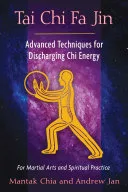
Tai Chi Fa Jin
 83
83

Tai Chi Fa Jin
Mantak Chia and Andrew Jan's Tai Chi Fa Jin offers a detailed examination of an often-misunderstood aspect of Tai Chi. The authors effectively articulate the mechanics of Fa Jin, moving beyond the superficial to address the energetic cultivation required. Their explanation of countering resistance not with force, but with yielding softness, is particularly insightful, drawing upon the foundational '13 Original Movements of Tai Chi' to illustrate this principle. A notable strength is the practical guidance provided for partner exercises like Push Hands, which bridge theoretical concepts with tangible application. However, the text sometimes assumes a level of prior knowledge in Qi cultivation that might leave absolute beginners feeling adrift. The exploration of Fa Jin's healing applications, while present, could have benefited from more extensive elaboration. Overall, the book serves as a valuable, albeit advanced, resource for serious Tai Chi students.
📝 Description
83
Published in 2012, Tai Chi Fa Jin details an advanced approach to Yang-style Tai Chi.
Tai Chi Fa Jin focuses on the martial art's explosive power generation, known as Fa Jin. This method emphasizes channeling internal energy, or Qi, for both combat effectiveness and therapeutic benefits. The book explains how to cultivate and release this energy, moving beyond simple physical movements to integrate mind and spirit. It serves as a guide for practitioners aiming to grasp the deeper energetic principles of Tai Chi.
The work is intended for dedicated Tai Chi practitioners who have already built a solid foundation in the art and wish to explore its more potent applications. Martial artists interested in developing internal power will find it useful, as will healers and others seeking to understand subtle energy manipulation. Those curious about the connection between martial arts and energetic cultivation will also find value here.
Fa Jin, the concept of explosive power release, is often associated with advanced practitioners within the Yang family lineage of Tai Chi. Its development within the art's history contrasts with the more commonly taught yielding aspects. This book's 2012 publication placed its exploration within a modern interest in traditional Chinese martial arts, particularly their internal mechanics. The aim was to codify and share these complex principles with a wider audience, connecting martial effectiveness with energetic cultivation.
💡 Why Read This Book?
• Learn how to channel internal energy for explosive power generation, a technique essential for advanced Tai Chi practitioners as detailed in the Fa Jin principles. • Understand the paradox of yielding softness enabling potent force, a core concept explained through the foundational '13 Original Movements of Tai Chi'. • Develop practical skills in partner dynamics through guided Push Hands (Tui Shou) routines, offering a tangible way to test and refine energetic application.
⭐ Reader Reviews
Honest opinions from readers who have explored this book.
❓ Frequently Asked Questions
What is Fa Jin in Tai Chi?
Fa Jin, meaning 'emit energy' or 'explosive power', is an advanced Tai Chi technique focused on generating sudden, powerful force. It involves cultivating internal energy (Qi) and releasing it instantaneously, often explained as a 'springing' or 'cracking' of energy.
Is Tai Chi Fa Jin suitable for beginners?
This book is generally geared towards intermediate to advanced Tai Chi practitioners who have a solid grasp of fundamental Tai Chi movements and internal energy concepts. Beginners might find the advanced nature of Fa Jin challenging without prior foundational training.
How does Fa Jin differ from standard Tai Chi movements?
While standard Tai Chi movements often emphasize smooth, continuous flow and yielding, Fa Jin introduces explosive, concentrated bursts of power. It’s about channeling the accumulated energy from a yielding posture into a sudden, potent discharge.
What are the 13 Original Movements of Tai Chi mentioned?
The '13 Original Movements' are considered the foundational principles and core techniques from which all Tai Chi forms are derived. They are often cited as the basis for understanding energy flow, structure, and power generation, including Fa Jin.
Can Fa Jin be used for healing as well as self-defense?
Yes, the book explains how the principles of collecting and discharging energy in Fa Jin can be applied therapeutically. By directing Qi, practitioners can potentially address blockages and promote healing within the body, complementing its martial applications.
Who are the authors of Tai Chi Fa Jin?
The book is authored by Mantak Chia and Andrew Jan. Mantak Chia is a well-known Taoist master and author, and Andrew Jan is also recognized for his expertise in Tai Chi and Qi Gong practices.
🔮 Key Themes & Symbolism
Internal Energy Cultivation
The book emphasizes the paramount importance of cultivating internal energy, or Qi, as the source of Fa Jin's power. It details methods for gathering this energy within the practitioner's core, specifically the Dan Tian, and preparing it for explosive release. This cultivation moves beyond mere physical conditioning, focusing on the subtle energetic body and its pathways, aligning with Taoist principles of internal alchemy and energetic mastery.
The Paradox of Softness and Power
A central theme is the understanding that true explosive power (Fa Jin) arises not from brute force, but from yielding softness. The work explores how resisting an opponent's force directly leads to exhaustion. Instead, practitioners are taught to absorb, redirect, and then discharge energy, making softness the very foundation upon which explosive power is built. This principle is directly linked to the 13 Original Movements of Tai Chi.
Martial Application and Therapeutic Use
Tai Chi Fa Jin is presented as a dual-purpose art. The explosive discharge of energy is detailed for effective self-defense, allowing a practitioner to overcome stronger opponents. Simultaneously, the book explores how this same energetic control can be applied for healing purposes, suggesting that the ability to manipulate and direct Qi can help clear energetic blockages and restore balance within the body.
Partner Practice Dynamics
The practical application of Fa Jin is significantly developed through partner exercises, particularly Push Hands (Tui Shou). The book illustrates how these routines allow practitioners to test their ability to generate and receive explosive force in real-time. This interactive element is crucial for refining sensitivity, timing, and the precise energetic coordination required for both martial combat and therapeutic energy transfer.
💬 Memorable Quotes
Direct passages from the work, attributed to the author.
“The secret of Fa Jin is to collect energy within and discharge it.”
— This concise statement captures the core mechanism of Fa Jin: the internal accumulation of vital energy (Qi) followed by its sudden, forceful expulsion. It highlights the importance of both the preparatory phase of energetic cultivation and the final phase of power manifestation.
“Develop yielding softness through the 13 Original Movements of Tai Chi.”
— This highlights the foundational role of specific Tai Chi movements in cultivating the necessary 'softness' that paradoxically enables explosive power. It grounds the advanced concept of Fa Jin in the fundamental principles of the art.
“Illustrates routines for the partner practice of 'Push Hands' (Tui Shou).”
— This indicates the book's practical orientation, providing concrete exercises for developing Fa Jin. Push Hands is presented not just as a training drill, but as a method for embodying and testing the principles of energetic exchange.
“Fa Jin complements the physical, mental, and spiritual.”
— This suggests that Fa Jin is not solely a physical technique but an integrated practice. Its effects extend to mental clarity and spiritual development, indicating a holistic approach to martial arts training.
💡 Key Ideas
Editorial paraphrase of the work's core concepts — not direct quotes.
Counter the natural instinct to resist force with force.
This quote addresses a common pitfall in martial arts and conflict. It advises against meeting an opponent's aggression with reciprocal aggression, suggesting instead a more subtle and effective strategy of yielding and redirecting energy.
🌙 Esoteric Significance
Tradition
This work is deeply rooted in the Taoist tradition, specifically within the context of internal martial arts and energetic cultivation (Qi Gong). It aligns with Taoist principles of harnessing and manipulating vital energy (Qi) for both physical and spiritual development. While Tai Chi is often viewed primarily as a martial art or health practice, Chia's approach emphasizes its esoteric dimensions, connecting the generation of Fa Jin to the broader Taoist pursuit of energetic mastery and alignment with natural forces.
Symbolism
The core symbolism revolves around the concept of Yin and Yang, particularly the transformation of yielding Yin (softness, absorption) into explosive Yang (power, discharge). The Dan Tian, often visualized as a reservoir of vital energy, functions as a symbolic crucible where Qi is collected and condensed before release. The '13 Original Movements' themselves can be seen as symbolic archetypes of fundamental energetic principles, with Fa Jin representing the ultimate expression of energetic potential derived from these roots.
Modern Relevance
Contemporary practitioners of internal martial arts, Qi Gong, and even certain branches of energy healing draw upon the principles articulated in works like Tai Chi Fa Jin. Thinkers and practitioners exploring mind-body integration, somatic awareness, and the energetic basis of health and combat find value in its detailed exploration of Qi dynamics. It serves as a bridge between ancient Taoist practices and modern scientific interest in bioenergetics and internal force generation.
👥 Who Should Read This Book
• Advanced Tai Chi practitioners seeking to unlock the martial potential of their art, moving beyond basic forms to understand and apply explosive power generation. • Martial artists interested in internal energy development and the principles of yielding softness as a strategic advantage in combat. • Students of Taoist philosophy and energetic cultivation who wish to explore the practical applications of Qi manipulation for both self-defense and therapeutic purposes.
📜 Historical Context
Published in 2012, Tai Chi Fa Jin arrived during a period of intense global interest in traditional Chinese martial arts and their internal aspects. While Yang-style Tai Chi has a long history, dating back to the 19th century, the explicit codification and dissemination of advanced power generation techniques like Fa Jin to a Western audience gained momentum in the late 20th and early 21st centuries. This book enters a discourse already enriched by figures like Yang Luchan and later masters who emphasized different facets of the art. The work's focus on explosive power can be seen as a counterpoint to the more prevalent emphasis on health and longevity in many modern Tai Chi circles, appealing to practitioners seeking martial efficacy. Its publication by a prominent author like Mantak Chia, known for his extensive work on Taoist internal arts, positioned it within a lineage of disseminating esoteric knowledge.
📔 Journal Prompts
Reflect on the concept of 'yielding softness' as a source of power in your own life experiences.
Analyze how the principle of collecting and discharging energy relates to your personal energy management.
Consider the role of the '13 Original Movements' as foundational principles in any complex skill you have mastered.
Explore the potential dual applications of intense energy release, for both assertion and healing.
Evaluate your current understanding of the Dan Tian and its significance in energetic practices.
🗂️ Glossary
Fa Jin
An advanced Tai Chi technique meaning 'emit energy' or 'explosive power'. It involves the rapid, concentrated discharge of internal energy (Qi) for martial impact or therapeutic effect.
Qi
The vital life force or energy that permeates all things in Taoist philosophy. In martial arts, it refers to the internal energy cultivated and directed by the practitioner.
Dan Tian
Literally 'elixir field', a crucial energy center in the lower abdomen in Taoist practices. It is considered the primary reservoir for storing and cultivating Qi.
Push Hands (Tui Shou)
A partner exercise in Tai Chi designed to develop sensitivity, balance, and the ability to apply Tai Chi principles (including Fa Jin) in response to an opponent's movements.
13 Original Movements
The foundational principles and core techniques considered the essence of Tai Chi, from which the more complex forms are derived. They emphasize fundamental energetic and structural concepts.
Yang Style Tai Chi
One of the major styles of Tai Chi Chuan, historically characterized by wider, more open stances and slower, deliberate movements compared to some other styles, though advanced techniques like Fa Jin introduce explosive elements.
Yielding Softness
A key Tai Chi principle that emphasizes absorbing, redirecting, and neutralizing an opponent's force rather than meeting it with equal resistance, forming the basis for generating explosive power.














![Reiki - Manual Original del Dr. Mikao Usui [Spanish]](/img/thumb/reiki-manual-original-del-dr-mikao-usui-spanish-f-arjava-petter-551356.webp)