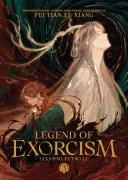
Legend of Exorcism: Tianbao Fuyao Lu (Novel) Vol. 3
 80
80

Legend of Exorcism: Tianbao Fuyao Lu (Novel) Vol. 3
Fei Tian Ye Xiang’s Legend of Exorcism: Tianbao Fuyao Lu Vol. 3 escalates the stakes with a chilling focus on corrupted divinity and the exploitation of spiritual power. The introduction of Mergen, the dream god turned unwitting pawn of the yao king, provides a compelling, tragic antagonist whose downfall is directly linked to the protagonists' current predicament. The depiction of the ghost king's army being controlled through the deer's corrupted dream-weaving ability is a particularly potent image of spiritual subjugation. However, the pacing occasionally falters, becoming dense with exposition regarding the yao king's machinations, which, while necessary, can slow the momentum built by the earlier confrontations. Despite this, the sheer ambition in portraying the entanglement of divine and demonic forces makes this volume a significant step in the ongoing saga.
📝 Description
80
Volume 3 of Fei Tian Ye Xiang's Legend of Exorcism continues the supernatural conflict after the ghost king's awakening.
In this third installment of the Tianbao Fuyao Lu series, protagonists face the fallout from rousing the ghost king. The narrative escalates as the threat from the mysterious yao king and his plans become clearer. This volume is important for understanding the growing danger to their world.
Readers will follow the characters as they deal with the consequences of past events and confront new challenges. The story delves into the complexities of demonic entities, spiritual battles, and the difficult moral choices made by those with extraordinary abilities. It appeals to those interested in East Asian mythology and dark fantasy.
The plot centers on the "waking dream," a manipulated state of consciousness. The "ghost king" is an ancient power, and his control is a major conflict point. The "yao king" represents a subtler, corrupting evil that commands undead armies. The "white deer Mergen," a fallen divine being, underscores the theme of corrupted power.
While published recently, the series draws from classical Chinese literature and folklore, particularly exorcism tales and spiritual cultivation. It reflects a long engagement with Taoist cosmology and Buddhist concepts in Chinese writing. This tradition includes authors who examined traditional beliefs in the early 20th century, continuing a literary legacy.
💡 Why Read This Book?
• Gain insight into the manipulation of divine entities, as seen with the white deer Mergen, understanding how cosmic powers can be subverted for dark purposes. • Explore the concept of the "waking dream" and its potent application by the yao king to control the ghost king's forces, offering a unique perspective on mental and spiritual dominion. • Witness the intricate power dynamics between ancient spirits like the ghost king and insidious entities such as the yao king, a core element of the Tianbao Fuyao Lu narrative.
⭐ Reader Reviews
Honest opinions from readers who have explored this book.
❓ Frequently Asked Questions
What is the primary conflict in Legend of Exorcism: Tianbao Fuyao Lu Vol. 3?
The main conflict involves the protagonists attempting to thwart the yao king, who has corrupted the dream god Mergen to control the ghost king's undead army and further his sinister agenda.
Who is Mergen in the context of this novel?
Mergen is depicted as a god of dreams who has fallen under the influence of the yao king, becoming instrumental in the latter's plan to control the ghost king.
What is the significance of the ghost king in Vol. 3?
The ghost king, successfully roused from his "waking dream," is a powerful entity whose army has been co-opted by the yao king, presenting a major threat.
What supernatural elements are explored in this volume?
The volume explores themes of spiritual corruption, dream manipulation, control over undead armies, and the complex interplay between divine, demonic, and human forces.
Is this book suitable for new readers of the series?
This volume is best appreciated by readers who have followed the series from its beginning, as it directly continues the narrative established in earlier installments.
What makes the yao king a formidable antagonist?
The yao king is a dangerous antagonist due to his cunning, his ability to corrupt divine beings like Mergen, and his successful use of dream powers to command an army of the undead.
🔮 Key Themes & Symbolism
Corrupted Divinity
This volume powerfully illustrates the vulnerability of even divine beings. Mergen, the god of dreams, becomes a tragic figure, his powers twisted by the yao king's influence. This theme highlights how spiritual purity can be compromised, turning sacred abilities into tools of destruction and control, a potent warning about the corrupting nature of unchecked power.
Spiritual Warfare and Control
The narrative intricately details the methods of spiritual warfare, moving beyond simple combat. The yao king's strategy involves psychological and spiritual subjugation, exemplified by his control over the ghost king's army via Mergen's corrupted dream abilities. This focuses on the manipulation of consciousness and the ethereal plane as primary battlegrounds.
The Nature of Dreams
Dreams are presented not merely as subconscious wanderings but as a potent dimension susceptible to external manipulation. Mergen's role as a dream god underscores the significance of this realm. The yao king's exploitation of this power reveals the fragility of mental landscapes and their potential to be weaponized against individuals and armies.
Ancient Powers and Modern Threats
The story grapples with ancient, powerful entities like the ghost king and pits them against a more cunning, manipulative evil embodied by the yao king. This dynamic explores how established forces, even malevolent ones, can be overwhelmed or redirected by more insidious threats, reflecting a timeless struggle between brute force and cunning strategy.
💬 Memorable Quotes
Direct passages from the work, attributed to the author.
“The yao king has used the deer's power to take control of the ghost king's army.”
— This statement details the specific mechanism of the yao king's influence. It highlights the dangerous potential of manipulating spiritual powers, turning a celestial being's abilities into instruments of war and domination.
“More undead soldiers are on the way.”
— This foreshadows escalating conflict and the growing threat posed by the yao king. It emphasizes the scale of the supernatural menace and the urgency facing the protagonists.
“Hongjun and Li Jinglong have successfully roused the ghost king from his waking dream.”
— This references a key achievement from the previous narrative arc, setting the stage for the current volume's challenges by reintroducing a powerful, awakened entity into the conflict.
“The danger is not yet over.”
— A classic narrative device signaling that even after a significant event, the core threat remains or has evolved, compelling the reader to anticipate further complications and confrontations.
💡 Key Ideas
Editorial paraphrase of the work's core concepts — not direct quotes.
The white deer Mergen, a god of dreams, has fallen under the sway of the mysterious yao king.
This line succinctly introduces a central conflict: the corruption of a divine entity. It signifies a major plot development where a benevolent power is perverted, becoming a tool for the antagonist's schemes.
🌙 Esoteric Significance
Tradition
The work engages with a broad spectrum of East Asian esoteric traditions, primarily drawing from Taoism and Buddhism, interwoven with folk beliefs. It explores concepts of spiritual cultivation, karma, and the existence of multiple realms inhabited by spirits, ghosts, and deities. Unlike rigidly defined Western esoteric lineages, this narrative embraces a more fluid, syncretic approach to the supernatural, reflecting a common characteristic in Chinese religious and philosophical expression.
Symbolism
The "ghost king" symbolizes primal, often chaotic, elemental forces or ancient resentments that, once awakened, pose a significant threat. The "white deer," traditionally a symbol of longevity and good fortune in Chinese culture, is here subverted, representing corrupted innocence or divine grace turned malevolent. The "yao king" embodies trickery and parasitic influence, a force that manipulates rather than confronts directly, preying on weakness.
Modern Relevance
Contemporary practitioners and scholars of comparative religion and mythology find value in Fei Tian Ye Xiang's work for its modern interpretation of ancient archetypes. The exploration of corrupted spiritual power and the manipulation of consciousness appeals to discussions in modern occultism and psychological spirituality concerning the shadow self and the influence of negative psychic energies.
👥 Who Should Read This Book
• Enthusiasts of East Asian fantasy literature seeking intricate plots involving spiritual hierarchies and folklore. • Readers interested in exploring the subversion of traditional mythological figures and the consequences of spiritual corruption. • Fans of dark fantasy narratives that combine action with complex moral dilemmas and supernatural lore.
📜 Historical Context
While Legend of Exorcism: Tianbao Fuyao Lu (Novel) Vol. 3 was first published in 2025, its narrative roots are deeply embedded in the rich tradition of Chinese supernatural fiction and Taoist cosmology. The series draws inspiration from classical works that explore the interactions between humans, spirits, and deities, a genre that has seen significant modern revival. Authors like Mo Xiang Tong Xiu, whose work *Mo Dao Zu Shi* (Grandmaster of Demonic Cultivation) gained international acclaim around the 2010s, paved the way for renewed interest in these intricate mythologies. Fei Tian Ye Xiang's novel engages with these established tropes, exploring themes of spiritual cultivation, demonic influence, and the complex moral landscapes of its characters. The reception of such works often highlights a global fascination with East Asian spiritual philosophies and folklore, moving beyond earlier, often exoticized, portrayals of Eastern mysticism.
📔 Journal Prompts
The corruption of Mergen as a god of dreams: how might divine purity be compromised?
The yao king's strategy of controlling the ghost king's army: what does this reveal about indirect forms of power?
The concept of the 'waking dream' and its manipulation: reflect on the boundaries of consciousness.
Li Jinglong and Hongjun's role in rousing the ghost king: consider the consequences of awakening dormant forces.
The escalating threat of undead soldiers: contemplate the nature of persistent, evolving dangers.
🗂️ Glossary
Ghost King
A powerful, ancient spectral entity central to the plot, whose awakening and subsequent control form a major part of the conflict.
Mergen
A divine being, specifically a god of dreams, who is manipulated by the yao king, becoming a key element in his plan.
Yao King
The primary antagonist in this volume, a mysterious and malevolent entity who uses spiritual corruption and manipulation to achieve his goals.
Waking Dream
A state of consciousness explored in the novel, which can be manipulated by powerful beings, including the ghost king and the yao king.
Undead Soldiers
The spectral army controlled by the ghost king, which becomes a tool for the yao king's machinations.
Tianbao Fuyao Lu
The title of the novel series, translating roughly to 'Record of the Elixir of Heaven's Treasures' or 'Legend of Exorcism,' indicating its focus on supernatural phenomena and spiritual battles.
Hongjun
One of the protagonists involved in the events of the novel, participating in the complex spiritual and demonic conflicts.